
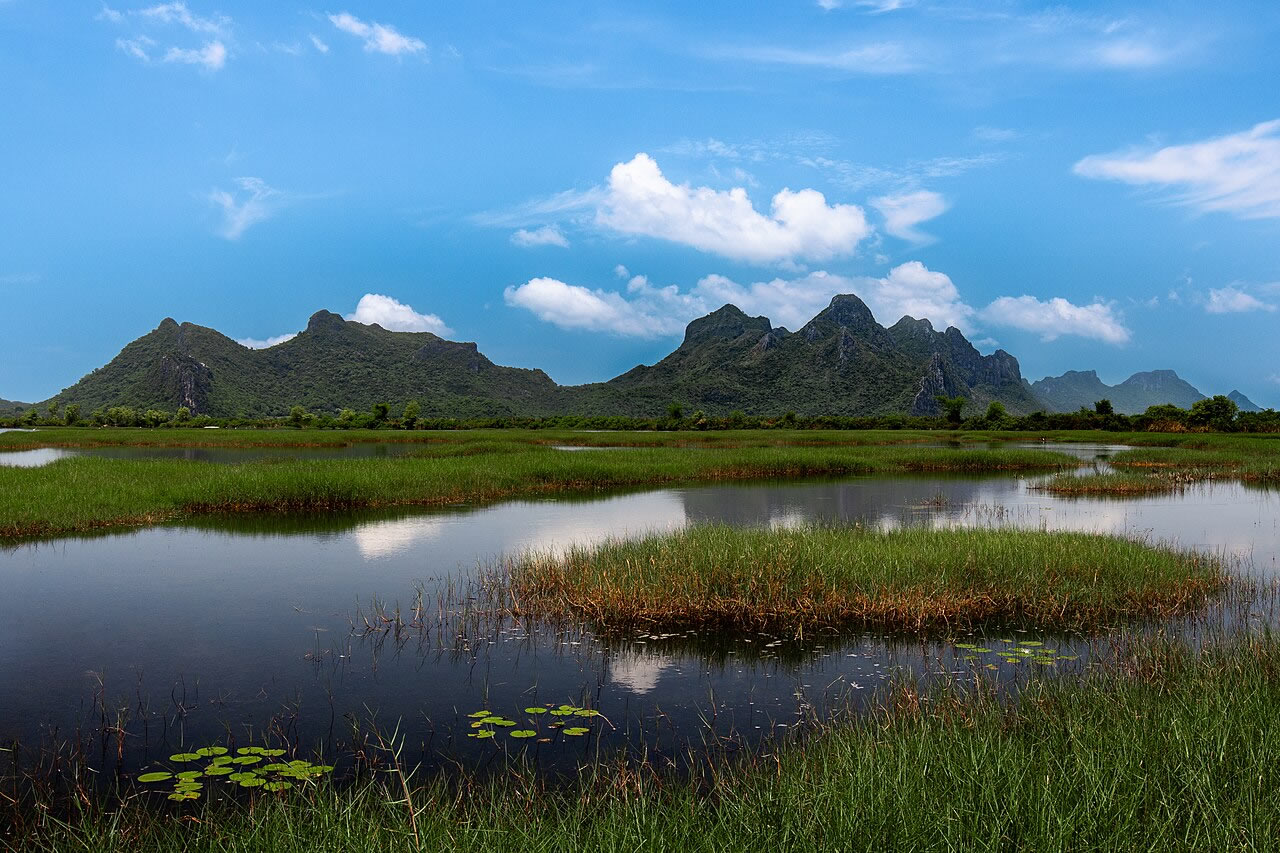
Khao Sam Roi Yot National Park brings together limestone mountains, coastal wetlands, caves and quiet beaches south of Hua Hin. Its best-known attraction is Phraya Nakhon Cave, where a royal pavilion stands beneath an opening in the cave roof. But there is more to explore, from the views at Khao Daeng to boat trips through the canal and birdwatching around the wetlands.
The park works well as a day trip from Hua Hin, while staying nearby gives you time to explore at a slower pace. It suits visitors who enjoy scenery, nature and some outdoor activity, although the physical demands vary considerably between attractions. The cave and viewpoint walks require more effort than a boat trip or a relaxed beach stop.
Planning matters here because the attractions are spread across different parts of the park. This guide covers how to get there, which places to prioritise, what the walks involve and how to put together a realistic itinerary, whether you have one day or a couple of days to explore.
Photo “Sam Roi Yot” by Not jenketragan on Wikimedia Commons, licensed under CC BY SA 4.0
📌 Affiliate Disclosure: Some links and booking tools on this page are affiliate partnerships. If you make a purchase through them, I may earn a commission at no additional cost to you. This helps support Thrive in Thailand and allows me to continue creating free content. Learn more in my Affiliate Disclosure.
Where Is Khao Sam Roi Yot National Park?
Khao Sam Roi Yot National Park lies along the Gulf of Thailand in Prachuap Khiri Khan province, south of Pranburi and roughly 60 kilometres south of Hua Hin. It sits between Hua Hin and Prachuap Khiri Khan town, making it a natural addition to a trip along this stretch of coast.
From central Hua Hin, allow around an hour to an hour and a half by car, depending on which attraction you visit. The surrounding area includes fishing villages, farmland and coastal accommodation, so you can visit from Hua Hin or stay closer to the park.
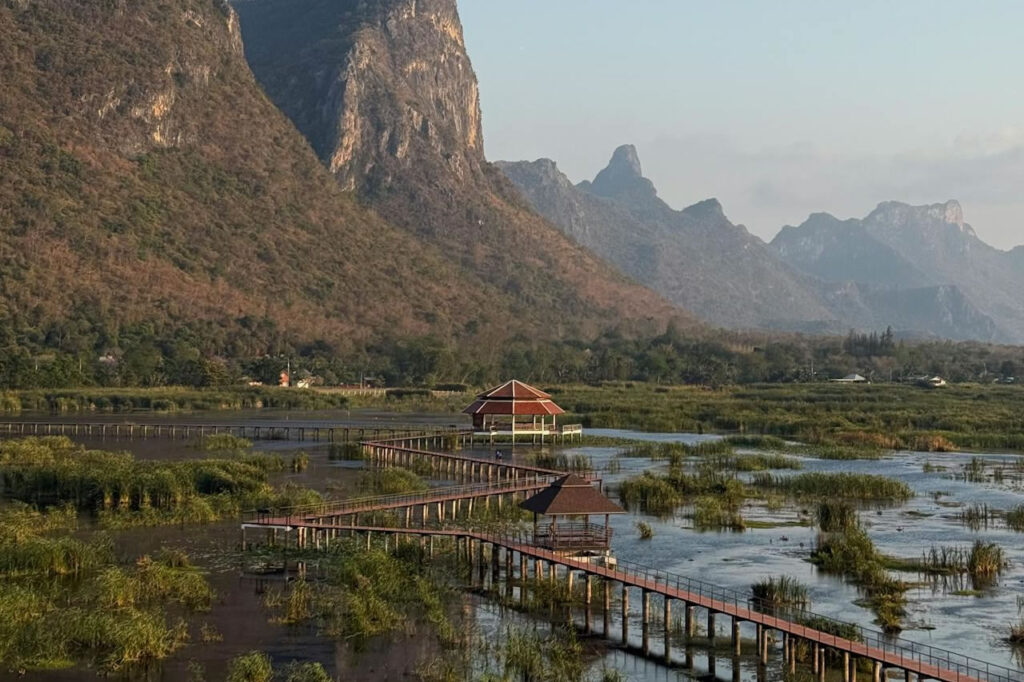
The park’s attractions have separate access points. Bang Pu village is the starting point for Phraya Nakhon Cave, while Khao Daeng Viewpoint and the canal boat trips are farther south. Bueng Bua wetlands lie on the western side of the limestone mountains, requiring a different approach by road.
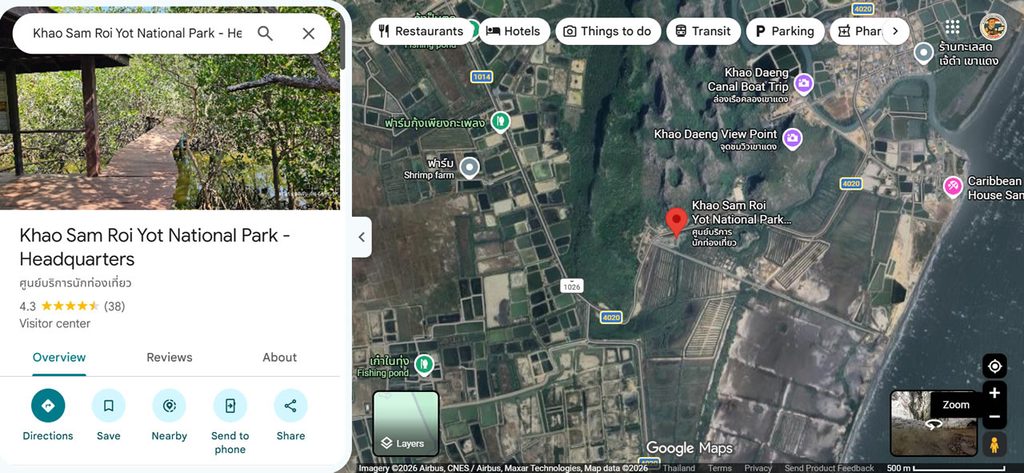
When planning your route, use the location of your first attraction rather than simply navigating to “Khao Sam Roi Yot National Park.” The park headquarters may be useful for information, but it is not the starting point for every visit.
Khao Sam Roi Yot National Park on the Map
Click the image below to open the park’s location in Google Maps in a new tab.
Best Time to Visit
December to February is generally the most comfortable period to visit Khao Sam Roi Yot National Park, particularly if you plan to walk to Phraya Nakhon Cave or climb Khao Daeng Viewpoint. Conditions are usually drier and less hot than later in the year, although exposed trails can still feel warm by late morning.
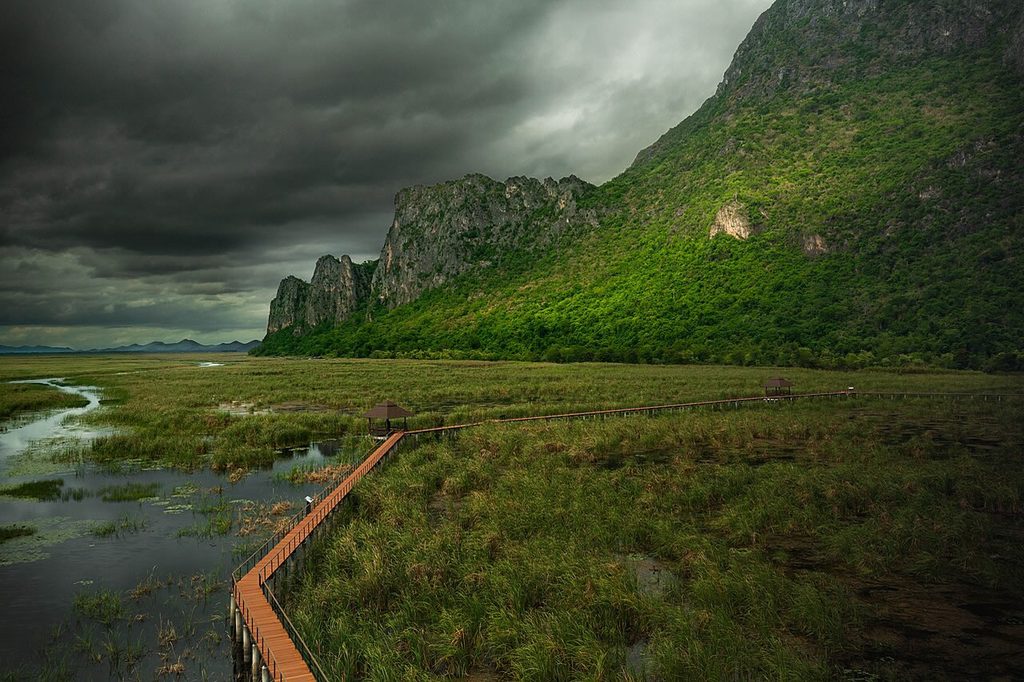
Photo by R.Nattawat on Wikimedia Commons, licensed under CC BY SA 4.0
December to February: Walking and Birdwatching
These months offer a good balance for combining walks, boat trips and beach stops. Birdwatchers also have a reason to visit during this period: the park’s wetlands attract migratory birds, with November to February highlighted by Thailand’s tourism directory as a particularly rewarding time for birdlife. November can still bring rain.
March to May: Plan Around the Heat
The hotter months can make the cave and viewpoint climbs considerably more demanding. Start strenuous walks early and leave the middle of the day for lunch, a shaded break or a less active stop. A manageable distance on paper can feel quite different on a steep trail in the heat.
May to November: Allow for Rain
The rainy season generally runs from May to November, with the heaviest rainfall often occurring between September and November. Wet limestone and uneven paths make walking more difficult, while rough sea conditions may affect boat access to Laem Sala Beach.
For a quieter visit, choose a weekday outside Thai public holidays where possible. Whatever the season, plan your day around the most demanding walk first. If photographing the pavilion in Phraya Nakhon Cave is a priority, its sunlight window also needs to influence your itinerary; that is covered in the cave section below.
Not sure if it’s a good month to visit?
Use the Monsoon Weather Checker to choose a destination and month to see a clear Go / Iffy / Avoid signal from Thailand’s Meteorological Department climate averages (historical; no forecasts), plus typical rainfall, rainy days, temperature, and a one-line sea conditions note.
How to Get there
Private transport is the most practical way to reach the park, whether you drive yourself, hire a driver or join an organised tour. Public transport can bring you to nearby towns, but you will still need to arrange the final journey to the attractions.
From Hua Hin
Allow approximately one to one and a half hours by car, depending on your starting point and which attraction you visit first.
- By car: Head south towards Pranburi, then follow the appropriate local roads to your chosen attraction. Having your own vehicle gives you flexibility to combine stops and adjust the day around the weather and walking conditions.
- With a hired driver: This is a convenient option if you prefer not to drive. Agree on the route, waiting time and return journey before booking. Make clear whether you want to visit only Phraya Nakhon Cave or include other attractions, as this affects the time and price.
- On an organised tour: A tour simplifies transport and planning, particularly for the cave. Check the itinerary carefully: a trip advertised as a national park tour may concentrate mainly on Phraya Nakhon Cave. Also confirm whether admission, the boat transfer and lunch are included.
From Bangkok
- By car: Allow roughly four to five hours, with extra time during busy weekends and public holidays. The main route follows Highway 35 out of Bangkok and then Highway 4 south towards Hua Hin and Pranburi. Your final turn-off depends on whether you are heading to the coastal attractions, the wetlands or your accommodation.
- By bus or minivan: Travel to Hua Hin or Pranburi, then continue with a prearranged driver or accommodation transfer. Confirm the exact drop-off point before booking, especially for Pranburi, where services may stop away from your intended meeting place.
- By train: Hua Hin, Pranburi and Sam Roi Yot are possible arrival points, depending on the service. Sam Roi Yot station is listed by Thailand’s tourism directory as an access option, but it is not within walking distance of the main park attractions. Arrange onward transport before arriving and check that your chosen train stops at the station you need.
📌 For most visitors coming from Bangkok, staying overnight in Hua Hin or near Sam Roi Yot makes the visit more manageable than travelling there and back in one day.
Can You Visit Without a Car?
Yes. A hired driver or organised tour is the simplest option for a day trip from Hua Hin. If you stay near the park, ask your accommodation about transfers and local excursions before booking.
Avoid relying on finding a return taxi at an attraction. Arrange the return journey in advance, particularly if your driver will not be waiting.
📌 Travel Tip: Send your driver the map pin for your first attraction. For Phraya Nakhon Cave, use the visitor parking and boat departure area at Bang Pu village, rather than the national park headquarters.
Getting Around
Think of the park as several separate stops connected by road. A car, scooter or hired driver is needed to explore comfortably; the distances between attractions are too great to treat it as a place you can arrive at and walk around.
By Car or Hired Driver
A car is the most comfortable option for combining attractions, particularly when you want somewhere cool to rest between walks. Roads lead to the main visitor areas, with parking at or near the attraction access points. The cave and viewpoint still require walking from there.
📌 If you hire a driver, agree on the stops and waiting arrangements beforehand. Allow enough time at Phraya Nakhon Cave for the approach, climb, rest breaks and return, rather than treating it as a quick photo stop.
By Scooter
A scooter offers flexibility for experienced riders, but consider the journey from your accommodation as well as the roads within the park. Heat, rain and the ride back after a strenuous walk can make a full day tiring.
Plan Stops by Area
Bang Pu and Laem Sala form the access area for Phraya Nakhon Cave. Khao Daeng Viewpoint and the canal boat trip are grouped farther south, near the headquarters. Bueng Bua wetlands are on the western side of the mountains and require a separate drive. Grouping nearby attractions helps avoid unnecessary backtracking.
The following are approximate planning allowances, excluding travel between stops:
| Attraction | Suggested Time | Physical Effort & Access |
|---|---|---|
| Phraya Nakhon Cave | 2–3 hours from Bang Pu; longer with beach time or lunch | Steep, uneven climb. Taking the boat to Laem Sala avoids the first hill, but the cave climb remains. |
| Khao Daeng Viewpoint | 1–1½ hours | Short but steep, rocky climb, followed by the descent. |
| Khao Daeng Canal | Around 1 hour on the boat, plus arranging departure | Little walking, but boarding and leaving the boat require some mobility. |
| Bueng Bua Wetlands | 30–60 minutes for a brief visit | Generally less strenuous. The available walking route depends on current boardwalk conditions. |
| Sam Phraya Beach | 30–60 minutes, or longer to relax | Road access followed by a short walk. Walking on sand may be difficult for some visitors. |
📌 These allowances include time to enjoy each stop rather than just complete the walk. Fitness, heat, boat availability and rest breaks can change the timing considerably.
✅ Choose your main walk first, then build the day around it. Phraya Nakhon Cave and Khao Daeng Viewpoint both involve climbing, so combining both is better suited to visitors comfortable with an active day. The canal trip or a beach stop offers a less demanding addition.
Best Things to Do
Phraya Nakhon Cave is the main attraction for many visitors, but the park offers several different experiences.
Phraya Nakhon Cave and the Royal Pavilion
The cave’s defining feature is the Khuha Kharuehat Pavilion, built for King Rama V’s visit in 1890. It stands inside a large chamber beneath an opening in the roof, surrounded by limestone walls and trees growing towards the daylight. The setting is what makes the visit special, particularly when sunlight reaches the pavilion.
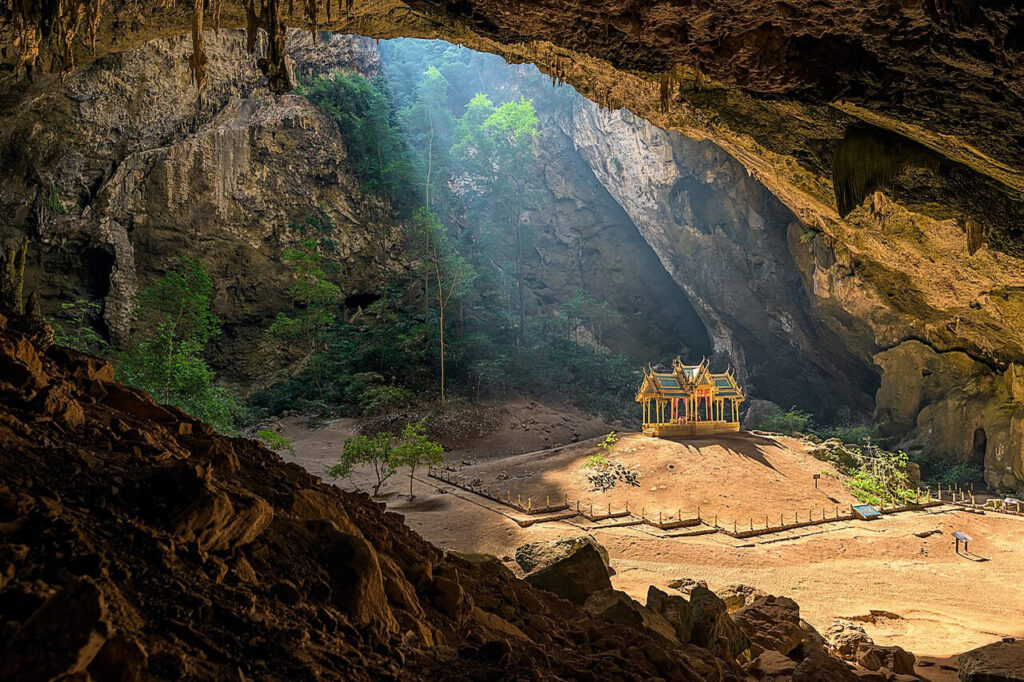
Photo by BerryJ on Wikimedia Commons, licensed under CC BY-SA 4.0
Getting there involves two stages. Start at Bang Pu village and reach Laem Sala Beach either by walking over the headland or taking a boat around it. From the beach, everyone must continue on foot up the steep trail to the cave. The boat avoids the first hill; it does not take you directly to the cave.
The climb from Laem Sala is approximately 430 metres long, but the distance understates the effort. Uneven rocks, steps and humidity make it more demanding than an ordinary short walk. Allow roughly 30–45 minutes for the ascent, with additional time if you need breaks, followed by the descent into the cave chamber.
Visitors comfortable with hills and uneven ground should find it manageable at their own pace. Anyone with knee problems, poor balance or limited walking endurance should consider the climb carefully. The descent also requires attention, especially after rain.
For the full visit, allow around two to three hours from Bang Pu, and longer if you walk both hills, stop for lunch or spend time on the beach.
✅ For photography, aim for a morning visit. The well-known sunlight effect depends on the season, the sun’s angle and cloud cover. The cave remains worth seeing even without the beam of sunlight.
Khao Daeng Viewpoint
Khao Daeng offers an elevated view across the limestone mountains, coastal plain and sea. It is a good choice if you want to appreciate the park’s geography from above.
The trail starts near the headquarters and climbs over steep, rocky ground. Although shorter than the complete cave outing, it still requires steady footing and some stamina. Allow approximately one to one and a half hours for the return walk and time at the top.
Khao Daeng Canal Boat Trip
A boat trip along Khao Daeng Canal offers a less strenuous way to enjoy the landscape, passing mangroves with limestone hills rising nearby. It makes a useful addition after a walk, or a main activity for visitors who prefer to avoid climbing.
Trips depart from the temple area near Khao Daeng village and take approximately one hour. Boats are normally arranged locally; confirm the charge and any waiting time before boarding.
Birds may be seen along the canal banks. Boarding involves stepping into a small boat, so visitors with mobility difficulties should check whether suitable assistance is available.
Bueng Bua Wetlands
On the western side of the mountains, Bueng Bua provides a different perspective: open freshwater wetlands with the limestone range behind them. It is particularly relevant for visitors interested in birdwatching, wetland scenery and photography.
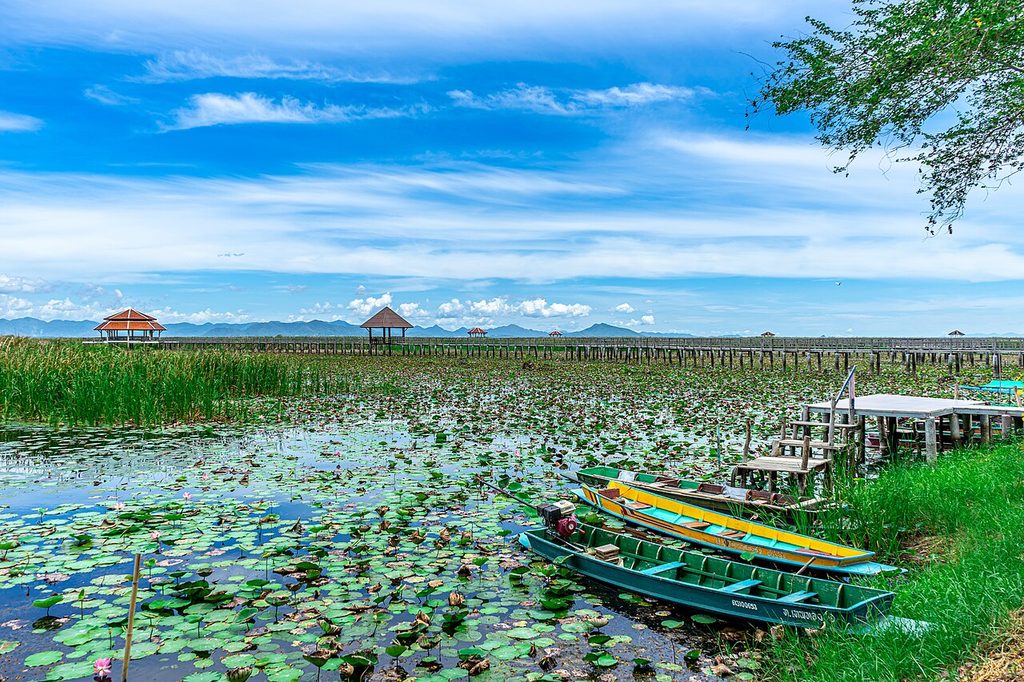
Photo by Sunnyfg on Wikimedia Commons, licensed under CC BY-SA 4.0
This is an optional stop rather than something every visitor needs to include. Its appeal depends partly on your interests, the season and how much of the walking route is accessible.
Check the current boardwalk condition before making a special detour. Older photographs may show sections that are no longer accessible. Allow 30–60 minutes for a brief visit, or longer if you are specifically watching birds.
Laem Sala and Sam Phraya Beaches
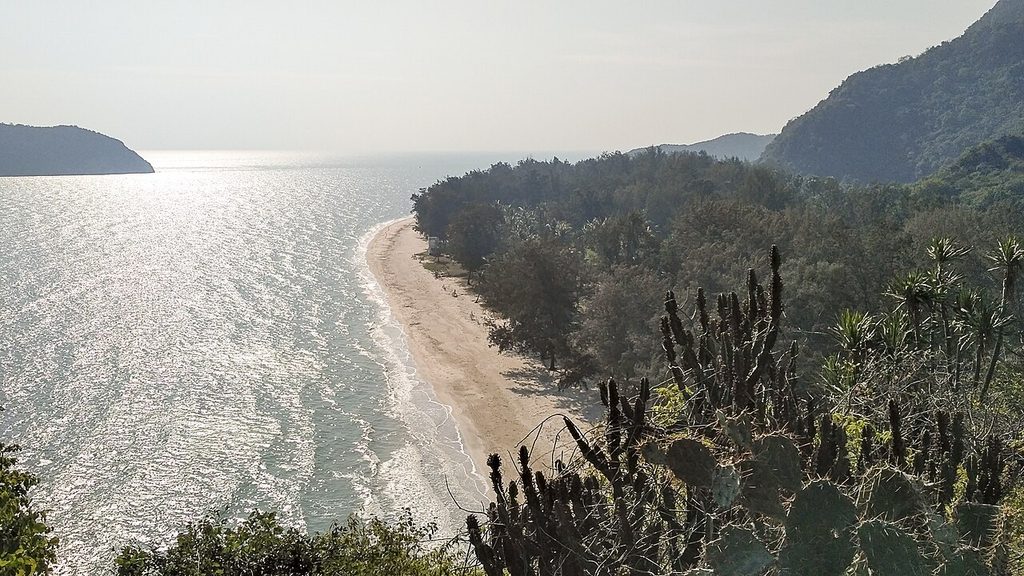
Photo by mmmmngai@rogers.com on Wikimedia Commons, licensed under CC BY-SA 2.0
Laem Sala Beach fits naturally into the cave visit because the uphill trail begins there. You can pause before the climb or spend time by the sea afterwards.
Sam Phraya Beach is a separate option with road access, making it easier to include without another hill walk. It suits a relaxed break between attractions.
Other Caves
Kaeo Cave and Sai Cave are additional options for visitors with more time and a particular interest in caves. They offer rock formations and a different experience from Phraya Nakhon’s open, naturally lit chambers.
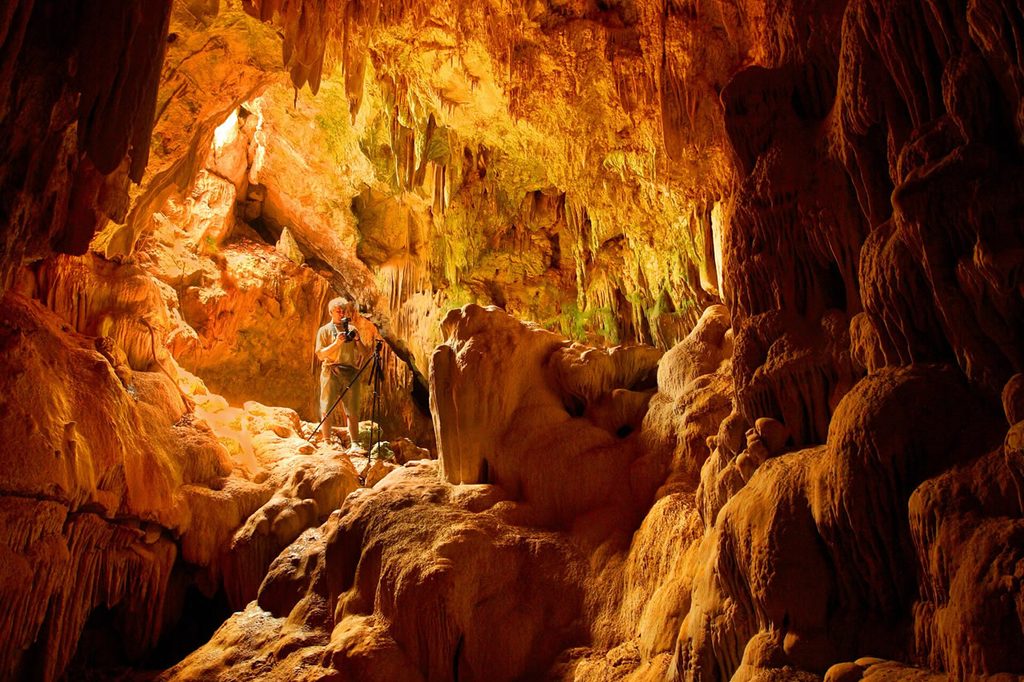
Photo by Dmitriy Konstantinov on Wikimedia Commons, licensed under CC BY-SA 4.0
Check access, lighting and ranger requirements before visiting. These are better considered for a second day than added automatically to an already active cave-and-viewpoint itinerary.
📌 Prefer an organised visit from Hua Hin? This group tour includes Phraya Nakhon Cave, where the uphill walk is still required.
Where to Eat
Bang Pu is the most convenient lunch stop after Phraya Nakhon Cave, with simple restaurants around the parking and boat departure area. Rice and noodle dishes suit a quick meal before continuing to another attraction. There is also a park restaurant at Laem Sala Beach if you prefer to eat before returning to the village.
Sam Phraya Beach has a restaurant near the visitor facilities, making it another practical meal stop when exploring the southern part of the park.
For more choice, head to Sam Roi Yot Beach/Dolphin Bay. One option is The Green Beach Resort, whose restaurant welcomes visitors for rice dishes, pad Thai and other simple meals. Its Longlay Café also welcomes non-residents for coffee and drinks. View the restaurant and café on Google Maps.
Food and Drink Prices
The following ranges are a rough guide for budgeting. Simple local restaurants generally cost less than beachfront cafés and resort restaurants.
| Food or Drink | Approximate Budget | What to Expect |
|---|---|---|
| Simple Thai rice or noodle dish | ฿60–฿100 | A single dish at a basic local restaurant; seafood or extras may cost more. |
| Thai main dish at a beachfront or resort restaurant | ฿120–฿250 | Allow extra for drinks, side dishes and any service charge. |
| Seafood dish | ฿180–฿350 | For a prepared dish such as squid or prawns; portion size and restaurant type affect the price. |
| Whole fish or seafood platter | ฿350–฿700+ | Prices vary widely by species, size and weight. Confirm the total before ordering. |
| Café coffee | ฿60–฿120 | Speciality drinks and resort cafés may cost more. |
| Small bottle of drinking water | ฿10–฿25 | A rough allowance for a shop or simple food stop; restaurant prices may be higher. |
📌 Approximate budgeting estimates, not confirmed menu prices.
Where to Stay
You do not need to stay near the park to enjoy a worthwhile visit. Hua Hin works well as a base for a day trip, while an overnight stay around Sam Roi Yot gives you more time for the attractions and a quieter coastal setting.
Hua Hin: A Convenient Base
Stay in Hua Hin if the park is one outing within a longer holiday. You have a wider choice of restaurants, accommodation and evening activities, and can visit with your own vehicle, a hired driver or a tour. My Where to Stay in Hua Hin guide compares the main areas and accommodation options.
📌 The main trade-off is the return journey. For a day trip, choose a few highlights rather than trying to cover the cave, viewpoint, canal and wetlands together.
Sam Roi Yot Beach / Dolphin Bay: Stay Closer
The nearby Sam Roi Yot Beach area, often called Dolphin Bay, suits visitors who want to split the park across two days or combine sightseeing with a quiet beach stay. You will still need transport to reach the individual attractions.
Accommodation includes smaller properties and beachfront resorts. Dolphin Bay Beach Resort is worth considering for families, with two swimming pools, a children’s play area and a choice of rooms, suites and villas. The Green Beach Resort offers rooms and villas near the beach, an outdoor pool, and an on-site restaurant and café.
📌 An overnight stay makes particular sense if you want to visit the cave one day and leave the wetlands, canal or beach for the next.
Park Accommodation and Camping
The park also has basic accommodation and camping options, including camping areas at Laem Sala and Sam Phraya beaches. These suit visitors who prefer staying within the park and are comfortable with simpler facilities. Check current availability and booking arrangements directly with the park.
📌 Laem Sala is reached by boat or a walk over the headland, which affects arrival with luggage.
Suggested Itineraries
One day is enough for a few well-chosen highlights. Two days give you time to explore both sides of the mountains, enjoy the coast and spread out the more demanding walks. These routes assume you have a car or a driver.
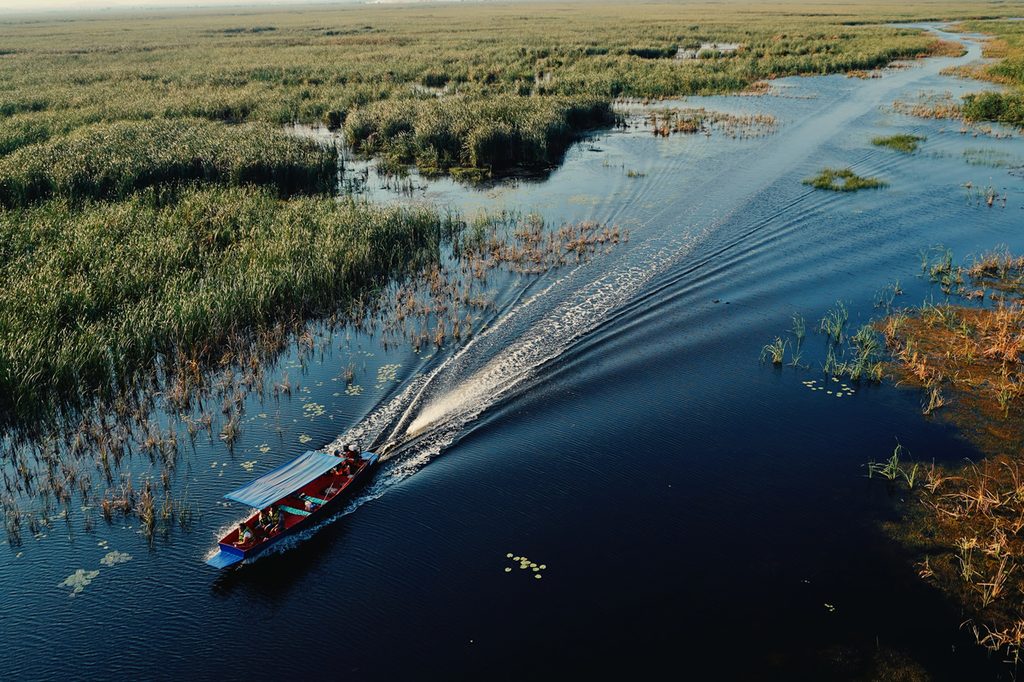
Photo by Nanthiphat Sal on Wikimedia Commons, licensed under CC BY-SA 4.0
One Day from Hua Hin: Cave and Canal
Leave Hua Hin early enough to reach Bang Pu in the morning. Start with Phraya Nakhon Cave, allowing two to three hours for the outing. Taking the boat to Laem Sala Beach reduces the walking, although the climb to the cave remains.
Afterwards, have lunch at Laem Sala or back in Bang Pu. Continue south for the Khao Daeng Canal boat trip, which adds a different view of the park without another climb.
If you have time, finish with a short stop at Sam Phraya Beach before returning to Hua Hin. This makes a varied day without trying to include every attraction.
📌 Khao Daeng Viewpoint is an alternative to the canal trip for visitors who want a second walk.
One Day with Less Walking
Begin at Bueng Bua wetlands if the boardwalk is accessible. Spend time enjoying the mountain backdrop and watching for birds, then drive around to the coastal side.
Have lunch around Sam Roi Yot Beach/Dolphin Bay, followed by a beach break. In the afternoon, continue to Khao Daeng Canal for a boat trip before returning to Hua Hin.
This route avoids the cave and viewpoint climbs. It still involves some walking and boarding a small boat, so it should not be treated as a fully accessible itinerary.
📌 If the wetlands do not appeal or boardwalk access is limited, start on the coast instead and include Sam Phraya Beach.
Two Days Around Sam Roi Yot
Day 1: Phraya Nakhon Cave and the coast
Visit the cave in the morning, then allow time for lunch and a break at Laem Sala Beach. Spend the remainder of the afternoon around Sam Roi Yot Beach and stay nearby overnight.
Day 2: Viewpoint, canal and optional wetlands
Start with Khao Daeng Viewpoint during its permitted opening hours, followed by the canal boat trip and lunch. Visitors who prefer less walking can skip the viewpoint and begin with the canal.
Use the afternoon for Bueng Bua wetlands if birdwatching or photography interests you. Otherwise, choose Sam Phraya Beach or a slower afternoon on the coast. Kaeo or Sai Cave could replace that afternoon stop for keen cave visitors, subject to access and ranger arrangements.
📌 The advantage of staying overnight is the flexibility. You can give the cave its own morning, recover from the climb and enjoy the other attractions without watching the clock throughout the visit.
Entrance Fees, Opening Hours and Typical Costs
Park Admission
The published entrance fees are ฿200 for foreign adults and ฿100 for foreign children, with Thai-national rates of ฿40 and ฿20 respectively. Admission covers the park attractions visited on the same day, so keep your ticket when moving between checkpoints. Boat trips are charged separately.
📌 Simply driving through the area to reach villages or accommodation does not require paying park admission.
Opening Hours
Most main attractions operate from approximately 8:00 am to 4:00–4:30 pm. Individual trails can have earlier last-entry times, so the closing time should not be treated as the latest time to begin a walk.
For Phraya Nakhon Cave, a morning arrival leaves enough time for the approach, climb and return. If you want to visit Khao Daeng Viewpoint at sunrise, confirm early access with park staff beforehand; sunrise recommendations online do not necessarily reflect normal opening arrangements.
Boat Charges
Allow approximately ฿400 per boat for the return transfer from Bang Pu to Laem Sala Beach, and ฿500 per boat for the Khao Daeng Canal trip. These are published indicative fares for boats carrying up to six people, rather than per-person charges. Local quotations may differ.
Typical Visit Costs
The table below brings together park admission and the main boat charges. Road transport, meals and accommodation are additional.
| Item | Cost | Basis |
|---|---|---|
| Park admission: foreign adult | ฿200 | Per person, for same-day visits to park attractions |
| Park admission: foreign child | ฿100 | Published child rate for ages 3–14 |
| Park admission: Thai national | Adult ฿40 / child ฿20 | Per person |
| Bang Pu–Laem Sala boat transfer | Around ฿400 | Per boat, return trip; published capacity up to 6 people |
| Khao Daeng Canal boat trip | Around ฿500 | Per boat, approximately 1 hour; published capacity up to 6 people |
📌 Published admission rates and indicative boat fares. Charges and access arrangements may change.
What Does a Day Cost?
For two foreign adults, park admission plus both boat trips comes to approximately ฿1,300 in total, before food and road transport. Sharing the boats with a larger group reduces the cost per person.
Transport is the biggest variable. With your own vehicle, add fuel and any rental costs. For a hired driver, the quotation will depend on your pickup location, stops and waiting time. An organised tour provides a separate package price; check which admission and boat charges it includes.
Practical Things to Know
Facilities and Supplies
Facilities are concentrated around the visitor areas rather than along the trails. Laem Sala Beach has toilets, showers and a restaurant, while Sam Phraya Beach has basic visitor and camping facilities. At Phraya Nakhon Cave, the beach is the practical place for a break before or after the climb.
📌 Bring water for the walking sections and some cash for local boats and smaller food stops. Downloading a map of the area is also useful when travelling between the coastal attractions and the wetlands.
Walking Conditions and Accessibility
The main consideration is uneven ground rather than distance alone. The cave and viewpoint trails involve steep, rocky sections, and descending can be as demanding as climbing. Shoes with a reliable grip are more suitable than beach footwear.
Families can choose attractions according to their children’s walking ability. Visitors with limited mobility will generally find the road-accessible coastal stops more manageable, but neither the beaches nor the small boats should be assumed to provide wheelchair access.
Wildlife
Dusky langurs may be seen around Laem Sala, while macaques occur near Khao Daeng and the headquarters. Sightings vary, and most of the park’s more elusive mammals are unlikely to appear during an ordinary day trip.
📌 Keep your distance and avoid feeding monkeys. Food attracts them to visitor areas and can lead to problems for both people and wildlife.
Current Access Conditions
Heavy rain, rough seas and maintenance can affect individual parts of the visit. Boat access to Laem Sala and the condition of the Bueng Bua boardwalk are particularly worth checking if they are central to your plans.
For updates, contact the park or look for notices on its official Facebook page, “อุทยานแห่งชาติเขาสามร้อยยอด – Khao Sam Roi Yot National Park.” Older photographs and visitor reports may not reflect the route currently available.
Useful Contacts
- National park enquiries: 032 821 568
- Emergency medical assistance: 1669
- Tourist Police: 1155
📌 If help is needed on a trail, notify park staff and give the attraction name and your position along the route. The general park map pin may be some distance from where you are.
Nearby Places to Combine with Your Visit
The coast north of the park offers a few natural stops on the way back to Hua Hin. Other destinations deserve more time, particularly if you have already spent the morning walking to Phraya Nakhon Cave.
Khao Kalok and Pak Nam Pran
Khao Kalok is a coastal option for a beach stop or a meal after visiting the park. You can continue north through Pak Nam Pran, following sections of the coastal road past restaurants, resorts and fishing boats before heading back towards Hua Hin.
📌 This combination suits visitors who want to finish with some time by the sea.
Pranburi Forest Park
Pranburi Forest Park offers a separate mangrove setting near the Pranburi River’s mouth. Its boardwalk provides a different experience from the rocky climbs at Sam Roi Yot, making it a possible stop on the return journey.
📌 It fits best with a shorter park visit. If you have already included the Khao Daeng Canal trip, decide whether you want another mangrove stop or would prefer time on the coast.
Kui Buri National Park
Kui Buri offers wild elephant watching, with visits focused on its designated wildlife-viewing area. This is a separate national park with its own admission and vehicle arrangements. The viewing area operates in the afternoon, generally from 2:00 pm to 6:00 pm.
Combining a morning at Sam Roi Yot with an afternoon at Kui Buri is possible, but requires a deliberately limited morning itinerary and an arranged transfer or your own vehicle. For a more relaxed visit, give Kui Buri its own day, particularly if you also want to explore several Sam Roi Yot attractions.
📌 For more outings along this coast, see my Best Day Trips from Hua Hin guide, including Pranburi, Kui Buri and Prachuap Khiri Khan.
Photo by BerryJ on Wikimedia Commons, licensed under CC BY-SA 4.0
Related Guides & Further Reading
Whether you are visiting Sam Roi Yot from Hua Hin or including it in a longer trip, these resources can help with practical planning and choosing where to go next.
Thailand Travel Essentials: Plan Smarter, Travel Easier
For advice on visas, health, culture and everyday travel logistics, my hub brings the key guides together in one place: Explore the Thailand Travel Guide.
Where to Go Next
Hua Hin is a convenient base for exploring Sam Roi Yot. For another nature-focused trip elsewhere in Thailand, Khao Sok and Khao Yai offer different landscapes and experiences.
- Hua Hin Travel Guide, Thailand: Beaches, Lifestyle, Costs & What to Expect
- Khao Sok National Park Travel Guide: Cheow Lan Lake & Jungle Tours
- Khao Yai National Park Travel Guide: Waterfalls, Wildlife & An Easy Escape from Bangkok
💬 Have you visited Sam Roi Yot, or have a question about planning your trip? Share your experience or ask in the comments below.