
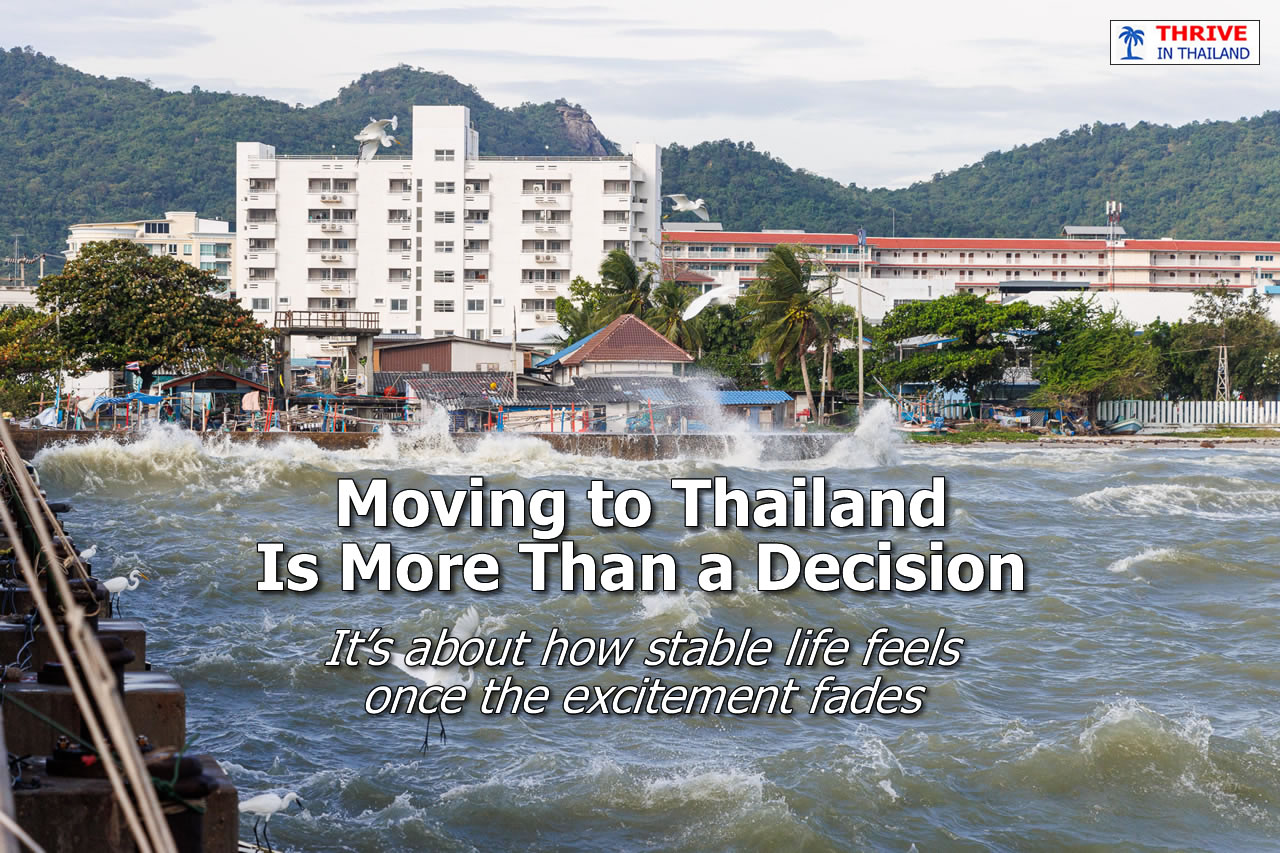
Thailand Rarely Fails People — Misaligned Expectations Do
Moving to Thailand is rarely the mistake people think it is. Most who struggle here don’t fail because Thailand is difficult, hostile, or unforgiving. They struggle because what they expected life to be like doesn’t match how it actually unfolds over time.
Thailand is welcoming, affordable, and remarkably easy to enter compared to many countries. That accessibility can create the impression that settling here is mostly about logistics: finding a place to live, sorting a visa, opening a bank account, learning a few phrases. On paper, it looks manageable. In practice, those details are only the outer layer.
What determines whether someone thrives long-term isn’t how smoothly they arrive, but how well their assumptions hold up once everyday life sets in. The pace, the systems, the social dynamics, and the quiet compromises required by living here don’t announce themselves as problems. They surface slowly, often after the excitement has worn off.
Thailand doesn’t push back loudly when something isn’t aligned. It doesn’t force quick decisions or dramatic turning points. Instead, it allows things to drift. That’s what catches people off guard. Small frictions accumulate. Unclear plans linger. Gaps that felt minor at the beginning start to matter more as time goes on.
When people eventually leave feeling disappointed, burned out, or quietly defeated, it’s rarely because they “couldn’t handle Thailand.” More often, they arrived with expectations shaped by short visits, online narratives, or optimism unsupported by preparation. Thailand didn’t fail them. The fit was never fully examined.
This article includes a practical self-assessment designed to help you pause and examine whether that fit is actually in place for long-term life in Thailand. If you prefer to move straight to the structured self-assessment tool, you can begin below.
✅ That’s what this article is about. Not discouraging you from moving, and certainly not telling you that you shouldn’t. It’s about stepping back long enough to ask whether your expectations, resources, and assumptions are aligned with the kind of life Thailand actually offers over the long run.
Why the First Few Months in Thailand Are Misleading
The early months in Thailand are unusually forgiving. Life feels lighter, simpler, and more fluid than expected. Everyday tasks seem easier, problems feel smaller, and inconveniences are often brushed aside as part of the adjustment period. This isn’t illusion or self-deception. Thailand genuinely makes arrival easier than staying.

During this phase, novelty does a lot of quiet work. New surroundings stimulate curiosity. Lower costs reduce pressure. Friendly interactions soften friction. Even inefficiencies feel charming when they’re unfamiliar. What would be irritating at home is often reinterpreted as cultural difference or part of the adventure.
This is also when people unconsciously suspend judgment. Loose ends are tolerated. Temporary solutions are accepted as “good enough for now.” Visa plans feel distant. Healthcare feels hypothetical. Financial drift doesn’t register as risk yet. There’s a sense that things will sort themselves out later, once life settles.
But later is exactly when the tone changes.
Once routines replace novelty, Thailand reveals its true character as a place to live, not just experience. Small compromises become repetitive. Bureaucracy stops being interesting. Language barriers matter more when something goes wrong. Social circles narrow. The absence of structure, which once felt liberating, can start to feel destabilizing.
This transition often happens quietly, without a clear trigger. There’s no dramatic moment when Thailand “turns difficult.” Instead, the cushion provided by novelty thins out, and what remains is your actual setup: your visa reality, your financial sustainability, your healthcare exposure, your tolerance for uncertainty, and your ability to build a stable life without external scaffolding.
People who are well prepared barely notice this shift. Their foundations absorb it. Those who aren’t often feel confused by their own discomfort. Thailand hasn’t changed, yet something feels off. That disconnect is where doubt, frustration, and second-guessing begin.
📌 Understanding this dynamic matters, because it reframes the question entirely. Readiness isn’t about whether you enjoy Thailand at first. Almost everyone does. It’s about whether your plans, expectations, and support systems are built to hold up once the honeymoon ends and real life takes over.
Readiness Is Not About Money, Courage, or Intelligence
It’s tempting to reduce relocation success to personal strength. People often assume that if they have enough money, enough confidence, or enough life experience, things will work out. When they don’t, the failure is framed as bad luck or personal weakness.
That framing misses the point.
Plenty of intelligent, capable, well-funded people struggle in Thailand. At the same time, many with modest means and no grand plan build stable, satisfying lives here. The difference rarely comes down to bravery or brainpower. It comes down to alignment.
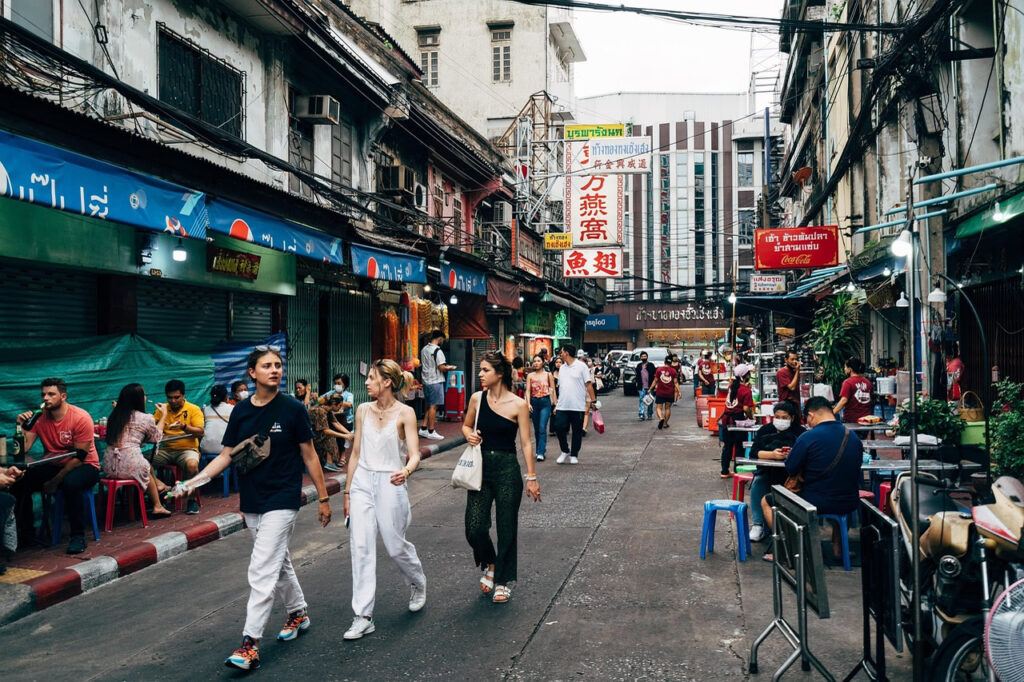
Money helps, but only when it’s paired with realistic expectations. Courage helps, but only when it isn’t masking avoidance of planning. Intelligence helps, but only when it’s applied to unfamiliar systems rather than familiar assumptions. Strength in one area does not compensate for blind spots in another.
What Thailand exposes over time isn’t whether someone is “cut out for expat life,” but whether their resources are balanced. A strong financial position paired with legal uncertainty creates stress. Cultural enthusiasm without routine leads to drift. Emotional resilience without healthcare preparation becomes fragile under pressure.
People who thrive long-term tend to share one trait: they don’t rely on a single pillar to carry the entire experience. They distribute risk. They understand that ease in one area doesn’t cancel vulnerability in another.
This is why readiness is often misjudged. It’s not obvious. It doesn’t announce itself through confidence or enthusiasm. It shows up quietly, in how well different parts of a person’s life reinforce each other once the excitement fades and ordinary days begin.
That’s also why generic advice falls short. Checklists and how-to guides can help with logistics, but they don’t reveal imbalance. They don’t show where assumptions are doing more work than preparation.
📌 To understand readiness properly, it has to be broken down. Not into steps, but into foundations. That’s where the six pillars come in.
The Six Pillars of Relocation Readiness
Long-term stability in Thailand doesn’t come from a single decision or a single advantage. It comes from a set of foundations that quietly support everyday life once the initial excitement wears off. When one of these foundations is weak or missing, pressure tends to show up elsewhere.
Over time, certain patterns repeat themselves. The same issues surface, regardless of age, nationality, or background. These issues aren’t random. They fall into a small number of predictable areas that determine whether life here remains manageable or slowly becomes stressful.
These are the six pillars that matter most.
They aren’t a checklist, and they aren’t equally visible at the beginning. Some feel abstract until they’re tested. Others seem unimportant until they fail. What matters is not perfection in all six, but balance across them.
Below is a high-level overview. Each pillar will be explored in more depth as we go, but the framework itself is worth understanding first.
At a glance, here’s what each pillar is really assessing:
| Pillar | What It Really Measures |
|---|---|
| Visa & Legal Reality | How stable your right to stay is over a 12–24 month horizon, and how exposed you are if rules or enforcement change. |
| Financial Sustainability | Whether your Thailand lifestyle is sustainable in real numbers (burn rate, buffer, and ability to adjust if costs rise or income shifts). |
| Healthcare Preparedness | How prepared you are if something goes wrong, and how confident you feel navigating care where you live. |
| Cultural & Lifestyle Adaptability | Your tolerance for friction, ambiguity, and different assumptions, and whether those differences will wear you down over time. |
| Support, Routine & Social Stability | Whether you have (or can build) sustainable structure and support beyond short-term social settings or the honeymoon phase. |
| Time Horizon & Exit Strategy | Clarity about intent and reassessment triggers, plus how calmly you could adapt or leave if needed (psychological stability). |
➡️ With that overview in mind, let’s look more closely at what each pillar actually means in practice.
🛂 Visa & Legal Reality
This pillar covers more than paperwork. It reflects how stable and realistic your legal footing in Thailand actually is over time.
Short-term solutions can feel workable at first. Over the long run, uncertainty around visas, extensions, or legal status creates background stress that never fully switches off. People often underestimate how much mental energy this consumes once novelty fades.
If visa stability is a concern for you, the Thailand Visa Hub offers a clear overview of long-term options and legal realities.
💰 Financial Sustainability
This isn’t about being wealthy. It’s about understanding your burn rate, your income reliability, and how long your current setup can realistically support your lifestyle.
Thailand rewards awareness more than optimism. Those who know their numbers tend to stay calm. Those who don’t often feel fine until something shifts and there’s no buffer left.
If financial sustainability feels uncertain, the Banking & Financial Tips for Expats in Thailand guide walks through practical systems for managing money, transfers, and long-term costs.
🏥 Healthcare Preparedness
Healthcare in Thailand is excellent, but expectations matter. This pillar reflects how exposed you are if something goes wrong and how comfortable you are navigating that reality.
It’s less about specific insurance choices and more about whether you’ve honestly accounted for age, health, location, and risk tolerance before you need care.
For those who want a clearer sense of how healthcare risk and coverage work in Thailand, the Thailand Health Insurance Guide for Foreigners offers a practical grounding.
🌏 Cultural & Lifestyle Adaptability
Thailand operates on different assumptions about time, communication, responsibility, and hierarchy. Adapting isn’t about liking every aspect of the culture. It’s about whether you can function well without constantly resisting how things work.
People who struggle here often do so quietly, through accumulated frustration rather than dramatic conflict.
Long-term adjustment often comes down to expectation shifts rather than effort. That dynamic is explored in Adapting to Thai Culture.
🧭 Support, Routine & Social Stability
Freedom without structure feels liberating at first. Over time, it can become destabilizing.
This pillar looks at whether you’re able to build routines, maintain healthy social connections, and avoid relying on fragile or short-term sources of belonging. Loneliness and drift rarely appear immediately, but they are common long-term stressors.
Sustainable support in Thailand usually comes from repeatable structure rather than chance encounters. How long-term residents build that is explored in Expat Communities & Social Life in Thailand.
🚪 Time Horizon & Exit Strategy
This is one of the least discussed, yet most important foundations.
Knowing whether you’re experimenting, transitioning, or settling permanently changes how you experience uncertainty. Equally important is knowing that you can leave without crisis if circumstances change. People who have that option tend to feel more grounded, not less committed.
Clarity around staying or leaving usually comes from seeing the full picture. A balanced look at that reality is explored in The Pros and Cons of Living in Thailand as an Expat.
Taken together, these six pillars form a realistic picture of readiness. Strength in one area doesn’t cancel weakness in another. The goal isn’t to score perfectly, but to understand where pressure is likely to build over time.
With that framework in place, it becomes easier to see why some people settle comfortably into life in Thailand, while others slowly feel out of sync without quite knowing why.
The Pattern That Repeats Itself Again and Again
After enough time living in Thailand, certain trajectories become familiar. Not in a dramatic or obvious way, but in how people gradually settle into — or drift out of — their lives here. The details differ, but the underlying pattern rarely does.
Those who struggle long-term usually arrive with one or two strong pillars carrying everything else. It might be financial confidence, a sense of adventure, or emotional relief from leaving something behind. Early on, that strength creates momentum. It smooths over gaps and delays hard questions.
Over time, the imbalance shows. Legal uncertainty starts to weigh on decisions. Finances feel less predictable than expected. Healthcare becomes a background worry rather than a distant abstraction. Social circles narrow instead of deepening. What once felt flexible begins to feel unstable.
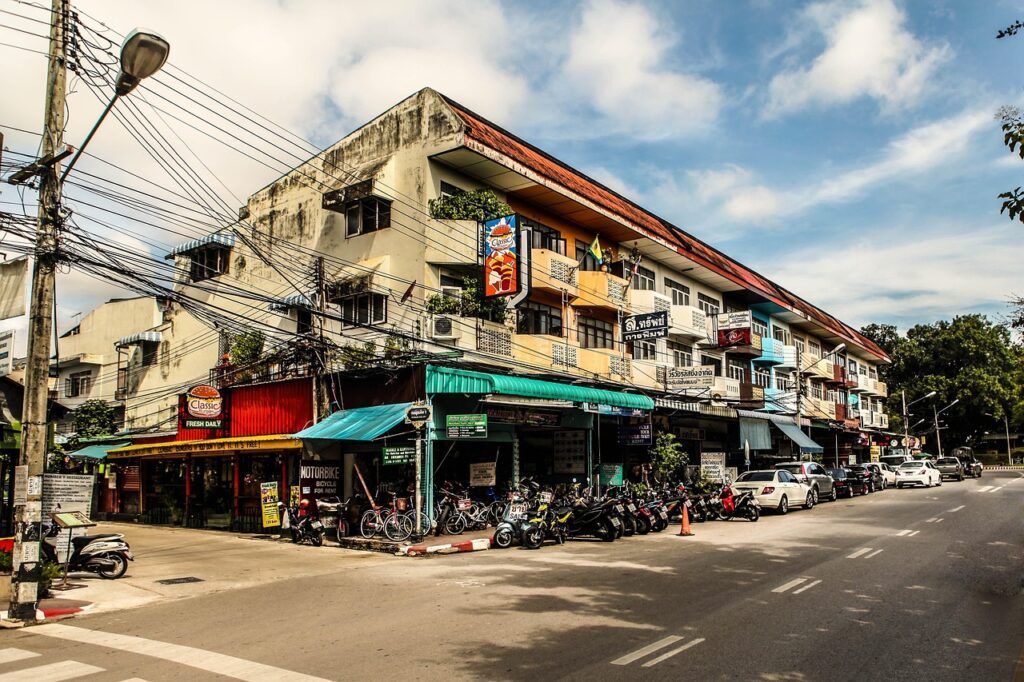
This doesn’t usually lead to a single breaking point. More often, it leads to quiet dissatisfaction. A sense of being slightly unmoored. Life still works, but it no longer feels anchored. People begin to second-guess decisions they once felt sure about, without being able to point to a clear reason.
By contrast, those who settle well tend to look less impressive on paper. Their lives aren’t built around one decisive advantage. Instead, they have reasonable clarity in several areas at once. Their visa situation isn’t exciting, but it’s stable. Their finances aren’t extravagant, but they’re understood. Their routines aren’t perfect, but they’re sustainable.
What stands out is not confidence, but calm. Problems still occur, but they don’t cascade. When something shifts, there’s room to adjust without panic. Thailand doesn’t feel like something that has to be managed constantly. It simply becomes the place where life happens.
This difference is easy to miss from the outside. Both groups may appear similar at first. Both may speak positively about Thailand. Both may enjoy the same lifestyle markers. The divergence only becomes visible with time, as small pressures either accumulate or dissipate.
📌 Recognizing this pattern matters because it removes mystery from the outcome. People don’t leave Thailand because they suddenly change their minds. They leave because the foundations they brought with them weren’t designed to support everyday life over the long run.
Where Most People Overestimate Their Readiness
Overestimating readiness rarely comes from arrogance. It usually comes from focusing on the parts of relocation that feel tangible and reassuring, while overlooking the ones that only reveal their weight later on.
Many people place a lot of confidence in how adaptable they feel during visits or short stays. Enjoying Thailand, feeling comfortable here, or having spent extended time in the country can create the impression that long-term living will simply be more of the same. In reality, liking a place and being supported by it over time are very different experiences.
This is especially true with coastal living, where short stays often highlight the scenery and atmosphere but not the long-term trade-offs.
📌 Further reading → Pros and Cons of Beach Living in Thailand
Legal status is another common blind spot. As long as visas are being granted, the situation can feel stable. The fragility of temporary arrangements often goes unnoticed until circumstances change and flexibility suddenly disappears. What once felt manageable becomes restrictive.
Financial optimism plays a role as well. Lower living costs can make almost any budget feel generous at first. Without a clear sense of long-term burn rate, future healthcare costs, or currency exposure, people tend to assume that today’s comfort will carry forward unchanged.
To make this more concrete, it helps to look at how much money you need to move to Thailand based on realistic setup costs and monthly expenses.

Cultural tolerance is frequently overestimated too. Patience during a short stay doesn’t always translate into resilience over years. Small frustrations that are easy to laugh off early on can become emotionally tiring when they repeat without resolution.
Finally, many people underestimate the role of structure. Freedom is often one of the main reasons for moving to Thailand. What’s less anticipated is how quickly too much unstructured time can lead to drift, isolation, or unhealthy routines if nothing replaces the structure left behind.
None of these miscalculations are dramatic. They don’t feel like mistakes when they’re being made. They only become visible once the environment stops compensating for them. By then, correcting course requires more effort than it would have earlier.
📌 Recognizing where readiness is commonly overestimated isn’t meant to discourage. It’s meant to narrow the gap between how relocation is imagined and how it actually unfolds, so fewer adjustments are left until they become urgent.
Turning Readiness Into Something Practical
Understanding readiness conceptually is useful, but it can remain abstract without a way to reflect on it personally. Most people can agree with the ideas in principle while still struggling to see how they apply to their own situation.
This is where clarity tends to break down. Readiness isn’t a single decision you either get right or wrong. It’s a distribution of strengths and vulnerabilities across different areas of life. Without examining those areas side by side, it’s easy to assume that feeling confident overall means being prepared enough.

Turning readiness into something practical doesn’t mean creating rigid rules or drawing hard conclusions. It means slowing down long enough to look at the foundations objectively, rather than relying on momentum or enthusiasm to carry the weight.
When people do this honestly, a few things usually happen. Areas of strength become clearer, which brings confidence without bravado. At the same time, gaps become visible in a way that feels manageable rather than alarming. The picture sharpens.
This kind of reflection is most useful before decisions harden and habits form. Once life in Thailand settles into a routine, making adjustments becomes harder, not because they’re impossible, but because they require unwinding assumptions that have already taken root.
📌 The goal isn’t to decide whether to move or not. It’s to understand what would need attention for life here to remain stable beyond the initial phase. That understanding makes any next step more intentional, whether it’s moving forward, slowing down, or refining plans before committing further.
The Thailand Relocation Readiness Score
To make this reflection more concrete, I created the Thailand Relocation Readiness Score. It’s a simple self-assessment designed to mirror the six pillars outlined above and help you see how balanced your preparation actually is.
The score isn’t meant to judge or decide anything for you. It doesn’t tell you whether you should move, stay, or leave. It simply highlights where your foundations are solid and where they may be carrying more strain than you realize.
Each section focuses on how stable your current setup would be once everyday life replaces novelty. Some questions may feel straightforward. Others may require a bit more honesty than comfort. That’s intentional. Readiness isn’t about optimism; it’s about alignment.
What the score reflects is balance. Strong preparation in one area doesn’t compensate for fragility in another, and the tool is designed to make that visible without exaggeration. Many people discover they’re better prepared than they assumed in some areas, and less so in others.
Just as important is what the score deliberately does not do. It doesn’t offer advice, recommend actions, or rank you against anyone else. It doesn’t replace professional guidance, and it doesn’t reduce complex realities to a single outcome. Its only purpose is to give you a clearer picture of how your expectations, resources, and plans fit together right now.
✅ Used thoughtfully, the score becomes a starting point rather than a conclusion. It can help you identify where preparation would reduce future stress, long before that stress has a chance to accumulate.
Take the Thailand Relocation Readiness Score
Take a few minutes. Answer honestly. Look for balance, not perfection.
The score looks at six areas that tend to determine how stable life in Thailand feels once the initial excitement wears off. It doesn’t measure optimism or intent. It highlights where preparation is already doing work for you — and where uncertainty may quietly accumulate over time.
Thailand Relocation Readiness Score
A calm self-assessment to help you see how balanced your relocation foundations are.
Your Results
Top 2 Priorities
You do not need to fix everything. Improving one or two foundations often stabilizes the rest.
Recommended Reading
- Thailand Visa Options Overview
- Cost of Living in Thailand
- Thailand Health Insurance Guide
- Best Places to Live in Thailand
- Expat Communities and Social Life in Thailand
Disclaimer: This tool is for self-reflection only and does not provide legal or medical advice. Privacy: your answers are calculated in your browser and are not sent anywhere.

Founder of Thrive in Thailand
Long-term expat in Thailand—sharing practical systems, lived experience, and calm decision-making tools for people planning a real move.
If you found this content useful, a coffee is a simple way to say thanks and helps keep Thrive in Thailand independent and ad-free.
What to Do If Your Readiness Is Uneven
Most people don’t discover that they’re perfectly prepared across all areas. In fact, uneven readiness is far more common than balance, and it isn’t a sign that something has gone wrong. It’s simply information.
The purpose of identifying gaps isn’t to create hesitation or self-doubt. It’s to bring forward the parts of relocation that tend to be addressed too late. When those areas are visible early, they can usually be strengthened gradually, without urgency or pressure.

Not all gaps require immediate action. Some matter more depending on your age, plans, and time horizon. Others can remain imperfect without causing stress, as long as they’re acknowledged. What tends to create problems isn’t weakness itself, but ignoring where pressure is likely to build.
If your readiness feels uneven, the most useful response is prioritization. Focus on one or two areas that would reduce uncertainty the most if they were more stable. Improving those often has a calming effect on the rest, even if nothing else changes right away.
If you want to approach this more methodically, this Thailand moving checklist helps you work through the key steps of relocating in a structured way—so nothing important gets overlooked as you close those gaps.
It’s also worth remembering that readiness isn’t fixed. It evolves. People who settle well in Thailand aren’t those who arrive fully prepared, but those who continue adjusting their foundations as circumstances change. The willingness to reassess is itself a form of stability.
📌 Uneven readiness doesn’t mean you’re unfit for life in Thailand. It means you’re human. Recognizing where alignment is still forming gives you more control over how that process unfolds, rather than leaving it to chance.
A Final Thought Before You Decide Anything
Moving to Thailand doesn’t require certainty. It requires honesty. Not about whether the move will be perfect, but about what will actually support you once life becomes ordinary again.
Thailand can be an easy place to arrive and a generous place to live. It can also magnify uncertainty if expectations and preparation drift too far apart. Neither outcome is inevitable. The difference lies in how clearly you see your own foundations before relying on them.
There’s no correct score, no ideal profile, and no deadline by which readiness must be achieved. What matters is understanding where you stand right now, and whether the way you imagine life here matches the way it tends to unfold over time.
If you choose to move, doing so with awareness makes the experience steadier and more forgiving. If you choose to wait, refine, or rethink, that isn’t hesitation. It’s preparation.
✅ Thailand will still be here. The question worth answering is whether you’ll arrive aligned, rather than simply hopeful.
💬 If this raised questions, clarified something, or challenged an assumption, feel free to share your thoughts or ask in the comments.