


If you’re living in Thailand, or planning to stay long-term, health insurance isn’t something you can afford to treat as an afterthought. For some visas, it’s mandatory. For everyone else, it can be the difference between handling a medical emergency comfortably and facing serious financial stress when something goes wrong.
Thailand offers outstanding private healthcare, but without coverage it can become expensive very quickly. A short hospital stay, surgery, or emergency admission can easily run into tens or even hundreds of thousands of Baht. Unlike in many Western countries, hospitals may also require payment up front or a financial guarantee before treatment begins.
The real challenge isn’t deciding whether you need health insurance. It’s understanding what actually works for foreigners living in Thailand.
There are dozens of insurers, and policies vary widely. Age limits, exclusions, visa rules, hospital networks, and renewal conditions all matter. What suits a 35-year-old remote worker can be completely unsuitable for a 68-year-old retiree. A policy that looks fine on paper may fail at visa renewal, or leave you paying out of pocket at the hospital.
I’ve lived in Thailand for nearly 30 years and have seen all sides of this. I’ve seen people properly covered and relaxed, and I’ve seen others forced into difficult decisions because they waited too long or chose the wrong plan. This guide exists to help you avoid those mistakes.
📌 Affiliate Disclosure: Thrive in Thailand partners with AA Insurance Brokers. If you purchase insurance through the links in this article, I may earn a commission at no additional cost to you. This helps support Thrive in Thailand and allows me to continue creating free content. Learn more in my Affiliate Disclosure.
What This Guide Will Help You Do
By the end of this article, you will:
- Understand which type of health insurance makes sense for your age, visa, and lifestyle
- Know what Thai immigration actually requires and what it doesn’t
- Avoid common traps around renewability, age cut-offs, exclusions, and hospital access
- Have a realistic understanding of costs, trade-offs, and optional add-ons
- Be prepared to speak confidently with a licensed insurance broker who can shortlist suitable plans for you
This guide isn’t designed to push you into comparing dozens of insurers on your own. For most long-stay expats, a sensible final step is a short conversation with an experienced broker who understands Thai visa rules, hospital networks, and long-term renewability and can narrow the options down properly.
✅ First, though, we’ll get the fundamentals right.
Why You Need Health Insurance in Thailand
Thailand is widely known for the quality of its healthcare, particularly in private hospitals. Doctors are well trained, facilities are modern, and English is commonly spoken in major medical centers. For many foreigners, this standard of care is one of the reasons Thailand feels safe and comfortable for long-term living.
There is, however, an important reality to understand early:
📍 Good healthcare in Thailand is excellent, but it is not free, and it is not forgiving if you’re uninsured.
It’s Not Just About Cost — It’s About Access
Without proper health insurance, your options can narrow very quickly.
In practical terms, this may mean:
- Being asked for a deposit or payment guarantee before treatment
- Delays in admission for non-life-threatening emergencies
- Fewer choices when it comes to private hospitals
- Stressful decisions at exactly the wrong moment
📌 Public hospitals are available and can provide competent medical care, but they often involve longer waiting times, language barriers, and more complex administrative processes. As a result, most expats rely on private hospitals where insurance plays a crucial role in access, speed, and overall experience.
Private Hospital Costs Add Up Quickly
Healthcare in Thailand is affordable compared to many Western countries but only in relative terms.
Typical examples include:
- Emergency room visit: ฿5,000–฿15,000
- Overnight hospital stay: ฿20,000–฿40,000+
- Surgery or specialist treatment: ฿100,000–฿300,000+
- Serious illness or complications: potentially much more
📌 If you don’t have insurance or another payment guarantee, hospitals may require payment or a deposit before or during treatment.
Some Long-Stay Visas Require Health Insurance
For some long-stay visas, health insurance is a formal requirement.
Depending on your visa type, you may need:
- A policy that meets specific minimum coverage requirements
- Proof of qualifying insurance as part of your application or renewal
- Coverage that meets the particular rules of your visa category
📌 Failing to meet these requirements can result in visa delays, denied renewals, or being forced to change visa type altogether.
Emergencies Don’t Wait for Perfect Timing
Many expats plan to “sort insurance later,” especially when they feel healthy. Unfortunately, serious medical issues rarely arrive on schedule.
Common scenarios include:
- Motorbike accidents on wet roads
- Dengue fever or severe infections
- Sudden conditions such as appendicitis or heart problems
- Chronic issues that worsen over time
📌 When something happens, it is already too late to apply for coverage.
A Simple Framework to Choose the Right Health Insurance
Before looking at visa rules, plan types, or pricing, it helps to step back and answer a few practical questions. You don’t need to choose an insurer yet, only to understand which type of coverage actually fits your situation.
Most health insurance decisions for expats in Thailand come down to four core factors.
1. Your Age (Now — and Looking Ahead)
Age is the single biggest factor affecting:
- Eligibility
- Premium levels
- Renewal options
Broadly speaking:
- Under 50: You’ll have the widest choice and the lowest premiums.
- 50–69: This is the most important window to secure long-term, renewable coverage.
- 70+: Options become more limited and more expensive; planning matters more than ever.
📌 Many insurers stop accepting new applicants at 70 or 75. Some allow renewals beyond that age but only if you enrolled earlier. Waiting too long can permanently reduce your options.
2. Your Visa Type
Your visa plays a much bigger role in insurance selection than many people expect. It determines whether coverage is:
- Mandatory
- Optional but strongly recommended
- Subject to specific approval or coverage rules
For example:
- O-A and O-X retirement visas require qualifying health insurance that meets specific visa requirements.
- LTR visas require qualifying health coverage or an accepted alternative, while applicable SMART Visa categories have their own insurance requirements.
- Non-B, Education (ED), marriage-based Non-O, and DTV visas do not generally have an immigration health insurance requirement, although employers or educational institutions may impose their own.
This guide explains those requirements in detail later. For now, the key point is simple:
📌 If your visa has an insurance requirement, that can narrow your choices before price or other preferences even come into consideration.
3. Your Hospital Expectations
Where do you realistically expect to receive care?
Most expats fall into one of these groups:
- Prefer top-tier private hospitals with international departments
- Comfortable with regional private hospitals
- Willing to use public hospitals except in emergencies
📌 Not all insurance plans cover all hospital tiers equally. Some restrict access to premium hospitals unless you choose a higher plan or pay extra. Knowing your comfort level here helps avoid unpleasant surprises later.
4. Inpatient vs Outpatient Coverage (IPD vs OPD)
Another key decision is whether you want:
- Inpatient-only coverage (IPD): Lower premiums; covers hospital admissions only
- Outpatient coverage (OPD): Covers doctor visits, tests, and medication without admission
📌 If you rarely see doctors and are comfortable paying smaller amounts out of pocket, IPD-only plans can be a sensible choice. If you visit clinics regularly or manage ongoing conditions, OPD is often worth the additional cost.
How This Framework Helps
By answering these four questions honestly, you can rule out many unsuitable plans before comparing insurers or prices.
That’s intentional.
✅ The goal isn’t to shop randomly, but to understand what kind of insurance actually fits your life in Thailand. Once that’s clear, the remaining decisions become far simpler, especially when discussing options with a knowledgeable broker later.
If you’d rather discuss your circumstances with an experienced health insurance broker, you can skip ahead to the broker I recommend and why I chose them.
→ Skip ahead to my recommended broker
Health Insurance & Thai Visa Requirements
(What’s Mandatory, What’s Not)
Health insurance is not a general requirement for living in Thailand, but it is part of the eligibility requirements for certain long-stay visas. The rules vary considerably by visa type, and in some cases alternatives to private health insurance are available.
That distinction matters. A good health insurance policy is not automatically visa-compliant, and a visa that allows you to stay in Thailand long-term does not necessarily require insurance at all.

Long-Stay Visas With Specific Health Insurance Requirements
The main visa categories where health insurance directly affects eligibility include:
| Visa Type | Insurance Position | Key Requirement |
|---|---|---|
| O-A Retirement Visa | Required | Health insurance covering medical expenses of at least ฿3 million / USD 100,000 for the period of stay |
| O-X Retirement Visa | Required | Thai health insurance with at least ฿400,000 inpatient and ฿40,000 outpatient coverage for the period of stay |
| Long-Term Resident (LTR) Visa | Insurance or qualifying alternative | At least USD 50,000 health coverage, qualifying Thai Social Security coverage, or the prescribed bank-deposit alternative |
| SMART S / applicable SMART O dependants | Required | Health insurance covering the entire period of stay; current BOI rules require at least ฿500,000 medical coverage in applicable categories |
For the O-A visa, the old ฿400,000 inpatient / ฿40,000 outpatient requirement has been superseded by the higher ฿3 million / USD 100,000 requirement. Foreign insurance may also be accepted when the required certification and documentation are provided.
LTR applicants have more flexibility. Current BOI rules allow health insurance with at least USD 50,000 coverage in Thailand, qualifying Social Security coverage, or a qualifying deposit of USD 100,000 for the main applicant.
Current SMART Visa rules require health insurance for SMART S applicants and applicable SMART O dependants. BOI documentation specifies coverage throughout the stay and at least ฿500,000 in medical coverage for the relevant categories.
📌 Visa requirements can change. Always confirm the current requirements for your specific visa and application route before purchasing insurance solely for immigration purposes.
Long-Stay Visas Without a General Immigration Insurance Requirement
Other common visa categories do not generally impose a health insurance requirement simply because you are staying in Thailand long-term.
| Visa Type | General Position | Important Consideration |
|---|---|---|
| Non-B / Work Visa | No general immigration insurance requirement | An employer may provide or require health coverage |
| Education Visa (ED) | No general immigration insurance requirement | A school or university may impose its own insurance requirements |
| Marriage-based Non-O / Extension | No general health insurance requirement | Private insurance remains advisable for long-term residents |
| Destination Thailand Visa (DTV) | No general health insurance requirement | Health insurance is sensible for an extended stay but is not a standard DTV requirement |
📌 The important distinction is between immigration requirements and other requirements. An employer, university, school, or other institution may require health insurance even when Thai immigration does not.
A Practical Reality Check
Visa and insurance rules change, and different visa categories follow different procedures. Before purchasing or replacing a policy specifically for immigration purposes:
- Check the current requirements for your visa
- Confirm what documentation will be accepted
- Work with a broker familiar with Thai long-stay visa requirements if you need help
- Avoid cancelling existing coverage until you know your replacement meets both your insurance and immigration needs
What “Visa-Compliant Insurance” Really Means
If your visa requires health insurance, choosing a good policy is only part of the job. The policy must also satisfy the specific requirements of that visa.
That distinction causes a lot of confusion.
📍 Good insurance and visa-compliant insurance are not necessarily the same thing.
A policy may provide excellent medical coverage and still lack the coverage level, duration, certification, or other documentation required for your particular visa.
What Makes a Policy Visa-Compliant?
There is no single standard that applies to every Thai visa.
Depending on the visa, authorities may look at:
- Minimum medical coverage
- How long the policy remains valid
- Whether treatment in Thailand is covered
- Whether Thai or foreign insurance is accepted
- Required certificates or supporting documents
- Whether the policy meets requirements specific to that visa category
For example, the O-A, O-X, LTR and applicable SMART Visa categories do not all follow the same insurance rules. LTR applicants can even use qualifying Thai Social Security coverage or a prescribed bank deposit instead of private health insurance.
📌 Never assume that a policy is visa-compliant simply because it offers high medical coverage.
Thai vs International Insurance
Whether you need a Thai policy depends on the visa.
The O-X visa, for example, currently requires Thai medical insurance meeting its prescribed requirements. By contrast, other visa categories may accept qualifying international coverage or provide alternative ways to satisfy the requirement.
📌 This is why choosing insurance solely on the basis of price, coverage limits, or international reputation can create problems if the policy is also being used for immigration purposes.
Common Visa-Related Insurance Mistakes
- Buying a policy before checking the exact visa requirements
- Assuming high coverage automatically makes a policy acceptable
- Letting required coverage lapse before a visa extension or renewal
- Changing insurers without checking whether the replacement meets the requirements
- Focusing on immigration compliance while overlooking whether the policy actually provides suitable medical protection
📌 That final point matters. A policy should ideally satisfy two different needs: your immigration requirements, where applicable, and your actual healthcare needs.
Why a Broker Can Help
Visa-related insurance is one area where an experienced broker can be particularly useful.
A broker familiar with long-stay foreigners in Thailand can help you:
- Identify policies suitable for your visa requirements
- Understand the documentation you may need
- Compare compliant options rather than unsuitable policies
- Consider the quality of the medical coverage alongside immigration compliance
📌 If you need insurance specifically for a visa, tell the broker your exact visa category from the beginning.
Types of Health Insurance Available to Expats in Thailand
Not all health insurance is designed for the same purpose. In Thailand, understanding the type of coverage you need is just as important as choosing the insurer.
Before looking at prices or providers, it helps to understand the main types of health coverage available to foreigners and what each is actually designed to do.
1. Thai Local Health Insurance Plans
These policies are issued by insurers operating in Thailand and are commonly used by long-term expats and retirees.
Best suited for:
- Expats who expect to receive most of their healthcare in Thailand
- People who value access to Thai private hospital networks
- Long-term residents looking for locally based coverage
Typical characteristics:
- Benefits and annual limits commonly expressed in Thai baht
- Direct billing available at participating hospital networks
- Policies designed around healthcare in Thailand
- Some policies may satisfy specific visa requirements
Limitations to understand:
- Overseas coverage may be limited depending on the plan
- Coverage limits vary considerably between products
- Entry-age and renewal conditions become increasingly important as you get older
📌 For many retirees and settled expats, a Thai-based plan can provide a practical balance of coverage and access, particularly if most medical treatment will take place in Thailand.
2. International / Expat Health Insurance Plans
These plans are designed for people who want broader geographical coverage or greater flexibility outside Thailand.
Best suited for:
- Expats who want coverage outside Thailand
- Professionals working across multiple countries
- Frequent travellers
- People who may relocate again in the future
Typical characteristics:
- Regional or worldwide coverage options
- Higher annual limits are often available
- Coverage across multiple countries
- English-language support and international provider networks
Limitations to understand:
- Premiums can be considerably higher
- A policy may not satisfy visa requirements without the required coverage and documentation
- Direct billing arrangements vary by insurer, plan, country, and hospital
📌 International plans offer greater geographical flexibility, but they are not automatically better. If your life and healthcare needs are firmly based in Thailand, you may be paying for benefits you rarely use.
3. Travel Insurance
Travel insurance is often confused with health insurance, but the two serve different purposes.
Best suited for:
- Holidays and temporary stays
- Emergency medical protection while travelling
- Trip-related risks such as cancellation or lost baggage, depending on the policy
Important limitations:
- Designed around travel rather than permanent healthcare needs
- Pre-existing and ongoing conditions are commonly restricted or excluded
- Maximum trip durations and residency requirements may apply
- Generally unsuitable as a long-term replacement for comprehensive health insurance
📌 Travel insurance has an important role, but it should not automatically be treated as a substitute for health insurance designed for long-term residents.
4. Public Health Coverage Through Thai Social Security
Foreigners who work legally for a Thai employer and contribute to Thailand’s Social Security system may have access to healthcare through the Social Security Scheme.
What it generally provides:
- Treatment through your registered hospital
- Medical consultations and treatment covered under the scheme
- Prescribed medication and other eligible medical services
Key limitations:
- Your choice of hospital is restricted
- Waiting times and the overall experience can differ considerably from private healthcare
- Coverage is generally linked to employment, although eligible former employees may be able to continue contributions voluntarily
- It offers less choice and flexibility than comprehensive private health insurance
📌 For employed expats, Social Security can provide valuable basic healthcare coverage. Whether additional private insurance is worthwhile depends on the level of hospital choice, convenience, and additional protection you want.
5. Family and Employer Group Coverage
Couples and families may be able to obtain discounts or coordinated coverage when insuring several family members. Employers and businesses may also provide group health insurance for employees.
These arrangements can be useful for:
- Couples
- Families with children
- Employees receiving health benefits through their company
- Businesses providing insurance for multiple employees
Terms vary considerably. Check whether benefits, annual limits, deductibles, and exclusions apply individually or across the group, and what happens to your coverage if employment or family circumstances change.
📌 Employer group insurance can be a valuable benefit, but long-term expats should understand what happens to that coverage if they change jobs, retire, or leave the company.
Public vs Private Hospitals in Thailand
(And How Insurance Really Works)
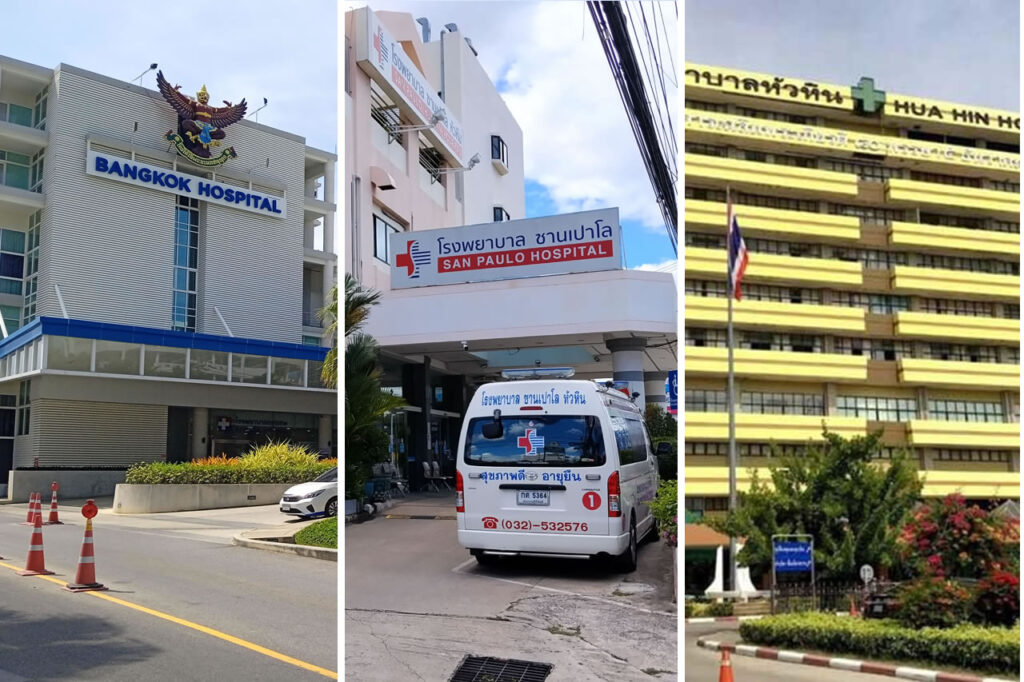
Thailand has both public and private hospitals, and both can provide excellent medical care. The main differences are often found in cost, convenience, waiting times, communication, and how insurance and payment are handled.
Understanding this distinction matters. Many insurance frustrations don’t come from poor medical care, but from mismatched expectations about where treatment will take place and how the bill will be settled.
Public Hospitals in Thailand
Public hospitals are government-run and serve the majority of Thai citizens. Medical standards can be very high, particularly at major teaching and specialist hospitals.
What to expect:
- Generally lower treatment costs
- Highly skilled doctors, including leading specialists
- Longer waiting times
- Busier facilities
- More limited English support in some departments
- More complex administrative processes
Insurance reality:
- Direct billing arrangements vary between hospitals and insurers
- You may need to pay first and claim reimbursement later
- Claims procedures should be confirmed with your insurer before non-emergency treatment
- Invoices, medical reports, and other documentation may be required for reimbursement
📌 Public hospitals can offer excellent medical care at considerably lower cost, particularly at major teaching hospitals. The trade-off is often convenience, waiting time, communication, and administrative simplicity.
Private Hospitals in Thailand
Private hospitals are where many expats choose to receive care, particularly when convenience, English-language support, and access to international-standard facilities are priorities.
What to expect:
- Shorter waiting times
- English-speaking doctors and staff at many facilities
- International patient departments at larger hospitals
- Modern facilities and streamlined processes
- Higher treatment costs
Insurance reality:
- Many insurers offer direct billing with participating private hospitals
- Coverage depends on your policy limits, benefits, and hospital network
- Admission can be smoother when the hospital and insurer have an established direct-billing arrangement
- Policy details matter more than insurer brand
📌 For many long-stay expats, private hospitals are the practical default. The important question is whether your insurance provides appropriate coverage at the hospitals you would realistically want to use.
Hospital Costs & Networks and Why They Matter
Private hospital costs vary enormously. For insurance purposes, it helps to think of hospitals broadly in terms of cost and the networks available under your policy:
- Premium private hospitals: Higher-cost facilities, often with extensive international services and strong reputations
- Mid-range private hospitals: Good private healthcare at more moderate prices
- Regional private hospitals: Often lower-cost facilities with fewer international services
Depending on the policy, an insurer may:
- Provide access to a broad hospital network
- Restrict or exclude certain higher-cost hospitals
- Apply co-payments or different conditions at particular facilities
- Require prior authorization for some treatments or admissions
📌 If you already know which hospitals you would prefer to use, check that they fit comfortably within your policy’s network and coverage limits before buying.
Direct Billing vs Reimbursement
One of the most important, and often overlooked, differences between insurance policies is how claims are handled.
Direct billing:
- The hospital seeks payment directly from the insurer for covered treatment
- You may still need to pay deductibles, co-payments, or non-covered expenses
- Can substantially reduce the amount you need to pay upfront
- Usually requires the hospital and insurer to have an appropriate billing arrangement
Reimbursement:
- You pay the medical bill yourself
- Submit the required documents to your insurer
- Receive reimbursement for eligible expenses according to your policy
📌 Neither system is inherently better, but the difference becomes particularly important with expensive inpatient treatment. Many expats value direct billing because it can significantly reduce the amount they need to fund themselves while a claim is being processed.
What Health Insurance in Thailand Actually Costs
By now, you should have a realistic picture of what kind of coverage makes sense for your situation. The next natural question is cost.
Health insurance premiums in Thailand vary considerably, so the figures below should be treated as ballpark ranges for planning purposes, not insurance quotes.

Typical Annual Premiums (Ballpark Ranges)
Age is one of the biggest factors affecting premiums, but the level of coverage, deductible, hospital network, medical history, and geographic coverage can all make a substantial difference.
| Age | Budget (IPD only) | Mid-Range (IPD + limited OPD) | Comprehensive |
|---|---|---|---|
| 35 | ฿25,000–฿40,000 | ฿40,000–฿60,000 | ฿60,000–฿90,000 |
| 50 | ฿40,000–฿65,000 | ฿60,000–฿90,000 | ฿90,000–฿140,000 |
| 60 | ฿60,000–฿90,000 | ฿90,000–฿130,000 | ฿130,000–฿180,000 |
| 70 | ฿80,000–฿120,000 | ฿120,000–฿170,000 | ฿170,000+ |
📌 These figures are for general orientation only. Actual premiums can vary substantially depending on insurer, medical history, benefits, deductible, hospital access, geographic coverage, and underwriting.
What Drives the Price Up (and Down)
The main factors affecting premiums include:
- Age
- Level of medical coverage
- Geographic coverage
- Hospital network
- OPD benefits
- Deductible or excess
- Underwriting and medical history
There are also sensible ways to reduce premiums without necessarily compromising the protection that matters most.
Common options include:
- Choosing inpatient-only coverage
- Adding a deductible
- Limiting geographic coverage if you primarily need treatment in Thailand
- Avoiding additional benefits you are unlikely to use
📌 Reducing unnecessary benefits can make sense. Sacrificing long-term renewability simply to achieve a lower premium usually does not.
OPD Coverage vs Paying Routine Costs Yourself
Routine outpatient treatment can be relatively affordable in Thailand, particularly at local clinics and lower-cost private hospitals. Costs at premium hospitals and for specialist consultations can be considerably higher.
As a rough indication, routine costs may include:
- Doctor consultation: ฿800–฿1,500
- Basic medication: ฿300–฿800
These figures can vary considerably depending on the hospital, doctor, medication, tests, and treatment involved.
If you rarely need outpatient treatment and are comfortable paying routine medical expenses yourself, adding OPD coverage may not always be cost-effective.
📌 Whether OPD coverage is worth paying for depends on how often you use it, the hospitals you prefer, and how much additional premium the insurer charges.
Why Quotes Vary So Much
Two people of the same age can receive very different insurance quotes.
Differences can result from:
- Medical history and underwriting
- Coverage limits
- Geographic coverage
- Hospital network
- Deductibles
- OPD benefits
- Policy structure and renewal terms
This is why headline premiums should never be considered in isolation. A cheaper policy may simply provide less coverage, restrict hospital access, carry a higher deductible, or have less favorable conditions.
📌 The cheapest quote is only meaningful when you’re comparing policies with genuinely similar benefits and conditions.
Health Insurance by Age Group
(What Changes After 50)
Age has a major influence on health insurance in Thailand, but there is no single age at which your options suddenly disappear.
What generally happens instead is that premiums rise, entry-age restrictions become more relevant, and medical underwriting can make obtaining or changing coverage increasingly difficult.
If You’re Between 50 and 70
For many long-term expats, this is an important period for thinking beyond the premium you are paying today.
As you get older:
- Premiums generally increase
- Some insurers impose maximum entry ages for new applicants
- Medical history becomes increasingly important during underwriting
- Pre-existing conditions may result in exclusions, premium loading, or declined applications
- Moving to another insurer later can become more difficult
This is why the long-term structure of a policy matters.
📌 Waiting doesn’t just mean paying a higher premium later. A medical condition diagnosed in the meantime may also affect what coverage is available to you.
Why Age 60 Is Worth Paying Attention To
There is no universal insurance cut-off at 60, but it is an important age to have your long-term coverage strategy in place.
Depending on the insurer and policy, applicants in their 60s may encounter:
- More detailed medical underwriting
- Requests for additional medical information or examinations
- Higher premiums
- Fewer plans open to new applicants
- Greater consequences from existing or newly diagnosed medical conditions
📌 Turning 60 does not suddenly make you difficult to insure. The significance is that from this stage onward, age, health history, and insurer entry rules increasingly work together to narrow your options.
What to Prioritize After 50
Pay particular attention to:
- Maximum entry age
- How long the policy can be renewed
- Conditions under which the insurer can change or terminate coverage
- How premiums are likely to develop as you age
- Coverage limits and hospital access
- Deductibles and benefits you genuinely need
- Any insurance requirements attached to your visa, if applicable
The objective isn’t necessarily to find the cheapest policy today. It is to find coverage you can realistically afford and maintain as you get older.
A Practical Way to Think About Age
There are no universal cut-off points, but the priorities gradually change:
- In your 50s: This is a good time to think seriously about the policy you want to carry into later life.
- In your 60s: Pay particularly close attention to entry-age limits, underwriting, renewability, and whether changing insurer later is realistic.
- 70+: Options can be considerably more limited, but don’t assume you are uninsurable. Availability depends on the insurer, your health, and the product.
📌 For representative premium ranges at ages 60, 65, 70 and 75, along with a closer look at entry ages, renewability, deductibles and obtaining new coverage after 70, see my guide to health insurance in Thailand over 60.
Why Changing Insurer Can Become Harder Later
One issue that is easy to overlook is that buying a new policy usually means going through medical underwriting again.
If your health has changed since you bought your existing insurance, a new insurer may:
- Exclude a newly diagnosed condition
- Charge a higher premium
- Apply different terms
- Decline the application altogether
Your existing insurer may continue covering conditions that developed while you were insured, depending on the policy terms. That can make a well-chosen renewable policy increasingly valuable over time.
📌 Don’t judge long-term health insurance solely by whether you could find something cheaper today. Consider whether you would still be able to replace the policy five or ten years from now.
What Changes After 70
For new applicants, you may find:
- Fewer insurers and plans accepting applications
- More detailed medical underwriting
- Higher premiums
- More exclusions or premium loading for existing medical conditions
- Greater use of deductibles to keep premiums manageable
- Fewer practical alternatives if an application is declined
📌 Being over 70 does not automatically make you uninsurable. Your options depend on the insurer, the policy, your age, and your medical history.
What to Prioritize After 70
At this stage, the long-term conditions of a policy become particularly important.
Pay close attention to:
- Maximum entry age
- How long the policy can be renewed
- Coverage for major inpatient treatment
- Hospital network
- Deductibles and co-payments
- Exclusions and other underwriting conditions
- Long-term affordability
- Any insurance requirements attached to your visa, if applicable
📌 The objective is not necessarily to find perfect coverage. It is to find suitable protection that you can realistically maintain.
Protect Coverage You Already Have
If you already have suitable health insurance when you reach your 70s, think carefully before cancelling or replacing it.
A new application may be assessed according to your current age and medical history, which means conditions that developed after you took out your existing policy could be excluded or affect whether another insurer will accept you at all.
This doesn’t mean you should never change insurers. It means the consequences of changing should be understood before cancelling existing coverage.
📌 Never cancel an existing policy until you understand the terms of the replacement and have confirmation that the new coverage is in place.
When a Broker Can Be Particularly Useful
For older applicants, using an experienced broker can be particularly helpful because the available market is smaller and underwriting becomes more important.
A broker can help identify which insurers are still accepting applicants in your age group, compare the terms being offered, and avoid spending time applying for policies that are unlikely to be suitable.
If you’re in your 60s or 70s, entry age, medical underwriting, and long-term renewability become increasingly important. If you’d rather get help assessing the options still available to you, you can skip ahead to the broker I recommend.
→ Skip ahead to my recommended broker
Health Insurance for Special Situations
Not every expat in Thailand fits the same profile. If your circumstances are more specific, the details of the policy can become particularly important.
Digital Nomads & Frequent Travelers
If you move between countries or don’t plan to stay in Thailand continuously, flexibility and geographic coverage may matter more than choosing a policy designed primarily around healthcare in Thailand.
What to prioritize:
- Regional or worldwide coverage
- Portability between countries
- Emergency coverage that works across borders
- Clear rules around residency and travel status
- Renewability if you plan to remain abroad long-term
Some products marketed specifically to digital nomads function more like extended travel insurance than comprehensive long-term health insurance.
Check carefully for:
- Maximum trip or coverage duration
- Residency requirements
- Treatment of pre-existing conditions
- Whether routine healthcare is covered
- Renewal conditions
- What happens if you settle permanently in one country
📌 If you expect to live internationally for several years, distinguish between travel-style coverage and health insurance designed to provide long-term medical protection.
Families & Couples Living in Thailand
Families often have different insurance priorities from solo expats.
What tends to matter more for families:
- Pediatric care
- Maternity coverage and waiting periods
- Family discounts or coordinated coverage, where available
- Hospital access for childbirth and emergencies
- Coverage limits for individual family members
When children are involved, convenient hospital access and continuity of coverage can become particularly important.
📌 If maternity coverage is important, arrange it well before pregnancy. Waiting periods and eligibility rules can make timing particularly important.
Pre-Existing Conditions
Having a pre-existing condition does not automatically mean you cannot obtain health insurance, but it can significantly affect the terms an insurer offers.
Possible underwriting outcomes include:
- Full acceptance
- Exclusion of a particular condition
- Higher premiums or premium loading
- Additional restrictions or conditions
- Declined coverage
Different insurers can assess the same medical history differently, so one insurer’s decision does not necessarily represent the entire market.
Always disclose your medical history accurately. Non-disclosure can create serious problems when you later make a claim.
Waiting can also make obtaining coverage harder if your health changes before you apply.
📌 A broker can be particularly useful with pre-existing conditions because underwriting approaches differ between insurers and the resulting exclusions, loadings, or terms may vary.
Mental Health Coverage
Mental health benefits vary considerably between health insurance policies.
Depending on the policy, mental health treatment:
- May be excluded
- May be available under more comprehensive plans
- May have separate annual or treatment limits
- May distinguish between inpatient and outpatient psychiatric treatment
The definitions also matter. Coverage for psychiatric treatment, counselling, medication, and other mental health services may not all be treated in the same way.
📌 If mental health coverage matters to you, check the policy wording explicitly. Never assume it is included.
Add-Ons Explained: What’s Worth Paying For
(And What You May Not Need)
Once the core health insurance policy is right, you can decide whether additional benefits are worth the extra premium.
There is no reason to automatically buy every available option. The useful question is whether an add-on covers an expense you genuinely want to insure rather than pay yourself.
Outpatient Coverage (OPD)
OPD covers eligible medical treatment that doesn’t require hospital admission, such as doctor consultations, diagnostic tests, and medication.
OPD may make sense if:
- You visit doctors or specialists regularly
- You expect frequent diagnostic tests or outpatient treatment
- You prefer not to pay routine private healthcare costs yourself
- The additional premium represents reasonable value for the benefits provided
You may prefer to self-fund OPD if:
- You rarely need outpatient treatment
- You’re comfortable paying routine medical expenses yourself
- The additional premium is high compared with your likely usage
- Your priority is protecting yourself against larger inpatient expenses
📌 OPD can be valuable, but it isn’t automatically necessary. Compare the additional premium with the benefits and limits you are actually receiving.
Dental Coverage
Dental benefits vary considerably between policies and may cover services such as:
- Routine examinations and cleaning
- Fillings
- Extractions
- More substantial dental treatment, depending on the policy
Before adding dental coverage, check the annual benefit limit, any waiting period, co-payment, and which treatments are included.
Routine dental treatment can be reasonably affordable in Thailand, particularly outside premium international facilities, so some expats prefer to pay these expenses themselves.
📌 Don’t judge dental coverage simply by whether it is inexpensive to add. Compare the additional premium with the actual annual benefit and treatments covered.
Vision Coverage
Vision benefits may include:
- Eye examinations
- Prescription glasses
- Contact lenses
Coverage limits are often separate from the main medical benefits, so check how much the policy will actually reimburse and how frequently the benefit can be used.
📌 For someone with predictable vision expenses, the additional coverage may be useful. Others may find it simpler to pay these costs themselves.
Medical Evacuation
Medical evacuation can be much more significant than routine add-ons such as dental or vision coverage.
Depending on the policy, it may cover medically necessary transportation when appropriate treatment isn’t available locally.
This can be particularly relevant if you:
- Live in a remote part of Thailand
- Spend significant time away from major medical centers
- Travel frequently around Southeast Asia
- Have regional or worldwide health coverage
However, evacuation benefits vary considerably. Some comprehensive health insurance policies already include them.
📌 Check what your core policy already provides before paying separately for evacuation coverage, including where you can be transported and under what circumstances.
Home-Country and International Coverage
Some health insurance policies provide treatment outside Thailand, while others allow you to choose broader regional or worldwide coverage.
This can be useful if:
- You regularly spend time in your home country
- You travel extensively
- You want the option of receiving treatment outside Thailand
- You may relocate to another country in the future
Broader geographic coverage generally comes at an additional cost, and some policies apply special conditions or exclusions in particularly expensive healthcare markets.
📌 Choose geographic coverage according to where you realistically expect to receive treatment, rather than paying for worldwide protection you are unlikely to use.
Maternity Coverage
Maternity requires more forward planning than most optional benefits.
Depending on the policy, maternity benefits may cover some combination of:
- Prenatal care
- Childbirth
- Pregnancy complications
- Postnatal care
- Newborn care
Waiting periods, benefit limits, eligibility conditions, and definitions vary considerably between insurers.
If maternity coverage is important, check it before pregnancy and well before you expect to use the benefit. Once someone is already pregnant, obtaining new insurance coverage for that pregnancy will generally be difficult or unavailable.
📌 Maternity is not an add-on to leave until you need it. Check the waiting period and coverage conditions well in advance.
Avoid Paying for Benefits You Don’t Need
It is easy to build a policy around every possible expense rather than the financial risks you actually want insurance to protect you against.
Before adding an optional benefit, ask:
- How much does it add to the annual premium?
- What is the maximum benefit?
- Are there waiting periods or co-payments?
- How likely am I to use it?
- Could I comfortably pay this expense myself?
- Is the benefit already included elsewhere in the policy?
📌 There is also an important reason not to assume you can simply add coverage later. Depending on the benefit and insurer, changing your policy may involve waiting periods, underwriting, restrictions, or may not be available at all.
How to Choose the Right Health Insurance Plan
(Step-by-Step)
Once you understand the main factors that affect health insurance in Thailand, choosing a suitable policy becomes much more manageable. The goal isn’t to find the theoretical “best” plan. It’s to choose coverage that fits how you actually live, use healthcare, and plan to stay in Thailand over the long term.

Step 1: Establish Whether Your Visa Has an Insurance Requirement
Before comparing policies, establish whether your visa requires health insurance at all.
If it does, identify the exact requirements that apply, including:
- Minimum coverage levels
- Duration of coverage
- Required certificates or documentation
- Any conditions concerning Thai or foreign insurance policies
If your visa does not impose a health insurance requirement, you can choose primarily according to your healthcare needs, budget, and long-term plans.
📌 If insurance is required for your visa, establish the current requirements first. A good medical policy is not necessarily a visa-compliant one.
Step 2: Check Entry Age and Long-Term Renewability
Your current age matters, but so does the age at which the insurer will continue covering you.
Before considering a policy, check:
- Maximum entry age
- Maximum renewal age, if any
- Conditions governing renewal
- How medical underwriting applies when you first join
- Whether benefits or conditions change as you get older
If you’re approaching or already in your 60s, these questions become particularly important. Changing insurer later may mean going through medical underwriting again at an older age and with a different medical history.
📌 Don’t evaluate a policy only on whether it works for you today. Consider whether it can still work for you ten or twenty years from now.
Step 3: Decide How You’ll Actually Use Healthcare
Think realistically about how and where you expect to receive medical care.
Ask yourself:
- Do I mainly want protection against expensive hospital admissions?
- Do I use doctors and clinics regularly?
- Which private hospitals would I realistically want to use?
- Am I comfortable paying routine medical expenses myself?
- Do I need coverage outside Thailand?
Your answers help determine the structure of coverage you need.
For example:
- Inpatient-only coverage: Focuses insurance on more expensive hospital admissions while you pay routine outpatient costs yourself
- OPD coverage: Can be useful if you regularly use outpatient medical services
- Higher deductibles: Can reduce premiums if you’re comfortable funding smaller expenses yourself
- Regional or worldwide coverage: May make sense if you travel frequently or expect treatment outside Thailand
📌 More coverage isn’t automatically better. The aim is to insure the risks you don’t comfortably want to carry yourself.
Step 4: Confirm Hospital Access
A high coverage limit means much less if the policy doesn’t work conveniently at the hospitals you expect to use.
Before choosing, check:
- Which hospitals are within the policy network
- Where direct billing is available
- Whether higher-cost private hospitals carry restrictions or co-payments
- What happens if you receive treatment outside the direct-billing network
- Whether prior authorization is required for certain treatments or admissions
If you already have a preferred hospital, check that hospital specifically rather than assuming it will be covered in the way you expect.
📌 If you have preferred hospitals, understand exactly how the policy works there before you buy it.
Step 5: Think Beyond the First Year
Health insurance is a long-term commitment, particularly if you expect to remain in Thailand into retirement.
Pay close attention to:
- Maximum renewal age
- Conditions governing renewal
- How premiums are likely to change as you age
- Whether benefits or conditions change at certain ages
- What happens to conditions that develop while you are insured
- Whether you could realistically switch to another insurer later
A policy with an attractive first-year premium may not be the best choice if it becomes difficult to maintain or replace later.
📌 Long-term affordability and renewability deserve as much attention as the price you pay today.
Step 6: Compare Like With Like
Once you know what you actually need, compare a manageable number of suitable policies rather than collecting quotes that provide completely different levels of protection.
Compare the important details side by side:
- Annual coverage limits
- Inpatient and outpatient benefits
- Hospital network
- Deductibles and co-payments
- Exclusions
- Geographic coverage
- Renewal conditions
- Premium
Only then does comparing price become particularly meaningful.
An experienced broker can make this stage considerably easier by narrowing the market to policies that fit the criteria you’ve already established and explaining the differences between them.
📌 A lower quote is only genuinely cheaper when the policies being compared provide broadly equivalent coverage and conditions.
If you now have a clearer idea of the coverage you need but would rather have an experienced broker narrow down the suitable options, you can skip ahead to the broker I recommend and why I chose them.
→ Skip ahead to my recommended broker
Common Health Insurance Mistakes Expats Make in Thailand
📍 Many health insurance problems can be traced back to decisions made when the policy was first chosen. Understanding the common pitfalls can help you avoid them.
Mistake 1: Choosing Based on Price Alone
A low premium can be attractive, but it doesn’t tell you whether the policy provides the protection you actually need.
A cheaper policy may come with:
- Lower coverage limits
- Restricted hospital networks
- Higher deductibles or co-payments
- Important benefits being excluded
- Less favorable renewal conditions
📌 Compare what the premium actually buys, not just the premium itself.
Mistake 2: Using Travel Insurance for Long-Term Living
Travel insurance and long-term health insurance serve different purposes.
Potential limitations of relying on travel insurance include:
- Maximum trip-duration restrictions
- Residency or eligibility conditions
- Limited coverage for ongoing treatment
- Restrictions around pre-existing conditions
- Lack of long-term continuity and renewability
📌 Travel insurance is designed around temporary travel. Long-term residents should consider whether they need coverage designed for ongoing healthcare.
Mistake 3: Waiting Too Long to Apply
Waiting can reduce your options, particularly as you move into your 60s and beyond.
Two things can change while you wait:
- Your age may place some policies outside their new-entry limits
- Your health may change, affecting underwriting, exclusions, premiums, or eligibility
This is why applying later isn’t simply a question of paying a higher premium. You may no longer be offered the same terms or policies that were available to you earlier.
📌 If you’re approaching or already in your 60s, entry-age limits and future insurability deserve particular attention.
Mistake 4: Not Disclosing Pre-Existing Conditions Properly
Accurate medical disclosure is essential when applying for health insurance.
Failing to disclose relevant medical history can result in:
- A claim being denied
- Coverage for a related condition being refused
- The policy being cancelled or otherwise affected
- Problems obtaining replacement coverage later
Having a pre-existing condition does not necessarily mean an insurer will reject your application. Depending on the insurer and condition, you may instead be offered coverage with an exclusion, premium loading, or other underwriting terms.
📌 Disclosing a condition may affect the terms you are offered. Failing to disclose relevant medical history can jeopardize a later claim or the policy itself.
Mistake 5: Ignoring Hospital Networks
Many people concentrate on the insurer and coverage limit without checking where they can actually use the policy.
This can result in:
- Finding that your preferred hospital isn’t in the network
- Higher out-of-pocket costs
- Having to pay first and claim reimbursement
- Needing to use a different hospital than expected
This matters particularly if you already have a preferred private hospital or want access to higher-cost facilities.
📌 Always confirm hospital access, not just coverage limits.
Mistake 6: Assuming OPD Is Always Necessary
Outpatient coverage is convenient, but it isn’t essential for everyone.
OPD may not make sense if:
- You rarely visit doctors
- You’re comfortable paying routine medical expenses yourself
- The additional premium is high compared with your likely outpatient costs
- Keeping the premium lower is a priority
For some expats, comprehensive inpatient coverage combined with paying routine outpatient expenses themselves provides a better balance.
📌 OPD is a lifestyle choice, not a default requirement.
Mistake 7: Buying Without Thinking About Renewal
A policy that looks attractive today may be much less suitable if you cannot maintain it later in life.
Before choosing a policy, check:
- Maximum renewal age
- Conditions under which renewal is guaranteed
- How premiums are likely to change with age
- Whether benefits or conditions change at certain ages
- What happens to medical conditions that develop while you are insured
This becomes increasingly important as you get older because changing insurer later may mean going through medical underwriting again.
📌 Renewability and long-term affordability deserve as much attention as the first-year premium.
Why Using a Health Insurance Broker Can Make Sense in Thailand
By this point, one thing should be clear: health insurance in Thailand isn’t just about choosing an insurance company. Age, medical history, hospital access, renewability, policy conditions, and sometimes visa requirements can all affect which plan is actually suitable.
This is where a good insurance broker can add value, particularly when you need to compare policies from different insurers or your circumstances make the decision more complicated.
What a Good Health Insurance Broker Actually Does
A broker doesn’t simply provide insurance quotes. Their role is to help you understand and compare the options available across the insurers they work with.
A good broker can help by:
- Comparing suitable policies from different insurers
- Explaining benefits, exclusions, deductibles, and co-payments
- Checking entry ages and long-term renewability
- Comparing hospital networks and direct-billing arrangements
- Checking any insurance requirements attached to your visa, where applicable
- Helping with applications and required documentation
- Providing ongoing assistance, depending on the broker and service offered
An established broker also sees how different insurers and policies perform across many clients. This can provide practical insight into underwriting, administration, claims handling, hospital networks, and renewal issues that is difficult to gain from policy documents alone.
📌 The value of a broker isn’t simply access to more quotes. It’s having someone who understands how the policies work in practice and can explain the differences.
When a Broker Can Be Particularly Useful
You don’t necessarily need a broker to buy health insurance, but professional help can become particularly valuable when your situation is less straightforward.
A broker can be particularly useful if:
- You’re approaching or already in your 60s
- You have pre-existing medical conditions
- Your visa has specific health insurance requirements
- You’re comparing policies from several insurers
- Long-term renewability is particularly important
- You need help understanding underwriting or policy conditions
- You value having a point of contact in Thailand
📌 In these situations, the challenge is often not finding a policy. It is understanding which policy offers the most appropriate balance of coverage, conditions, affordability, and long-term security.
How to Work With a Broker and Stay in Control
Using a broker doesn’t mean handing over the decision. You should still understand what you are buying and why it has been recommended.
A good broker should:
- Ask about your age, health, lifestyle, budget, and healthcare priorities
- Explain why particular policies may or may not suit you
- Clearly explain exclusions, deductibles, and other important conditions
- Discuss long-term renewability and affordability
- Give you enough information to compare realistic alternatives
- Allow you to make the final decision without unnecessary pressure
Red flags to watch for include:
- Pushing a particular policy without explaining why
- Avoiding questions about exclusions or renewability
- Focusing almost entirely on the premium
- Rushing you to make a decision
- Being unwilling to explain alternatives or trade-offs
📌 A good broker should help you understand the trade-offs well enough to make your own informed decision.
The Point of This Guide
The purpose of this guide isn’t to turn you into an insurance expert. It’s to give you enough understanding to ask the right questions, recognize the important trade-offs, and make an informed decision.
And if you decide to use a broker, you should now be in a much better position to evaluate their advice rather than simply accept it.
Why I Recommend AA Insurance Brokers
After researching health insurance for foreigners in Thailand myself, I came to the conclusion that using an experienced broker makes sense for many long-term expats. There are simply too many variables, from age and medical underwriting to hospital networks, renewability, and visa requirements, to judge a policy on price alone.
I also looked at more than one broker before deciding who I would be comfortable recommending through Thrive in Thailand. AA Insurance Brokers was the best fit for what I was looking for.
What particularly appealed to me was the combination of experience with expats, access to policies from multiple insurers, and having an established physical presence here in Thailand. AA also has an office in Hua Hin, where I live, which gives the service a more tangible, local dimension than dealing exclusively with an online comparison platform.

My subsequent conversations with AA reinforced that decision. Their approach to insurance is very similar to the philosophy behind this guide: look beyond the cheapest first-year premium and consider whether a policy remains suitable over the longer term. Age, medical history, underwriting, renewability, and future options all form part of that assessment.
Speak to AA About Your Health Insurance Options
If you’ve worked through this guide and would like professional help comparing the options available to you, AA Insurance Brokers is the broker I recommend starting with.
You can explain your circumstances, ask them what policies they consider suitable, and then compare the recommendations using the principles covered throughout this guide.
What I Like About AA Insurance Brokers
AA Insurance Brokers has been operating in Thailand for more than 20 years and is a broker rather than an insurance company itself. That distinction is important.
Instead of being limited to the products of a single insurer, a broker can look across the insurers and policies they work with and help identify options that suit your circumstances.
There is another advantage that is harder to get from comparison tables or policy brochures. AA deals with insurers through underwriting, claims, renewals, and day-to-day servicing, giving its team practical experience of how different insurers perform after a policy has been purchased.

For long-term expats, I particularly value that AA offers:
- ✅ More than 20 years of experience in Thailand, with a strong focus on expat clients
- ✅ Access to health insurance from multiple insurers
- ✅ Help comparing coverage, exclusions, deductibles, and renewal conditions
- ✅ Guidance where age, medical history, underwriting, or visa requirements complicate the decision
- ✅ Ongoing support with claims, renewals, and dealing with insurers after the policy has been arranged
- ✅ A multilingual team
- ✅ Physical offices in Bangkok, Phuket, Pattaya, Hua Hin, and Samut Prakan
- ✅ A human point of contact rather than relying entirely on an online comparison system
📍 For me, that last point matters. Health insurance is something you may depend on years after buying the policy, so I prefer dealing with a company that has an established presence in Thailand.
Why I Chose to Partner With AA
I want to be transparent about the relationship.
Thrive in Thailand is an affiliate partner of AA Insurance Brokers. If you arrange insurance through my referral link and subsequently purchase a policy, I may receive a commission at no additional cost to you.
Importantly, my decision to recommend AA came before the affiliate partnership. I had already researched the market, contacted different brokers, and concluded that AA was the broker I felt most comfortable recommending. I subsequently approached them about working together.
That is also why I’m selective about partnerships. I don’t want to recommend a financial or insurance service simply because an affiliate program is available. The service has to be one I would be comfortable using or recommending independently.
What Does It Cost to Use AA?
AA Insurance Brokers is compensated by the insurance company when it arranges a policy. You do not pay AA an additional brokerage fee for using its service.
That means you can use their experience to help identify and compare suitable policies without adding a separate broker charge to the cost of arranging your health insurance.
📌 AA is a broker, not the insurer. Your insurance policy is ultimately issued by the insurance company you choose, with the coverage, exclusions, premiums, and other conditions set out in that policy.
What to Have Ready When You Contact AA
You don’t need to know exactly which policy you want before speaking with a broker. In fact, that’s largely the point of asking for help.
It does help to provide a clear picture of your circumstances.
Have the following information ready:
- Your age
- Your medical history and any pre-existing conditions
- Your visa type and whether it carries an insurance requirement
- Whether you want inpatient-only or outpatient coverage as well
- Any hospitals you particularly want access to
- Whether you need Thailand-only, regional, or worldwide coverage
- Your approximate insurance budget
📌 The more accurately you describe what you need, the easier it is to narrow the market to policies worth considering.
📍 Don’t choose a policy simply because it has been recommended to you, including through Thrive in Thailand. Make sure you understand the coverage, exclusions, deductibles, hospital access, renewal conditions, and long-term cost before making your decision.