
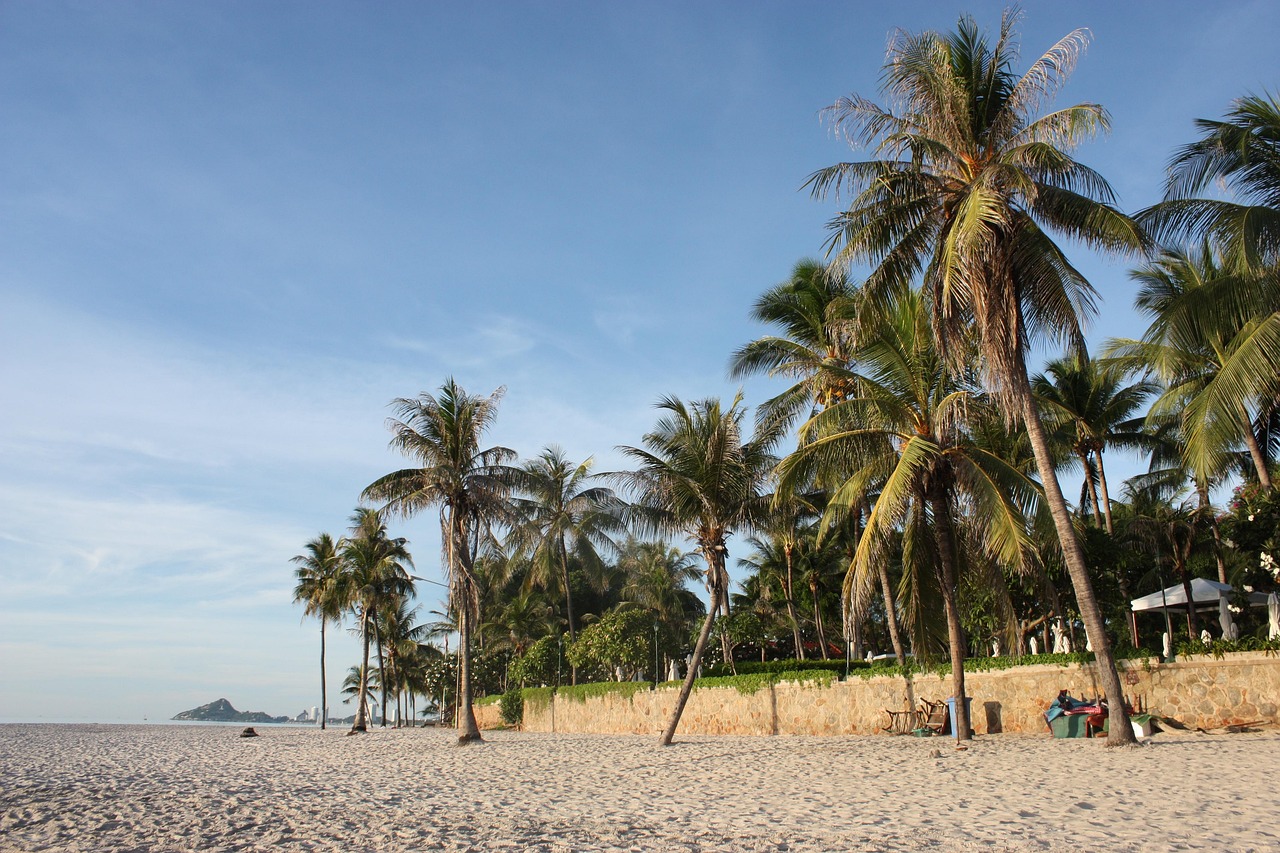
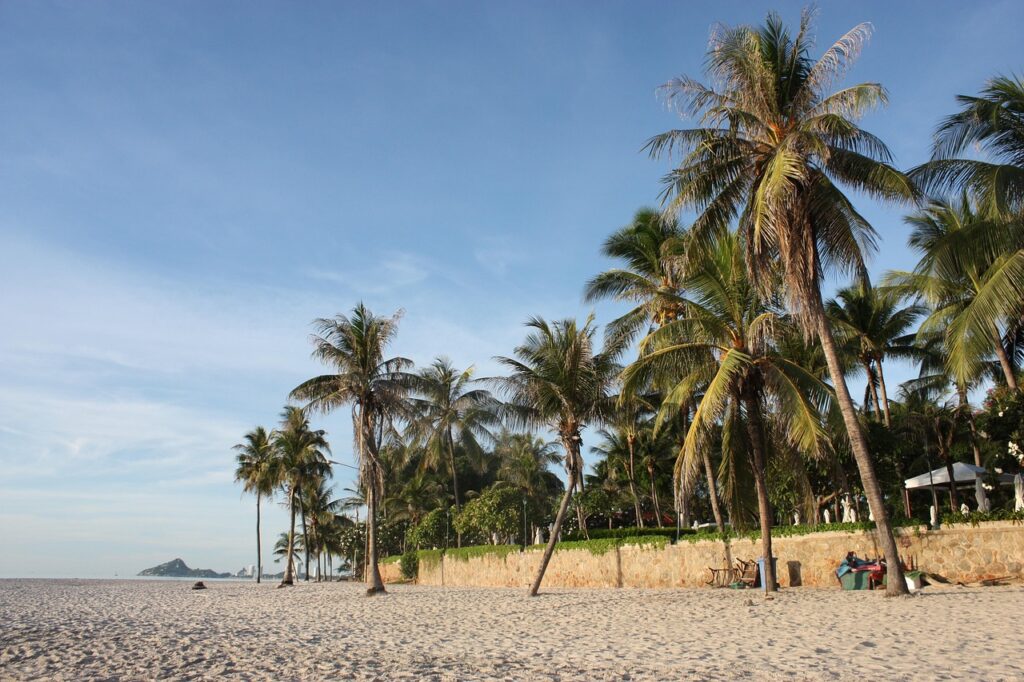
Hua Hin is one of those places in Thailand that often surprises people. At first glance, it may seem like a relaxed beach town with markets, golf courses, seafood restaurants, and an easy weekend vibe. Spend a little more time here and you start to understand why so many Thai families, retirees, and long-stay foreigners keep coming back or end up staying for good.
Located on the Gulf of Thailand in Prachuap Khiri Khan province, Hua Hin offers a mix that is surprisingly hard to find elsewhere. It feels more orderly and settled than many beach destinations, but still has enough atmosphere, convenience, and coastal charm to keep life interesting. You can spend your mornings walking along the beach, your afternoons in cafés, shopping malls, or hospitals that actually feel reassuringly modern, and your evenings at night markets or quiet seaside restaurants.
This guide is for travelers who want more than a quick list of things to do. It is also for people wondering what Hua Hin is really like beyond the postcards, including whether it might suit them for a longer stay, a seasonal base, or even retirement. We’ll look at the beaches, food, transport, and attractions, but also the lifestyle, practical realities, and nearby areas that help define what living here actually feels like.
📌 Affiliate Disclosure: Some links and booking tools on this page are affiliate partnerships. If you make a purchase through them, I may earn a commission at no additional cost to you. This helps support Thrive in Thailand and allows me to continue creating free content. Learn more in my Affiliate Disclosure.
Where Is Hua Hin?
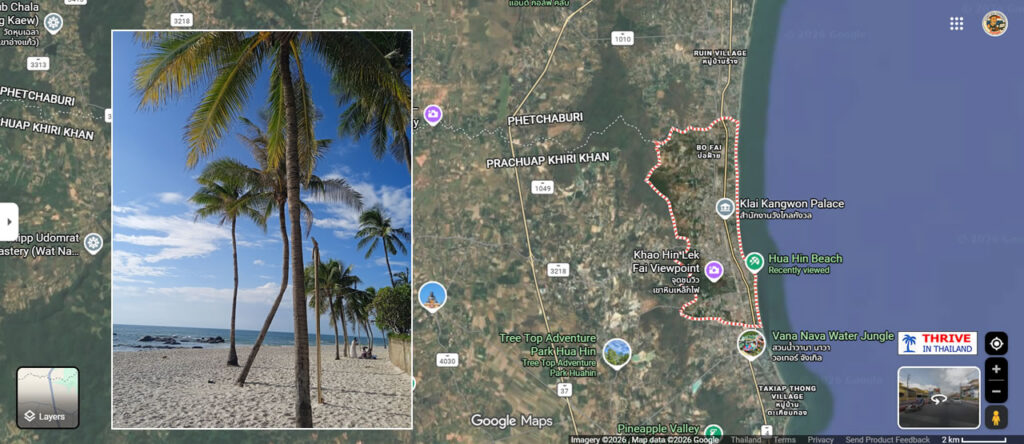
Hua Hin is located in Prachuap Khiri Khan province on the western side of the Gulf of Thailand, about 200 kilometers south of Bangkok. It’s one of the closest coastal destinations to the capital, which has long made it a popular weekend escape for Thai residents as well as a convenient base for longer stays.
The town stretches along a long, gently curving coastline, with its main center built around the beach, night markets, shopping areas, and residential neighborhoods. Unlike many beach destinations in Thailand, Hua Hin sits on the mainland, which means it’s easily accessible by road and rail without the need for ferries or domestic flights.
In practical terms, Hua Hin feels more structured and settled than many resort areas. You’ll find modern hospitals, shopping malls, golf courses, and well-developed residential zones, all set against a coastal backdrop that still maintains a relaxed and approachable atmosphere.
Hua Hin on the Map
Hua Hin developed as one of Thailand’s original seaside retreats, shaped by its close proximity to Bangkok and its role as an accessible coastal escape. This connection to the capital continues to influence the town, with steady infrastructure, reliable transport links, and a more established feel compared to newer resort destinations.
While Hua Hin itself is compact and easy to navigate, its position along the coastline places it within reach of several distinct areas. To the north lies Cha-am, offering a more local and less polished beach environment, while heading south leads to quieter and more scenic regions such as Pranburi and Sam Roi Yot, where the pace slows down and nature becomes more prominent.
This positioning makes Hua Hin more than just a standalone destination. It functions as a convenient and comfortable base, combining accessibility and infrastructure with the ability to explore less developed coastal areas without complicated travel.
📍 Click the image below to open Hua Hin’s location in Google Maps in a new tab.
Best Time to Visit
Hua Hin can be visited year-round, but the experience changes more than many people expect depending on the season. Unlike some parts of Thailand, it doesn’t follow a simple dry versus rainy pattern. Wind direction, sea conditions, and tides all play a role in how the beach actually feels.
November to February (Best Overall)
This is generally the most comfortable time to visit. Temperatures are slightly lower, humidity is manageable, and rainfall is minimal.
During these months, winds are typically coming from the north or northeast, blowing toward the coast. This creates steady onshore conditions, which can make the sea a bit choppy at times but still manageable for most beach activities. It’s also when Hua Hin feels most active, with a good balance of visitors and local life.
One thing to be aware of is the tide. Between November and March, high tides can significantly reduce the usable beach, especially in the mornings, leaving less space for walking or relaxing.
March to May (Hot Season with Strong Sea Breezes)
Temperatures rise noticeably, with April being the hottest month of the year. However, this period also brings consistent southerly sea breezes, especially in the afternoons.
These winds help make the heat more bearable and create good conditions for water sports. The sea is often more active during this time, and while it’s still very much a beach destination, swimming conditions can vary depending on the day.
June to August (Windy and Mixed Conditions)
This period marks the influence of the southwest monsoon, with winds blowing from the southwest toward the coast. These are typically onshore winds, which can make the sea rougher and less predictable.
Rain is still relatively moderate compared to other parts of Thailand, often coming in short bursts rather than all-day downpours. However, the combination of wind and occasional rain can make the beach less appealing on some days.
September to October (Wettest Period)
This is the least predictable time of year. Rainfall increases significantly, with October usually being the wettest month, and conditions can change quickly throughout the day.
Winds remain influenced by the southwest monsoon, and the sea is often choppier. That said, Hua Hin still tends to experience less extreme weather than Thailand’s west coast, and there are still plenty of dry periods between rain.
📍 NOTE
One of the things that sets Hua Hin apart is how much wind direction and tides shape the beach experience. From November to April, winds are generally more consistent and predictable, while the monsoon months bring more variability. Tides can also change the feel of the beach dramatically, with wide, walkable stretches at low tide and much narrower sections at high tide.
Not sure if it’s a good month to visit?
Use the Monsoon Weather Checker to choose a destination and month to see a clear Go / Iffy / Avoid signal from Thailand’s Meteorological Department climate averages (historical; no forecasts), plus typical rainfall, rainy days, temperature, and a one-line sea conditions note.
How to Get There
Hua Hin is one of the easiest beach destinations to reach from Bangkok, which is a big part of its long-standing popularity. Since it’s located on the mainland, you don’t need ferries or complicated transfers, and there are several reliable ways to get there depending on your budget and comfort level.
By Car or Taxi (Most Convenient)
Driving from Bangkok to Hua Hin typically takes around 3 to 4 hours, depending on traffic. While it’s sometimes possible to make the trip faster under ideal conditions, congestion, especially along Rama II Road, often adds delays.
The route is straightforward, mainly following Highway 35 (Rama II Road) and then Highway 4, making it an easy drive without complicated navigation.
Private taxis are widely available and usually cost THB 2,000–3,000, depending on pickup location and vehicle type. This is the most comfortable and flexible option, particularly if you’re traveling with luggage or arriving at Suvarnabhumi Airport.
By Bus or Minivan (Best Value)
Regular buses and minivans run from Bangkok to Hua Hin throughout the day.
- Buses depart from the Southern Bus Terminal (Sai Tai Mai)
- Minivans leave from multiple locations, including Ekkamai and Mo Chit
Travel time is typically around 3.5 to 4.5 hours, depending on traffic, route, and number of stops. While minivans are usually slightly faster, they can feel cramped, especially with luggage. Buses offer more space and are generally the more comfortable option for longer journeys.
📌 Prices usually range from THB 180 to 300.
By Train (Scenic but Slower)
Hua Hin is connected by rail from Bangkok, with departures from Krung Thep Aphiwat Central Terminal (Bangkok’s main station).
Travel time varies between 3.5 to 5 hours, depending on the service. Ticket prices typically range from THB 100 to 400 for standard seats, with cheaper third-class options available and more comfortable air-conditioned seats at the higher end.
While not the fastest option, the train offers a more relaxed and scenic journey. Trains now arrive at Hua Hin’s new elevated railway station, located just outside the town center, while the historic station remains nearby and is still worth a quick visit for its classic architecture.
By Air (Limited but Improving)
Hua Hin has a small regional airport, but flight options are still very limited. As of now, the only regular commercial route is operated by Thai AirAsia, connecting Hua Hin with Chiang Mai.
Flights run a few times per week, with a travel time of around 1 hour 15–20 minutes.
Prices typically range between THB 2,000 and 4,000 one-way, depending on timing and availability.
At present, this is the only direct domestic connection, and schedules can change, so it’s worth checking availability in advance. There are plans to expand routes in the future, including connections to destinations like Phuket, but for now most international travelers will still arrive in Bangkok and continue by road.
📌 If you’re arriving in Bangkok late at night or during peak traffic hours, a private transfer can save a lot of hassle. Weekend traffic between Bangkok and Hua Hin can be heavy, especially on Friday evenings and Sunday afternoons. If possible, aim to travel early in the morning or outside peak times to avoid long delays.
Book Your Tickets
Planning to visit Hua Hin? Click the image to compare available bus, train, ferry, and flight connections.
✅ View schedules, travel times, and current ticket prices in one place before you travel.
Getting Around Hua Hin
Getting around Hua Hin is relatively easy, especially compared to larger cities like Bangkok. The town is fairly spread out along the coastline, but the main areas are well connected and simple to navigate once you understand how local transport works.
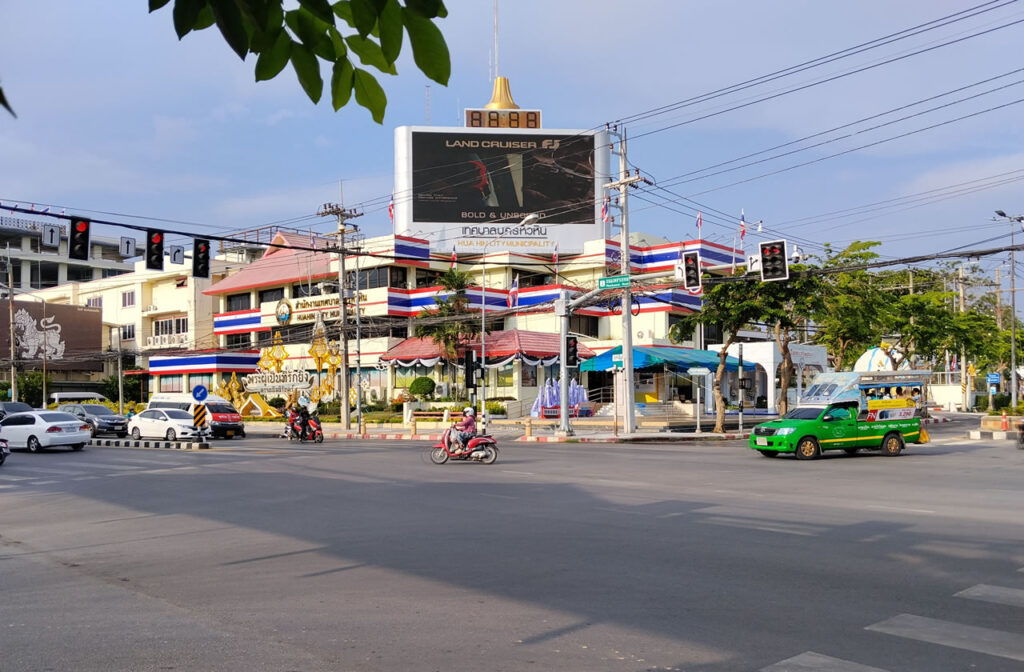
On Foot (More Walkable Than You Might Expect)
Hua Hin is surprisingly pedestrian-friendly compared to many other cities in Thailand. While you won’t be able to walk everywhere, certain parts of town are genuinely comfortable to explore on foot.
In the central areas around the beach, night markets, and main shopping zones, walking is easy and often the best way to get around, especially in the evenings. Sidewalks are generally in better condition than in many Thai cities, and you’re less likely to encounter the classic obstacles like broken pavement, parked motorbikes, or even trees growing right in the middle of the walkway, something you might be familiar with in places like Chiang Mai.
One of Hua Hin’s standout features is the infrastructure along Phetkasem Road, where pedestrian overpasses make it much easier and safer to cross the busy highway. These connect key areas such as Market Village and Bluport, which is a big advantage when moving between shopping, dining, and the beach.
In addition, there are pedestrian crossings with traffic lights, where vehicles are required to stop, something that’s not always a given elsewhere in Thailand. This makes crossing the main road far more manageable and adds to the overall sense that Hua Hin is designed with pedestrians in mind.
You’ll also notice that some walkways are well designed and maintained, with small details like pineapple-themed decorations that give the town a bit of character. That said, Hua Hin is more spread out than it looks on a map. Walking works well within specific areas, but for longer distances or exploring beyond the center, you’ll still need some form of transport.
Some people getting around by bicycle, particularly on quieter side streets and in residential areas. Hua Hin doesn’t have a proper beachfront promenade, and main roads like Phetkasem can be busy, so cycling isn’t always the most comfortable option. That said, the flat terrain and generally slower pace in certain areas still make it a practical choice for short distances if you know where to ride.
Grab, Bolt & Taxis (Most Practical Option)
Ride-hailing apps are the easiest and most reliable way to get around Hua Hin. Both Grab and Bolt are widely available, with good coverage across the main areas of town.
Prices are generally reasonable, with short rides typically costing around THB 60–150, depending on distance, time of day, and demand. In many cases, Bolt can be slightly cheaper, while Grab tends to have more consistent availability.
📌 Traditional taxis are less common than in Bangkok, and most don’t use meters, so app-based rides are usually the more straightforward and predictable option.
Tuk-Tuks (Short Distances)
Tuk-tuks are easy to find around tourist areas, markets, and hotels. They’re convenient for short trips but usually more expensive than Grab.
Fares are negotiated upfront, and short rides often start around THB 100–200. They’re useful when you just want a quick ride without waiting.
Songthaews (Local “Baht Bus”)
Hua Hin has a network of green songthaews (shared pickup trucks) that run along fixed routes, mainly along the main road and beachfront areas.
They are the cheapest option, typically costing around THB 10–30, but routes and schedules aren’t always obvious to visitors. Once you understand how they operate, they’re a simple and efficient way to get around locally.
Motorbike & Car Rentals (Best for Flexibility)
If you plan to explore beyond Hua Hin or stay longer, renting a motorbike or car gives you the most flexibility.
- Motorbike rentals: from THB 200–300 per day
- Car rentals: from THB 800–1,500 per day
Traffic in Hua Hin is manageable compared to larger cities, but you should only rent a motorbike if you’re confident riding in Thailand and have the proper license.
📌 Hua Hin is more spread out than it first appears. While the center feels compact, many hotels, beaches, and residential areas are located several kilometers apart. For short stays, Grab and tuk-tuks are usually enough, but for longer stays, having your own transport makes a noticeable difference.
Top Things to Do
Hua Hin isn’t a destination built around big-ticket attractions or bucket-list landmarks. What makes it appealing is the combination of small, everyday experiences that come together to create an easy and comfortable lifestyle.
You’ll find a mix of beach time, markets, cafés, short excursions, and low-key activities that are more about enjoying the environment than chasing highlights.
Walk the Beach (At the Right Time)
Hua Hin Beach is long, accessible, and easy to integrate into your daily schedule. It’s not the most dramatic beach in Thailand, but it’s one of the most usable.
The best time to enjoy it is during low tide, when the sand is wide, firm, and ideal for long walks. Early mornings are especially pleasant, with fewer people, softer light, and a quieter atmosphere.
📌 High tide can significantly reduce the beach in some areas, so timing makes a noticeable difference.
Explore the Night Markets
Night markets are a big part of Hua Hin’s rhythm. They’re less chaotic than in larger cities and feel more relaxed, making them easy to revisit multiple times.
- Hua Hin Night Market: classic street food, seafood, souvenirs
- Cicada Market: more curated, with crafts, art, and live performances
- Tamarind Market: food-focused, popular with both locals and expats
📌 Prices are reasonable, and the variety is good without being overwhelming.
Visit Wat Khao Takiab (Monkey Mountain)
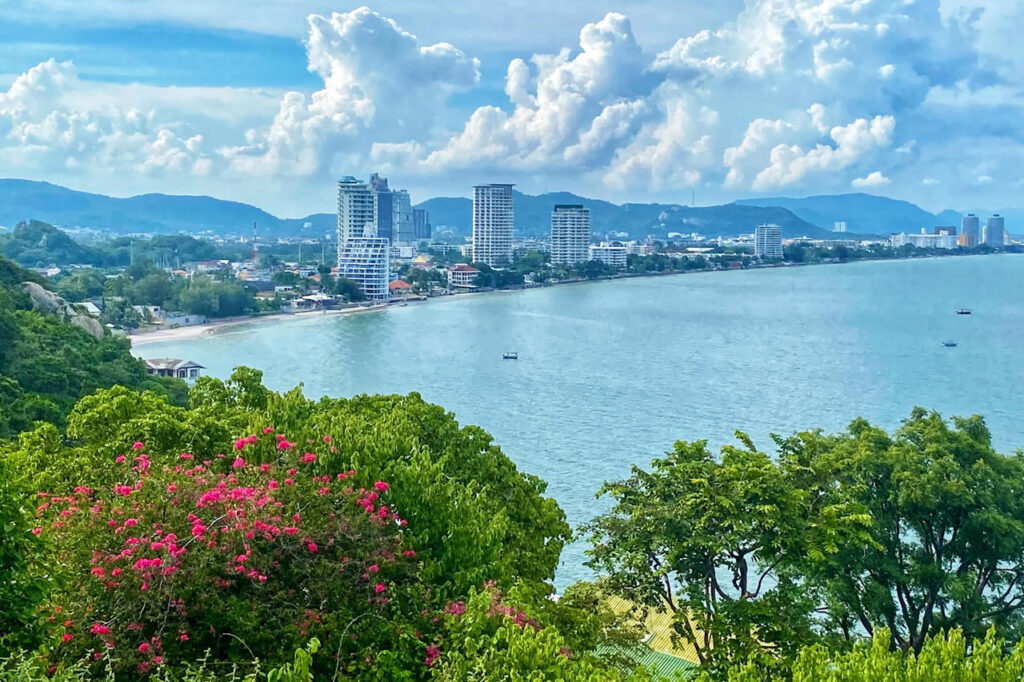
Located at the southern end of Hua Hin Beach, this small hill offers one of the best viewpoints in the area.
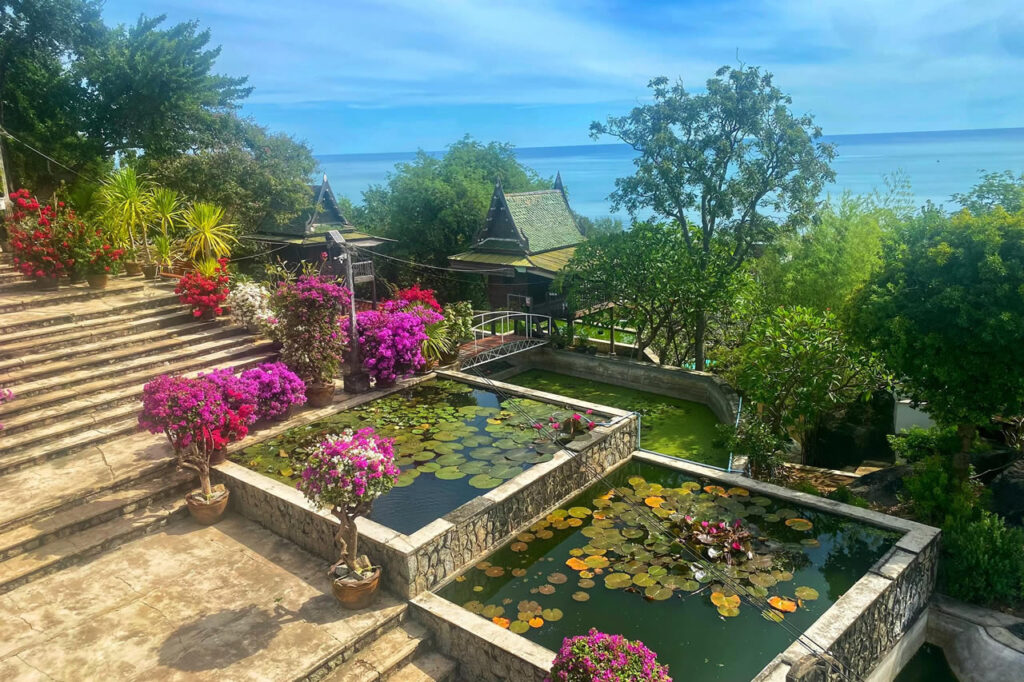
A short climb leads to temples and panoramic views over the coastline. The monkeys are part of the experience, but keep a bit of distance and avoid carrying visible food.
📌 It’s a quick visit, but worth doing, especially in the morning or late afternoon.
Spend Time in Cafés and Malls (Part of the Lifestyle)
Hua Hin has a well-developed café scene and two major shopping malls, Market Village and Bluport, which play a bigger role than you might expect.
These aren’t just shopping spots. They’re places where people spend time, work remotely, escape the heat, or meet friends. Especially during hotter months, they become part of the daily routine rather than just occasional stops.
Try Golf or Spa Experiences
Hua Hin is one of Thailand’s top destinations for golf, with several high-quality courses like Black Mountain and Banyan Golf Club.
Even if golf isn’t your thing, the spa and wellness scene is strong, ranging from simple Thai massages to more upscale resort-style experiences.
Take a Day Trip to Sam Roi Yot National Park
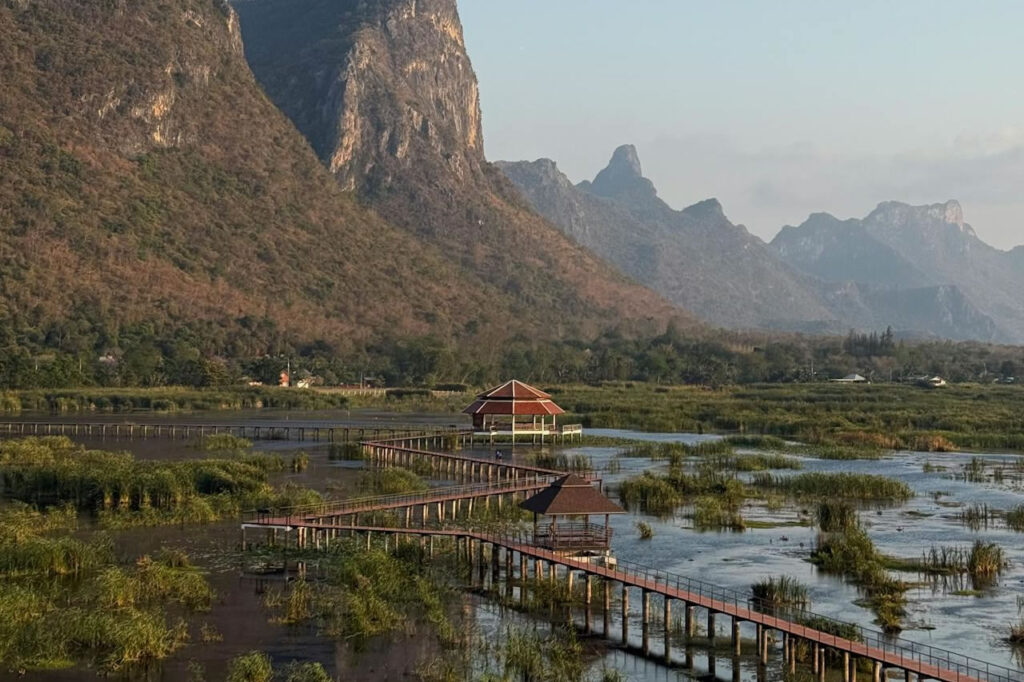
About an hour south of Hua Hin, Sam Roi Yot offers a completely different landscape.
Limestone mountains, quiet beaches, and the famous Phraya Nakhon Cave with its royal pavilion create one of the most unique natural settings in the region.
📌 Planning a visit?
My Khao Sam Roi Yot National Park Guide covers the main attractions, transport, entrance fees and suggested itineraries.
Explore Pranburi’s Coastline
Just south of Hua Hin, Pranburi feels noticeably quieter and less developed.
The beaches are more natural, and the mangrove forest boardwalk at Pak Nam Pran offers a different kind of coastal experience. It’s ideal if you want to escape the more built-up feel of Hua Hin for a few hours.
Visit Local Temples and Viewpoints
Beyond Khao Takiab, there are several smaller temples and viewpoints around Hua Hin that are worth visiting.
- Wat Huay Mongkol: known for its massive statue of Luang Phor Thuad
- Wat Khao Tao: quieter, with a more local feel and nice views
📌 These places aren’t major attractions, but they add depth to the area and give you a glimpse of everyday Thai life.
Enjoy Seafood by the Sea
Seafood is a big part of Hua Hin’s identity, and eating by the water is one of the simplest and most enjoyable things to do here.
From casual beachfront spots to slightly more polished restaurants near the fishing pier, the focus is on fresh ingredients and a relaxed atmosphere rather than fine dining.
Book Tours & Activities in Hua Hin
Hua Hin offers more than beaches, with nearby national parks, temples, vineyards, markets, and coastal attractions worth exploring. You can browse current tours, activities, day trips, prices, and availability below.
Best Beaches in Hua Hin
Hua Hin’s beaches are often misunderstood. If you’re expecting dramatic limestone cliffs or crystal-clear water like in southern Thailand, you might be underwhelmed. But if you’re looking for long, walkable stretches of sand, easy access, and beaches you can actually use every day, Hua Hin delivers.
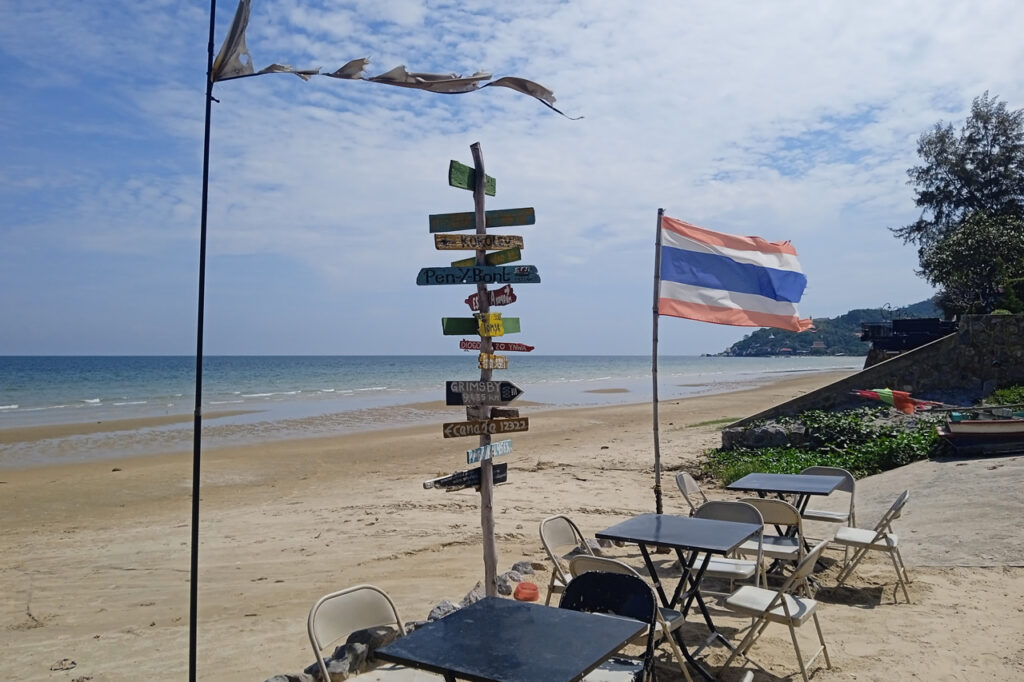
The coastline here is defined by functionality rather than spectacle. It’s a place where the beach becomes part of your everyday routine, not just something you visit once for photos.
Another important factor is the tide. Hua Hin’s beaches change significantly throughout the day. At low tide, the sand is wide, firm, and ideal for long walks. At high tide, some sections narrow considerably, which can affect how enjoyable the beach feels depending on timing.
Hua Hin Beach (Central Area)
This is the main beach running along the town center and is the most accessible for visitors.
- Long, continuous stretch of sand
- Easy access from hotels, cafés, and resorts
- Best for morning walks and casual beach time
The water is generally swimmable, but conditions vary depending on wind and season. It’s not the clearest water in Thailand, but it’s perfectly fine for a relaxed swim.
📌 This is the beach most people will use daily, especially if staying in central Hua Hin.
Khao Takiab Beach (Quieter, More Scenic)
Located just south of the main town, this area feels a bit more relaxed and less crowded.
- Wider and often cleaner than the central stretch
- Backed by hills and temples, giving it more character
- Fewer jet skis and less activity
📌 It’s a good option if you want a slightly quieter beach without going too far from town.
Suan Son Pradipat Beach (Local Feel, More Space)
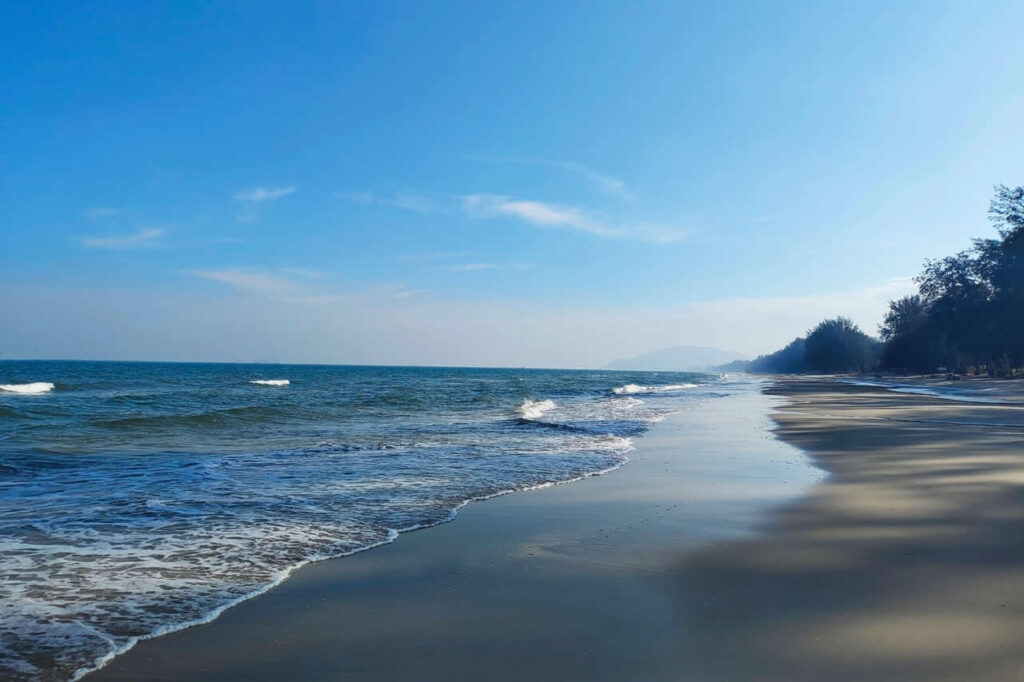
Further south, this beach is managed by the Thai military and has a noticeably different atmosphere.
- Lined with pine trees providing natural shade
- More spacious and less commercial
- Popular with Thai visitors, especially on weekends
📌 It feels more laid-back and less developed, making it a good choice if you prefer a more local environment.
Smaller Beaches & Hidden Spots (Khao Tao & Sai Noi)
Just south of Hua Hin, you’ll find a couple of smaller beaches that offer a different atmosphere compared to the main stretches.
Khao Tao Beach sits near a quiet fishing village and temple area, giving it a more local and slightly traditional feel. In recent years, it has also developed into a popular residential area, with a growing number of condos and housing developments attracting long-stay expats and retirees who prefer a quieter setting just outside Hua Hin.
A bit further along, Sai Noi Beach is one of the more scenic beaches in the area. It’s smaller and more enclosed, with hills on either side that create a more sheltered setting. The water is often a bit clearer here, and the overall atmosphere feels more relaxed and self-contained.
📌 These beaches aren’t as convenient for daily visits from central Hua Hin, but they’re well worth exploring if you’re staying longer or want to see a different side of the coastline.
Beyond Hua Hin: Pranburi & Sam Roi Yot
If you’re willing to go a bit further, the beaches become more scenic and less developed.
- Pranburi: quieter, more natural coastline with fewer crowds
- Sam Roi Yot: dramatic limestone landscapes and peaceful beaches
📌 These areas are better suited for day trips or short stays rather than daily access from Hua Hin.
What to Expect Overall
Hua Hin’s beaches are not about dramatic scenery or postcard-perfect water. Their strength lies in how easy they are to access and use regularly.
- Great for walking, relaxing, and casual swimming
- Less ideal if you’re chasing “tropical island” visuals
- Strongly influenced by tides and seasonal wind
✅ If you approach them with the right expectations, they become one of Hua Hin’s biggest advantages rather than a disappointment.
Best Photo Spots & Scenic Viewpoints
Hua Hin isn’t known for dramatic landscapes, but there are still a handful of spots that offer great views and memorable photo opportunities. Most of them are simple, easy to reach, and best enjoyed early in the morning or late in the afternoon when the light is softer and the heat is more manageable.
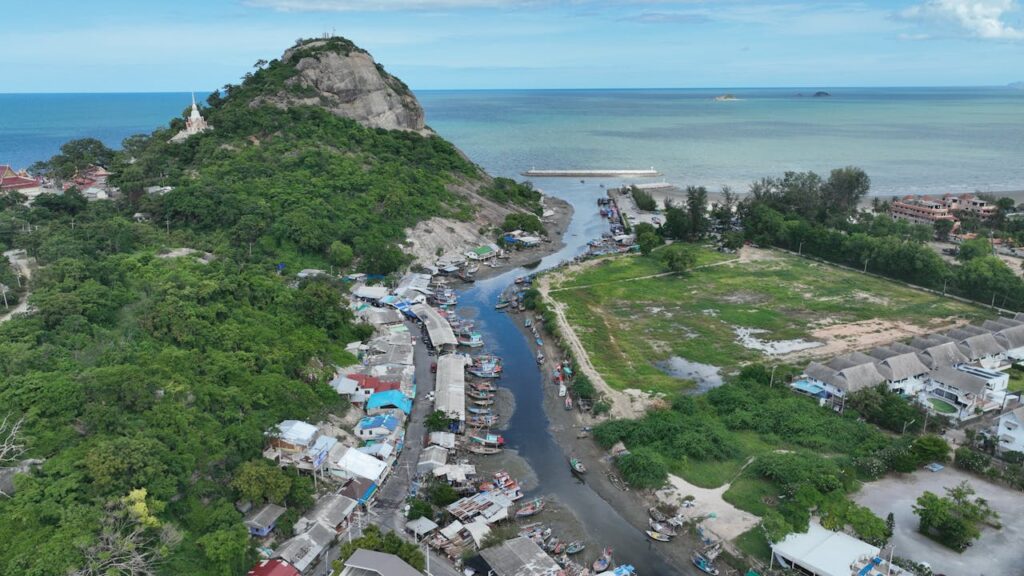
Wat Khao Takiab (Hilltop Views over Hua Hin)
📌 A temple complex on a small hill offering one of the few elevated views over Hua Hin’s coastline.
✅ Best time: Early morning (06:30–08:30) or late afternoon (16:30–18:30)
Shot ideas: Coastal views, temple structures, sea horizon, hillside perspective
Crowd strategy: Quieter in the morning; busier near sunset
Shooting notes: Steps can be steep; watch for monkeys around the temple area
Equipment tip: Standard zoom (24–70mm equivalent)
Drone notes: ❌ Not recommended; temple area with restrictions
Difficulty: ★★☆☆☆ Easy–Moderate
📍 Google Maps: Wat Khao Takiab
Sai Noi Beach (Sheltered Scenic Spot)
📌 A smaller beach framed by hills, offering a more contained and scenic setting.
✅ Best time: Morning (soft light, calmer conditions)
Shot ideas: Framed beach views, hillside composition, shoreline detail
Crowd strategy: Generally quieter than central Hua Hin
Shooting notes: Light changes quickly; best before midday
Equipment tip: Standard zoom or wide-angle
Drone notes: ⚠️ Possible, but check local conditions and wind
Difficulty: ★☆☆☆☆ Easy
📍 Google Maps: Sai Noi Beach
Wat Khao Tao (Temple & Lake Views)
📌 A quieter, more local viewpoint combining coastal and inland scenery.
✅ Best time: Morning or late afternoon
Shot ideas: Temple structures, lake reflections, hillside views
Crowd strategy: Usually calm throughout the day
Shooting notes: Less about one shot, more about atmosphere
Equipment tip: Standard zoom
Drone notes: ⚠️ Use caution; temple area
Difficulty: ★☆☆☆☆ Easy
📍 Google Maps: Wat Khao Tao
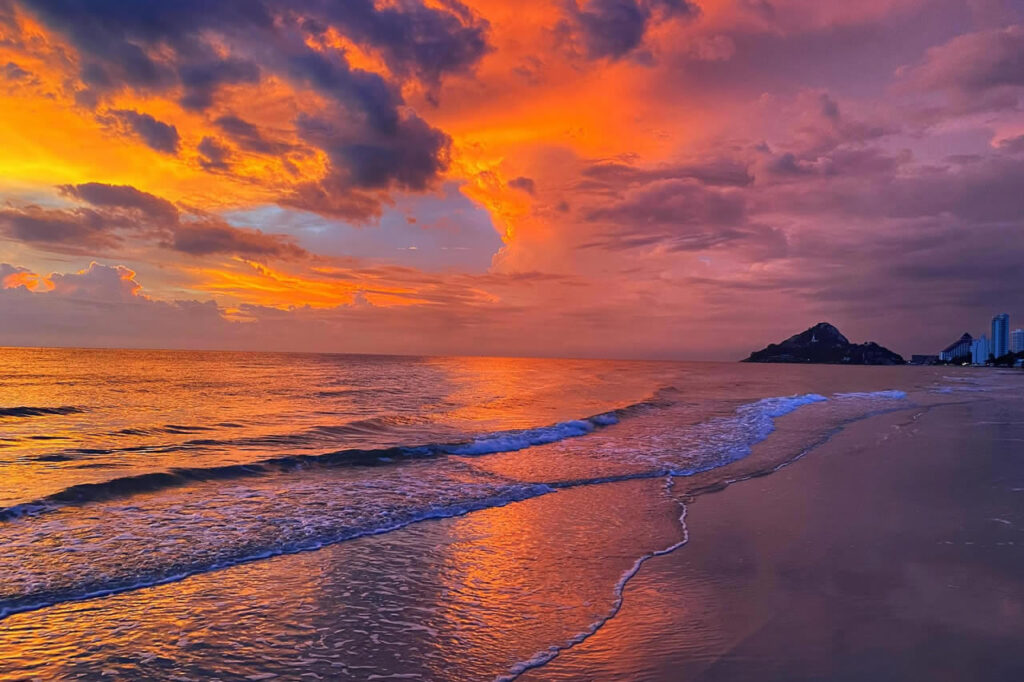
Hua Hin Beach (Low Tide Conditions)
📌 Not a single viewpoint, but one of the most photogenic settings at the right time.
✅ Best time: Early morning during low tide
Shot ideas: Reflections on wet sand, minimal beach scenes, soft light
Crowd strategy: Very quiet early morning
Shooting notes: Tide timing is essential; high tide limits composition
Equipment tip: Wide-angle for reflections
Drone notes: ⚠️ Possible in less crowded areas
Difficulty: ★☆☆☆☆ Easy
📍 Google Maps: Hua Hin Beach
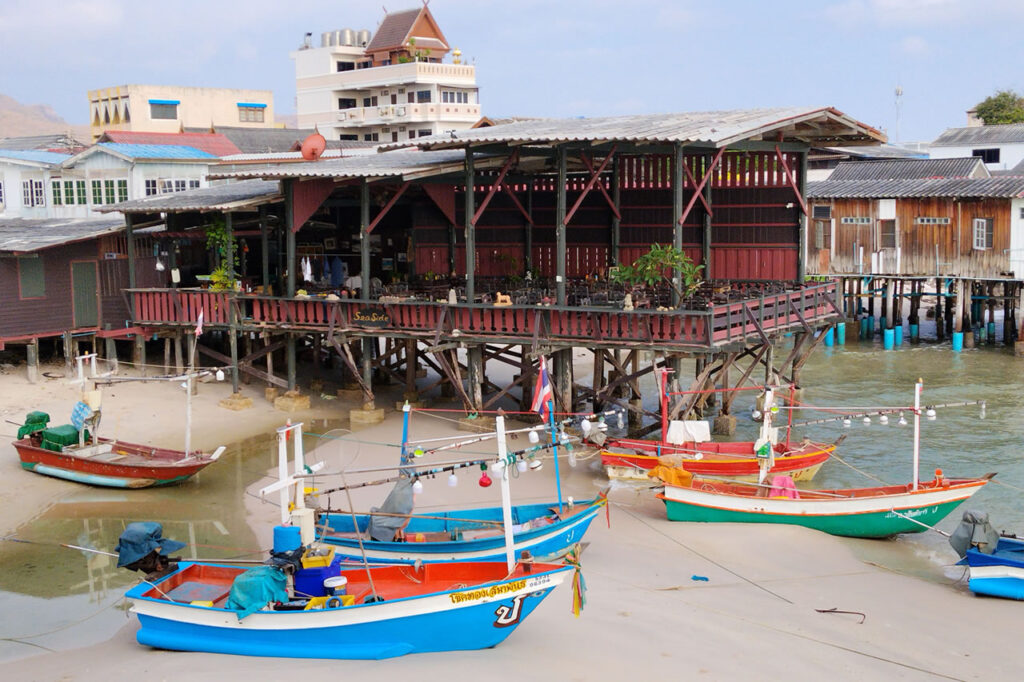
Hua Hin Fishing Pier & Temple Area (Local Character & Coastal Life)
📌 A more authentic side of Hua Hin, where fishing boats, old wooden structures, and local life come together.
✅ Best time: Early morning (06:30–08:30) or late afternoon
Shot ideas: Fishing boats, wooden houses on stilts, harbor activity, details around the Chinese temple
Crowd strategy: Quiet in the morning; slightly busier near sunset
Shooting notes: Watch your footing on uneven surfaces; great for candid and detail shots
Equipment tip: Standard zoom (24–70mm equivalent)
Drone notes: ❌ Not recommended; dense structures and people
Difficulty: ★☆☆☆☆ Easy
📍 Google Maps: Hua Hin Fishing Pier
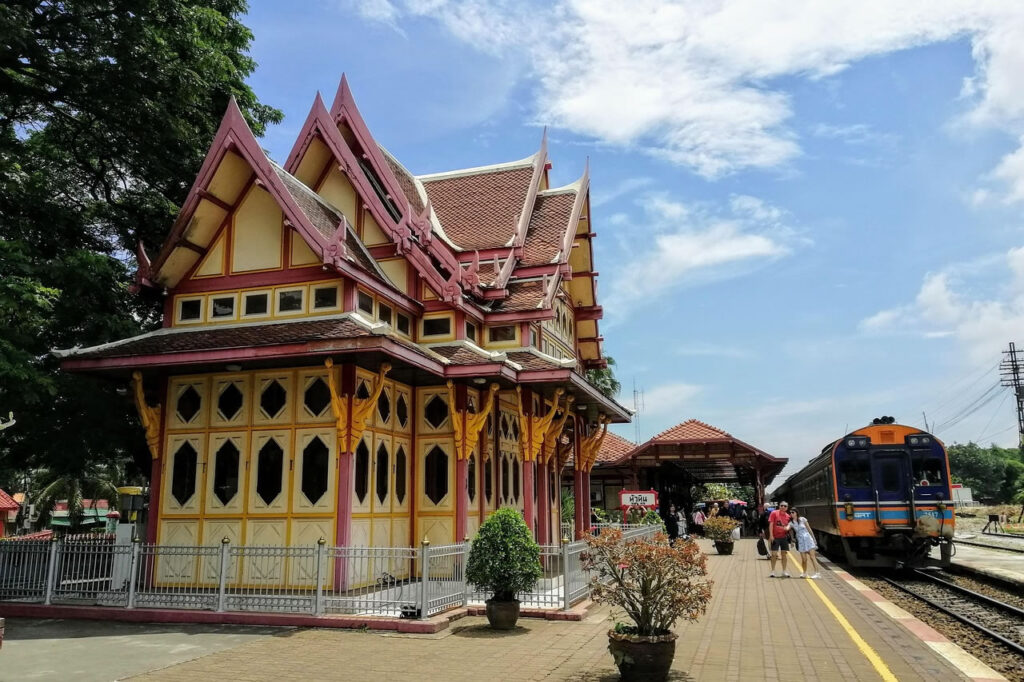
Hua Hin Railway Station (Historic Architecture & Photo Stop)
📌 A traditional Thai-style railway station known for its distinctive wooden design and historical significance, offering a quick but recognizable photo opportunity.
✅ Best time: Early morning (softer light, fewer people) or late afternoon
Shot ideas: Pavilion architecture, platform details, symmetry, signage
Crowd strategy: Go early; can get busy with visitors and tour groups
Shooting notes: Limited area for photos; parts may be renovated or relocated
Equipment tip: Standard zoom (24–70mm equivalent)
Drone notes: ❌ Not allowed; active railway area with restrictions
Difficulty: ★☆☆☆☆ Very Easy
📍 Google Maps: Hua Hin Railway Station
✅ Hua Hin doesn’t rely on dramatic viewpoints. Instead, it rewards patience, timing, and attention to small details. The best photos here come from understanding light, tide, and atmosphere, not just location.
What & Where to Eat
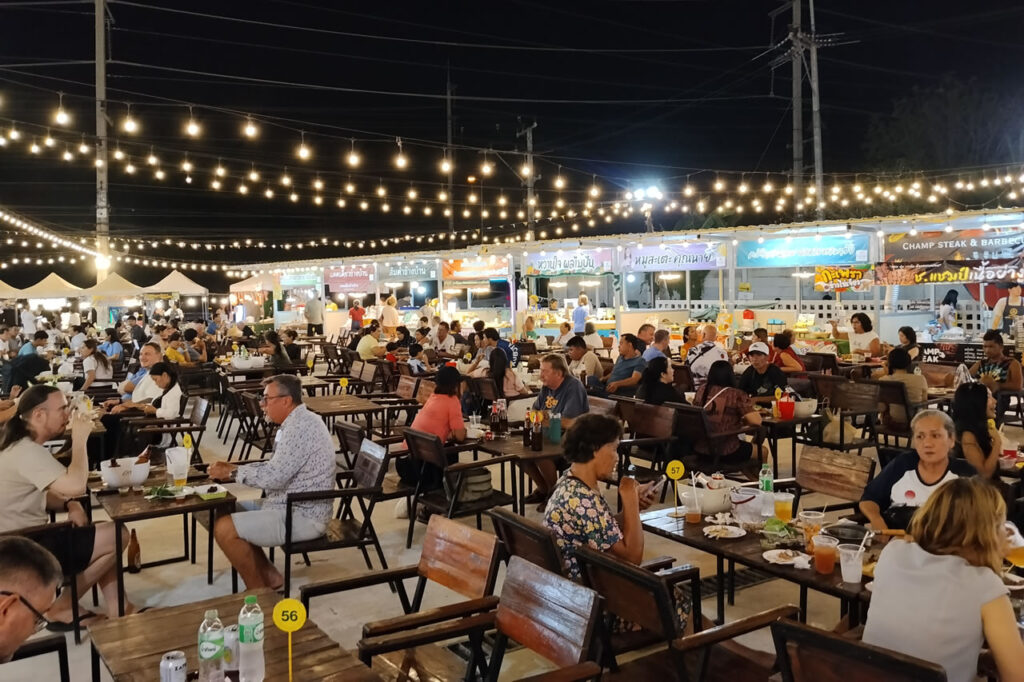
Food is one of Hua Hin’s strongest points, and it plays a central role in daily life here. Compared to larger cities, the scene feels more relaxed and less chaotic, but still offers a wide variety of options, from simple street food to seafood restaurants and modern cafés.
What makes Hua Hin stand out is the balance. You can eat very well at local prices, but you also have access to more polished dining, international cuisine, and reliable quality across the board.
Local Food & Street Eats
Hua Hin is an easy place to enjoy Thai food without needing to search too hard. Street food is widely available, especially in the evenings, and prices remain reasonable.
Typical dishes you’ll find include grilled seafood, noodle soups, fried rice, som tam, and a wide range of Thai desserts.
📌 Most meals range between THB 50–120, depending on what and where you eat.
Night Markets (Where Everything Comes Together)
Night markets are at the heart of Hua Hin’s food scene and are worth visiting more than once.
- Hua Hin Night Market – centrally located, classic mix of seafood, street food, and souvenirs
- Cicada Market – more curated, with a mix of food, art, and live performances
- Tamarind Market – food-focused, popular with both locals and expats
📌 These markets are less hectic than in Bangkok and easier to navigate, making them ideal for a relaxed evening out.
Seafood Restaurants (A Hua Hin Staple)
Seafood is a big part of Hua Hin’s identity, and some of the best experiences come from simple meals near the water.
Key areas:
- Around the fishing pier (more local, slightly rustic)
- Along the beachfront (more polished, higher prices)
📌 Expect to pay THB 300–800 per person, depending on what you order.
Cafés & Casual Dining
Hua Hin has a well-developed café scene, which plays a bigger role than you might expect. Cafés here are not just places to grab a coffee, but comfortable spaces to spend time, whether that’s working for a few hours, meeting friends, or simply escaping the heat.
- Good coffee quality across many places
- Plenty of air-conditioned spots to cool down
- A mix of light meals, desserts, and casual dining options
📌 This is one of the small details that makes Hua Hin feel comfortable for longer stays.
Western & International
Hua Hin also offers a wide range of Western and international restaurants, from casual pubs and comfort food to Italian kitchens and higher-end dining options.
Quality is generally consistent, and many places cater more to repeat customers than one-time visitors. While prices are higher than local Thai food, they remain reasonable compared to Western standards.
📌 This makes it easy to maintain familiar eating habits without feeling limited, even during longer stays.
Recommended Places (By Category)
The following selection gives a representative cross section of Hua Hin’s food scene across different categories. It’s not about ranking the “best” places, but about highlighting reliable options that reflect the variety and consistency you’ll find here.
Price guide:
$ = under THB 150
$$ = THB 150–400
$$$ = THB 400+
Local & Thai Food
| Place | Area | Price | Why It’s Worth Visiting |
|---|---|---|---|
| Hua Hin Night Market | Center | $ | Classic mix of seafood and street food |
| Tamarind Market | South | $–$$ | Good balance of food and atmosphere |
| Krua Ban See Pi Nong | Local area | $ | Authentic Thai dishes with a local feel |
Seafood Restaurants
| Place | Area | Price | Why It’s Worth Visiting |
|---|---|---|---|
| Chao Lay Seafood | Fishing pier | $$ | Fresh seafood in a traditional coastal setting |
| Lung Ja Seafood | Center | $$ | Popular spot with consistent quality and fair prices |
| Aow Takiab Seafood | Khao Takiab | $$ | Good location near the beach with a relaxed atmosphere |
Cafés & Casual Dining
| Place | Area | Price | Why It’s Worth Visiting |
|---|---|---|---|
| Skoop Beach Café | Beachfront | $$ | Relaxed setting with desserts and sea views |
| Air Space Hua Hin | South | $$–$$$ | Stylish space with good all-day dining options |
| 1d+ Day Artist Café | Center | $$ | Creative atmosphere and popular with long-stay visitors |
Western & International
| Place | Area | Price | Why It’s Worth Visiting |
|---|---|---|---|
| Father Ted’s Irish Pub | Center | $$ | Comfort food and a relaxed expat-friendly atmosphere |
| Carlo Ristorante Italiano | Center | $$–$$$ | Reliable Italian cuisine with consistent quality |
| Prime Steakhouse | Center | $$$ | Higher-end dining with quality steaks and wine selection |
What to Expect Overall
Hua Hin’s food scene is not about chasing one standout restaurant. It’s about having consistent, reliable options across the board.
- Easy to eat well at any budget
- Strong mix of local and international food
- Night markets play a central role
- More relaxed and less overwhelming than larger cities
📌 In most cases, simply exploring what’s nearby will lead to a good meal, which is part of what makes Hua Hin so easy to live in.
Nightlife & Social Scene
Hua Hin has something to offer for everybody, but it does it in a more relaxed and spread-out way than Thailand’s major nightlife destinations. Instead of one large entertainment district, the scene is divided into several smaller areas, each with its own character.
You’ll find everything from casual bars and live music venues to night markets and a handful of clubs, all without the intensity of places like Pattaya or Phuket.
Main Nightlife Areas
Hua Hin’s nightlife is best understood by location rather than category.
✅ Soi Bintabaht
The most well-known central nightlife street, featuring a mix of lady bars, pubs, some restaurants, and several live music venues. It’s compact, easy to walk, and attracts both tourists and expats.
📍 Google Maps: Soi Bintabaht
✅ Soi 80
A lively nightlife street in Hua Hin, made up mostly of lady bars, along with a few pool venues and some restaurants. It’s especially popular with expats and has a social, easygoing atmosphere without feeling too chaotic.
📍 Google Maps: Soi 80
✅ Soi 94
This area offers a more spread-out and balanced mix of restaurants, bars, and casual venues, making it one of the more “livable” nightlife areas in Hua Hin. It’s popular with expats and long-stay visitors, especially for evenings that start with dinner and gradually move into drinks. Compared to other areas, it feels less bar-focused and more integrated into everyday life.
📍 Google Maps: Soi 94
✅ Soi Mae Kep
A lively nightlife street with a wide mix of bars, restaurants, and live music venues. With 20+ venues along the street, it offers plenty of choice and a more energetic feel than most parts of Hua Hin. It’s a good option if you want variety in one place without needing to move between different areas.
📍 Google Maps: Soi Mae Kep
✅ Wonderland
A smaller, more concentrated cluster of lady bars. It’s less polished than other areas but very much part of Hua Hin’s nightlife scene. It’s more niche and typically appeals to those specifically looking for this type of environment.
📍 Google Maps: Wonderland
Live Music Scene
One of Hua Hin’s strongest points is its live music scene, which is surprisingly active for a town of this size. You’ll find live bands across many venues, often as the main attraction rather than just background entertainment. Styles range from acoustic sets to blues and rock, and the quality is generally consistent.
Popular spots include venues like Hard Rock Cafe Hua Hin, Baan Kuhn Por, and Woodstock, along with places like El Toro Loco, Panama and Calypso.
Night markets also contribute to the atmosphere, with live music at spots like Railway Bar and nearby venues such as KO Bar as well as Patio Old Town.
📌 The number of venues and performances changes daily, so it’s difficult to keep a static list up to date.
✅ Go to the Sandy Beach Facebook page — by around 10am, he posts a full list of live music events in Hua Hin, Cha-Am, Sam Roi Yot, and Pak Nam Pran for that day, including venues and bands.
Bars, Pubs & Social Spots
Hua Hin has a strong selection of casual bars and pubs, many of which are popular with long-term expats and returning visitors. Places like Father Ted’s Irish Pub and Cheers Bar offer a familiar, relaxed environment where it’s easy to settle in for the evening.
📌 The overall atmosphere is social and unpretentious rather than loud or high-energy, making it easy to strike up conversations or simply enjoy a quiet drink.
Nightclubs & Late-Night Options
While Hua Hin isn’t known as a clubbing destination, there are still a few late-night venues for those who want to continue the evening. Places like Sam Sam Bar and Newbie Club offer a more club-like atmosphere, with music and later closing times.
There are also venues such as Rock Zone and Cat Club that cater to a younger or more party-oriented crowd.
📌 It’s not a large club scene, but there are enough options to keep things going if you’re in the mood.
Pool Leagues & Expat Social Scene
One of the more unique aspects of Hua Hin’s nightlife is its active pool league scene, which is especially popular with expats.
- Regular competitions held across different bars
- Social, informal atmosphere
- Easy way to meet people and become part of the local community
📌 This adds a strong community element that you won’t find in more transient destinations.
Night Markets & Evening Atmosphere
For many people, evenings in Hua Hin revolve around the night markets rather than traditional nightlife.
- Food, drinks, and casual seating
- Live music and performances
- Easy, relaxed atmosphere
📌 They’re an integral part of the town’s rhythm and often replace the need for a more structured night out.
After-Hours by the Beach
A more informal part of Hua Hin’s nightlife happens after everything else winds down. It’s quite common for people to head down to the beach for a final drink, enjoying the quieter atmosphere away from the bars.
📌 It’s a simple but very “Hua Hin” way to end the evening.
Hua Hin After Dark
Hua Hin’s nightlife is best described as diverse but low-pressure.
- Multiple small nightlife areas instead of one main district
- Strong live music scene
- Good mix of bars, pubs, and late-night options
- Noticeable expat and community presence
✅ You can easily choose between a quiet evening, a social night out, or something a bit more lively, without ever feeling overwhelmed.
Where to Stay
Hua Hin offers a wide range of accommodation options, from beachfront resorts and modern condos to quieter residential areas slightly outside the center.
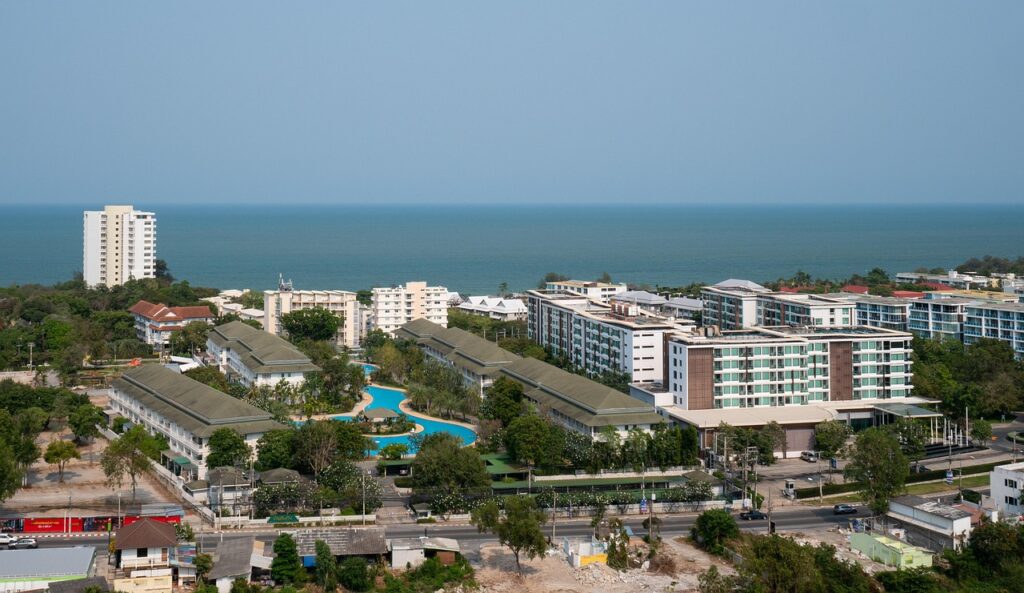
Where you stay will have a big impact on your overall experience, especially since the town is relatively spread out and each area has a slightly different character.
📍 Choosing the right location matters more than choosing the hotel itself.
Alternative to Hotels: Renting a Condo
For stays longer than a few nights, renting a private condo is often one of the most comfortable and practical options in Hua Hin. Many modern developments offer fully furnished units that can be booked short-term through platforms like Booking.com or Airbnb.
Compared to standard hotel rooms, condos typically provide:
- More space, including separate living and sleeping areas
- Kitchen facilities for longer stays
- Access to shared amenities such as pools and gyms
- A more residential, “live-like-a-local” feel
✅ This option is especially popular with couples, families, and repeat visitors who value space and privacy over hotel-style service.
That said, there are a few trade-offs:
- No daily housekeeping in most cases
- Check-in can require coordination with the host
- Limited on-site support compared to hotels
📌 If you prefer space, comfort, and a more relaxed setup, condo rentals are often better value than traditional hotels in Hua Hin.
Main Areas to Stay in Hua Hin
To make this easier, it helps to think in terms of areas rather than individual hotels. Each part of Hua Hin offers a slightly different experience, and once you choose the right area, finding suitable accommodation becomes much simpler.
Central Hua Hin (Beach, Night Markets & Convenience)
The central area around the Hilton, Night Market, and Beach Road is the most convenient place to stay, especially for first-time visitors.
- Walking distance to restaurants, bars, and markets
- Easy access to the beach
- Lively atmosphere, especially in the evenings
| Hotel | What to Expect | Typical Price (per night) | Best For |
|---|---|---|---|
| Hilton Hua Hin Resort & Spa | Large beachfront hotel in the heart of town; walking distance to nightlife, markets, and restaurants | ฿3,500–฿7,000 | First-time visitors & central convenience |
| Centara Grand Beach Resort & Villas | Historic luxury resort with large gardens and direct beach access, yet still central | ฿4,500–฿9,000 | Luxury stays & classic Hua Hin atmosphere |
| Putahracsa Hua Hin | Stylish boutique resort near the beach with a quieter feel just outside the busiest streets | ฿3,000–฿6,000 | Couples & boutique comfort |
| Baan Bayan Beach Hotel | Smaller beachfront hotel with traditional Thai character and a more personal atmosphere | ฿2,500–฿4,500 | Relaxed beachfront with central access |
✅ Best for: first-time visitors, short stays, and those who want everything within reach
📌 Can be busier and slightly noisier than other areas
Khao Takiab (Quieter Beach with Local Feel)
Located just south of the center, Khao Takiab offers a more relaxed environment while still being close to town.
- Good mix of condos, hotels, and local restaurants
- Access to one of the better beach sections
- More laid-back atmosphere
| Hotel | What to Expect | Typical Price (per night) | Best For |
|---|---|---|---|
| Anantasila Beach Resort | Beachfront resort with relaxed atmosphere and direct beach access | ฿3,000–฿5,500 | Couples & relaxed stays |
| VERSO Hua Hin | Modern beachfront hotel with stylish design and sea views | ฿4,000–฿7,000 | Modern luxury seekers |
| The Yana Villas | Private pool villas close to the beach in a quieter setting | ฿3,500–฿6,000 | Privacy & couples |
| Ibis Hua Hin | Reliable budget hotel within walking distance to the beach | ฿1,200–฿2,200 | Budget & short stays |
✅ Best for: couples, long-stay visitors, and those who want a quieter base
Khao Tao (Residential & Peaceful)
Further south, Khao Tao feels more like a residential coastal community than a typical tourist area, with a noticeable expat presence and a slower, more settled pace of life.
- Popular with expats and long-term residents
- Mix of housing developments, condos, and villas
- Quiet beaches and a slower pace of life
| Hotel | What to Expect | Typical Price (per night) | Best For |
|---|---|---|---|
| Sanae Beach Club | Beachfront boutique stay near Sai Noi Beach with a relaxed, private atmosphere | ฿2,500–฿4,500 | Couples & quiet beach stays |
| The Blue Sky Resort @ Hua Hin | Stylish boutique resort near the reservoir with landscaped gardens and peaceful surroundings | ฿2,000–฿3,500 | Nature lovers & relaxed escapes |
| T Villas Hua Hin | Private pool villas offering space and privacy in a quiet residential setting | ฿3,500–฿6,500 | Families & longer stays |
| Khao Tao Beach Lodge | Simple beachfront accommodation with direct access to a quiet stretch of beach | ฿1,200–฿2,500 | Budget travelers & laid-back stays |
✅ Best for: long stays, retirees, and those prioritizing peace and space
📌 Less convenient without your own transport
North Hua Hin / Cha-Am Direction (Resorts & Space)
The northern stretch toward Cha-Am is known for larger resorts and more space.
- Wide beachfront properties
- Less crowded beaches
- Resort-style living
| Hotel | What to Expect | Typical Price (per night) | Best For |
|---|---|---|---|
| Dusit Thani Hua Hin | Large beachfront resort with extensive facilities, pools, and gardens between Hua Hin and Cha-Am | ฿3,000–฿6,000 | Families & resort-style stays |
| Sheraton Hua Hin Resort & Spa | Resort with lagoon-style pool connecting rooms, beachfront setting, and relaxed atmosphere | ฿3,500–฿7,000 | Families & pool-focused holidays |
| Radisson Resort & Spa Hua Hin | Spacious beachfront resort with sea views, multiple pools, and a quieter location further north | ฿2,500–฿5,000 | Value resort stays & relaxation |
| SO/ Sofitel Hua Hin | Design-focused luxury resort in Cha-Am with creative spaces, beachfront access, and upscale amenities | ฿4,500–฿9,000 | Luxury travelers & stylish stays |
✅ Best for: families, resort stays, and quieter holidays
📌 Further away from central Hua Hin attractions
Soi 94 Area (Food & Expat-Friendly Living)
This area is not directly on the beach but has become popular due to its mix of restaurants, cafés, and residential options.
- Good balance between convenience and local feel
- Strong expat presence
- Easy access to central Hua Hin, the beach, and main roads leading south
| Hotel | What to Expect | Typical Price (per night) | Best For |
|---|---|---|---|
| G Hua Hin Resort & Mall | Modern hotel near Market Village with easy access to restaurants, shopping, and transport | ฿1,800–฿3,500 | Convenience & mid-range comfort |
| Baan Nilrath Hotel | Simple, well-located hotel within walking distance to Soi 94 dining and central areas | ฿900–฿1,800 | Budget stays & good location |
| Kiang Haad Beach Hua Hin | Comfortable hotel close to the beach and Soi 94, offering good value and easy access to food spots | ฿1,500–฿3,000 | Balanced stays & location |
| The Lapa Hua Hin | Boutique-style hotel with a quieter setting just off the main road, still close to Soi 94 and shopping areas | ฿2,000–฿3,800 | Couples & relaxed mid-range stays |
✅ Best for: longer stays and those who prefer a more local, everyday environment
📌 Not beachfront; expect a short ride to reach the sea
📍 Planning a longer stay or thinking about living in Hua Hin? See the full guide to the best areas to stay and live in Hua Hin, including detailed breakdowns of neighborhoods, rental costs, lifestyle trade-offs, and expat-friendly residential areas.
At a Glance
Hua Hin doesn’t have one single “best area” — the right choice depends entirely on your travel style and priorities.
- Central = convenience and activity
- South = quieter, more residential feel
- North = resort-style stays and space
📌 In many cases, staying slightly outside the center leads to a more relaxed and enjoyable experience.
Ready to compare hotels in Hua Hin?
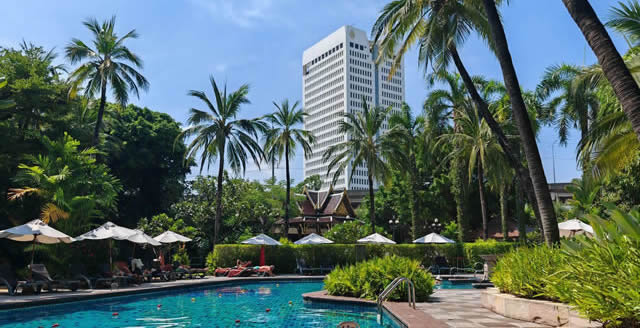
Both Agoda and Booking.com offer a wide range of accommodation, from budget guesthouses to luxury beachfront resorts.
I’ve used Booking.com for many years and have always had good experiences. Agoda is another excellent option and sometimes lists different properties or prices, so it’s worth checking both.

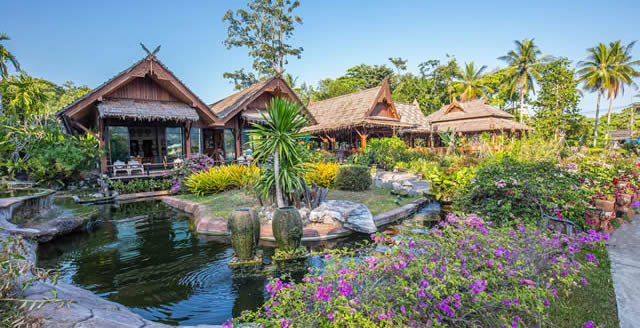
- ✅ Excellent Thailand coverage
- ✅ Great for local hotels & resorts
- ✅ Instant booking confirmation

- ✅ Trusted guest reviews
- ✅ Hotels, resorts & apartments
- ✅ Easy online reservations
Shopping & Local Markets
Shopping in Hua Hin is less about large-scale retail and more about convenience, local markets, and relaxed browsing. You’ll find everything you need for daily life, along with a few places that are worth visiting for the atmosphere alone.
Shopping Malls (Where You’ll Actually Go Regularly)
Hua Hin has two main malls, and while both cover similar basics, they serve slightly different purposes in practice.
Market Village Hua Hin (Daily Use & Practical Shopping)
This is the most functional shopping hub in Hua Hin and the one you’ll likely use the most.
- Large supermarket for full grocery runs
- Everyday services like pharmacies, banks, and mobile shops
- Wide range of casual restaurants and fast food
📌 This is where you go for errands and routine shopping, not for atmosphere.
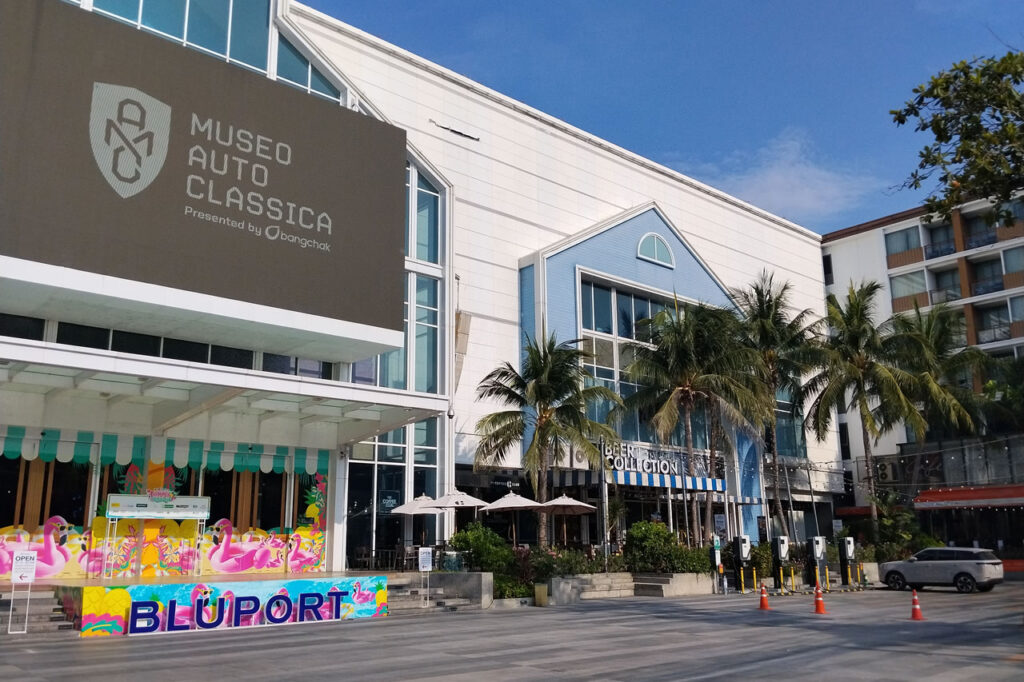
Bluport Hua Hin (More Comfortable & Less Busy)
Bluport offers a more polished experience, but is slightly less essential for daily use.
- Cleaner layout and noticeably less crowded
- Better for sitting down, eating, and spending time
- Good mix of mid-range and slightly higher-end shops
📌 This is where you go when you want a more relaxed environment, not necessarily because you need something specific. In reality: Most people use Market Village for function and Bluport for comfort.
Night Markets (Different Feel, Different Purpose)
Not all night markets in Hua Hin are the same — each has a different focus.
Hua Hin Night Market (Classic & Central)
- Mix of souvenirs, clothing, and seafood restaurants
- More tourist-oriented
- Narrow layout, can feel busy
Best for:
✔ Quick visit
✔ Casual browsing
✔ Easy dinner in town
📌 Not ideal if you’re looking for anything unique or high quality.
Cicada Market (Creative & Higher Quality)
- Focus on handmade goods, art, and design
- More structured and less chaotic
- Clearly separated food and shopping areas
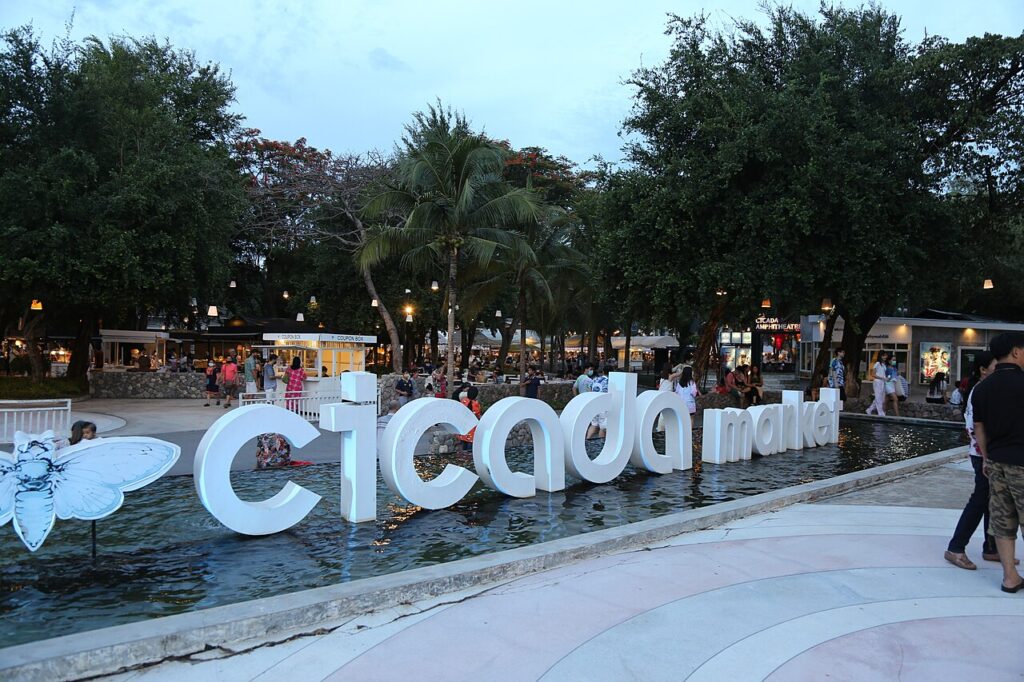
Photo by Wutthichai Charoenburi on Wikimedia Commons, licensed under CC BY 2.0
Best for:
✔ Unique items
✔ Gifts
✔ A more curated experience
📌 This is the only market where shopping can feel intentional rather than random.
Tamarind Market (Food First, Shopping Second)
- Open layout with communal seating
- Strong live music presence
- Very limited actual shopping
Best for:
✔ Food and atmosphere
✔ Social evenings
📌 Not really a shopping destination.
Summary:
- ✅ Night Market → convenient
- ✅ Cicada → quality
- ✅ Tamarind → food & social
Local Markets (Practical, Not Touristic)
These are not designed for visitors — they’re part of everyday life.
- Fresh vegetables, seafood, meat
- Ready-to-eat meals at low prices
- No presentation, just function
Best for:
✔ Cheap food
✔ Daily shopping
✔ Experiencing local routines
📌 Not ideal if you’re looking for a comfortable or curated environment.
Smaller Shops, Street Stalls & Convenience Stores
This is something many guides miss, but it matters in real life.
- 7-Eleven & FamilyMart everywhere
- Small independent shops for snacks, drinks, essentials
- Roadside fruit stalls and quick takeaway food
📌 These fill the gaps between malls and markets. In practice, you’ll use these more often than anything else.
Where to Go (Quick Guide)
- ✅ Groceries & daily needs → Market Village
- ✅ More relaxed mall → Bluport
- ✅ Souvenirs & casual browsing → Night Market
- ✅ Unique / handmade items → Cicada Market
- ✅ Food + atmosphere → Tamarind Market
- ✅ Local everyday shopping → Fresh markets & street stalls
Day Trips & Nearby Attractions
Hua Hin is well positioned for exploring beyond the town itself. Within a short drive, you’ll find national parks, quiet beaches, viewpoints, and small coastal areas that feel very different from the main town.
Most places can be reached within 30 minutes to 2 hours, making them suitable for half-day or full-day trips.
Sam Roi Yot National Park (Nature & Iconic Scenery)
Located about 45–60 minutes south of Hua Hin, this is one of the most rewarding trips in the area.
- Home to the famous Phraya Nakhon Cave
- Limestone mountains, wetlands, and quiet beaches
- Hiking, viewpoints, and wildlife
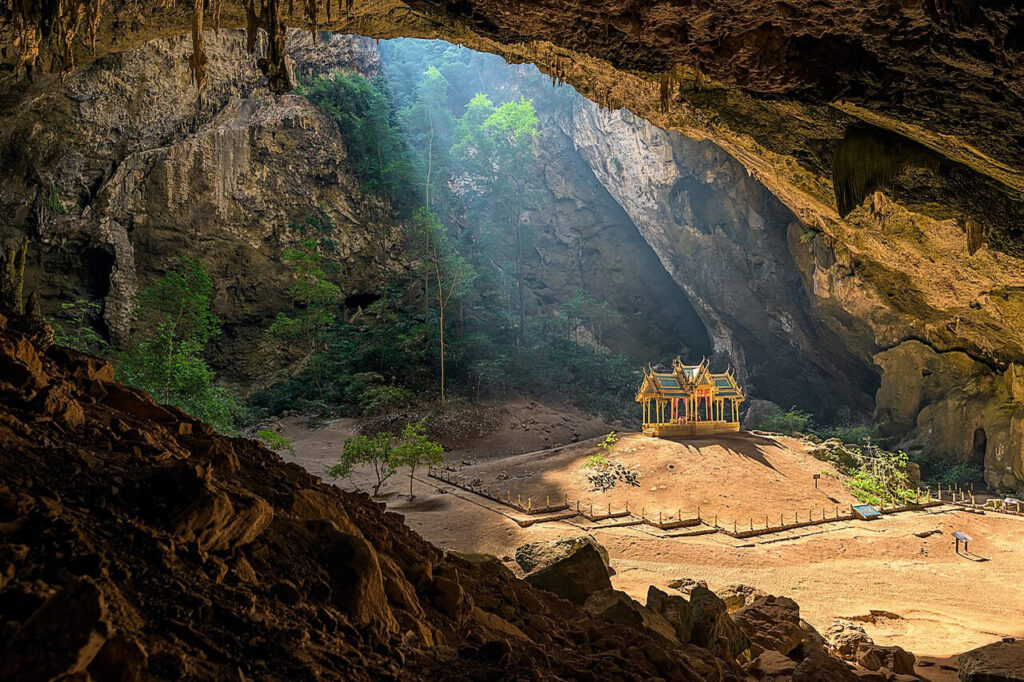
Photo by BerryJ on Wikimedia Commons, licensed under CC BY-SA 4.0
✅ Best for: nature, photography, and a more adventurous day out
📌 Requires some walking and planning, especially for the cave
Khao Tao & Sai Noi Beach (Quick Escape South)
Just 15–25 minutes south of Hua Hin, this area offers a quieter coastal experience.
- Sai Noi Beach: small, sheltered, and scenic
- Khao Tao: local village feel with temples and views
- Fewer crowds than central Hua Hin
✅ Best for: a short, relaxed beach trip without going far
Pranburi & Pak Nam Pran (Laid-Back Coastal Vibe)
About 30–40 minutes south, this stretch of coastline feels more open and less developed.
- Long, quiet beaches with very few crowds
- Seafront cafés and restaurants
- Pranburi Forest Park with mangrove walkways
✅ Best for: relaxed drives, cycling, and escaping the busier parts of Hua Hin
Black Mountain Area (Views, Activities & Golf)
Located about 20–30 minutes inland, this area offers a different landscape.
- Black Mountain Water Park
- One of Thailand’s top golf courses
- Open views and less urban development
✅ Best for: activities, golf, and a change of scenery
Water Parks (Family-Friendly & Easy Half-Day Trips)
Hua Hin has two well-known water parks, both offering a fun break from the beach, especially for families or hotter days.
Vana Nava Water Jungle (Closer to Town)
- Located just south of central Hua Hin
- Modern water park with large slides and attractions
- More compact but easy to access
Best for:
✔ Families
✔ Short visits without much travel
Black Mountain Water Park (More Space & Better Setting)
- Located inland near the Black Mountain area
- Larger layout with open space and mountain views
- Feels less crowded and more relaxed
Best for:
✔ Half-day trips
✔ Combining with Black Mountain or golf
📌 Both parks are well maintained and suitable for all ages, but the experience is quite different depending on location and layout.
Monsoon Valley Vineyard (Unique Countryside Experience)
Located inland west of Hua Hin, this is one of the most distinctive day trips in the area.
- Thailand’s leading vineyard set in a scenic valley
- Wine tasting, vineyard tours, and cycling routes
- Restaurant with panoramic views over the landscape
Best for:
✔ Something different from beaches and markets
✔ Couples and relaxed day trips
✔ Late afternoon visits with sunset views
📌 Requires a 40–45 minute drive and is best combined with other inland stops
Cha-Am (Easy Coastal Extension)
About 25–30 minutes north, Cha-Am is often overlooked but easy to reach.
- Long beachfront with a more local feel
- Fewer international tourists
- Simple seafood restaurants and cafés
✅ Best for: a quick change of pace without traveling far
Looking beyond Hua Hin? The complete day trips guide covers quiet beaches, waterfalls, national parks, wildlife experiences and longer coastal escapes, with realistic travel times and practical planning advice.
Suggested Itineraries
Hua Hin is not a destination that needs to be rushed. It’s a place that reveals itself gradually — through its beaches, food, and everyday rhythm rather than a long list of must-see attractions.
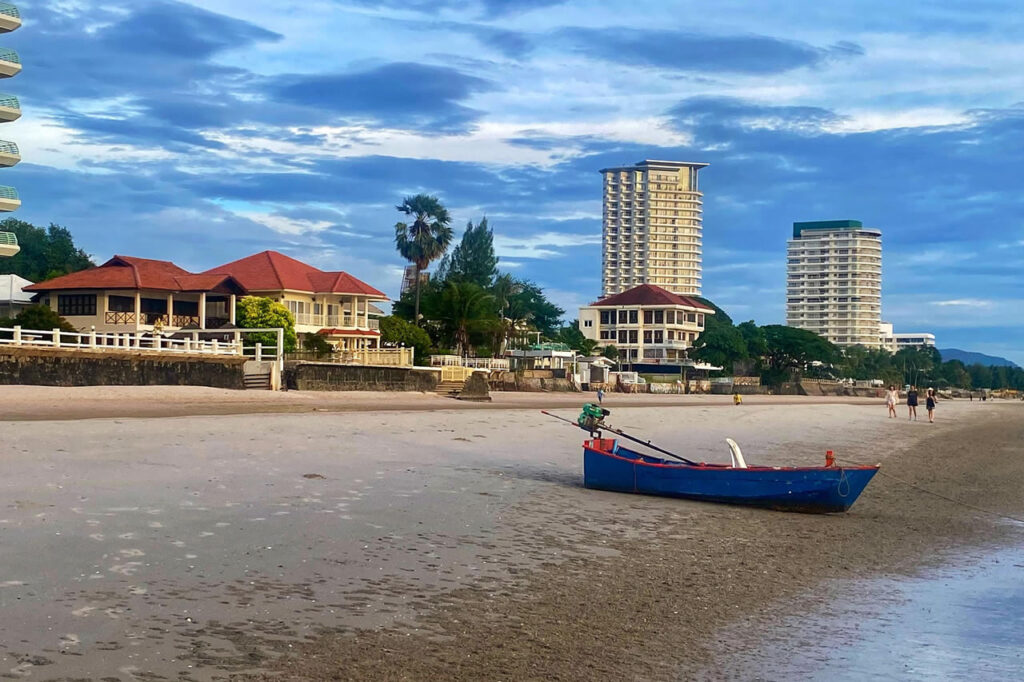
These itineraries are designed to give you a realistic structure, whether you’re passing through or staying a little longer.
1 Day in Hua Hin (Short Stop or First Impression)
Hua Hin can be visited in one day, but it works best as a relaxed stop rather than a destination to cover. With limited time, the focus should be on getting a feel for the town.
Morning
- Walk along Hua Hin Beach
- Coffee or breakfast at a café
- Optional: visit Khao Takiab for views over the coastline
Afternoon
- Lunch at a local restaurant or one of the malls
- Light exploration or time by the pool/beach
Evening
- Dinner at the Night Market or a seafood restaurant
- Short walk through the center or a live music stop
📌 Focus: a simple introduction without trying to see everything
2–3 Days in Hua Hin (Balanced Experience)
This is the ideal length for most visitors. You get a mix of beach time, local atmosphere, and a short trip outside town.
Day 1 – Town & Beach
- Beach walk and café stop
- Explore central Hua Hin
- Evening at the Night Market, Cicada, or Tamarind Market
Day 2 – Short Trip South
- Morning visit to Sai Noi Beach or Khao Tao
- Lunch by the sea
- Optional: continue to Pranburi or Pak Nam Pran
- Return for dinner and a relaxed evening
Day 3 (Optional) – Flexible Day
- Café, beach, or pool time
- Light shopping or massage
- Optional: short inland trip (e.g., Black Mountain area)
📌 Focus: variety without rushing, combining town life with quieter surroundings
3–5 Days in Hua Hin (Deeper & More Relaxed Stay)
With more time, Hua Hin starts to feel less like a destination and more like a place to settle into. This is where the town’s appeal really comes through.
Day 1 – Arrival & Orientation
- Beach, café, and central exploration
- Evening with food and live music
Day 2 – Nature or Activities
Choose based on your interests:
Option A – Nature
- Trip to Sam Roi Yot National Park
- Visit Phraya Nakhon Cave
Option B – Activities
- Black Mountain area (golf, water park, views)
Day 3 – Scenic Inland Experience
- Late start
- Visit Monsoon Valley Vineyard
- Lunch with views and relaxed surroundings
Day 4–5 – Slow Down & Repeat What You Enjoy
- Return to favorite cafés or beaches
- Explore different dining spots
- Optional second trip (Pranburi, Cha-Am, or nearby areas)
📌 Focus: flexibility, slower pace, and enjoying the lifestyle rather than filling the schedule
✅ Hua Hin works best when you leave space in your schedule, as it’s less about ticking off attractions and more about settling into a rhythm of beach time, good food, and a slower pace of life that becomes clearer the longer you stay.
Cost Snapshot: What to Expect in Hua Hin
Hua Hin is generally more affordable than Bangkok and the major island destinations, but costs can vary depending on your lifestyle, accommodation choice, and how often you dine out or travel.
✅ For most visitors and expats, it sits comfortably in the mid-range for Thailand — offering good value without feeling overly basic.
Typical Daily Costs
| Category | Typical Price | Notes |
|---|---|---|
| Street Food / Local Meals | ฿50–฿120 | Widely available and good quality |
| Casual Restaurants | ฿120–฿300 | Thai and simple Western options |
| Seafood / Mid-Range Dining | ฿300–฿800 | Varies by location and selection |
| Coffee | ฿50–฿100 | Higher in specialty cafés |
| Transport (Short Rides) | ฿60–฿150 | Grab/Bolt or motorbike taxis |
Accommodation (Per Night)
| Type | Typical Price | What to Expect |
|---|---|---|
| Budget | ฿800–฿1,500 | Basic hotels or guesthouses |
| Mid-Range | ฿1,500–฿3,500 | Comfortable hotels and boutique stays |
| Luxury | ฿3,500–฿9,000+ | Beachfront resorts and villas |
Daily Budget Estimates
| Travel Style | Estimated Daily Budget | Description |
|---|---|---|
| Budget | ฿1,000–฿1,800 | Simple stays, local food, minimal transport |
| Mid-Range | ฿2,000–฿4,000 | Comfortable hotels, mix of dining, occasional activities |
| Higher-End | ฿4,000–฿8,000+ | Resorts, dining out regularly, more activities |
✅ Hua Hin offers a good balance between affordability and comfort. Compared to Phuket or Samui, Hua Hin generally offers better value for money, especially for longer stays.
Want a realistic Thailand trip budget?
Use the Thailand Travel Cost Calculator — just enter your destinations, trip length, and travel style to get instant, accurate per-person and group trip costs in both THB and USD.
📌 Want a deeper breakdown of what things cost across Thailand by region and style?
Read the full Cost of Travel in Thailand guide.
Digital Nomad Friendliness in Hua Hin
Hua Hin is not a typical digital nomad hotspot, but it offers a comfortable and stable environment for remote work, especially for those who prefer a quieter lifestyle.
Instead of a fast-paced scene, you’ll find a more relaxed setup with enough infrastructure to work efficiently.
Internet & Connectivity
Internet in Hua Hin is generally reliable and fast.
- Fiber connections available in most condos and houses
- Mobile data is cheap and widely accessible
- Speeds are more than sufficient for video calls and remote work
📌 In most cases, connectivity is not a limiting factor.
Workspaces & Cafés
Hua Hin doesn’t have a large co-working scene, but you’ll still find plenty of places to work.
- Many cafés are comfortable, air-conditioned, and laptop-friendly
- Good coffee quality across town
- Quiet atmosphere compared to larger cities
Suitable for:
✔ Casual work sessions
✔ A few hours of focused work
Less suitable for:
❌ Full-day structured co-working environments
Co-Working Spaces
The co-working scene is limited compared to major hubs.
- A small number of dedicated spaces exist
- Quality is generally decent but not exceptional
- Not a major part of the local ecosystem
📌 Most remote workers rely more on cafés or home setups.
Lifestyle & Work Balance
This is where Hua Hin stands out.
- Easy access to the beach
- Less traffic and noise
- More predictable and slower daily rhythm
Ideal for:
✔ Focused work
✔ Lower stress environment
✔ Long-term sustainability
Less ideal for:
❌ High-energy, networking-driven work styles
Community & Networking
Hua Hin has a noticeable expat presence, but not a strong digital nomad scene.
- Smaller, more informal community
- Limited networking events or meetups
- More long-term residents than short-term nomads
📌 You’ll meet people naturally, but not through structured events.
Pros & Limitations
✅ Pros
- Reliable internet and infrastructure
- Calm and stable environment
- Good balance between comfort and cost
❌ Limitations
- Limited co-working options
- Smaller community
- Less variety compared to major hubs
📌 Hua Hin works best for digital nomads who value consistency, comfort, and a slower pace over networking and constant stimulation. It’s not a place to build connections quickly — it’s a place where you can work well and live comfortably over time.
👉 Thinking beyond a short stay?
If you’re considering making Hua Hin your base, here’s what it’s really like to live in Hua Hin as an expat, including neighborhoods, costs, healthcare, and day-to-day life.
Family-Friendliness in Hua Hin
Hua Hin is widely considered one of the best places in Thailand for families. Compared to larger cities or party-focused destinations, it offers a safer, calmer, and more manageable environment.
✅ It’s particularly well suited for families who value space, routine, and a slower pace of life.
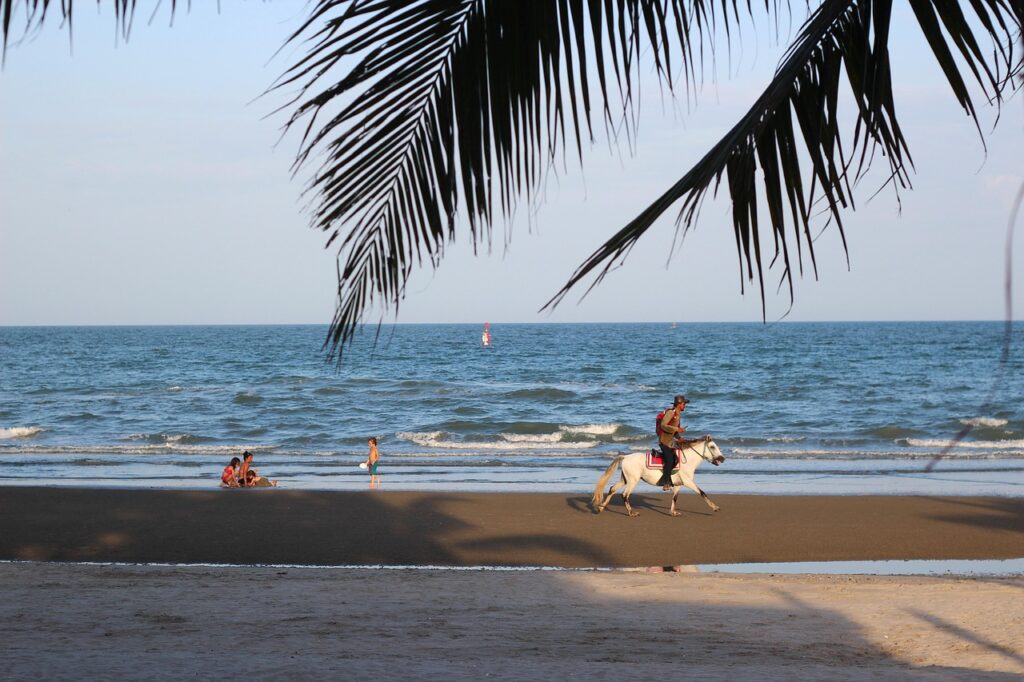
Beaches & Outdoor Space
Hua Hin’s beaches are generally wide, accessible, and suitable for families.
- Gradual entry into the water in many areas
- Plenty of space for walking, playing, and relaxing
- Options to choose between central or quieter beaches
Good choices include:
- Central Hua Hin Beach (easy access)
- Sai Noi Beach (calmer and more contained)
- Cha-Am Beach (wide and less crowded)
📌 Conditions vary, but overall the coastline is family-friendly compared to many other parts of Thailand.
Activities for Kids
There are enough activities to keep children engaged without needing constant travel.
- Two water parks (Vana Nava and Black Mountain)
- Open spaces for cycling and outdoor play
- Markets and casual evening outings
📌 Hua Hin is not packed with attractions, but offers consistent, easy entertainment.
Schools & Long-Term Living
For families considering a longer stay, Hua Hin has a small but growing selection of international and bilingual schools.
- Options available for different budgets
- Smaller scale compared to Bangkok
- Suitable for long-term expat families
📌 This makes Hua Hin a realistic option not just for holidays, but for family relocation.
Getting Around with Family
Getting around is relatively straightforward.
- Short distances compared to larger cities
- Grab and Bolt available for convenience
- Less traffic and easier navigation
Many families choose to:
- Use ride-hailing apps
- Rent a car for more flexibility
Overall Environment
This is where Hua Hin stands out most.
- Lower noise levels
- Less congestion
- More predictable daily rhythm
Compared to places like Phuket or Pattaya:
- Fewer crowds
- Less nightlife focus
- More suitable for routine-based living
Pros & Considerations
✅ Pros
- Safe and relaxed environment
- Good balance of activities and downtime
- Easy to navigate with children
❌ Considerations
- Fewer large-scale attractions
- Limited school options compared to major cities
- Slower pace may feel quiet for some families
📌 Hua Hin is not designed as a high-energy family destination — and that’s exactly why it works. It’s a place where families can settle into a comfortable routine, with enough to do without feeling overwhelmed.
Local Services & Emergency Info
Hua Hin has all essential services needed for both short visits and long-term stays. While it’s a smaller town compared to Bangkok, infrastructure is reliable and easy to access.
Hospitals & Medical Care
Hua Hin offers a mix of private and public healthcare options.
- Bangkok Hospital Hua Hin – modern private hospital with international standards
- San Paulo Hospital – private hospital in the city center with full medical services
- Hua Hin Hospital – public hospital, more affordable but busier
- Numerous private clinics and pharmacies across town
📌 For most visitors and expats, private hospitals provide the most convenient experience.
- Police: 191
- Tourist Police: 1155 (English-speaking assistance)
- Ambulance / Medical Emergency: 1669
- Fire: 199
Pharmacies & Everyday Healthcare
- Pharmacies are widely available throughout Hua Hin
- Many medications can be purchased without a prescription
- English is commonly spoken in most places
📌 For minor issues, pharmacies are often the quickest and easiest option.
Safety & General Support
Hua Hin is generally considered a safe and low-risk destination.
- Lower crime levels compared to major cities
- Visible police presence in central areas
- Tourist Police available for assistance in English
As always:
- Keep an eye on belongings
- Use common sense, especially at night
ATMs, Banks & Money Access
- ATMs are widely available
- International cards accepted almost everywhere
- Currency exchange services easy to find
📌 Access to money is straightforward and rarely an issue.
Frequently Asked Questions About Hua Hin
Here are answers to some of the more practical questions that often come up when planning a trip or longer stay in Hua Hin.
📌 Is Hua Hin easy to explore without a car?
Yes, for central areas. You can get around using Grab, Bolt, and short rides. For places further out like Pranburi or Monsoon Valley, having a car or driver becomes more practical.
📌 Does Hua Hin have Grab and Bolt?
Yes, both are widely available and reliable. They are often the easiest way to get around, especially if you’re not renting a vehicle.
📌 Are there many beachfront hotels in Hua Hin?
Yes, but not all accommodation is directly on the beach. Many hotels are separated by Beach Road, and true beachfront access is more limited than in some other destinations.
📌 Does Hua Hin have a promenade along the beach?
No, Hua Hin does not have a continuous beachfront promenade. Most beach access is through individual entry points or hotel areas.
📌 Is Hua Hin suitable during the rainy season?
Yes, more than many other coastal destinations. Rain tends to come in shorter periods rather than lasting all day, making it still manageable for travel.
📌 Are there many mosquitoes in Hua Hin?
Mosquitoes are present, especially near greenery or water, but generally manageable. Basic precautions like repellent are usually sufficient.
📌 Can I use credit cards everywhere in Hua Hin?
Credit cards are accepted in malls, hotels, and larger restaurants. Smaller shops, markets, and local places often prefer cash.
📌 Is English widely spoken in Hua Hin?
Yes, especially in tourist areas, restaurants, hospitals, and hotels. Communication is usually easy for visitors.
📌 Is Hua Hin suitable for long-term stays?
Yes, particularly for those who prefer a quieter and more structured lifestyle. It’s less dynamic than Bangkok or Chiang Mai but offers consistency and comfort.
Hua Hin Hub
Explore my collection of Hua Hin guides covering living, healthcare, costs, accommodation, retirement, and everyday life on Thailand’s Gulf Coast.
Related Guides & Further Reading
Travel in Thailand is easier when you have the right balance of practical advice and destination inspiration. Below you’ll find useful travel resources to help you prepare smoothly, plus nearby destinations worth adding to your journey.
Thailand Travel Essentials: Plan Smarter, Travel Easier
Need tips on visas, health, culture, or everyday logistics? My hub brings all the key guides together in one place: Explore the Thailand Travel Guide
Your Next Thai Adventure Awaits
Looking for where to go next? These nearby or complementary places pair well with your current destination and are worth your time in the Land of Smiles.
- Koh Samet Travel Guide: Best Beaches, Where to Stay & How to Get There
- Pattaya Travel Guide: What to Expect, Best Beaches, Nightlife & Where to Stay
- Khao Yai National Park Travel Guide: Waterfalls, Wildlife & An Easy Escape from Bangkok
💬 If you’ve been to Hua Hin or have any questions, feel free to leave a comment — it helps keep this guide useful and up to date.