
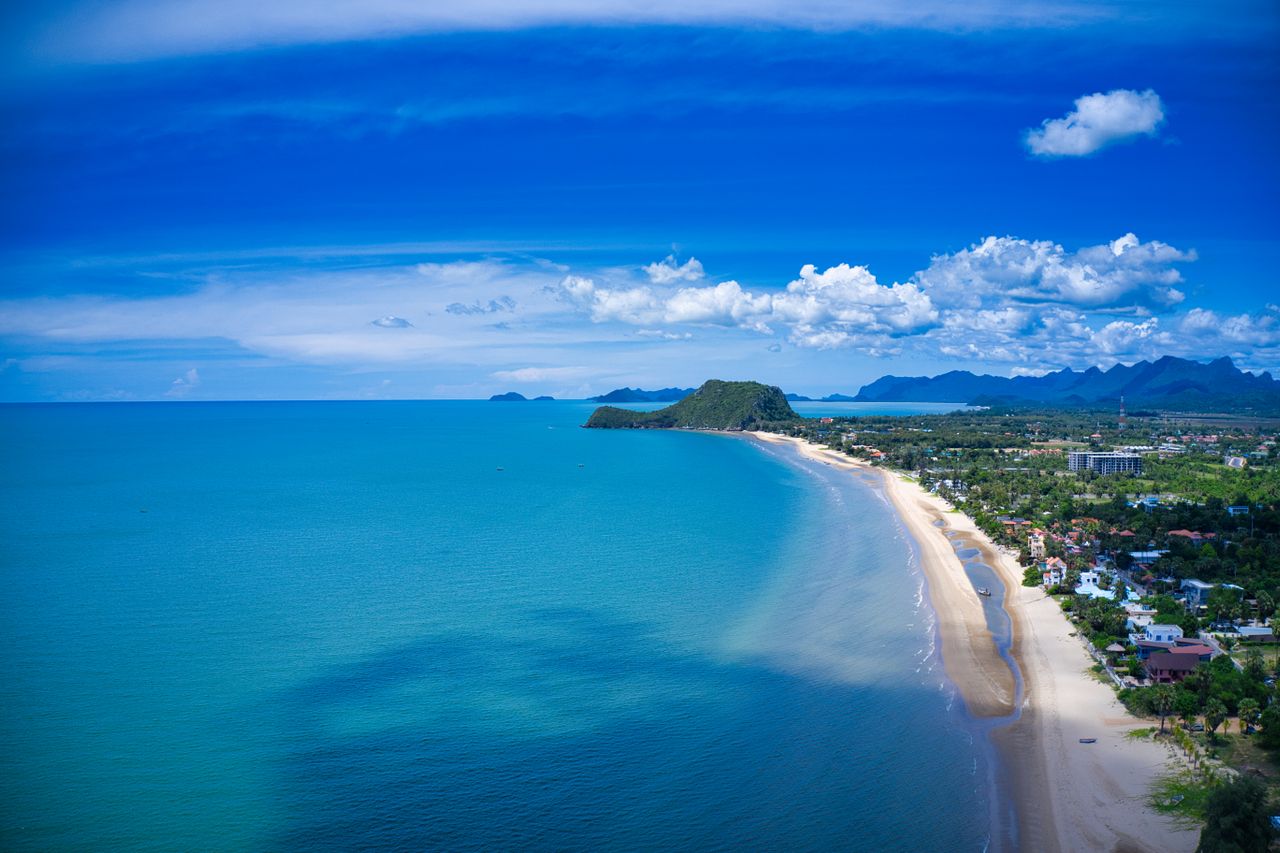
One of the advantages of staying in Hua Hin is how easily you can leave the town behind. Travel west and the landscape changes to forest, waterfalls and national parks. Follow the coast south and you will find quiet beaches, fishing communities and scenic roads that feel very different from central Hua Hin.
The best day trips from Hua Hin range from an easy visit to Wat Huay Mongkol to more active excursions such as Phraya Nakhon Cave and wildlife watching in Kui Buri National Park. Some places can comfortably be visited in half a day, while Kaeng Krachan, Prachuap Khiri Khan and Ban Krut deserve more time or an overnight stay.
Public transportation outside the main towns is limited, so having your own vehicle or hiring a driver makes many of these trips considerably easier. This guide explains what each destination offers, how long you realistically need and which trips are worth extending beyond a single day.
Hua Hin Day Trips at a Glance
The destinations below range from easy half-day excursions to longer journeys that are more enjoyable with an overnight stay.
| Destination | Travel Time | Time to Allow | Best For | Recommended Transport |
|---|---|---|---|---|
| Wat Huay Mongkol and Monsoon Valley | 30–45 minutes | Half or full day | Temples, countryside and a relaxed outing | Car, motorcycle or hired driver |
| Pa La-U Waterfall | 75–90 minutes | Full day | Forest scenery, walking and waterfalls | Car or hired driver |
| Kaeng Krachan National Park | 1–2 hours, depending on the area | Full day or overnight | Nature, birdwatching and wildlife | Car or arranged transport |
| Coastal drive to Sam Roi Yot | Up to 90 minutes each way | Full day | Beaches, coastal scenery and seafood | Car or motorcycle |
| Sam Roi Yot National Park and Phraya Nakhon Cave | 75–90 minutes | Full day | Hiking, caves and dramatic scenery | Car or hired driver |
| Kui Buri National Park | 1.5–2 hours | Full day | Wild elephants and gaur | Car or hired driver |
| Prachuap Khiri Khan and Ao Manao | Around 1.5 hours | Full day or overnight | Beaches and local Thai atmosphere | Car or train |
| Ban Krut | 2–2.5 hours | Overnight recommended | A quiet beach escape | Car or train |
📌 Travel times are approximate and calculated from central Hua Hin in normal traffic. National parks can cover considerable distances, so reaching a particular trail, viewpoint or visitor centre may take longer.
Wat Huay Mongkol and Monsoon Valley Vineyard
Wat Huay Mongkol and Monsoon Valley Vineyard can be combined into an easy half-day or relaxed full-day trip through the countryside west of Hua Hin. They offer two very different experiences, but their locations make them a practical pairing without returning to town between visits.
Wat Huay Mongkol
Wat Huay Mongkol is best known for its enormous statue of Luang Pu Thuat, one of Thailand’s most revered Buddhist monks. The statue dominates the temple grounds and attracts Thai visitors who come to pay their respects and ask for protection, good fortune or safe travel.
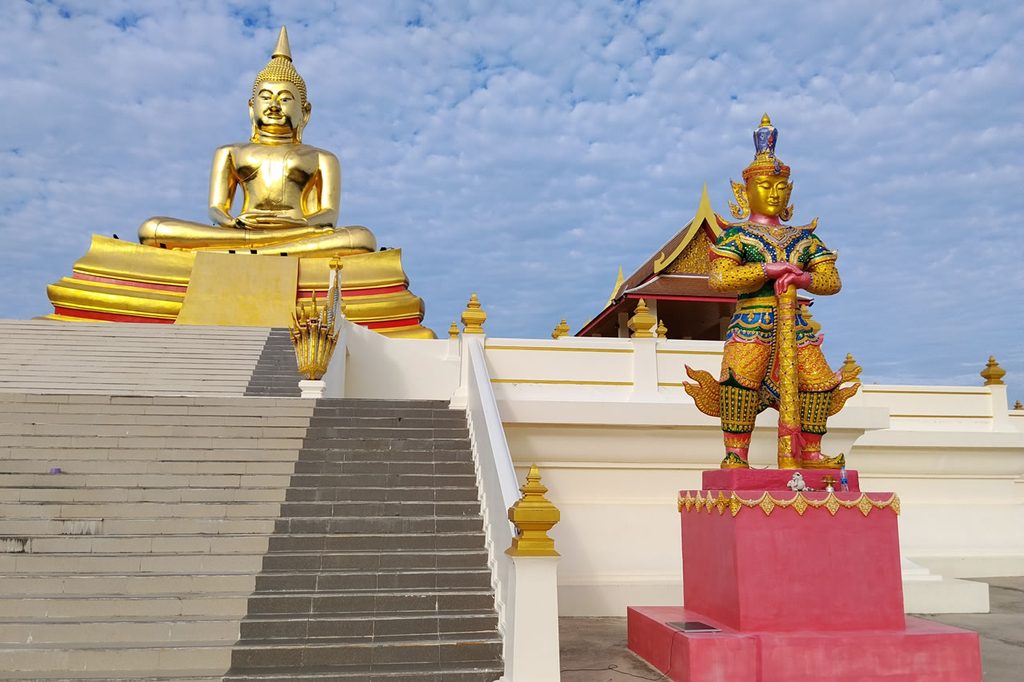
The grounds also contain smaller shrines, religious statues and two large wooden elephants. Visitors traditionally walk beneath the elephants for good luck. Although Wat Huay Mongkol is a popular attraction, it remains an active place of worship rather than simply a sightseeing stop.
Most visitors will need between 45 minutes and an hour at the temple. Admission is free, although donations are welcome. Dress respectfully by covering your shoulders and knees, and remove your shoes before entering any temple buildings where required.
Monsoon Valley Vineyard
From Wat Huay Mongkol, the journey can continue through the surrounding countryside to Monsoon Valley Vineyard. The vineyard occupies a scenic rural setting backed by low hills, making the location as much a part of the visit as the wine itself.
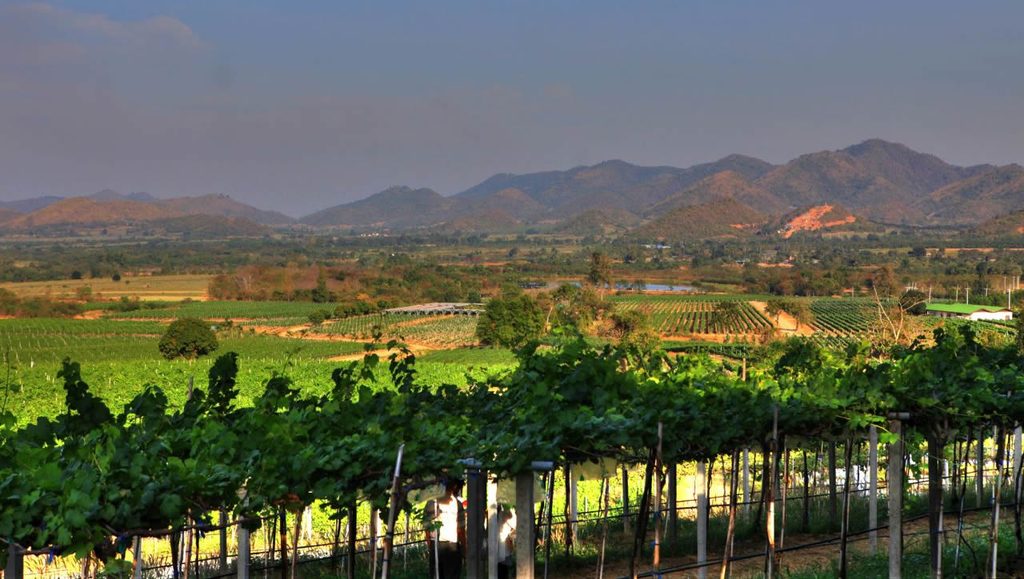
Photo by josef knecht on Wikimedia Commons, licensed under CC BY 3.0
Depending on the current schedule, visitors may be able to tour the vineyard, join a wine tasting or have lunch overlooking the vines. Activities, opening times and reservation requirements can change, so it is worth checking directly with the vineyard before travelling.
Monsoon Valley is considerably more commercial than Wat Huay Mongkol, and a visit will be of greatest interest to people who want to combine the countryside setting with lunch or a wine experience. Those with little interest in either may find the temple alone sufficient.
Planning the Trip
Wat Huay Mongkol is around 30 minutes from central Hua Hin, while Monsoon Valley lies farther into the countryside. There is no convenient public transportation connecting the two, so travelling by car, motorcycle or hired driver is the practical option.
Visit Wat Huay Mongkol first, preferably before the heat builds, and continue to the vineyard for lunch or an afternoon tasting. Allow half a day for a straightforward visit or most of the day if you plan to eat, join activities and take your time.
At a glance
- Travel time from Hua Hin: Approximately 30–45 minutes
- Time needed: Half or full day
- Best for: Thai culture, countryside scenery, lunch and wine
- Transport: Car, motorcycle or hired driver
- Main consideration: Check vineyard activities and reservation requirements before leaving Hua Hin
Pa La-U Waterfall
Pa La-U Waterfall lies deep in the forest west of Hua Hin, close to the border with Myanmar. It forms part of Kaeng Krachan National Park and offers a cooler, greener contrast to the coast, particularly when water levels are high.
The journey takes around 75 to 90 minutes from central Hua Hin. Although the waterfall is the main destination, the drive through increasingly rural countryside and forest is part of the appeal.
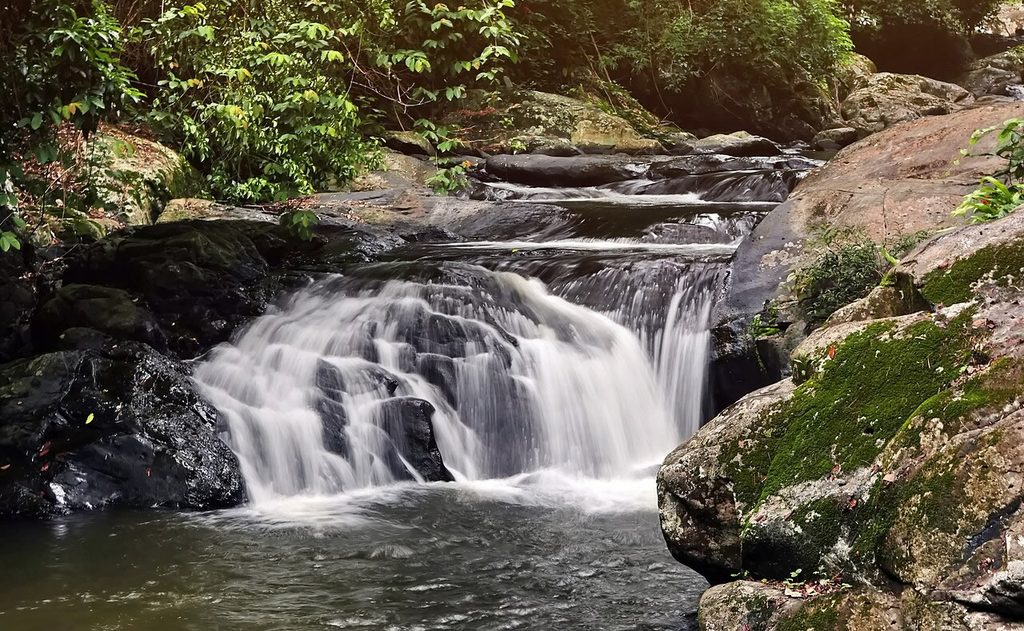
Photo by Kriengsak Jirasirirojanakorn on Wikimedia Commons, licensed under CC BY-SA 4.0
Walking to the Waterfall Levels
Pa La-U consists of a series of cascades and natural pools reached along a forest trail. The lower levels are relatively accessible, but the route becomes more demanding as you continue. Reaching the upper sections involves climbing over rocks, crossing uneven ground and using ropes for support in places.
Most casual visitors do not need to reach the highest levels to enjoy the waterfall. The lower and middle sections provide forest scenery, flowing water and places to stop without turning the visit into a strenuous hike.
Wear shoes with a secure grip rather than sandals. Rocks can be slippery even in otherwise dry conditions, and the combination of heat, humidity and uneven terrain makes the walk more tiring than the distance may suggest.
When to Visit
The waterfall is most impressive when there has been sufficient rain, but heavy rainfall can also make the trail unsafe. Flash flooding, strong currents and slippery conditions may lead to temporary closures at short notice.
During the drier months, access may be easier, but the volume of water can be considerably lower. An early start offers cooler walking conditions and a better chance of seeing butterflies around the lower trail.
Check the current status with Kaeng Krachan National Park before leaving Hua Hin, particularly during the rainy season. Do not assume the waterfall will be accessible simply because the weather in Hua Hin is dry.
Getting There and Planning the Trip
There is no practical public transportation to Pa La-U, so you will need a car, motorcycle or hired driver. The route is straightforward, but services become limited as you approach the national park. Take drinking water, suitable footwear, insect repellent and enough cash for entrance fees and basic purchases.
Wild elephants occasionally cross roads in this area. Drive cautiously, particularly early in the morning and toward dusk. If you encounter an elephant, keep your distance, remain inside the vehicle and follow any instructions from park staff.
Pa La-U works best as a full-day trip with an early departure from Hua Hin. Allow enough time for the drive, the forest trail and an unhurried return before dark.
At a glance
- Travel time from Hua Hin: Approximately 75–90 minutes
- Time needed: Full day
- Best for: Forest scenery, waterfalls and moderate walking
- Transport: Car, motorcycle or hired driver
- Main consideration: Access and trail conditions can change after heavy rain
Kaeng Krachan National Park
Kaeng Krachan is Thailand’s largest national park and part of the UNESCO-listed Kaeng Krachan Forest Complex. Its vast forests support exceptional biodiversity, including elephants, hornbills, gibbons, leopards and numerous bird species.
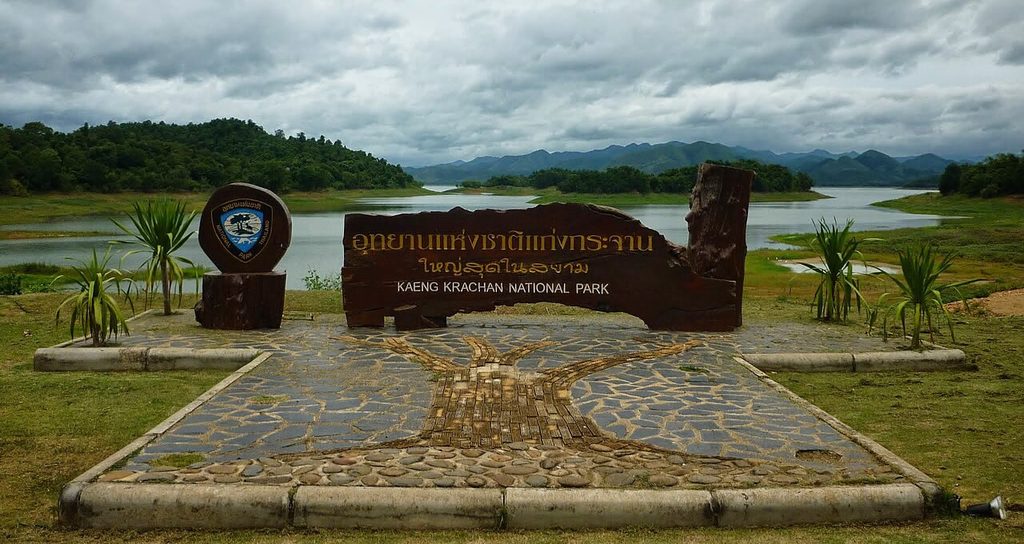
Photo by Dirk Enthoven on Wikimedia Commons, licensed under CC BY 3.0
However, Kaeng Krachan is not a single attraction that can be covered in a few hours. The park has several access points, campsites and forest areas spread across a considerable distance. A useful visit therefore requires more planning than most day trips from Hua Hin.
Pa La-U Waterfall lies within the national park but is reached separately from the Hua Hin side and is covered in the previous section. The main forest area around Ban Krang and Phanoen Thung is approached by a different route farther north.
What Can You See in One Day?
Ban Krang is the most practical destination for visitors who want to experience the forest rather than simply view the reservoir near Kaeng Krachan town. The area is particularly known for birdlife, butterflies and the possibility of seeing monkeys, langurs and other forest animals.
Phanoen Thung lies deeper inside the park at a higher elevation and is known for mountain views and early-morning mist. Access is more complicated, with seasonal closures, vehicle restrictions and controlled driving times on parts of the route. Do not plan a visit based on old online information. Confirm current access directly with the national park before travelling.
Kaeng Krachan Dam and its reservoir provide an easier scenic outing, but they should not be confused with exploring the national park’s main forest area. The reservoir is suitable for a relaxed drive and views across the water, while Ban Krang and Phanoen Thung offer the more meaningful nature experience.
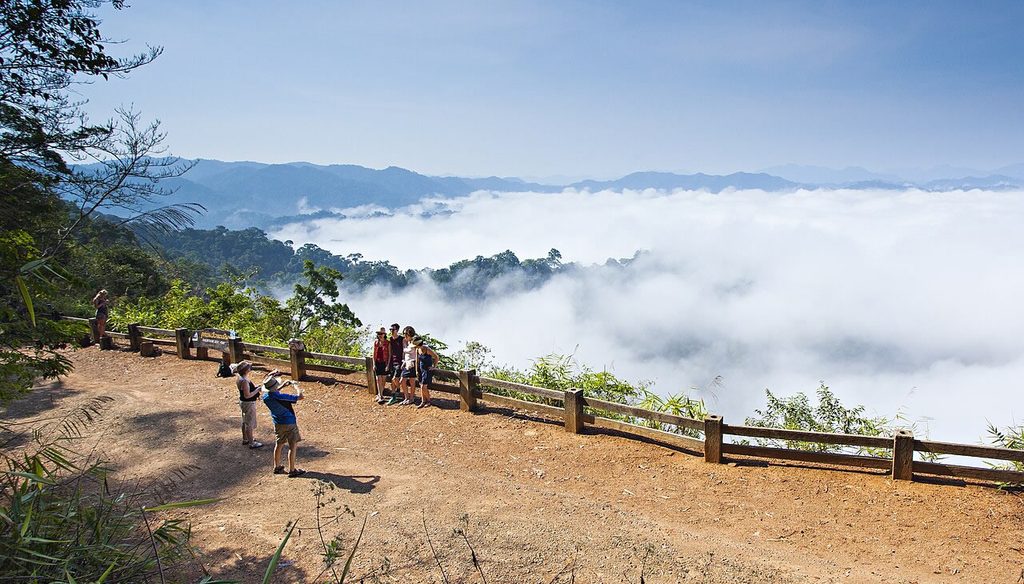
Photo by KOSIN SUKHUM on Wikimedia Commons, licensed under CC BY-SA 4.0
Wildlife and Birdwatching
Kaeng Krachan contains an impressive range of wildlife, but this does not mean animals are easy to see on a casual daytime visit. Most of the park is dense forest, and larger mammals generally avoid roads and busy areas.
Birdwatchers and serious nature enthusiasts will gain the most from the park, particularly with an experienced local guide. Hornbills, woodpeckers, broadbills and many other forest species make Kaeng Krachan one of Thailand’s most important birdwatching destinations.
An overnight stay improves the experience because wildlife activity is generally greater early in the morning and later in the afternoon. It also avoids spending much of the day driving from Hua Hin and back.
Planning Your Visit
Private transport is essential. A normal car may be sufficient for the entrance area and Ban Krang under suitable conditions, but access farther into the park can require an appropriate vehicle and adherence to park driving schedules.
Road conditions, campsite access and seasonal closures can change. Check with the park before leaving Hua Hin, particularly if Phanoen Thung is central to your plans. Take cash, fuel up beforehand and bring water, food, insect repellent and suitable outdoor clothing.
Kaeng Krachan can be visited as a long day trip, but an overnight stay near the park or at an authorized campsite is the better choice for anyone primarily interested in wildlife, birdwatching or reaching the higher areas.
At a glance
- Travel time from Hua Hin: Approximately 1–2 hours, depending on the entrance and destination
- Time needed: Full day or overnight
- Best for: Forest, birdwatching, wildlife and serious nature trips
- Transport: Private car or arranged transport
- Main consideration: The park is vast, and access conditions vary by area and season
The Coastal Drive from Hua Hin to Sam Roi Yot Beach
The drive south from Hua Hin is one of the easiest and most enjoyable day trips in the area. Rather than focusing on a single attraction, the journey connects a series of beaches, fishing communities and coastal viewpoints between Hua Hin and Sam Roi Yot.
You can follow the coast through Pranburi Beach and Pak Nam Pran, continue around Khao Kalok and finish beside the limestone mountains at Sam Roi Yot Beach. The route is best enjoyed without a strict schedule, leaving time for photographs, drinks beside the sea and an unhurried lunch.
Optional Stop: Pranburi Forest Park
Pranburi Forest Park contains an approximately one-kilometre raised boardwalk through the mangroves. It is a worthwhile stop for first-time visitors who are particularly interested in coastal ecosystems, but it is not essential to enjoying the drive south.
Allow around an hour if you want to walk the boardwalk. If your priority is the coastline, beaches and relaxed seafront atmosphere, continue directly toward Pranburi Beach and Pak Nam Pran instead.
📍 When doing this drive with friends, I would normally skip the boardwalk and spend the extra time around Pak Nam Pran, Khao Kalok or Sam Roi Yot Beach. The forest park is more relevant for visitors who specifically want to experience a mangrove environment.
Pranburi Beach and Pak Nam Pran
Pranburi Beach marks the beginning of the most enjoyable part of the coastal route. The road runs close to the sea for long stretches, passing resorts, seafood restaurants, fishing boats and quieter sections of beach.
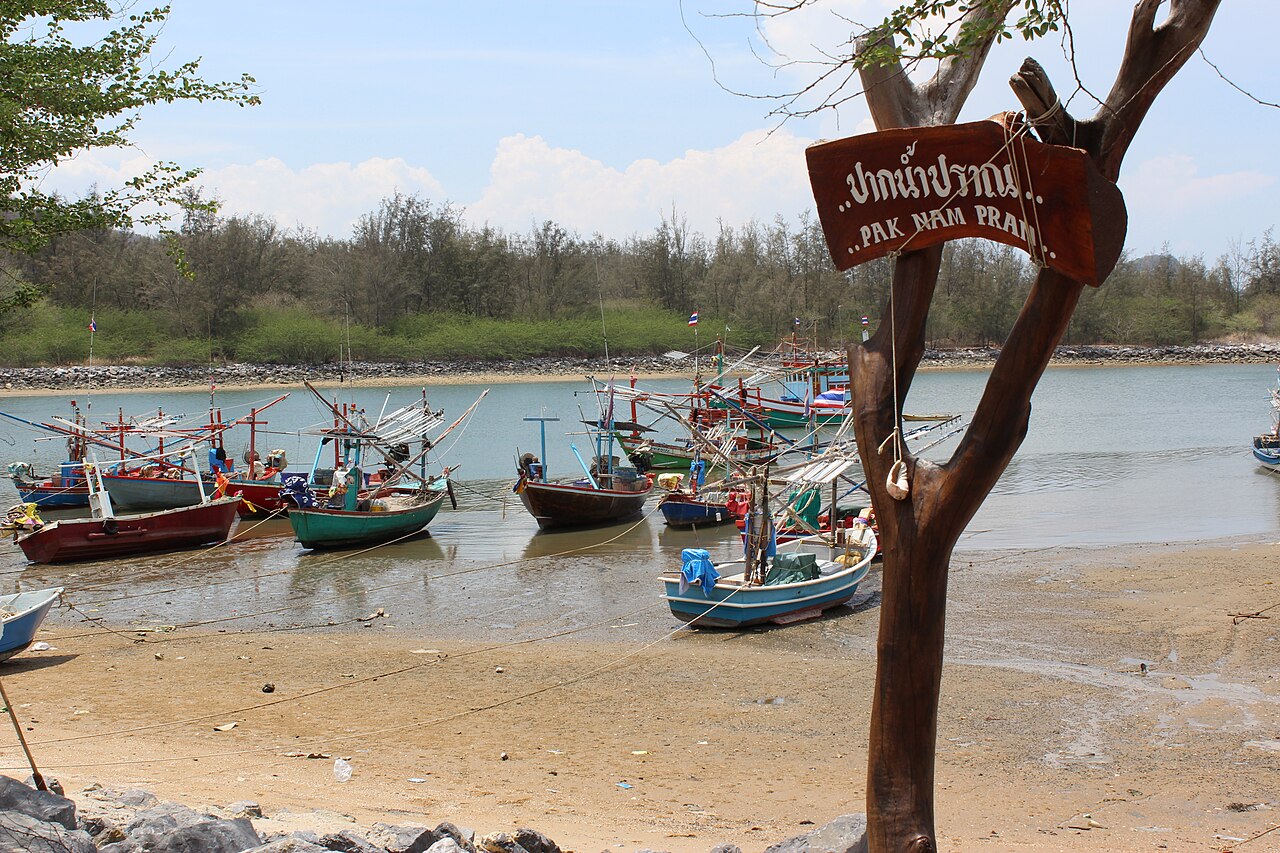
Photo by Phong Phat G on Wikimedia Commons, licensed under CC BY-SA 3.0
Pak Nam Pran is not a conventional sightseeing destination with a checklist of attractions. Its appeal lies in the drive itself and the contrast with central Hua Hin. The atmosphere is quieter, development is more spread out and the coastline feels more local.
This is a good area to stop for coffee, walk briefly along the beach or have lunch at a seafood restaurant. You can also simply continue driving slowly along the seafront and stop whenever somewhere looks appealing.
Khao Kalok
South of Pak Nam Pran, the coastline reaches Khao Kalok, where a distinctive limestone hill rises beside the beach. The name means “skull mountain”, referring to the shape of the rock.
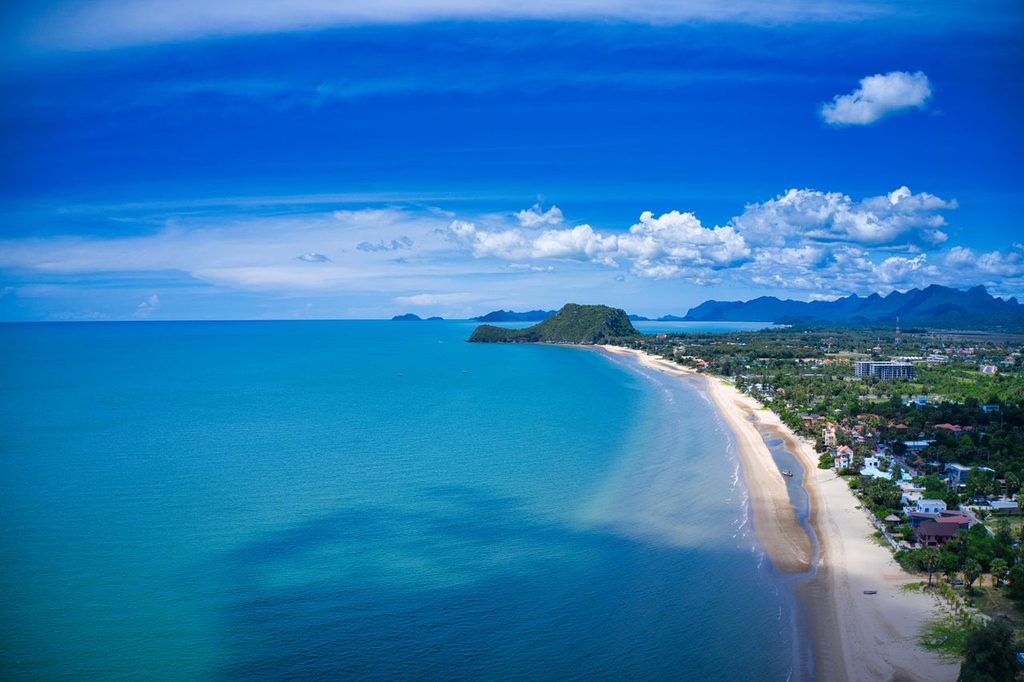
Khao Kalok Beach is suitable for a short stop, a swim when conditions are calm or lunch overlooking the sea. The hill and surrounding area form part of Thao Ko Sa Forest Park.
There is a steep trail leading over the hill, but you do not need to climb it to appreciate the setting. For most people following the coastal route, the beach and views from ground level are enough.
Where to Stop for Lunch
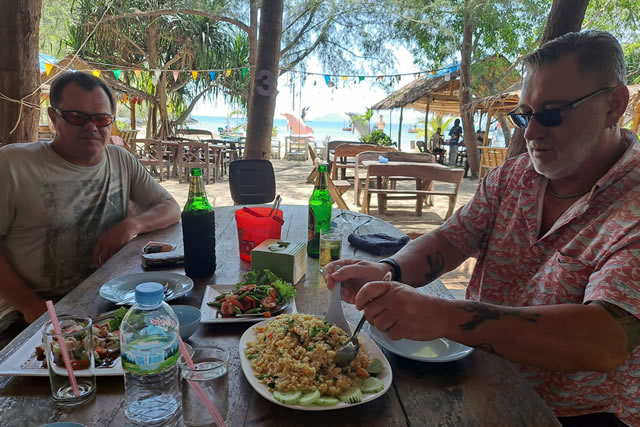
Just south of Khao Kalok, Khao Kra Lok Welfare Shop serves Thai food and seafood at reasonable prices. Its beach huts let you eat with your feet in the sand while enjoying the sea view, making it an excellent lunch stop before continuing toward Sam Roi Yot Beach.
Sam Roi Yot Beach and Dolphin Bay
Continuing south brings you to Sam Roi Yot Beach, also commonly called Dolphin Bay. This long, quiet stretch of coast faces the limestone mountains of Khao Sam Roi Yot National Park, creating one of the most attractive landscapes near Hua Hin.
The beach is generally peaceful, and the road behind it has small resorts, cafés and restaurants. It is an easy place to finish the drive, have a late lunch or sit beside the sea before returning to Hua Hin.
Dolphin Bay is also a practical base for exploring Phraya Nakhon Cave and other parts of the national park. However, combining the full coastal drive with the cave hike can make the day feel rushed. If Phraya Nakhon Cave is your main objective, it is better treated as a separate day trip.
How to Plan the Drive
First-time visitors who want to see as much as possible can begin at Pranburi Forest Park, continue through Pak Nam Pran and Khao Kalok, and finish at Sam Roi Yot Beach.
For a more relaxed coastal day, skip the forest park and begin with the drive through Pranburi Beach and Pak Nam Pran. This leaves more time for spontaneous stops, lunch and the beaches farther south.
A car or scooter gives you the most flexibility. Navigation is straightforward, but allow more time than the distance suggests because the appeal of the route comes from following the smaller coastal roads rather than taking the fastest highway.
At a Glance
- Travel time: Around 30 minutes to Pak Nam Pran and approximately 60 to 75 minutes to Sam Roi Yot Beach
- Time needed: Half a day to a full day
- Best for: Coastal scenery, quiet beaches, seafood and relaxed driving
- Transport: Car or scooter recommended
- Possible stops: Pranburi Forest Park, Pranburi Beach, Pak Nam Pran, Khao Kalok and Sam Roi Yot Beach
- Worth staying overnight: Yes, particularly if combining the coast with Phraya Nakhon Cave or other parts of the national park
Sam Roi Yot National Park and Phraya Nakhon Cave
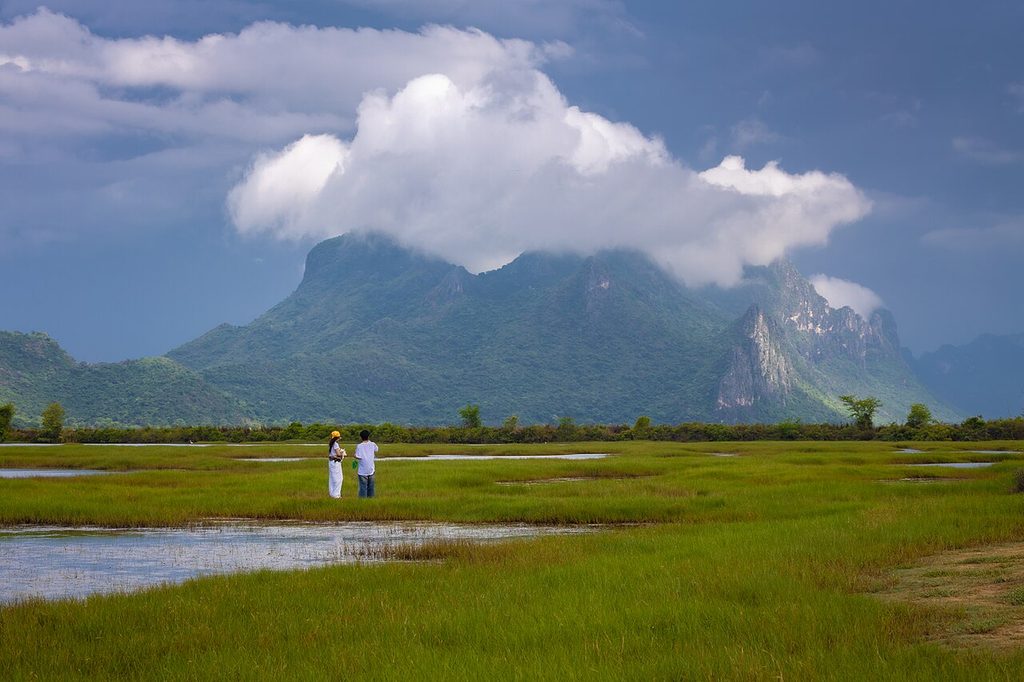
Photo by Rungsilp Sasitorn on Wikimedia Commons, licensed under CC BY-SA 4.0
Khao Sam Roi Yot National Park is known for its limestone mountains, wetlands and quiet coastline, but its most famous attraction is Phraya Nakhon Cave. Inside the enormous cavern stands the small Kuha Karuhas royal pavilion, illuminated through an opening in the cave roof when the conditions are right.
This is one of the most memorable day trips from Hua Hin, but it is also among the most physically demanding. Reaching the pavilion requires a steep climb, even if you take a boat for the first part of the journey.
Reaching the Cave
The trip begins at Bang Pu, where you can either walk over the headland to Laem Sala Beach or take a short boat ride around it. Walking provides attractive views over the coast but adds another steep climb and descent to the day.
The boat is the easier option, although it only avoids the first section. From Laem Sala Beach, everyone must follow the steep and uneven trail up to the cave. Boat services depend on sea and weather conditions and may not operate when the water is rough.
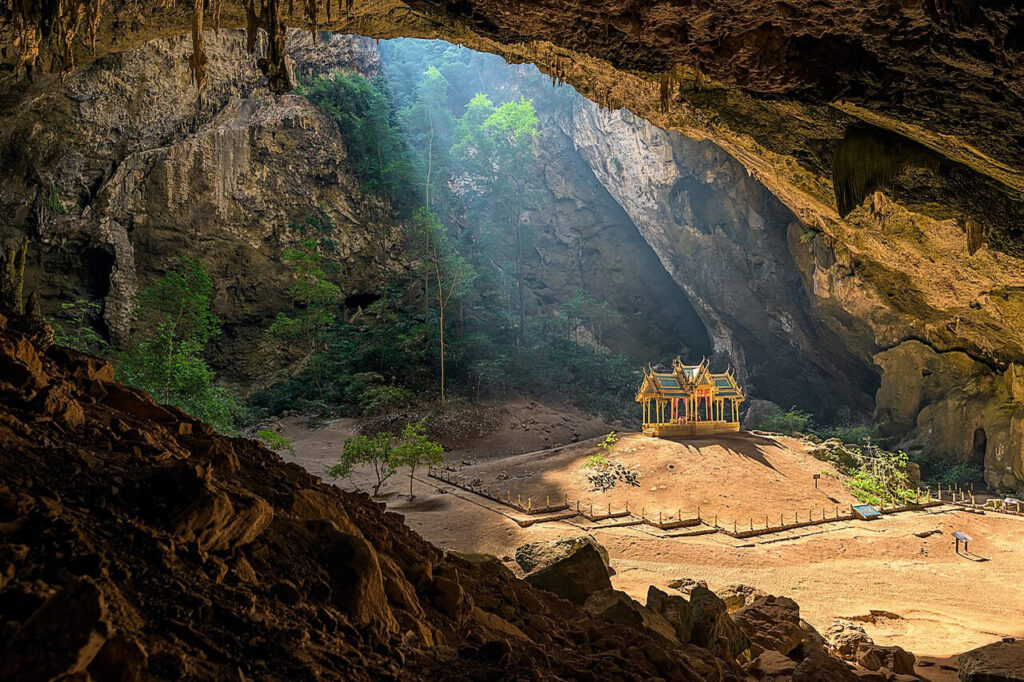
Photo by BerryJ on Wikimedia Commons, licensed under CC BY-SA 4.0
The Climb to Phraya Nakhon Cave
The trail from Laem Sala Beach is relatively short but steep, with rocky steps and uneven sections. The heat and humidity can make it more demanding than the distance suggests, particularly during the return climb and descent.
Inside the cave, a natural opening allows sunlight to reach the Kuha Karuhas Pavilion. The familiar photographs showing the pavilion in a dramatic beam of light are usually taken during the late morning, although the exact effect depends on the season, weather and position of the sun.
Wear suitable shoes, carry plenty of water and start early enough to avoid the strongest afternoon heat. The trail can become slippery after rain and is not suitable for visitors with limited mobility.
How Much Time to Allow
Allow at least four hours at Bang Pu, including the boat or headland walk, the climb to the cave and time at Laem Sala Beach. With the drive from Hua Hin, this is best treated as a full-day excursion.
It is possible to stop at Sam Roi Yot Beach before or after visiting the cave, but combining Phraya Nakhon with the entire coastal drive through Pak Nam Pran and Khao Kalok can make the day feel rushed. Visitors primarily interested in the scenery and beaches should follow the coastal route on a separate day.
Other Places Inside the National Park
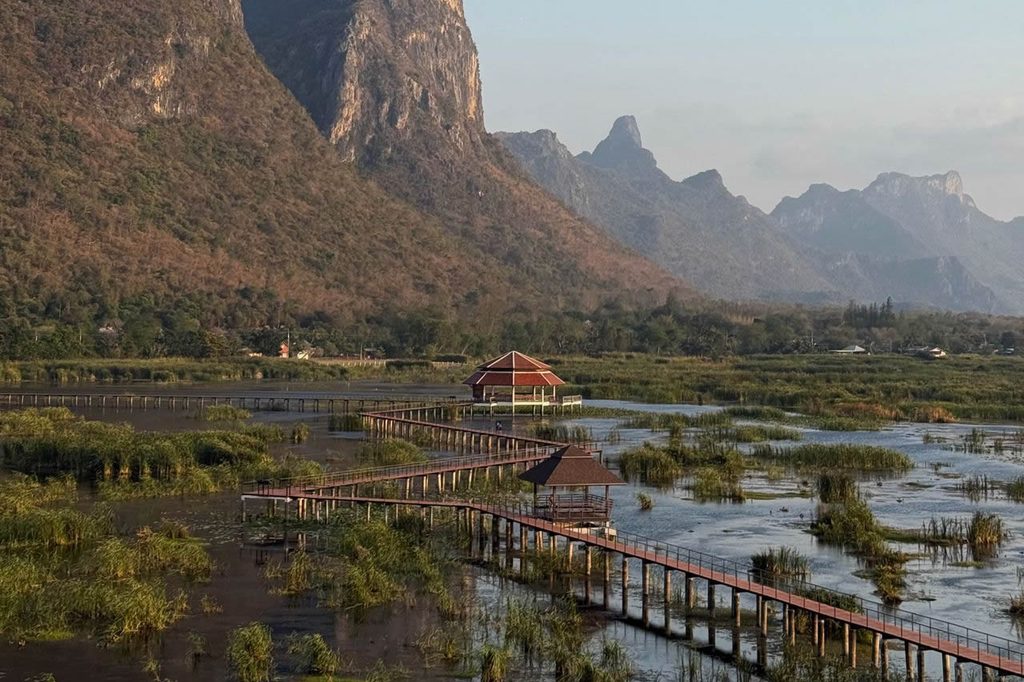
Phraya Nakhon Cave receives most of the attention, but Khao Sam Roi Yot National Park covers several separate areas. Bueng Bua Nature Observation Centre has a raised boardwalk across the freshwater marsh, with excellent views of the surrounding limestone mountains. It is particularly attractive early in the morning or later in the afternoon, when temperatures are lower and birds are more active. Check the condition of the boardwalk locally because sections may occasionally close for maintenance.
Khao Daeng Viewpoint provides another perspective over the park after a short but steep climb. Boat trips through the nearby Khao Daeng canal may also be available, depending on local conditions.
These attractions require additional driving and should not be treated as quick additions to the cave visit. If Phraya Nakhon is your priority, choose no more than one extra stop or stay overnight to explore the park at a more comfortable pace.
At a Glance
- Travel time: Approximately 75 to 90 minutes from central Hua Hin
- Time needed: Most of a day
- Best for: Hiking, limestone scenery and one of Thailand’s most distinctive cultural landmarks
- Physical effort: Moderate to strenuous
- Transport: Car, scooter, hired driver or organised tour
- Boat option: Available between Bang Pu and Laem Sala Beach when sea conditions permit
- Important: The boat avoids the first headland but not the steep climb to the cave
- Worth staying overnight: Optional, particularly if you also want to explore the beaches and other parts of the national park
Kui Buri National Park: Wild Elephants in Their Natural Habitat
Kui Buri National Park is one of the best places in Thailand to observe wild Asian elephants in their natural environment. Unlike an elephant attraction or sanctuary, the animals roam freely through the forest and grasslands, and visitors watch them from designated areas at a respectful distance.
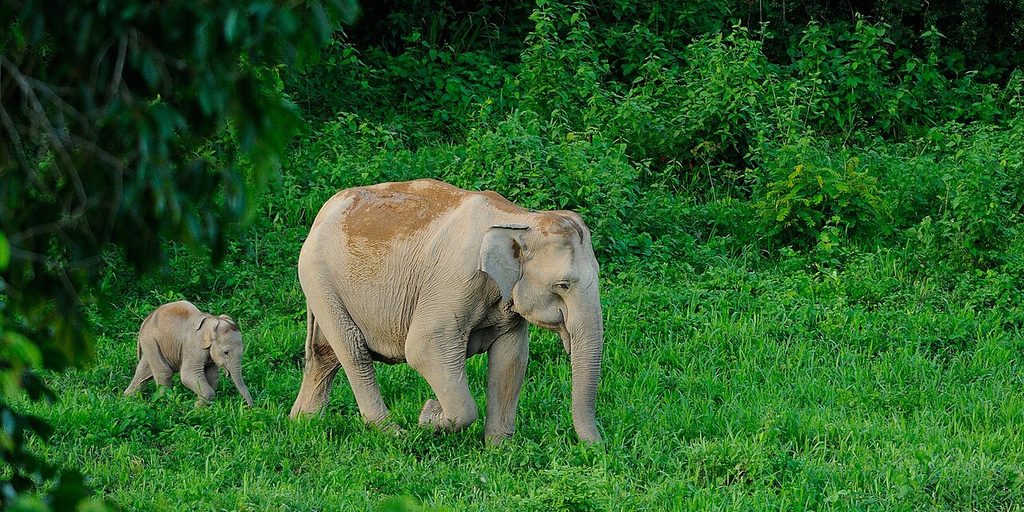
Photo by Tontan Travel on Wikimedia Commons, licensed under CC BY-SA 2.0
Elephants are the main attraction, but gaur, deer, wild boar and numerous bird species also inhabit the park. Sightings can never be guaranteed, although Kui Buri has developed a strong reputation for regular elephant encounters.
How the Wildlife Safari Works
Wildlife watching takes place around the Huai Luek Ranger Station, which is separate from the national park headquarters. Entering “Kui Buri National Park” into a navigation app may direct you to the wrong location, so make sure your destination is the dedicated wildlife-watching area.
After arriving at the visitor centre, you leave your own vehicle and join an authorised safari pickup with a local driver and guide. Private vehicles are not permitted along the wildlife-watching route.
The pickups travel between several observation points overlooking grasslands and forest edges. Guides communicate with one another when animals are spotted, which improves the chances of finding elephants during the visit.
Best Time for Wildlife Watching
Wildlife safaris operate during the afternoon, with animal activity generally increasing later in the day. Arriving around 3:00 pm normally provides enough time to register, arrange a vehicle and enter the park before the best viewing period.
Avoid arriving close to closing time because reaching the observation areas takes time. Opening hours, access and safari arrangements can occasionally change, so check the current situation before travelling from Hua Hin.
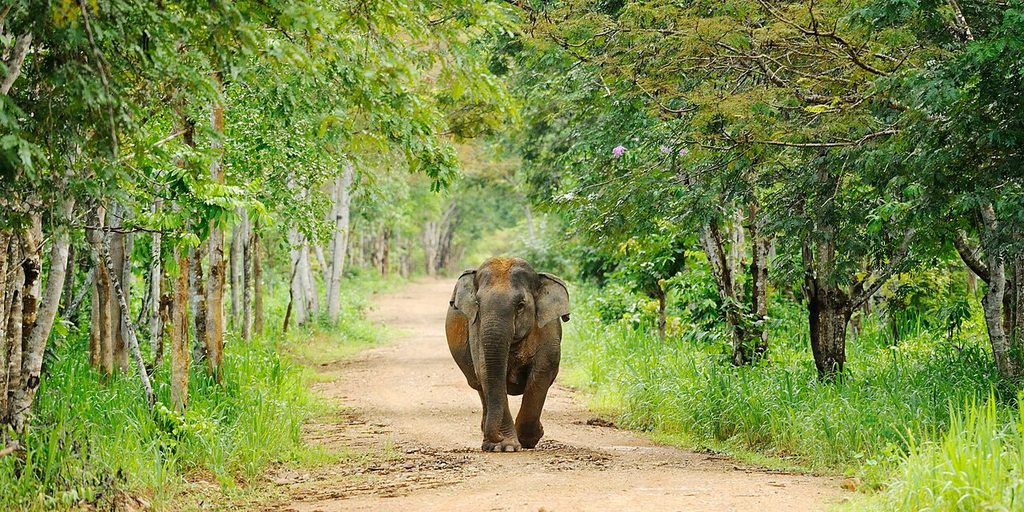
Photo by Tontan Travel on Wikimedia Commons, licensed under CC BY-SA 2.0
What to Expect
The experience is closer to a small-scale safari than a conventional national park visit. Most of the time is spent riding in the back of an open pickup or waiting quietly at observation points.
Some elephants may appear relatively close to the road, while others remain far across the grasslands. Binoculars or a camera with a zoom lens can be useful. Remain quiet, follow the guide’s instructions and remember that the animals decide whether and where they appear.
The open vehicles provide excellent visibility but little protection from sun or rain. Bring water, sun protection and a light rain jacket during the wetter months.
Planning the Trip from Hua Hin
The wildlife-watching entrance is approximately 85 kilometres from Hua Hin. Allow around 90 minutes to two hours for the drive, depending on traffic and your starting point.
Because the safari begins in the afternoon, there is no need to leave Hua Hin early in the morning. A private car, hired driver or organised half-day tour is the most practical option because no useful public transportation reaches the wildlife entrance.
It is possible to combine Kui Buri with Phraya Nakhon Cave, but this creates a long and physically demanding day. For a more comfortable trip, visit Kui Buri independently or combine it with a relaxed morning beside the coast.
At a Glance
- Travel time: Approximately 90 minutes to two hours from central Hua Hin
- Time needed: Half a day, including the drive
- Best for: Wild elephants, gaur and nature photography
- Physical effort: Low, although the safari pickups can be bumpy
- Best time: Late afternoon
- Transport: Car, hired driver or organised tour
- Additional costs: National park admission and a guided safari vehicle
- Important: Navigate to the Huai Luek wildlife-watching area, not the national park headquarters
- Sightings guaranteed: No, these are genuinely wild animals
- Worth staying overnight: Usually unnecessary from Hua Hin
Prachuap Khiri Khan and Ao Manao
Around 90 kilometres south of Hua Hin, Prachuap Khiri Khan is a compact provincial capital surrounded by curved bays and steep limestone hills. It feels noticeably quieter and less tourism-oriented than Hua Hin, making it a good choice for visitors who want to see a more everyday Thai seaside town.
The drive normally takes around 90 minutes to two hours. Prachuap can be visited as a long day trip, although staying overnight allows more time to enjoy the waterfront without watching the clock.
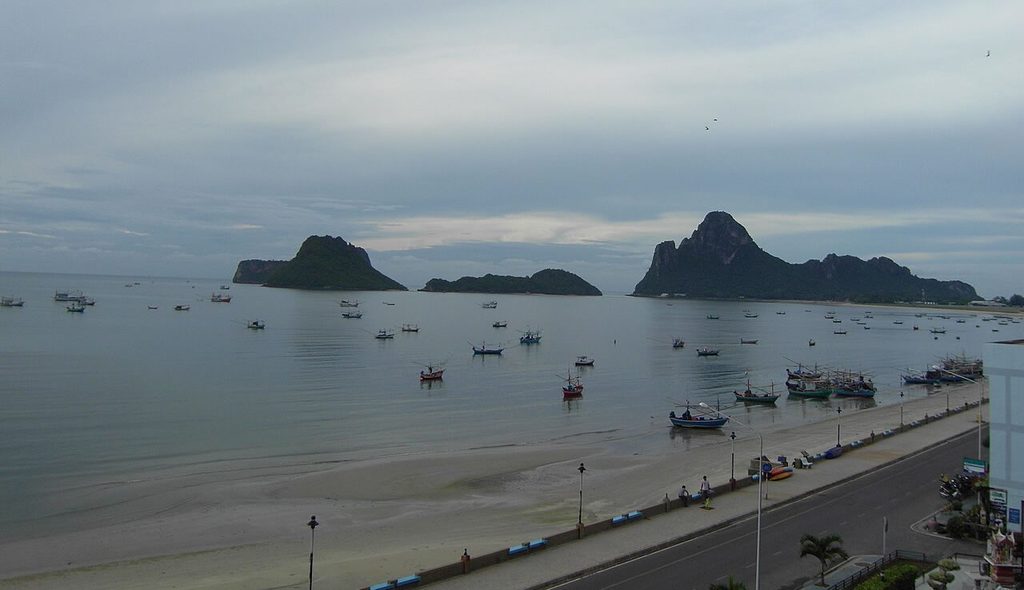
Photo by Mozhar on Wikimedia Commons, licensed under CC BY-SA 3.0
Prachuap Khiri Khan Town
The town centre sits beside Ao Prachuap, where a waterfront road follows the bay past fishing boats, local restaurants and small cafés. It is pleasant for a walk or a slow drive, particularly later in the afternoon when the temperature begins to drop.
One of the town’s most recognisable landmarks is Khao Chong Krachok, also known as Mirror Mountain. A staircase of almost 400 steps leads to Wat Thammikaram and wide views over the town and surrounding bays.
The climb is optional and can be tiring in the heat. Macaques live around the hill and can be persistent, so avoid carrying visible food and keep phones, sunglasses and loose belongings secure.
Ao Manao
A few kilometres south of the town centre, Ao Manao is a sheltered, crescent-shaped beach inside Wing 5 of the Royal Thai Air Force. The bay is generally calmer than many of the more exposed beaches along this coast, with shade, food stalls and places to sit near the sand.
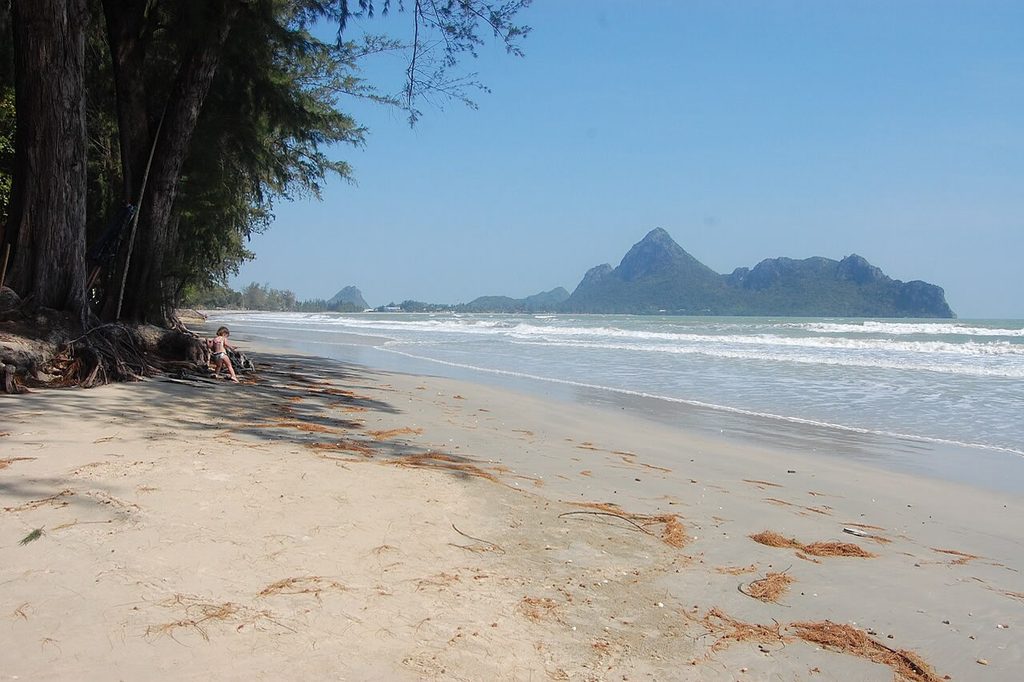
Photo by Immoreel on Wikimedia Commons, licensed under CC BY-SA 3.0
Visitors enter through a military checkpoint, so carry a passport or other photo identification. Access arrangements can change when military activities are taking place, and any signs or restrictions concerning photography should be respected.
Ao Manao is best treated as a place to spend several unhurried hours rather than a quick photo stop. You can have lunch, swim when conditions are suitable and enjoy the view of the limestone headlands enclosing the bay.
A Note About Khao Lom Muak
Khao Lom Muak rises beside Ao Manao and is also known for its population of dusky leaf monkeys. However, the climb to the summit is not open every day. Access is normally restricted to designated dates or special events.
The summit route is steep and strenuous, with sections where ropes are used. For a normal day trip, it is better to enjoy the mountain from below rather than plan the entire visit around reaching the top.
Planning the Day
Leave Hua Hin in the morning and begin with Prachuap’s waterfront and town centre. Visitors who are comfortable with steps can climb Khao Chong Krachok before the day becomes too hot. Continue to Ao Manao for lunch and a few hours beside the beach before driving back to Hua Hin.
It is possible to complete the trip in one day, but Prachuap is also a good overnight destination. Staying until the evening gives you more time to enjoy the waterfront, local restaurants and the town’s relaxed atmosphere.
At a Glance
- Travel time from Hua Hin: Approximately 90 minutes to two hours
- Time needed: A full day, or one night for a more relaxed visit
- Best for: Bay scenery, local atmosphere, waterfront walks and a quiet beach
- Transport: A car is the most convenient option, particularly for reaching Ao Manao
- Physical effort: Low unless climbing Khao Chong Krachok
- Remember: Carry photo identification for entry through Wing 5
- Worth staying overnight: Yes, especially if you enjoy quiet seaside towns
Ban Krut: Better as an Overnight Escape
Ban Krut lies approximately 155 kilometres south of Hua Hin, with the drive normally taking around two hours and 20 minutes each way. It is possible to visit in one long day, but the amount of driving leaves relatively little time to enjoy the destination. Ban Krut makes much more sense as a relaxed overnight escape.
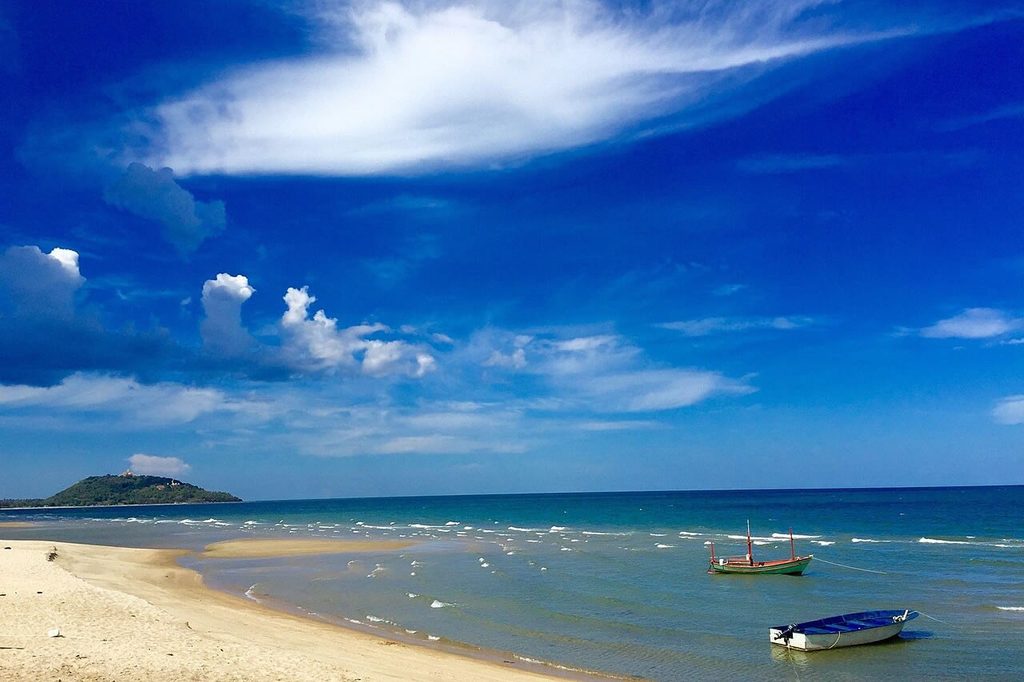
Photo by Bossficial on Wikimedia Commons, licensed under CC BY 4.0
The appeal is not a long list of attractions. It is the combination of an uncrowded beach, coconut palms, quiet coastal roads and a small seaside community that remains considerably less developed than Hua Hin.
Ban Krut Beach
Ban Krut Beach extends for several kilometres along the Gulf of Thailand. Development is low-rise and spread out, with small resorts, restaurants and cafés rather than large hotels or busy entertainment areas.
The coastal road is suitable for a slow drive or bicycle ride, with frequent places to stop beside the sea. The beach is generally quiet, although swimming conditions depend on the weather and season.
Ban Krut is particularly suitable for visitors who want space, scenery and a slower pace rather than organised activities. Much of the experience consists simply of walking along the beach, eating seafood and enjoying the absence of crowds.
Wat Thang Sai and the Hilltop View
At the northern end of the beach, Thong Chai Mountain separates two sections of coastline. The hill is home to Wat Thang Sai and the impressive Phra Mahathat Chedi Phakdi Prakat, a temple complex distinguished by its golden spires.
The elevated location provides wide views along the coast and across the Gulf of Thailand. Even visitors who are not especially interested in temples may find the viewpoint worthwhile.
Dress respectfully when entering the temple grounds, covering shoulders and knees. The area is best visited in the morning or later in the afternoon, when temperatures are more comfortable.
Day Trip or Overnight?
A Ban Krut day trip requires an early start. You could visit the temple, have lunch near the beach and spend a few hours by the sea before beginning the return journey. However, this involves close to five hours on the road and turns a peaceful destination into a fairly demanding day.
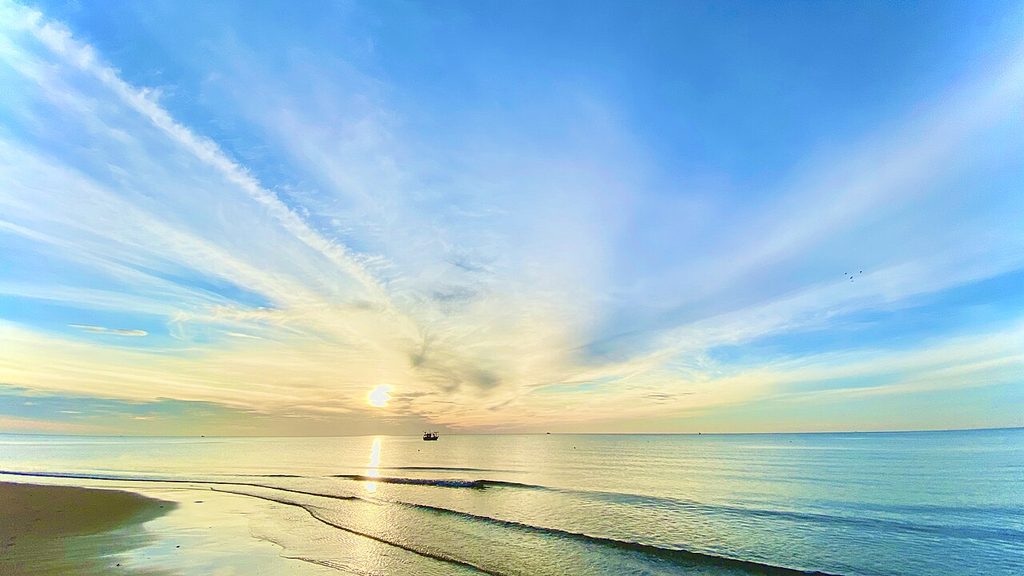
Photo by Bossficial on Wikimedia Commons, licensed under CC BY 4.0
Staying for one night changes the experience considerably. It allows time for an evening meal beside the coast, an unhurried morning walk and a second visit to the beach before returning to Hua Hin.
Ban Krut also has a railway station, making it possible to travel from Hua Hin by train. Journey times and convenient services vary, so check the current timetable before planning the trip. A car remains more practical for exploring the different parts of the beach and reaching the temple.
📌 For more detailed local information, including beaches, restaurants and transport, see this independent guide to Ban Krut.
At a Glance
- Travel time from Hua Hin: Approximately two hours and 20 minutes by car
- Time needed: A very long day, but preferably one or two nights
- Best for: Quiet beaches, coastal scenery, cycling and a slower pace
- Main sight: Wat Thang Sai and Phra Mahathat Chedi Phakdi Prakat
- Transport: Car or train, although a car is more convenient locally
- Physical effort: Low, apart from walking around the hilltop temple complex
- Worth staying overnight: Definitely
Choosing the Right Trip from Hua Hin
The best trip depends less on distance than on how you want to spend the day. Some destinations work well as relaxed half-day outings, while the national parks and longer coastal journeys deserve an early start and a more focused itinerary.
There is little benefit in trying to combine too many places. A temple, waterfall, wildlife safari or quiet stretch of coastline is usually more enjoyable when it is given enough time rather than treated as another stop on a crowded schedule.
Hua Hin makes a convenient base for exploring this part of Thailand, but destinations such as Prachuap Khiri Khan and Ban Krut also reward visitors who slow down and stay overnight.
Hua Hin Hub
Explore my collection of Hua Hin guides covering living, healthcare, costs, accommodation, retirement, and everyday life on Thailand’s Gulf Coast.
💬 Have you taken a memorable trip from Hua Hin that should be included here? Share your experience in the comments.