
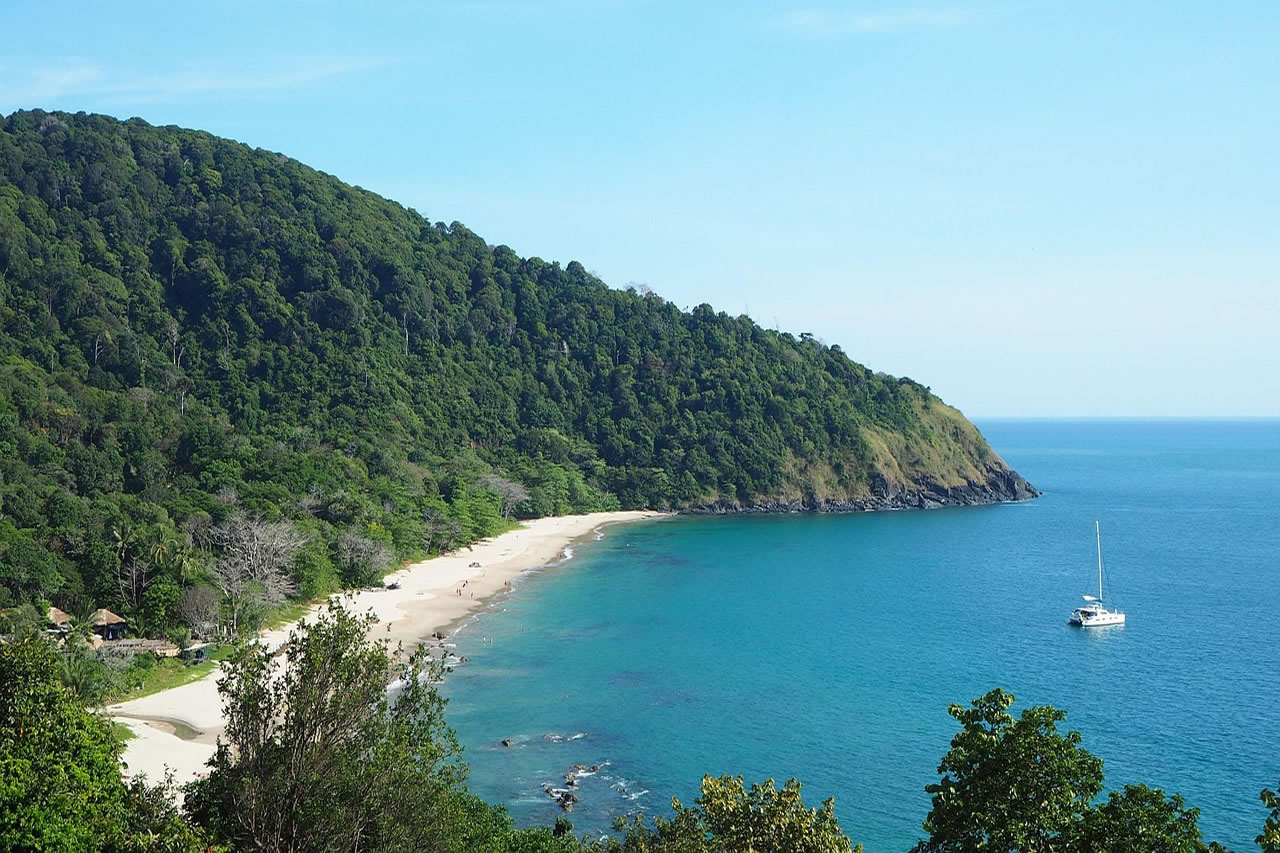
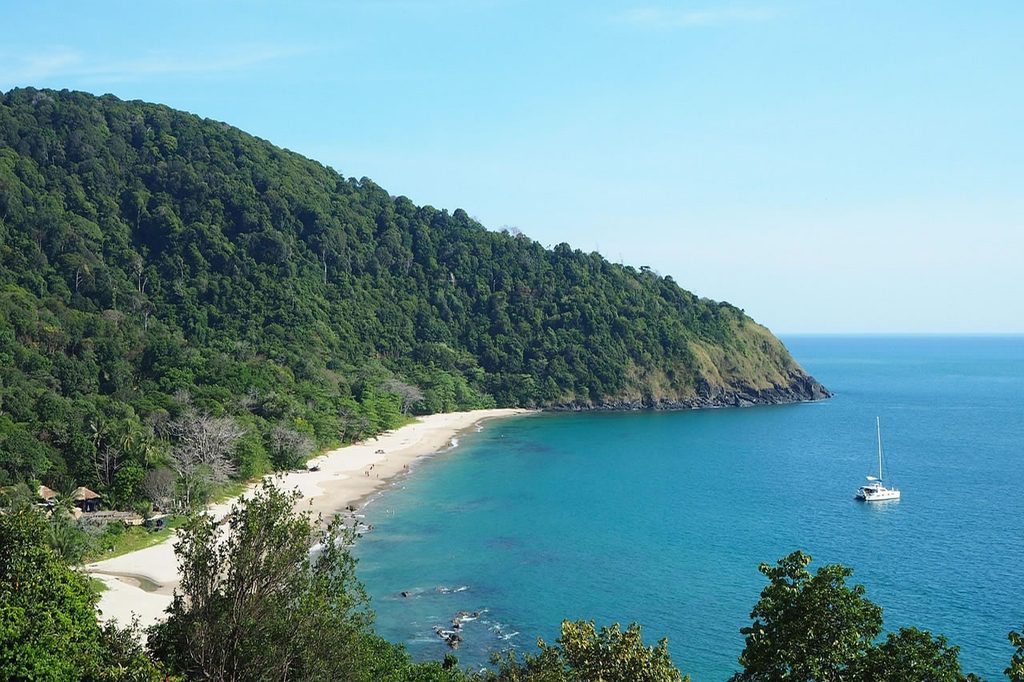
Koh Lanta offers a slower-paced island holiday on Thailand’s Andaman coast, with long beaches, small coastal communities and enough to explore beyond your resort. Most visitors stay on Koh Lanta Yai, where the west coast has the main beaches and accommodation, while the east coast offers a different setting around Lanta Old Town.
The island suits couples, families and travellers who enjoy beach time without needing a packed schedule. Backpackers and remote workers also find reasons to stay longer. There are beach bars and places to socialise, but nightlife is generally low-key. Your choice of base matters: some areas put restaurants and everyday conveniences within easy reach, while others suit visitors looking for a quieter stay who are comfortable arranging transport.
Beyond the beaches, you can explore the Old Town, visit the national park, paddle through mangroves or take a boat trip to nearby islands and reefs. The season makes a considerable difference, particularly for swimming and offshore excursions.
This guide covers when to visit, how to get there, the best beaches and things to do, where to stay, and the practical details that will help you plan your time on Koh Lanta.
📌 Affiliate Disclosure: Some links and booking tools on this page are affiliate partnerships. If you make a purchase through them, I may earn a commission at no additional cost to you. This helps support Thrive in Thailand and allows me to continue creating free content. Learn more in my Affiliate Disclosure.
Where Is Koh Lanta?
Koh Lanta is in Krabi province on Thailand’s Andaman coast, south of Krabi Town and southeast of Phuket. It belongs to an island group that includes Koh Lanta Yai, Koh Lanta Noi and several smaller islands.
The two main islands have different roles:
- Koh Lanta Yai is where most visitors stay, with the main beaches, resorts, restaurants and tourist facilities.
- Koh Lanta Noi lies between Lanta Yai and the mainland. It is less developed for tourism, with villages, farmland and a quieter local atmosphere.
A bridge connects the two islands. When travelling overland from the mainland, you cross to Koh Lanta Noi by car ferry before continuing across the bridge to Koh Lanta Yai.
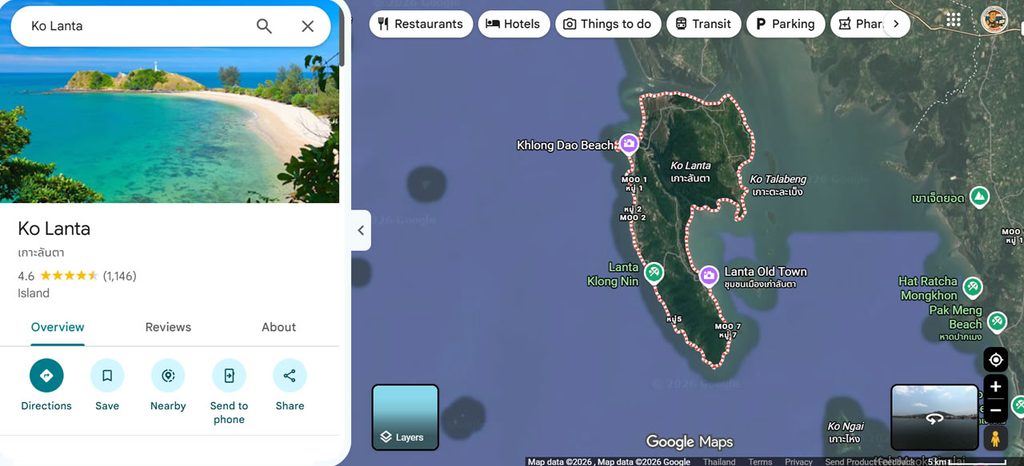
On Lanta Yai, most beach accommodation stretches along the west coast. Saladan, at the northern end, is an important arrival and service point, while Lanta Old Town sits on the east coast. The island’s southern tip forms part of Mu Ko Lanta National Park.
Koh Phi Phi lies to the northwest, while Koh Ngai, Koh Kradan and Koh Mook lie farther south towards Trang. This location makes Koh Lanta a useful base for offshore excursions or a stop on a longer journey along the Andaman coast.
Koh Lanta on the Map
Click the image below to open the Koh Lanta location in Google Maps in a new tab.
Best Time to Visit
November to April is generally the best time to visit Koh Lanta, especially for beach holidays, snorkelling and diving. December to February offers a good balance of more settled weather and manageable heat, although accommodation demand and prices rise around Christmas and New Year.
November to February: Main Holiday Season
The rainy season usually eases during November, bringing better conditions for beach days and offshore excursions. November can still have unsettled spells.
📌 December to February offers the widest choice of accommodation, restaurants and activities, making it a popular period for families and first-time visitors.
March to April: Hotter Weather
March and April remain suitable for beach holidays, but the heat becomes more noticeable.
These months can offer better accommodation value outside holiday periods. Songkran, Thailand’s traditional New Year in mid-April, can bring a temporary increase in domestic travel demand.
May to October: Rainy and Low Season
The southwest monsoon brings more rain and rougher seas. Sunny periods still occur, but conditions are less reliable for swimming and offshore excursions.
Some accommodation, restaurants and tour businesses close or reduce their services. Passenger boat connections may also be limited, while protected offshore sites such as Koh Rok and Koh Haa have seasonal closures.
📌 Lower room rates and fewer visitors can make this season appealing for a quiet stay. However, rough surf and strong currents can make the west-coast beaches unsuitable for swimming.
For a visit focused on beaches and boat trips, December to March is a sensible choice. November and April can offer a useful compromise between weather, visitor numbers and price, with more variable weather in November and greater heat in April.
Not sure if it’s a good month to visit?
Use the Monsoon Weather Checker to choose a destination and month to see a clear Go / Iffy / Avoid signal from Thailand’s Meteorological Department climate averages (historical; no forecasts), plus typical rainfall, rainy days, temperature, and a one-line sea conditions note.
How to Get there
Koh Lanta has no airport. Most visitors arrive either by road from Krabi, including a short car-ferry crossing, or by passenger ferry or speedboat from another Andaman destination. From Bangkok, flying to Krabi and continuing by road is usually the most practical option.
📌 The prices below are approximate one-way fares. Costs and journey times vary by operator, season and your accommodation’s location.
By Air
Krabi Airport is the closest and most convenient airport. Flights from Bangkok take around 1 hour 20 minutes, followed by a road transfer to Koh Lanta.
Allow approximately 2–3 hours from Krabi Airport to your accommodation, with additional time possible for ferry queues, shared-van stops or hotels farther south.
- Shared minivan: Around ฿400–฿600 per person. An economical option for solo travellers and couples, although departure waits and multiple drop-offs can lengthen the journey.
- Private car or minivan: Approximately ฿2,500–฿3,500 per vehicle, depending on vehicle size and destination. This is more convenient for families, groups or travellers with substantial luggage.
Trang Airport is another option, particularly if it fits your wider itinerary. The onward road journey takes roughly 3 hours, and transfers generally require more planning than from Krabi.
Phuket Airport offers a wider range of international flights, but it is farther away. Onward travel is by road or by passenger boat, with a separate transfer from the airport to the departure pier.
By Train
There is no railway station on Koh Lanta or in Krabi. Trang is a useful rail gateway, with overnight trains from Bangkok followed by an onward road transfer.
Allow roughly 14–16 hours for the train journey, then around 3 hours from Trang to Koh Lanta. A second-class sleeper typically costs approximately ฿800–฿1,200, depending on the service, berth and booking channel; the island transfer costs extra.
📌 This option suits travellers who enjoy train journeys or want to include Trang in their trip. Flying to Krabi is considerably quicker.
By Bus or Minivan
From Bangkok, you can take an overnight bus to Krabi and connect with a minivan to Koh Lanta. Allow approximately 11–14 hours to Krabi, followed by 2–3 hours to the island, plus connection time.
Budget around ฿800–฿1,200 for the Bangkok–Krabi bus, depending on the class, and approximately ฿350–฿600 for the onward shared minivan.
Shared road services also connect Koh Lanta with places such as Ao Nang, Phuket and Trang. Hotel pickup and drop-off coverage vary, and a transfer advertised as “Koh Lanta” may serve only certain parts of the island.
By Car
The road route crosses from the mainland to Koh Lanta Noi by car ferry, then continues over the bridge to Koh Lanta Yai. You do not need a second ferry between the two islands.
Approximate driving times, including the crossing but allowing only a modest ferry wait, are:
- Krabi Town or Krabi Airport: Around 2–3 hours.
- Trang: Around 3 hours.
- Phuket: Around 4–5 hours, depending on your starting point.
Journey times increase during busy holiday periods and for accommodation towards the southern end of Lanta Yai. The road-and-car-ferry route operates year-round, although ferry operating hours matter for late arrivals.
📌 For rental cars, permission to travel to Koh Lanta and insurance cover during the ferry crossing depend on the rental agreement.
By Ferry or Speedboat
Passenger boats connect Koh Lanta with Phuket, Koh Phi Phi, Krabi and Ao Nang, particularly during the main tourist season. Most services arrive at Saladan Pier, at the northern end of Koh Lanta Yai.
Common routes include:
- Koh Phi Phi to Koh Lanta: Approximately 30–60 minutes, depending on the boat, with fares commonly around ฿600–฿800.
- Phuket to Koh Lanta: Approximately 1½–4 hours, depending on boat type and intermediate stops. Budget roughly ฿1,000–฿1,600.
- Krabi or Ao Nang to Koh Lanta: Often around 2–3 hours by passenger ferry, with fares commonly around ฿600–฿900.
Seasonal speedboats also connect Koh Lanta with islands farther south, including Koh Ngai, Koh Mook, Koh Kradan and Koh Lipe.
Boat schedules are more extensive during the dry season. Some routes reduce services or stop during the monsoon, and rough weather can cause cancellations. Speedboats are quicker but can be uncomfortable in choppy seas.
📌 A road transfer from Krabi Airport can take you directly to your hotel, while a passenger boat usually requires an onward transfer from Saladan.
Book Your Tickets
Planning to visit Koh Lanta? Click the image to compare available bus, train, ferry, and flight connections.
✅ View schedules, travel times, and current ticket prices in one place before you travel.
Getting Around
Koh Lanta’s beaches and attractions are spread out. A stay without renting a vehicle is possible, particularly around the main beach areas, but exploring different parts of the island requires transport.
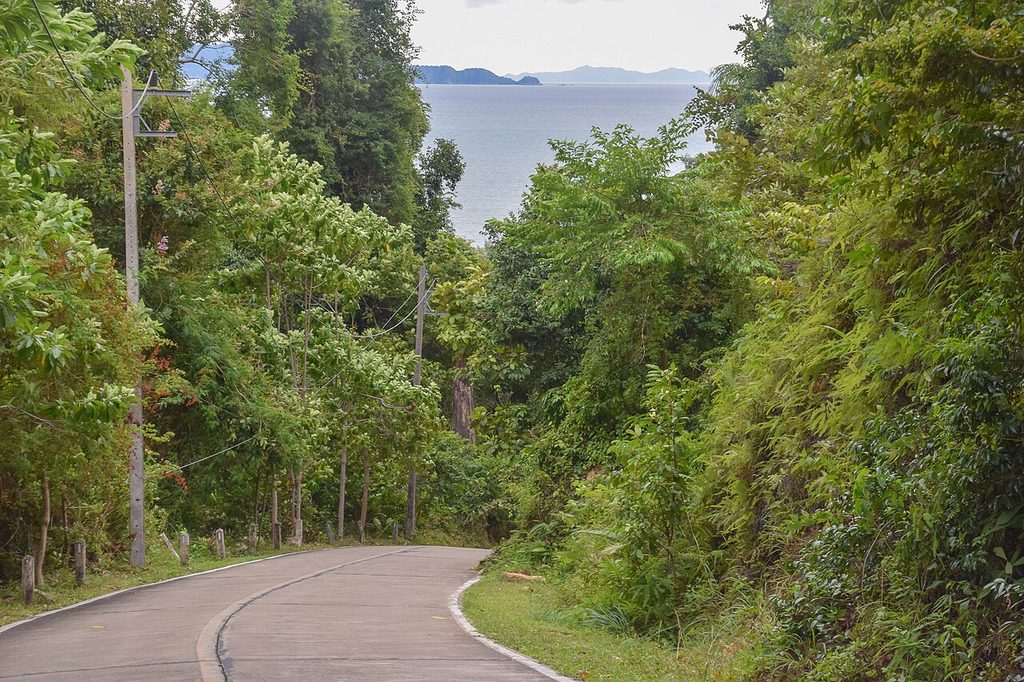
Photo by Krzysztof Golik on Wikimedia Commons, licensed under CC BY-SA 4.0
Tuk-Tuks & Local Taxis
Local transport includes motorcycle tuk-tuks with sidecars, pickup taxis and private cars or minivans. Drivers can usually be arranged through accommodation, with transport also available around Saladan and the main tourist areas.
Fares are negotiated rather than metered. As a rough guide, budget ฿200–฿500 for a local taxi journey, with longer trips, larger vehicles and late-night pickups potentially costing more. Quotes may be per person or for the whole vehicle.
📌 Drivers can also be hired for several hours for outings to Old Town, the national park or the southern beaches.
Public Transport & Ride-Hailing
There is no dependable scheduled public bus network for sightseeing around the island. Pickup taxis may take shared passengers, but services do not provide frequent departures along fixed routes.
📌 Grab and Bolt are currently reported as unavailable on Koh Lanta.
Scooter Rental
A scooter gives experienced riders flexibility to explore different beaches. Basic automatic scooters typically cost around ฿250–฿350 per day, excluding fuel. Prices vary with the model, season and rental duration.
The roads become steeper and more winding towards the south. Sand, loose gravel, potholes and animals can also create hazards.
📌 A helmet and appropriate motorcycle licence and driving documentation are essential. Insurance cover for scooter riding depends on the policy and licence requirements.
Car Rental
A rental car suits families, groups and visitors who want to explore without riding a scooter. Budget approximately ฿1,100–฿1,800 per day for a basic vehicle, with fuel extra.
📌 Availability is more limited than at mainland airports.
Walking
Walking works well for beach time and nearby restaurants within individual resort areas. Distances between beaches and attractions usually require transport.
📌 Pavements are limited, and some roads are poorly lit at night.
Best Things to Do in Koh Lanta
Beyond the beaches, Koh Lanta offers historic waterfront settlements, forest trails, mangrove waterways and activities connected to the island’s food and community life.
Explore Lanta Old Town
On the east coast, Lanta Old Town offers a different atmosphere from the beach areas, with wooden shophouses, small businesses and waterfront restaurants built on stilts. Its history as a trading settlement helps explain the Chinese influences alongside the island’s wider mix of communities.
📌 The main street and waterfront lend themselves to a leisurely stroll, browsing small shops and stopping for lunch overlooking the water. A visit typically takes one to two hours, or longer with a meal.
Visit Mu Ko Lanta National Park
The national park’s visitor area at Laem Tanod, on the southern tip of Koh Lanta Yai, combines a beach, forest and the island’s recognisable white lighthouse. The headland views are the main attraction for many visitors, while a roughly 1.7-kilometre nature trail offers a more active option.
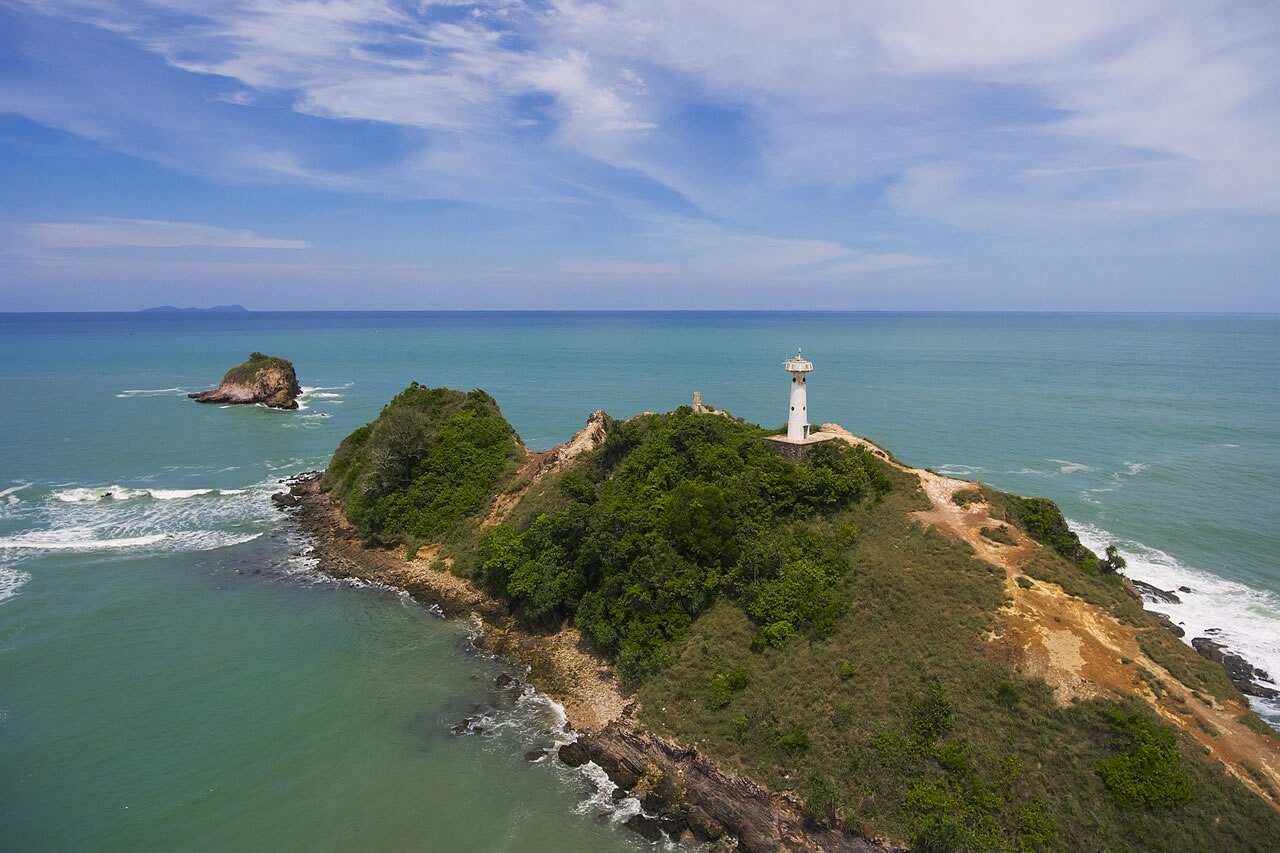
Photo by Wanjak Atikomchakorn on Wikimedia Commons, licensed under CC BY-SA 4.0
A visit takes around two hours, with extra time for the trail. The approach road is steep and winding, and monkeys around the visitor area may try to grab food or bags.
📌 Foreign-visitor entrance fees are currently ฿200 for adults and ฿100 for children aged 3–14, with an additional vehicle charge.
Take a Thai Cooking Class
A cooking class offers a closer look at Thai ingredients, curry pastes and cooking techniques, with time to prepare and eat several dishes.
Time for Lime is one established option. The school states that its profits support Lanta Animal Welfare, giving the activity a connection to the island beyond the meal itself.
Visit Lanta Animal Welfare
Lanta Animal Welfare cares for rescued dogs and cats and runs treatment and sterilisation programmes. A guided visit explains how the organisation rescues, rehabilitates and finds homes for animals.
Tours must be booked in advance, as visitor numbers are limited. They last approximately one hour and currently cost ฿300 for adults and ฿200 for children.
Explore Khao Mai Kaew Cave
For a more demanding activity, Khao Mai Kaew Cave combines a jungle approach with an underground route through rock formations and narrow passages.
The guided excursion involves climbing and some crawling, making it more physically demanding than the island’s easier sightseeing stops. Uneven ground and enclosed spaces are part of the experience, and wet weather can affect access.
Paddle Through the Thung Yee Peng Mangroves
Thung Yee Peng, on the east coast, is a community-based starting point for exploring the mangrove waterways. Kayaking gives you a close view of the roots and tidal channels, while local boat trips offer an alternative to paddling.
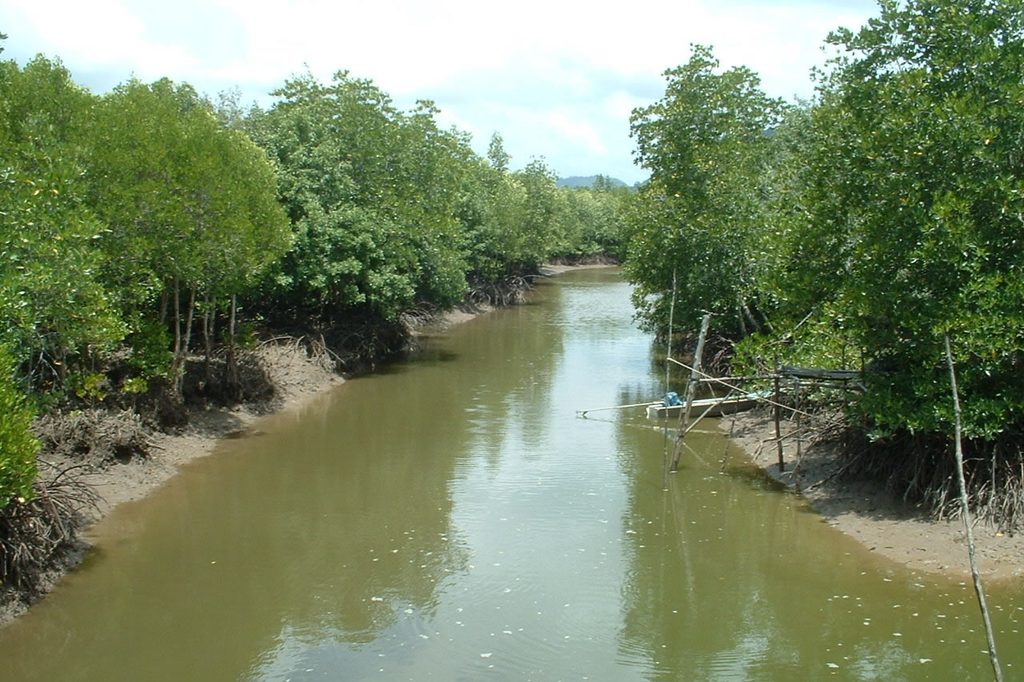
Photo by Dirk Enthoven on Wikimedia Commons, licensed under CC BY 3.0
The waterways provide a contrast to the open beaches, with opportunities to learn about the coastal environment and local livelihoods. Routes and departure times depend on the tides.
Discover Koh Lanta Noi
Across the bridge, Koh Lanta Noi offers a quieter drive through villages, plantations and coastal scenery. There are fewer tourism businesses than on Lanta Yai, with a stronger emphasis on everyday island life.
📌 Its appeal lies in the scenery and village surroundings rather than major visitor attractions. A leisurely outing takes a few hours.
Try Scuba Diving or Develop Your Skills
Koh Lanta has established dive centres offering introductory experiences, certification courses and trips for qualified divers. Beginners can try an instructor-led session without committing immediately to a full course.
Offshore sites vary in depth and currents, so suitability depends on diving qualifications and experience.
📌 Many boat-based diving trips take a full day. Snorkelling excursions and nearby islands are covered in the day-trip section.
Best Beaches
Most of Koh Lanta’s main beaches lie along the west coast of Koh Lanta Yai, but they differ considerably in shoreline, facilities and atmosphere. Some suit swimming and family beach days, while others are better for sunset drinks or a quieter outing.
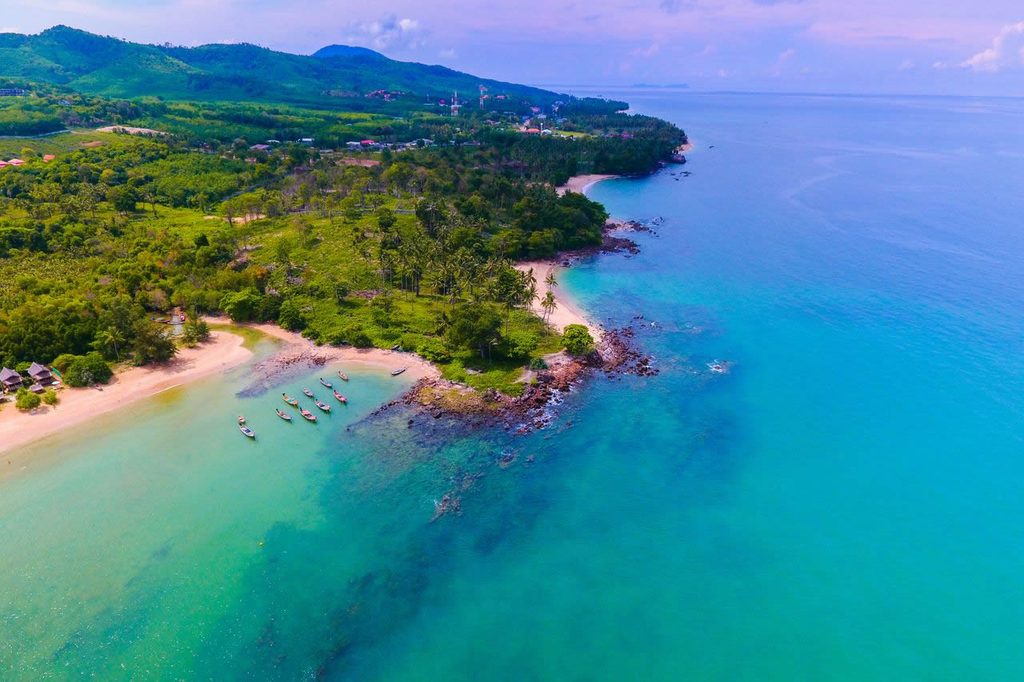
📌 The descriptions below assume reasonably settled dry-season conditions. Tides affect swimming access, and monsoon waves and currents can make beaches unsuitable for swimming.
Klong Dao Beach: A Practical Choice for Families
Near Saladan in the north, Klong Dao has a broad sandy shoreline and a gently shelving seabed. Its shallow water makes it popular with families, although swimming depth lies farther offshore at low tide.
Restaurants and resorts back much of the beach, with meals and refreshments close by and plenty of space for beach walks.
✅ Best for: Families, easy beach days and visitors who value nearby facilities.
Long Beach / Phra Ae: A Good All-Round Option
Long Beach offers a long stretch of sand with room for walking, swimming and settling in for the afternoon. The water generally deepens more quickly than at Klong Dao.
Resorts, restaurants and beach bars are spread along the shoreline. The atmosphere varies between quieter stretches and clusters of beachfront venues.
✅ Best for: Swimming, long beach walks and a balance of space and facilities.
Relax Bay: A Smaller Beach for Lazy Afternoons
Just south of Long Beach, Relax Bay offers a compact sandy shoreline with beachfront restaurants, informal bars and patches of shade. It suits a leisurely afternoon by the sea, with enough facilities nearby for lunch or a sunset drink.
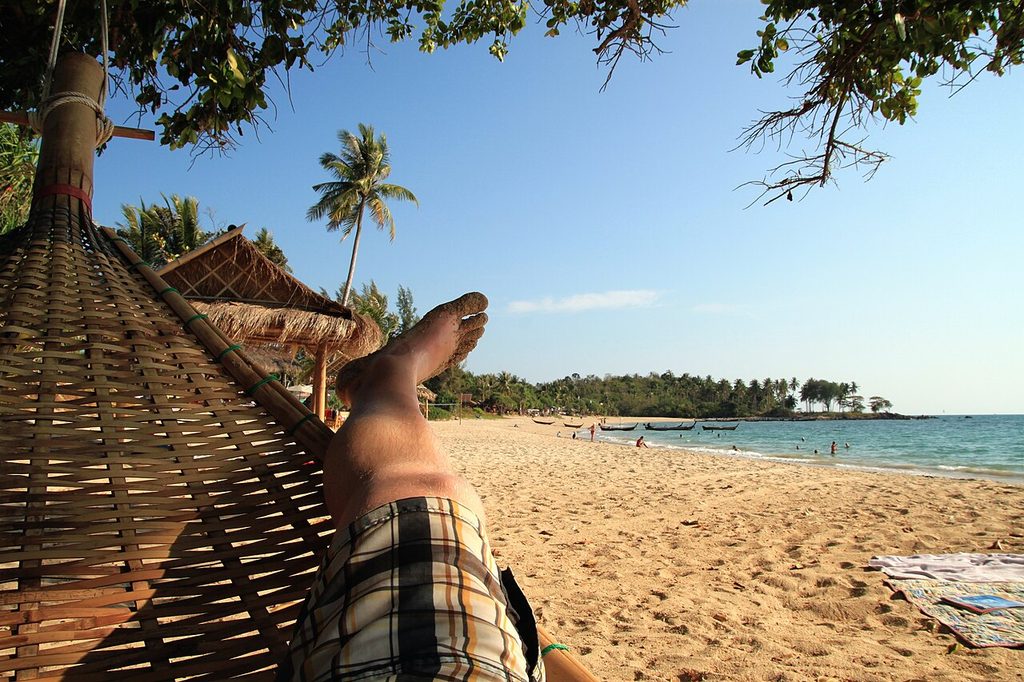
Photo by Johnk996 on Wikimedia Commons, licensed under CC BY 3.0
Swimming varies along the bay. Rocks interrupt parts of the seabed, and low tide makes some stretches shallow and more difficult to enter. Its main appeal is the relaxed beach atmosphere rather than consistently easy swimming.
✅ Best for: Lazy beach afternoons, casual beachfront dining and a smaller setting close to Long Beach.
Klong Khong Beach: Beach Bars & Sunset Evenings
Klong Khong has a relaxed, sociable atmosphere, with bungalow accommodation and informal beachfront places to eat and drink.
Its main limitation is the rocky shoreline exposed at low tide. Swimming is more restricted than at the sandier beaches, and submerged rocks remain a consideration when the tide rises.
It is an appealing place for sunset drinks and dinner by the sea.
✅ Best for: Beach-bar atmosphere, sunset meals and travellers who place less emphasis on swimming.
Klong Nin Beach: Beach Time with Convenient Dining
Farther south, Klong Nin combines a sandy beach with beachfront restaurants and small resorts. Its beach and dining options make it a comfortable place to spend an afternoon or stay for several days.
Much of the beach is suitable for swimming in settled conditions, although rocks interrupt some stretches.
✅ Best for: Couples, leisurely beach days and meals overlooking the water.
Kantiang Bay: A Scenic Southern Beach
Kantiang Bay has a curved sandy shoreline framed by green hills, giving it a more enclosed setting than the longer northern beaches.
Restaurants and accommodation are nearby. The central stretch is sandy, with rocks towards the edges.
✅ Best for: Couples, scenery and a quieter day with some facilities nearby.
Nui Beach & Nui Bay: Smaller Coves to Explore
These are two separate beaches with easily confused names. Nui Beach lies south of Klong Nin, while Nui Bay, also called Ao Nui, lies south of Kantiang Bay.
Both are smaller than the main resort beaches, with more limited facilities. Access involves walking down from the road.
They make worthwhile stops on a southern-coast outing. Swimming and occasional snorkelling depend on waves, visibility and conditions around the rocks.
✅ Best for: Smaller coves, scenery and a change from the main beaches.
Klong Jark & Bamboo Bay: Quieter Southern Outings
Towards the southern end of the island, Klong Jark, also written Klong Chak, and Bamboo Bay have greener, less built-up surroundings.
Shops and restaurants are fewer than at the main northern beaches. Both beaches fit naturally into an outing towards the national park.
✅ Best for: Quiet beach time and exploring the southern coast.
Which Beach Should You Choose?
Klong Dao stands out for shallow water and family convenience, while Long Beach offers swimming and a broader mix of accommodation and beach venues. Klong Nin combines beach time with nearby dining, and Kantiang Bay offers a scenic southern setting. Klong Khong is stronger on atmosphere than swimming, while the smaller southern bays appeal for their quieter surroundings.
📌 For snorkelling, offshore excursions generally offer more reliable opportunities than the main sandy beaches. Those options are covered in the day-trip section.
What & Where to Eat
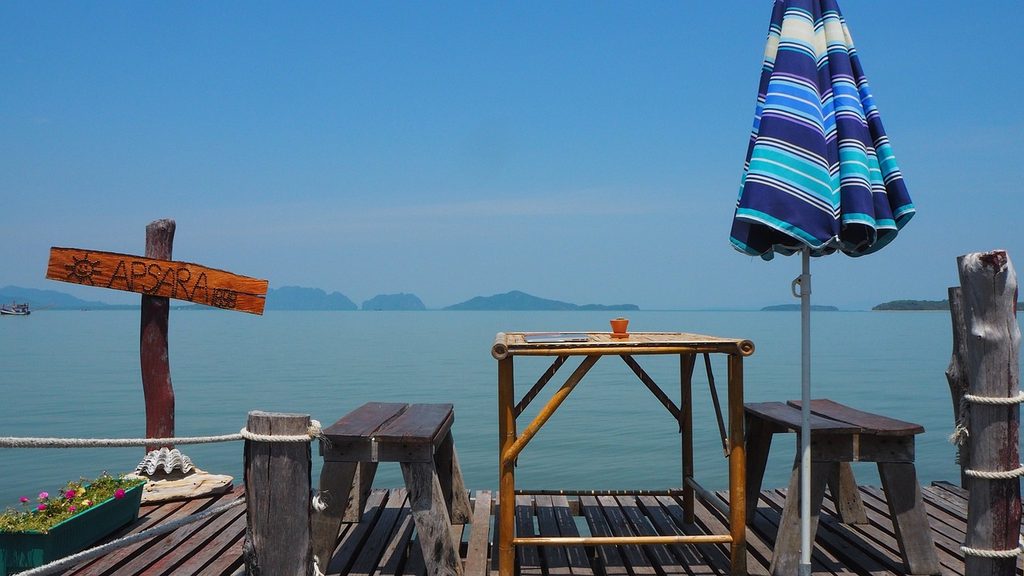
Koh Lanta’s food scene ranges from small roadside kitchens and market stalls to beachfront restaurants and more expensive resort dining. Alongside familiar Thai dishes, southern Thai cooking, seafood and dishes reflecting the island’s Muslim communities give the local food scene its character.
What to Try
Seafood features prominently, from grilled fish and squid fried with garlic to prawns cooked with chilli and herbs. Southern Thai cooking often brings stronger flavours, with turmeric, fresh curry pastes and generous amounts of chilli.
| Dish | What to Expect | Approx. Price | Worth Knowing |
|---|---|---|---|
| Southern Thai curries | Bold flavours from chilli, spices and fresh curry pastes. | ฿80–฿150 for a simple curry-and-rice plate | Some are very hot. Separately ordered curries and seafood versions cost more. |
| Fish fried with turmeric | Fried fish with an aromatic turmeric seasoning. | Varies by species, portion and weight | Check whether the price is for a portion or a whole fish. |
| Sator dishes | Southern “stink beans,” often stir-fried with prawns and chilli paste. | Varies with ingredients and portion | The beans have a distinctive, strong flavour. Dishes may also be spicy. |
| Khao mok gai | Fragrant spiced rice served with chicken. | ฿60–฿100 per plate at a local stall or simple restaurant | Associated with Thai Muslim cooking; accompanying sauces may add heat. |
| Roti | Pan-fried flatbread served with sweet or savoury accompaniments. | ฿30–฿60 for common street-stall versions | Extra fillings or a curry accompaniment can cost more. |
📌 Prices are approximate. Beachfront and resort restaurants generally charge more than local stalls and simple restaurants.
Where to Eat
Saladan offers Thai meals, seafood and casual dining, particularly convenient for visitors staying in the north. Along the west coast, the main beach areas have a broad mix of Thai and international restaurants.
Lanta Old Town combines sightseeing with waterfront dining. Several restaurants have terraces extending over the water.
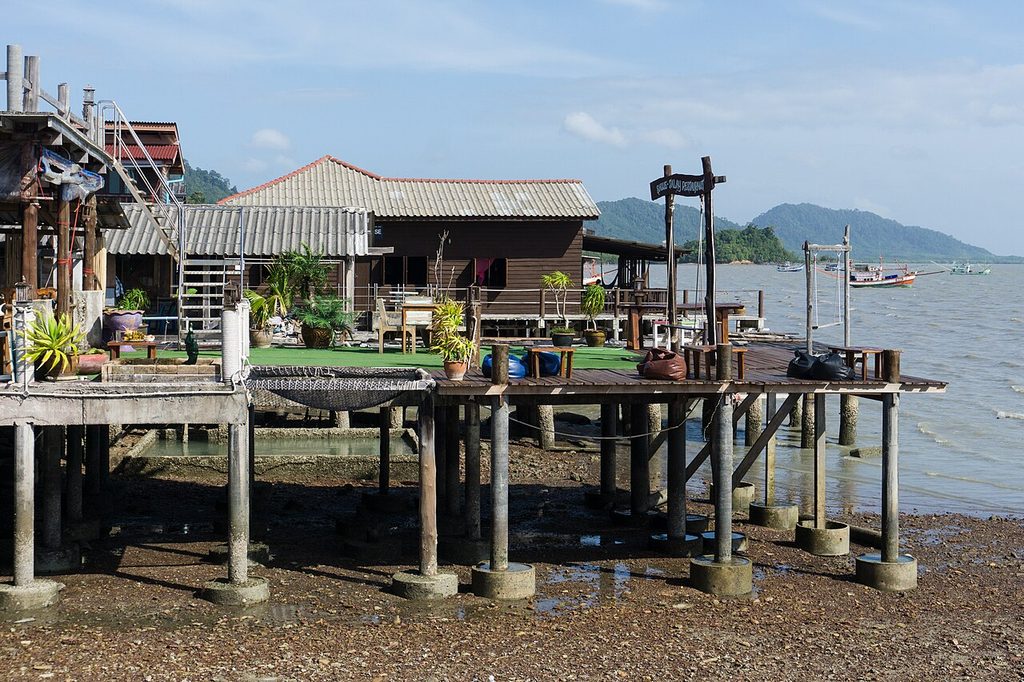
Photo by Alexkom000 on Wikimedia Commons, licensed under CC BY-SA 4.0
A few places to consider for different kinds of meals are:
- Krua Dan Tai: Southern Thai food and stronger regional flavours.
- Happy Veggie, in the Phra Ae area: A vegetarian restaurant with vegan choices.
- Yang Garden, around the southern Long Beach area: International dishes in a garden setting, suited to a more expensive evening meal.
- Drunken Sailors, in Kantiang village: A café and restaurant serving coffee, breakfast and a mix of Thai and Western food.
Street Food & Local Markets
Koh Lanta has rotating local markets selling produce, prepared meals and snacks, including grilled foods, rice dishes, curries, fruit and roti.
These markets offer a closer look at everyday food shopping on the island, with less emphasis on international tourist menus. Shopping and local markets are covered later in the guide.
Typical Food Prices
Typical prices are approximately:
- Simple Thai rice or noodle dish: ฿80–฿150.
- Thai dish in a tourist or beachfront restaurant: ฿150–฿300.
- Café breakfast or international main course: ฿200–฿400.
- Espresso-based coffee: ฿60–฿120.
📌 Seafood prices vary considerably by species, size and preparation. Whole fish, crab and prawns may be priced per dish or by weight. Resort restaurants and more elaborate evening meals can cost substantially more.
Dietary Considerations
📌 Pork and alcohol may be unavailable at Muslim-run restaurants.
Vegetable dishes may still contain fish sauce, shrimp paste or oyster sauce, so a dish described as “vegetable” is not necessarily vegetarian or vegan.
Nightlife & Social Scene
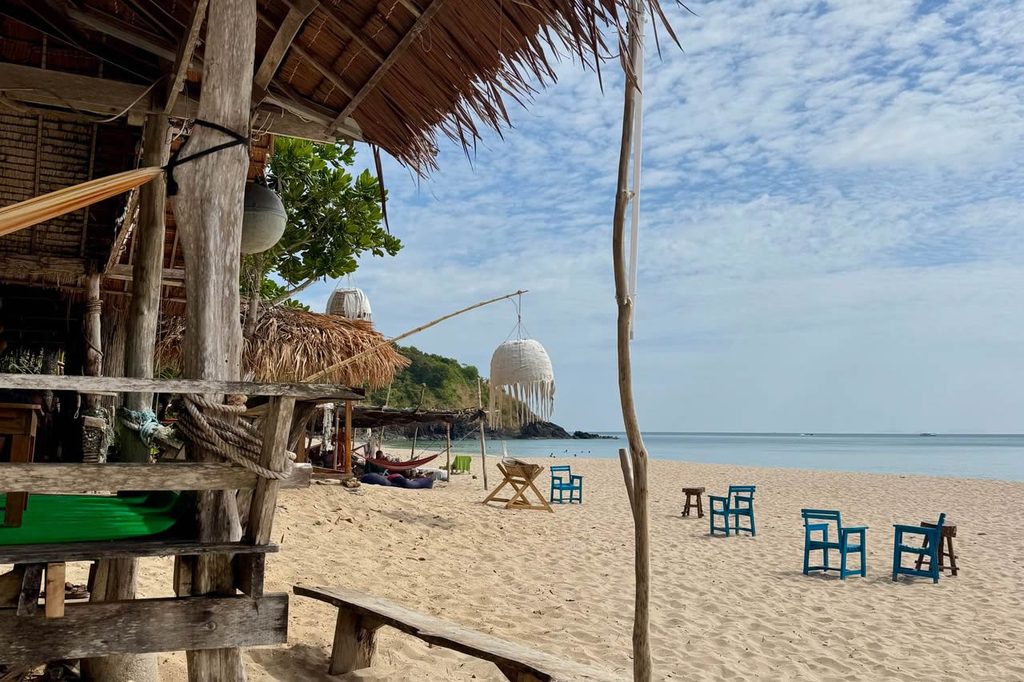
Koh Lanta’s evenings generally revolve around sunset drinks, beachfront dinners and informal bars, with live music, DJs or fire shows at some venues. There are occasional livelier nights, but entertainment is spread between beach areas rather than concentrated in one nightlife district.
Where to Go in the Evening
Long Beach and Klong Khong offer a choice of places to socialise. Long Beach combines restaurant terraces with beach bars, while Klong Khong has a more informal scene around its beachfront bungalow resorts and bars.
Klong Nin suits a leisurely dinner followed by a drink nearby. Kantiang Bay has fewer venues, although individual bars can draw a lively crowd. Klong Dao generally has a quieter, more family-oriented evening atmosphere.
A couple of established options are:
- Lym’s Bar & Restaurant, Long Beach: Beachfront dining with scheduled live music and other evening entertainment.
- Why Not Bar, Kantiang Bay: A beach venue known for live music and fire shows, particularly during the main season.
Meeting Other Travellers
Beach bars offer an easy setting for casual conversations, particularly during high season. For visitors staying longer, coworking spaces, dive courses and other shared activities can provide more regular opportunities to meet people.
📌 The social atmosphere is seasonal. During low season, some venues close and others become considerably quieter.
Where to Stay in Koh Lanta
Klong Dao and Long Beach offer convenient bases, with a broad choice of accommodation, restaurants and shops. Farther south, the balance gradually shifts towards quieter surroundings and greater dependence on transport.
Best Areas to Stay
✅ Klong Dao: Convenient for Families
Klong Dao suits families and visitors who want straightforward access to restaurants, shops and Saladan. Its concentration of accommodation and nearby services makes it a practical base without a rental vehicle.
📌 The setting is more developed than the smaller southern bays.
✅ Long Beach / Phra Ae: A Versatile First-Visit Base
Long Beach offers a broad accommodation choice, from hostels and bungalow resorts to luxury properties. It suits couples, independent travellers and longer-stay visitors who want beach access alongside restaurants, cafés and opportunities to socialise.
📌 The area is spread out, with accommodation and restaurants distributed along different stretches of the beach.
✅ Klong Khong: Informal & Sociable
Klong Khong offers bungalow accommodation, relaxed beach bars and a less polished resort atmosphere. It suits budget-conscious travellers and visitors who enjoy casual evenings by the sea.
📌 Its main compromise is swimming access along the rocky shoreline.
✅ Klong Nin: Beachfront Dining & a Slower Pace
Klong Nin offers a useful balance of beach accommodation and nearby dining. It suits couples and visitors who want a quieter base with restaurants close by.
📌 Properties away from the central restaurant cluster can be less convenient without transport.
✅ Kantiang Bay & the Southern Beaches: Quieter Resort Stays
Kantiang Bay suits visitors who prioritise scenery and a quieter base. Staying near the village gives access to independent dining options, while properties around Klong Jark and Bamboo Bay are more secluded.
📌 These areas suit a resort-focused holiday. The southern location means longer arrival transfers and higher transport costs for outings to the north.
✅ Lanta Old Town: Waterfront Character
Old Town offers small guesthouses and accommodation in or around the historic waterfront settlement. It suits visitors interested in the east coast and a different setting from the beach resorts.
📌 The west-coast swimming beaches require transport from here, and evenings are generally quieter.
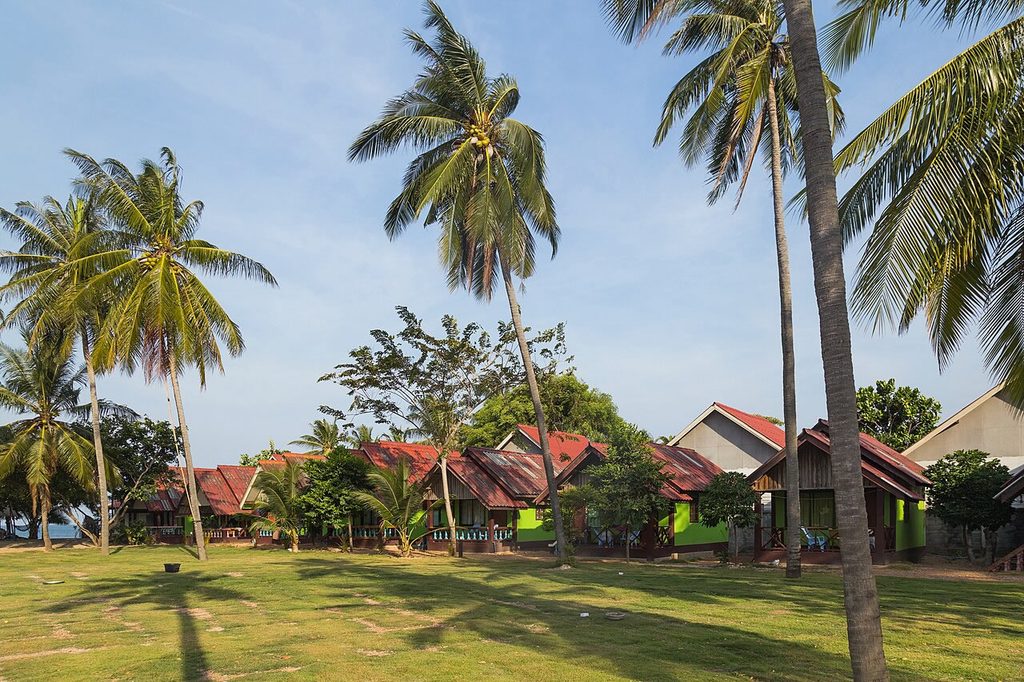
Photo by Marcin Konsek on Wikimedia Commons, licensed under CC BY-SA 4.0
Accommodation Options to Compare
These properties offer different starting points for your search:
| Accommodation | Area | Price | Best Suited For | Key Consideration |
|---|---|---|---|---|
| Hub of Joys Hostel | Long Beach area | From around ฿250 per dorm bed | Budget travellers and solo visitors | Dormitory accommodation with shared facilities. |
| Lanta Pearl Beach Resort | Long Beach | From around ฿900 per room | Visitors seeking simpler private accommodation | Bungalow resort a short walk from the beach, rather than directly beachfront. |
| Lanta Castaway Beach Resort | Southern end of Long Beach | From around ฿1,200 per room | Couples and visitors who prefer a smaller beachfront resort | Dining and diving services on site; bungalow categories cost more than entry-level rooms. |
| Anda Lanta Resort | Klong Jark Beach | From around ฿1,500 per room | Families and visitors seeking a quieter stay | Family villas cost more; the southern location means longer transfers. |
| Layana Resort & Spa | Long Beach | From around ฿4,600 per room | Couples seeking adults-only luxury | Welcomes guests aged 18 and over. |
| Pimalai Resort & Spa | Kantiang Bay | From around ฿7,000 per room | Couples and families seeking a luxury resort stay | Villas cost substantially more. steps and walking distances vary by room location. |
📌 Indicative starting rates may reflect low-season offers. Private-room estimates are for two adults; dorm rates are per person. Rates vary by dates, room category and booking conditions. Check the final total, including taxes, breakfast and any extra charges. Peak-season prices can be substantially higher.
Seasonal Rates & Availability
Low-season rates can offer substantial savings, although some properties reduce their restaurant, transfer and activity services. Christmas and New Year bring higher demand and room rates.
Accommodation Booking
I’ve used Booking.com for many years and have always had good experiences. Agoda is another excellent option and sometimes lists different properties or prices.

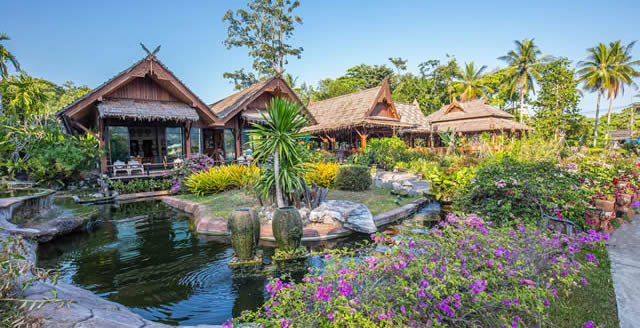
- ✅ Excellent Thailand coverage
- ✅ Great for local hotels & resorts
- ✅ Instant booking confirmation

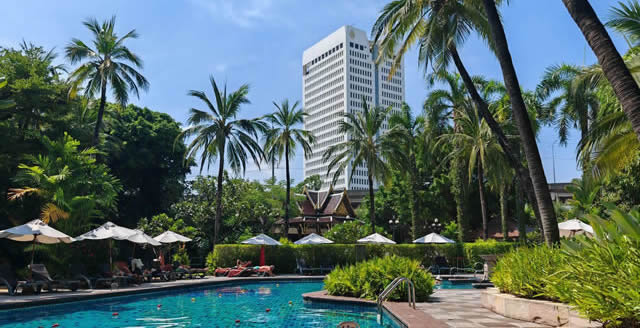
- ✅ Trusted guest reviews
- ✅ Hotels, resorts & apartments
- ✅ Easy online reservations
Shopping & Local Markets
Shopping on Koh Lanta is mainly about small shops, local markets and everyday supplies. Saladan and Lanta Old Town are useful places to browse, while minimarts and roadside businesses serve the main beach areas.
Saladan: Everyday Supplies & Holiday Essentials
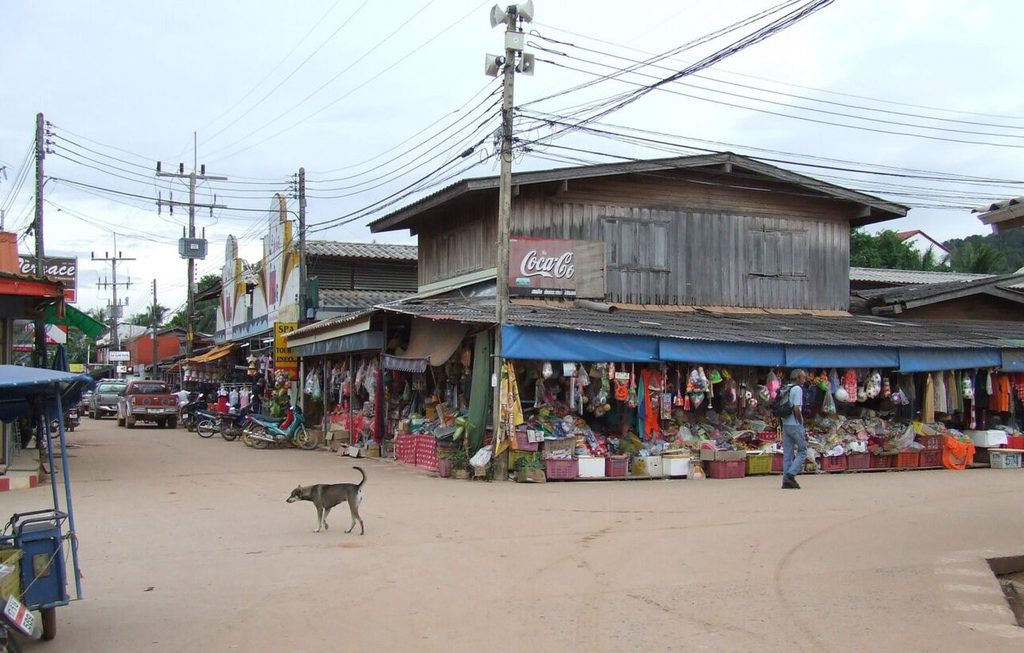
Photo by Neitram on Wikimedia Commons, licensed under CC BY-SA 3.0
Saladan has shops selling groceries, toiletries, beachwear, clothing, bags and souvenirs. Lanta Mart provides a broader grocery selection than a small convenience store.
Lanta Old Town: Souvenirs & Small Shops
Old Town’s main street has small shops selling souvenirs, clothing, jewellery and decorative items. Browsing combines easily with a walk through the historic waterfront settlement.
Local Markets
Koh Lanta’s rotating markets sell fresh fruit, vegetables, prepared food and everyday household goods, with residents shopping alongside visitors.
Locations and operating days vary, and evening-market activity in Saladan can change with the season. Food and produce generally have set prices, while bargaining may be possible at some clothing and souvenir stalls.
Local Food Products
Food products sold at the markets include shrimp paste and dried seafood, ingredients associated with southern Thai cooking.
Day Trips & Nearby Attractions
Koh Lanta is a useful base for boat trips to nearby reefs, limestone islands and the Trang island group. Options range from snorkelling and beach visits to kayaking and island sightseeing.
Journey times depend on the departure point, boat and sea conditions. Hotel pickups also add time, particularly when staying far from the departure pier.
Koh Rok: Snorkelling & Beach Time
Koh Rok’s twin islands are a popular choice for combining reef snorkelling with time on a sandy beach. Trips usually include several swimming or snorkelling stops and lunch, although the exact programme varies.
The crossing takes roughly one hour each way by speedboat from northern Koh Lanta. The complete excursion generally takes a full day, including hotel transfers and activities. Departures from farther south can have shorter crossings.
✅ Best suited to: Visitors who want a day of snorkelling and beach relaxation.
📌 Some tours combine Koh Rok with Koh Haa, offering more variety but less time at each location.
Koh Haa: Reef Snorkelling & Diving
Koh Haa is a small group of limestone islands with reefs and a lagoon used by snorkelling and diving operators. The main attraction is the underwater environment rather than an extended beach visit.
Many tours combine Koh Haa with Koh Rok, while some operators offer a dedicated excursion. The crossing takes approximately 45–60 minutes by speedboat from northern Koh Lanta, depending on the route. Slower dive boats take longer.
✅ Best suited to: Travellers who prioritise snorkelling or diving over time on the sand.
Four-Island Tour: Emerald Cave & the Trang Islands
The four-island excursion usually combines Koh Mook’s Emerald Cave with snorkelling stops and beach time around the Trang islands. Depending on the operator, the route may include Koh Kradan, Koh Ngai, Koh Chuak or Koh Ma.
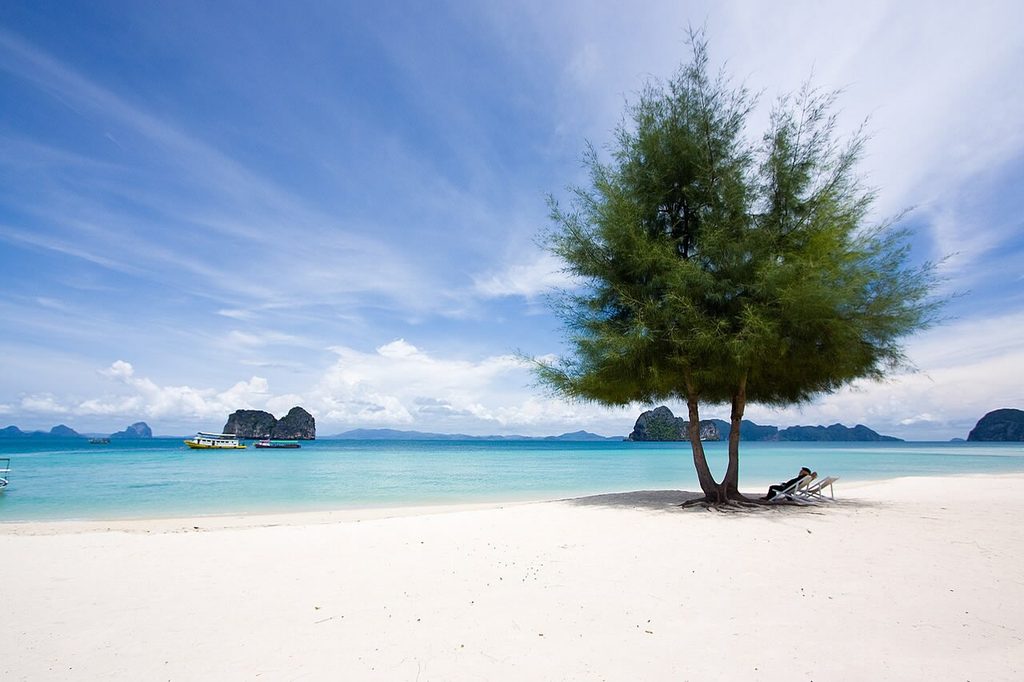
Photo by Khunkay on Wikimedia Commons, licensed under CC BY-SA 3.0
“Four islands” does not mean the same stops on every tour. Some are brief snorkelling locations rather than islands where passengers go ashore.
The Emerald Cave involves entering the water and following a guide through a dark sea passage into an enclosed beach and lagoon. Access depends on tides and sea conditions.
This is normally a full-day excursion, with longer crossings by a large boat or longtail than by speedboat.
✅ Best suited to: Visitors who enjoy a varied programme and want to experience the Emerald Cave.
📌 These tours provide a brief introduction to the area. Overnight stays on Koh Mook, Koh Kradan or Koh Ngai allow more time to explore individual islands.
Koh Talabeng: Kayaking & Limestone Scenery
Off Koh Lanta’s east coast, Koh Talabeng offers limestone cliffs and sea caves explored on guided kayaking and boat excursions. Some itineraries combine it with nearby islands or a journey through the mangroves.
Half-day trips are available, combining boat travel and paddling. The amount of kayaking varies between tours.
✅ Best suited to: Visitors interested in scenery and an active excursion.
📌 Some programmes include cave climbing as well as kayaking, making them more physically demanding. Cave access depends on conditions.
Koh Phi Phi: A Busier Sightseeing Day
Organised tours from Koh Lanta can combine Phi Phi’s limestone scenery with snorkelling and stops around Phi Phi Don and Phi Phi Leh. Some programmes include Maya Bay, subject to access rules and seasonal closures.
The direct crossing can take approximately 30–60 minutes by speedboat, but the complete sightseeing programme generally fills the day.
✅ Best suited to: Visitors who want to see Phi Phi without changing accommodation and are comfortable with a busier tour.
📌 Passenger-ferry timetables can limit the time available for an independent same-day visit.
Seasonal Availability & Tour Prices
Many offshore excursions are seasonal, and protected sites have annual closures. Weather can also change routes or cancel departures.
National park fees are not included in every tour price. Hotel transfers, meals and equipment inclusions also vary between operators.
Best Photo Spots & Scenic Viewpoints
Koh Lanta offers a useful mix of coastal views, sunset beaches and waterfront architecture. The west coast is best for sunset photography, while the east coast offers opportunities for morning light.
Laem Tanod Lighthouse (Southern Headland Views)
📌 The national park headland combines Koh Lanta’s white lighthouse with contrasting sandy and rocky shorelines.
✅ Best time: Morning, shortly after the park opens
Shot ideas: Lighthouse against the sea, curved shoreline, headland views, beach framed by trees
Crowd strategy: Early morning is generally quieter than midday
Shooting notes: Uneven ground and exposed edges on the headland; monkeys may grab food or bags
Equipment tip: Wide-angle lens for the coastline; standard zoom for lighthouse details
Drone notes: ❌ Flights require park authorisation and compliance with current aviation requirements
Difficulty: ★★☆☆☆ Easy–Moderate
📍 Google Maps: Laem Tanod Lighthouse
Lanta Old Town (Wooden Shophouses & Waterfront Scenes)
📌 Historic wooden buildings and terraces over the water provide a different perspective from the island’s beaches.
✅ Best time: Early morning for waterfront light; late afternoon for softer street scenes
Shot ideas: Wooden façades, shopfront details, boats, waterfront buildings and views from the pier
Crowd strategy: Mornings are generally quieter than the lunchtime visitor period
Shooting notes: East-facing sea views can be strongly backlit in the morning
Equipment tip: Standard zoom or phone camera; a short telephoto lens helps isolate architectural details
Drone notes: ❌ Not recommended around homes, shops and occupied waterfront terraces
Difficulty: ★☆☆☆☆ Easy
📍 Google Maps: Lanta Old Town
Long Beach (Sunset & Shoreline Reflections)
📌 A long, open shoreline offers space for simple sunset compositions and reflections on wet sand.
✅ Best time: Late afternoon through sunset, approximately 17:00–18:30 depending on the season
Shot ideas: Sunset reflections, silhouettes, waves, beach curves and foreground details
Crowd strategy: Stretches away from busy beachfront venues offer less crowded compositions
Shooting notes: Retreating tides expose wet sand for shoreline reflections
Equipment tip: Phone camera or standard zoom; a small tripod can help with photographs after sunset
Drone notes: Avoid flying near swimmers, beachgoers or resort grounds; check current flight requirements before considering a launch
Difficulty: ★☆☆☆☆ Easy
📍 Google Maps: Long Beach / Phra Ae
Kantiang Bay Viewpoint (An Elevated View of the Bay)
📌 The roadside viewpoint south of Kantiang Bay offers an elevated perspective over the curved beach and surrounding hills.
✅ Best time: Morning for beach detail and water colour; late afternoon for warmer light
Shot ideas: The complete bay, forested slopes, coastline layers and beach patterns
Crowd strategy: Earlier visits are generally quieter; parking space is limited
Shooting notes: Limited stopping space beside passing traffic restricts shooting positions
Equipment tip: Wide-angle lens for the full bay; standard zoom for tighter coastal compositions
Drone notes: ❌ A narrow roadside stopping area is not a suitable launch point
Difficulty: ★☆☆☆☆ Easy
📍 Google Maps: Kantiang Bay Viewpoint
Nui Bay / Ao Nui (A Small Cove Framed by Hills)
📌 This smaller bay south of Kantiang offers beach-level compositions framed by rocks and green hills.
✅ Best time: Morning for beach scenes; late afternoon for warmer coastal light
Shot ideas: The cove from the approach path, shoreline curves, rocks and forest-framed sea views
Crowd strategy: Earlier visits offer a better chance of uncluttered beach scenes
Shooting notes: Rocks on the approach can be slippery; monkeys may investigate unattended bags
Equipment tip: Wide-angle lens or phone camera
Drone notes: Avoid disturbing wildlife or other visitors; check current requirements and site permission before flying
Difficulty: ★★☆☆☆ Easy–Moderate
📍 Google Maps: Nui Bay, south of Kantiang
Thung Yee Peng Mangroves (Reflections & Local Boat Scenes)
📌 The east-coast mangrove waterways offer reflections, traditional boats and a different landscape from Koh Lanta’s beaches.
✅ Best time: Early morning for softer light and potentially calmer water
Shot ideas: Boats framed by mangrove roots, reflections, narrow waterways and coastal village details
Crowd strategy: A private boat trip offers more flexibility for photography than a group excursion
Shooting notes: Tides affect access and how much of the mangrove roots is exposed
Equipment tip: Standard zoom for boat and landscape scenes; a telephoto lens is useful for wildlife
Drone notes: ❌ Not recommended around wildlife and narrow mangrove channels
Difficulty: ★☆☆☆☆ Easy by boat
📍 Google Maps: Thung Yee Peng Mangroves
📌 Drone flights are subject to Thai aviation requirements and local restrictions. The notes above do not establish permission to fly.
Suggested Koh Lanta Itineraries
These itineraries assume full days on the island, excluding arrival and departure transfers.
One-Day Highlights
This route covers the west coast and southern end of Koh Lanta Yai.
Morning: Visit Mu Ko Lanta National Park for the lighthouse and coastal views, with the nature trail as an optional addition.
Lunch: A meal around Kantiang Bay, followed by a short beach walk.
Afternoon: Beach time at Kantiang Bay or Klong Nin.
Evening: Sunset and dinner by the sea near your accommodation.
Two to Three Days
Day 1: West-Coast Beaches & the Southern Headland
Follow the one-day route above: the national park, Kantiang Bay and a west-coast sunset.
Day 2: Mangroves & Lanta Old Town
Start with a guided kayak or boat excursion at Thung Yee Peng. Departure times depend on suitable tides.
Continue to Lanta Old Town for lunch overlooking the water, then explore the wooden shophouses and small shops. Return to the west coast for the evening.
📌 A cooking class is an alternative to the mangrove excursion.
Day 3: An Offshore Excursion
- Koh Rok or Koh Haa: Snorkelling and reef scenery.
- Four-island tour: A varied day including Koh Mook’s Emerald Cave.
- Koh Talabeng: A shorter kayaking and limestone-scenery excursion.
If You Have More Time
With four or five full days, there is room for another beach day, a cooking class or an outing to Koh Lanta Noi. Or simply do nothing: sit in the shade, read a book and enjoy having no plans.
📌 A longer stay also provides more flexibility if weather postpones a boat trip.
Typical Costs
Koh Lanta can accommodate different budgets, with accommodation, transport and boat excursions accounting for the main differences in spending.
The figures below are approximate planning ranges. Accommodation prices vary substantially by season, with Christmas and New Year often considerably more expensive.
| Expense | Price | Notes |
|---|---|---|
| Hostel dorm bed | ฿250–฿600 per person / night | Shared facilities; check whether breakfast is included. |
| Budget private room | ฿800–฿1,500 per room / night | Simple accommodation; beachfront locations and peak dates may cost more. |
| Mid-range accommodation | ฿1,500–฿4,000 per room / night | Room category, facilities and season strongly affect the rate. |
| Luxury resort | Around ฿4,600 upwards per room / night | Entry-level promotional rates; peak-season rooms and pool villas can cost substantially more. |
| Simple Thai meal | ฿80–฿150 per dish | Rice or noodles at a local restaurant; seafood and shared dishes cost more. |
| Beachfront restaurant meal | ฿150–฿300 per dish | Drinks, additional dishes and resort dining increase the total. |
| Coffee | ฿60–฿120 | Typical espresso-based café drink. |
| Local beer at a bar | ฿80–฿150 | Depends on serving size and venue; resort prices may be higher. |
| Scooter rental | ฿250–฿350 per vehicle / day | Basic automatic scooter; fuel extra. |
| Car rental | ฿1,100–฿1,800 per vehicle / day | Basic vehicle; check insurance and damage excess. Fuel extra. |
| Local taxi journey | Around ฿200–฿500 per vehicle | Longer journeys can cost more. Agree the total fare before departure. |
| National park headland visit | ฿200 per foreign adult | ฿100 for foreign children aged 3–14; vehicle charges extra. Offshore-site fees may differ. |
| Full-day snorkelling tour | Around ฿1,700–฿2,500 per adult | Shared boat excursion; check transfers, lunch, equipment and park fees. Premium small-group trips cost more. |
Daily Budget Guidelines
The following estimates are per person per day, including accommodation, meals and modest local spending. Private-room budgets assume two adults sharing. Flights, transfers to and from Koh Lanta, diving courses and full-day boat excursions are additional.
- Backpacker: Approximately ฿800–฿1,300. A dorm bed, simple Thai meals and mostly free beach time, with limited paid transport.
- Mid-range: Approximately ฿1,800–฿3,500. A comfortable shared room, a mix of local and beachfront meals, and some spending on transport and drinks.
- Luxury: Approximately ฿4,500 upwards. A shared luxury room, higher-priced dining and more convenient transport. Pool villas, peak dates and private excursions can push spending much higher.
📌 For solo travellers in private rooms, the accommodation cost per person is higher than these shared-room estimates.
Want a realistic Thailand trip budget?
Use the Thailand Travel Cost Calculator — just enter your destinations, trip length, and travel style to get instant, accurate per-person and group trip costs in both THB and USD.
📌 Want a deeper breakdown of what things cost across Thailand by region and style?
Read the full Cost of Travel in Thailand guide.
Digital Nomad Friendliness
Koh Lanta has an established digital nomad community, with dedicated coworking spaces and accommodation designed for longer working stays. Its appeal combines a quieter island setting with places to work and meet other remote workers. KoHub, operating since 2014, has been a longstanding part of that scene.

Coworking Spaces & Internet
Long Beach / Phra Ae is a convenient base for remote workers, with both KoHub and Monkey Business in the area.
- KoHub: Air-conditioned workrooms, outdoor garden areas, call booths and an on-site restaurant and café. It reports multiple fibre connections and backup power, and currently opens 1 November–30 April.
- Monkey Business: A coworking space above Free Descent in Phra Ae, with a quiet room, meeting facilities and monitors included with membership. It advertises dual fibre connections and year-round operation, with 24-hour access available to members.
📌 These dedicated spaces provide a more complete working setup than café Wi-Fi alone. Their advertised connection speeds describe the workspace infrastructure, however, rather than internet performance across every hotel or rental on the island.
Community & Longer Stays
The coworking scene also provides a social connection. KoHub organises communal meals and activities, while Monkey Business lists networking evenings and board-game events. This gives remote workers regular opportunities to meet people beyond the island’s beach bars.
For accommodation, KoHub offers monthly garden-bungalow packages combining a private room, coworking and meals. Its bungalows include desks and office chairs, providing an option specifically designed around longer working stays.
Seasonal Differences
Seasonality affects the choice of workspace. KoHub closes from May to October, while Monkey Business remains open year-round. A low-season stay is therefore still possible with access to dedicated coworking, although KoHub’s workspace and associated community activities are unavailable during those months.
Family Friendliness
Koh Lanta suits families looking for a relaxed beach holiday, with bungalow resorts, beachfront restaurants and outings beyond the sand. Klong Dao is a particularly convenient base thanks to its gently shelving beach and nearby shops and restaurants.
The national park, mangrove boat trips and Lanta Old Town offer variety between beach days. Older children may also enjoy cooking classes and snorkelling excursions. The more demanding cave routes and Emerald Cave swim have different physical requirements, described in the activities and day-trip sections.
Longer Family Stays & the Swedish Community
Koh Lanta also has an established Swedish community, including resident families and others spending part of the year on the island. Schools, businesses and community activities have helped make it a destination for extended family stays.
Two longstanding Swedish schools are:
- Sanuk – Svenska Skolan Thailand: Established on Koh Lanta in 2004, with preschool and school education following the Swedish curriculum.
- Lilla Svenska Skolan: Founded in 2006, offering preschool, compulsory schooling and upper-secondary education. It accommodates full-year pupils and shorter stays, currently with a minimum enrolment of four full weeks.
School life also brings opportunities to meet other families. Lilla Svenska Skolan offers activities including football, beach volleyball and gymnastics, and reports that almost half its school families return from previous years. These Swedish-curriculum schools are particularly relevant to Swedish-speaking families considering a longer stay.
Local Services & Emergency Information
Koh Lanta has a public hospital and private clinics, including facilities with English-speaking staff. For a medical emergency, call 1669; for police emergencies, call 191. Tourist Police assistance is available on 1155.
| Service | Contact / Location | Details |
|---|---|---|
| Medical emergency | 1669 | National emergency medical service. |
| Police emergency | 191 | Emergency police assistance. |
| Tourist Police | 1155 | Assistance for tourists. |
| Koh Lanta Police Station | 075 668 192 Saladan |
Local station for reporting incidents and other police matters. |
| Koh Lanta Hospital | 075 697 100 East coast, south of Lanta Old Town |
Public hospital with outpatient, inpatient and emergency services. |
| Thonburi Lanta Clinic | 081 569 7890 Saladan |
Advertises 24-hour urgent care, English-speaking doctors, X-ray and laboratory services. |
| Dr. Pad Clinic | 095 515 9555 (emergency line) Saladan |
English-speaking team; advertises around-the-clock emergency contact and ambulance services. |
| Pharmacies | Saladan and the main west-coast resort areas | Several pharmacies serve the island; opening hours vary by business. |
| Krabi Immigration Office | 075 611 097 382 Moo 7, Sai Thai, mainland Krabi |
Provincial office for immigration enquiries and services, requiring a mainland journey from Koh Lanta. |
| Post Office | Koh Lanta Yai, postcode 81150 | Thailand Post branch on the island. |
Medical Care & Insurance
English-speaking medical care is available at private clinics, including Thonburi Lanta and Dr. Pad. Serious cases requiring facilities beyond those available on the island may involve referral and a mainland transfer.
Travel or health insurance with cover for treatment and medical transfers is particularly relevant for an island stay. Some clinics offer direct billing with participating insurers, although acceptance depends on the policy and insurer’s approval.
Practical Things to Know
ATMs, Banks & Money Access
ATMs are available in Saladan, Klong Dao, Long Beach and Klong Nin, so withdrawing cash does not require a trip to the mainland. Saladan also has bank branches and currency-exchange services.
Cash remains the usual payment method at markets, small local restaurants and many independent businesses. Card acceptance is more common at larger hotels and restaurants, but is not universal across the island.
Local Culture & Dress
Koh Lanta is home to Thai Muslim, Buddhist, Thai-Chinese and Urak Lawoi communities, giving it a cultural character that extends beyond its beach resorts. Mosques and the call to prayer are part of everyday island life.
Beachwear is normal around beaches and swimming pools. In village streets, shops and community areas, ordinary clothing is more appropriate. This distinction matters on an island where tourism and residential life sit closely alongside each other.
Related Guides & Further Reading
Travel in Thailand is easier when you have the right balance of practical advice and destination inspiration. Below you’ll find useful travel resources to help you prepare smoothly, plus nearby destinations worth adding to your journey.
Thailand Travel Essentials: Plan Smarter, Travel Easier
Need tips on visas, health, culture, or everyday logistics? My hub brings all the key guides together in one place: Explore the Thailand Travel Guide
Your Next Thai Adventure Awaits
Looking for where to go next? These nearby or complementary places pair well with your current destination and are worth your time in the Land of Smiles.
- Krabi Travel Guide: Best Beaches, Outdoor Adventures & Where to Stay
- Phuket Town: A Local-Style Guide to Old Town, Food & Everyday Life
💬 Have you visited Koh Lanta, or is there something else you’d like to know? Share your experiences or questions in the comments below.