
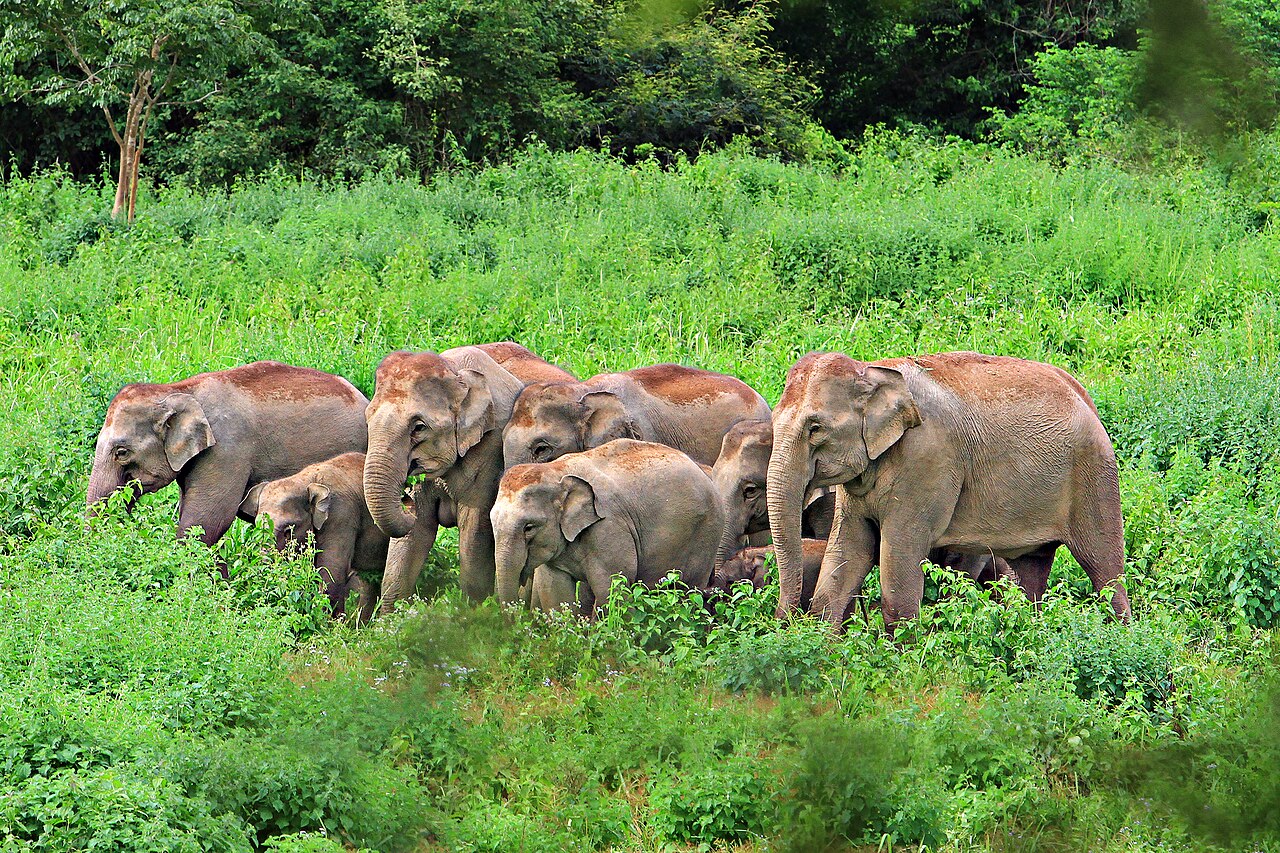
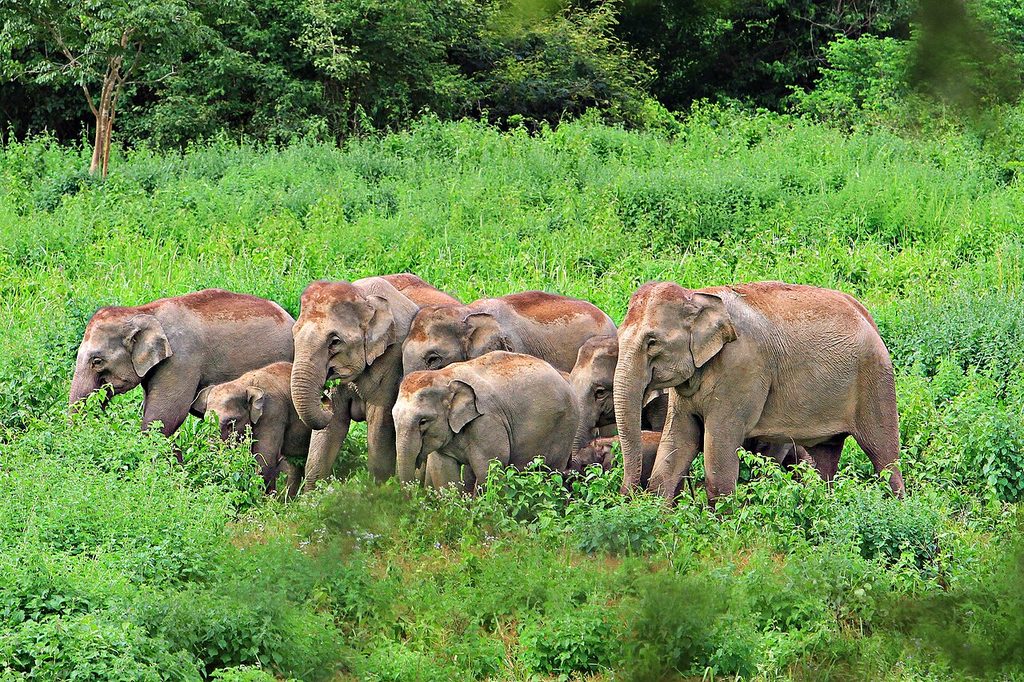
Kui Buri National Park in Prachuap Khiri Khan province offers the chance to watch wild elephants in their natural habitat. Wildlife viewing is the main reason to visit, with guided safari drives taking visitors into an area where elephants and gaur can sometimes be seen feeding in open grassland.
For visitors staying in Hua Hin or nearby Sam Roi Yot, the park makes a rewarding day trip, particularly if seeing wildlife is a priority. The experience involves driving between viewing areas, stopping and watching patiently. Sightings vary from day to day, and animals may be some distance away, so it helps to arrive with realistic expectations.
This guide covers how to reach the correct entrance, what to expect from the safari, when to visit and how to plan the costs and transport for your trip.
Photo “Elephant Herd” by KOSIN SUKHUM on Wikimedia Commons, licensed under CC BY-SA 4.0
📌 Affiliate Disclosure: Some links and booking tools on this page are affiliate partnerships. If you make a purchase through them, I may earn a commission at no additional cost to you. This helps support Thrive in Thailand and allows me to continue creating free content. Learn more in my Affiliate Disclosure.
Where Is Kui Buri National Park?
Kui Buri National Park lies inland in Prachuap Khiri Khan province, southwest of Hua Hin and west of the coastal Sam Roi Yot area. It covers around 969 square kilometres of forest, hills and grassland and can be visited as a day trip from either Hua Hin or Sam Roi Yot.
Kui Buri on the Map
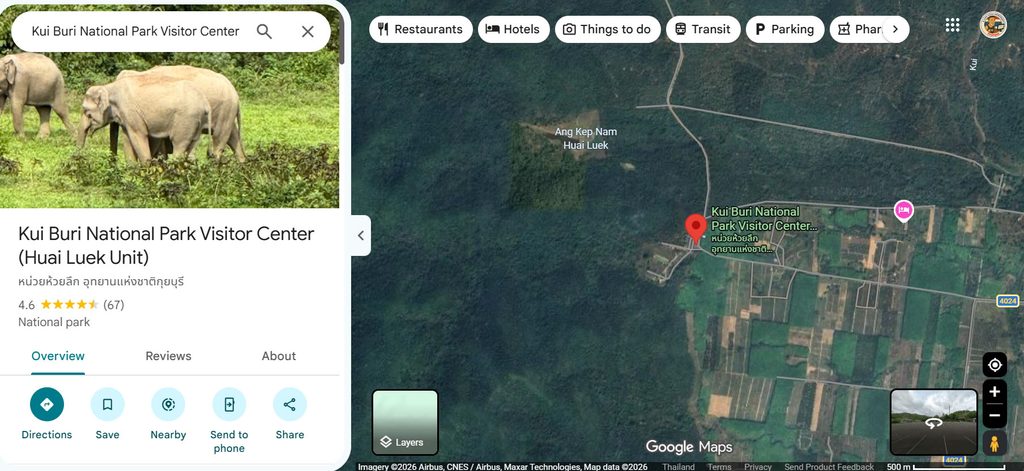
For the elephant safari, head to Kui Buri National Park Visitor Center (Huai Luek Unit). This is the visitor centre for the wildlife viewing area. The park headquarters is a separate location farther south and is not the safari departure point.
📍 Click the image below to open the Huai Luek visitor centre in Google Maps in a new tab.
Best Time to Visit
December to February is a good choice for a more comfortable safari, with generally drier conditions and less intense heat. March and April are also relatively dry, but afternoon temperatures can make the open safari vehicle feel hot. The rainy season generally runs from May to November, so visits during these months require more flexibility around the weather.
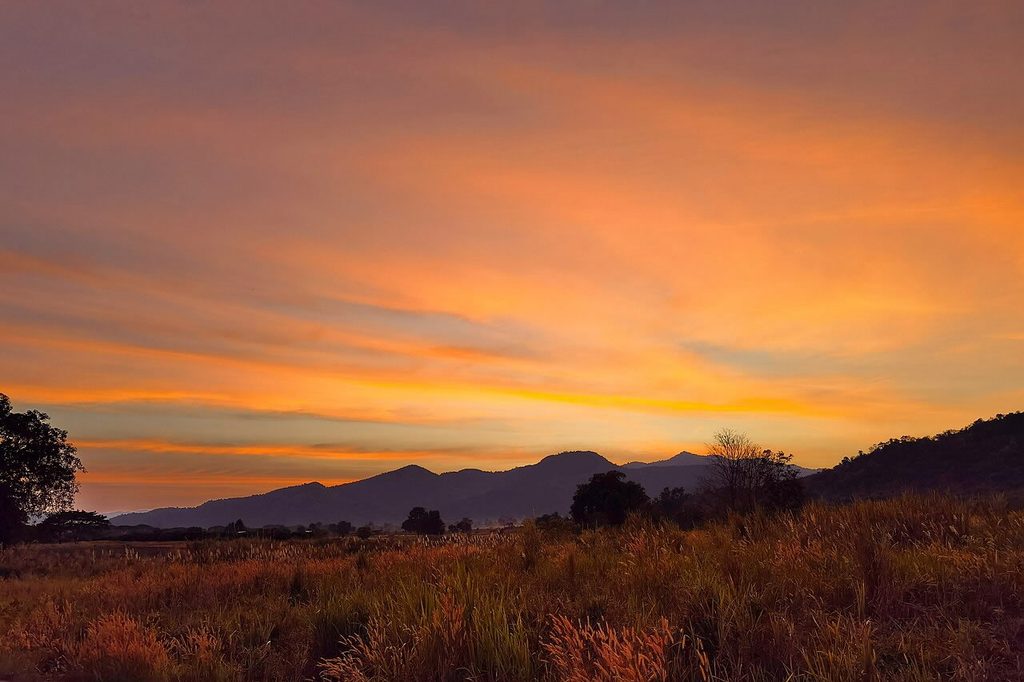
Photo by Kriengsak Jirasirirojanakorn on Wikimedia Commons, licensed under CC BY-SA 4.0
These seasonal differences are mainly about comfort. A dry-season visit does not guarantee better sightings, and there is no single month when you can be certain of seeing elephants.
Best Time of Day
Plan your visit for the afternoon, with arrival at the Huai Luek visitor centre around 2:30–3:00 pm. Wildlife tends to become more active later in the afternoon, and this gives you time to arrange the safari before heading into the viewing area. Avoid arriving close to closing time, as you need enough time for the drive and viewing stops.
📌 Before travelling, check the park’s current opening arrangements, particularly during periods of heavy rain. National park access can change because of weather or temporary closures.
Not sure if it’s a good month to visit?
Use the Monsoon Weather Checker to choose a destination and month to see a clear Go / Iffy / Avoid signal from Thailand’s Meteorological Department climate averages (historical; no forecasts), plus typical rainfall, rainy days, temperature, and a one-line sea conditions note.
How to Get There
The Huai Luek visitor centre is reached by road, with a car, private driver or organised tour being the main options. There is no scheduled public transport directly to the wildlife viewing entrance.
From Hua Hin
The drive takes roughly 1–1½ hours, depending on your starting point and traffic. The route heads south along Highway 4 before turning inland towards Huai Luek. Use the visitor centre pin linked above as your destination.
A rental car gives you flexibility to include other stops. With a private driver or taxi, a return arrangement that includes waiting during the safari makes the trip straightforward. Transport to the visitor centre is separate from the park’s safari vehicle.
📌 Organised tours from Hua Hin offer another option, combining the journey with the wildlife visit. Packages vary in whether park admission, the safari vehicle and an English-speaking guide are included.
From Sam Roi Yot or Prachuap Khiri Khan
Both are suitable bases for the trip. From the Sam Roi Yot coast, the route heads inland towards Huai Luek; from Prachuap Khiri Khan town, it follows Highway 4 north before turning west. Driving time depends on your accommodation’s location.
📌 Private transport can also be arranged locally, including through accommodation providers around Sam Roi Yot.
By Public Transport
Trains and minivans serve Kui Buri town, but they do not reach the wildlife viewing area. A separate transfer is needed for the remaining journey, making public transport a less convenient option for this particular outing.
The Wildlife Safari: What to Expect
The wildlife safari is the main visitor experience at Kui Buri. From the Huai Luek visitor centre, you travel into the wildlife viewing area in an authorised pickup with a local driver and guide. Your own vehicle stays at the visitor centre.
How the Safari Works
The safari vehicles are pickups with bench seating in the open rear section. The drive follows dirt roads through forest and open grassland, with stops at designated observation points. At these stops, visitors can leave the vehicle to watch wildlife across the surrounding landscape.
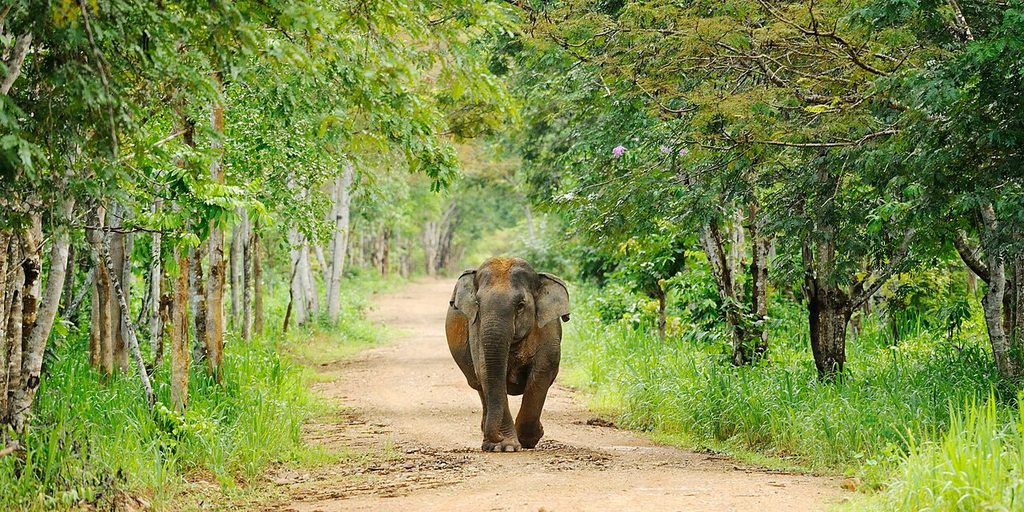
Photo by Tontan Travel on Wikimedia Commons, licensed under CC BY-SA 2.0
Guides share sightings by radio, helping drivers locate animals along the route. Some of the afternoon is spent driving slowly and scanning the vegetation; other stretches involve waiting at a viewpoint.
Allow roughly two to three hours for the safari, although the duration varies with sightings and the arrangement you book. Most of the visit is vehicle-based, with short walks at the observation points rather than a jungle trek.
Which Animals Might You See?
Wild elephants are the main attraction, with opportunities to watch individuals or family groups feeding and moving through the grassland. Gaur, the large wild cattle found in the park, are another highlight. The safari visits viewing areas used by both species, and banteng are occasionally seen too.
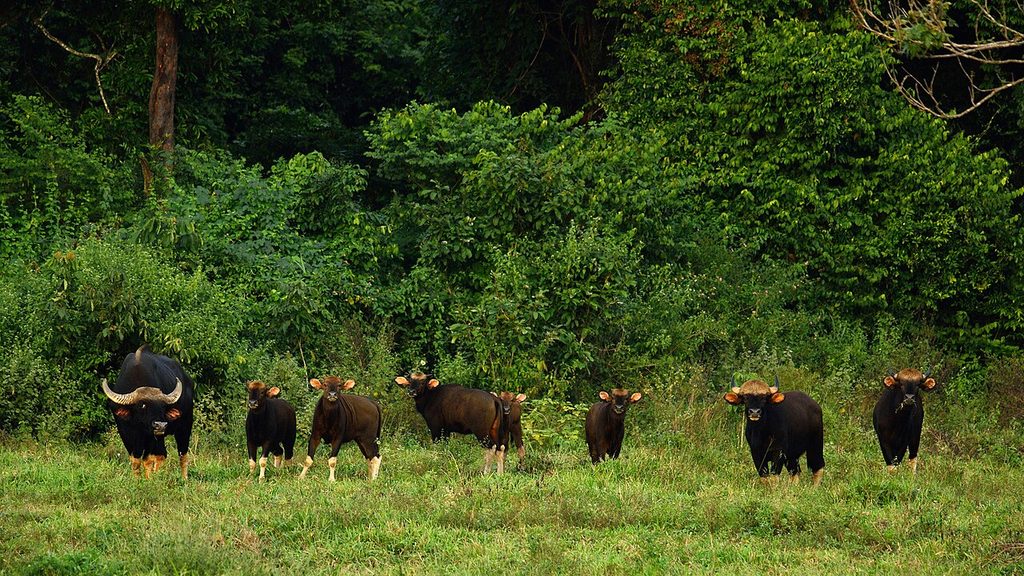
Photo by Tontan Travel on Wikimedia Commons, licensed under CC BY-SA 2.0
The wider park supports many other animals, but a standard afternoon safari covers only a small part of it. Elephants and gaur are the focus, with other sightings adding to the experience.
What the Viewing Is Like
Animals may appear near the road or much farther away across the grassland. Some encounters offer a clear view for an extended period; others are brief or partly obscured by vegetation. Binoculars and a zoom lens can make a noticeable difference when wildlife is distant.
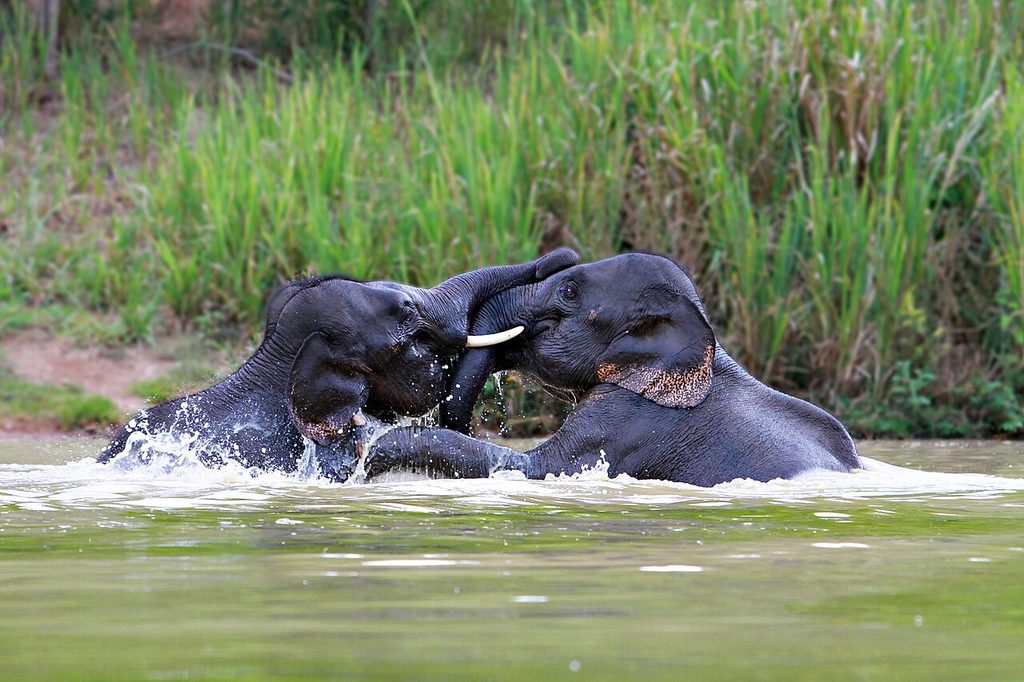
Photo by KOSIN SUKHUM on Wikimedia Commons, licensed under CC BY-SA 4.0
📌 The appeal is watching animals go about their lives in a natural setting. This is an observation experience, without feeding, bathing or direct contact with the elephants.
Visiting Kui Buri with an Organised Tour
An organised tour is a convenient option if you want transport from Hua Hin included. GetYourGuide lists shared and private safari trips, with pickup locations and inclusions detailed on each listing.
Entrance Fees, Opening Hours and Booking
The cost of an independent visit has two main parts: park admission per person and a safari vehicle charge per group. Transport to and from Huai Luek is additional.
Entrance Fees and Safari Costs
| Item | Cost |
|---|---|
| Foreign adult admission | ฿200 |
| Foreign child admission, ages 3–14 | ฿100 |
| Thai adult admission | ฿40 |
| Thai child admission | ฿20 |
| Safari pickup with local driver and guide | ฿1,200 per vehicle |
📌 The safari vehicle fee increased from ฿850 to ฿1,200 on 1 May 2026, so older guides may still show the previous price. The vehicle charge is separate from admission.
A pickup accommodates up to six foreign visitors. For two foreign adults, admission and one safari vehicle come to ฿1,600 in total, excluding transport to the park.
Opening Hours
The wildlife viewing area normally operates from 2:00 pm to 6:00 pm, with safaris taking place during the afternoon. These are the relevant hours for elephant watching, rather than the opening hours of the park headquarters.
Booking Your Visit
For an independent visit, the local safari vehicle is normally arranged at the Huai Luek visitor centre on arrival.
An organised tour can be booked in advance through a tour operator. This may include hotel transfers and an English-speaking guide, whereas the standard local safari guides generally speak limited English. Admission and safari charges may already be included in the package price.
For enquiries about the local vehicle service, the Kui Buri Wildlife Ecotourism Club can be contacted on 085 266 1601.
Where to Eat
There is a basic restaurant and a café beside the Huai Luek visitor centre, providing a convenient option for a meal or coffee before the safari. Food facilities are concentrated at the departure point rather than along the wildlife viewing route.
For a wider choice, lunch can be part of the journey from Hua Hin, Pranburi or Sam Roi Yot. An afternoon safari fits comfortably after a meal en route, with dinner back at your accommodation base following the visit.
Where to Stay
Kui Buri is easily visited as a day trip, so there is no need to stay beside the park for the wildlife safari. Hua Hin, Sam Roi Yot and Prachuap Khiri Khan are suitable bases, depending on the rest of your travel plans.
- ✅ Hua Hin offers the broadest choice of accommodation, restaurants and organised excursions. It suits visitors who want to include the safari in a longer stay with beaches, dining and other day trips.
- ✅ Sam Roi Yot is a quieter coastal option, particularly if you also plan to explore Khao Sam Roi Yot National Park. Staying here allows you to visit the two parks on separate days without fitting both into one outing.
- ✅ Prachuap Khiri Khan works well for travellers continuing south or spending time around the town and Ao Manao. The safari can be included as an afternoon trip from there.
📌 The national park headquarters has basic camping and limited accommodation, but it is separate from the Huai Luek wildlife viewing area. For most visitors, a coastal base is more convenient.
Suggested Itinerary
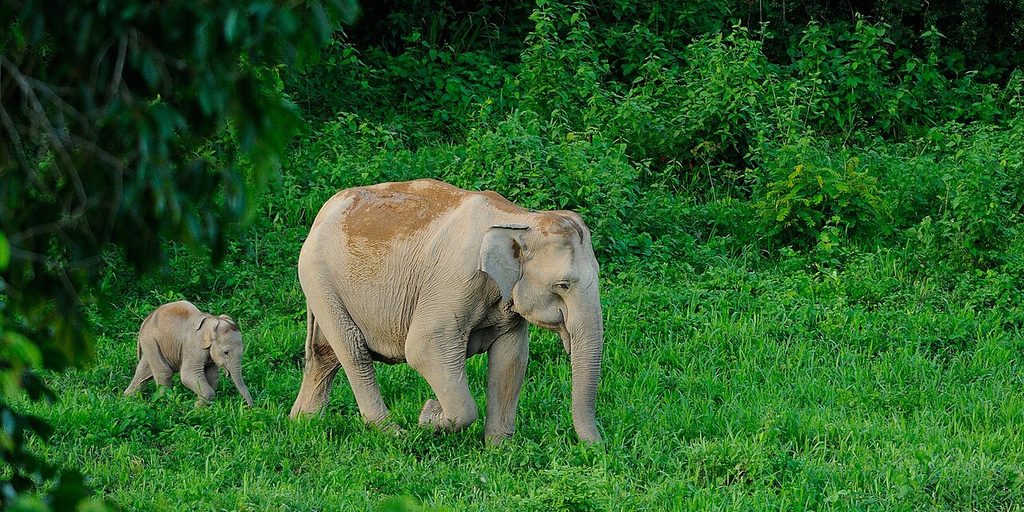
Photo by Tontan Travel on Wikimedia Commons, licensed under CC BY-SA 2.0
An Afternoon Safari from Hua Hin
A visit to Kui Buri fits into a relaxed day from Hua Hin, with the morning free and the wildlife safari taking up the afternoon.
| Time | Plan |
|---|---|
| Late morning | Lunch in Hua Hin or a stop along the way |
| Around 1:00 pm | Leave Hua Hin for the Huai Luek visitor centre |
| Around 2:30 pm | Arrive, pay admission and arrange the safari vehicle |
| Mid to late afternoon | Safari drive and stops at the wildlife observation points |
| Around 5:30–6:00 pm | Finish the visit and return to Hua Hin |
| Evening | Dinner in Hua Hin |
📌 The timings are approximate, with the safari’s length depending on sightings and time spent at the observation points. An organised tour follows its own pickup and departure schedule.
Practical Things to Know
Sun, Rain and Photography
The safari pickups have open seating, leaving passengers exposed to sun and rain. A hat, sunscreen and light rain protection are useful, along with drinking water for the afternoon.
📌 Binoculars are particularly useful at the grassland viewpoints, where animals can be some distance away. A camera with a zoom lens offers more flexibility than a phone for distant wildlife.
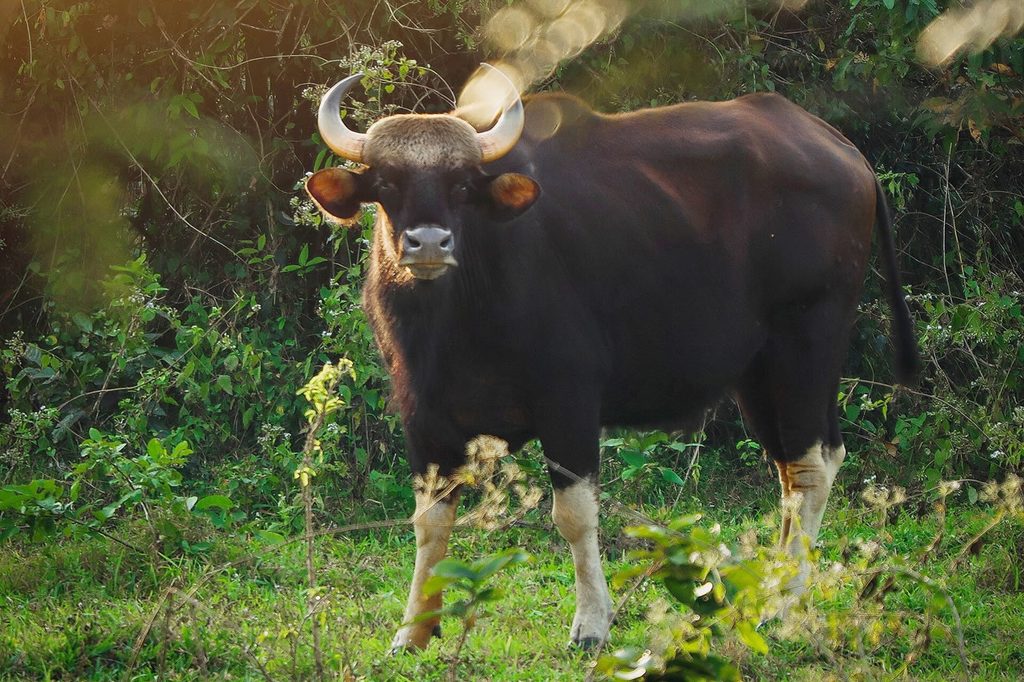
Photo by Kriengsak Jirasirirojanakorn on Wikimedia Commons, licensed under CC BY-SA 4.0
Facilities
Toilets, parking, a basic restaurant and a café are available at the Huai Luek visitor centre. This is the main service point for the visit.
Children and Mobility
The safari involves relatively little walking, which can suit families who prefer a wildlife outing to a longer hike. However, the ride includes uneven dirt roads and periods of waiting at observation points.
📌 Limited walking does not necessarily mean easy access. Passengers need to climb into the rear seating of a pickup, so the vehicle arrangement is worth discussing with the operator if someone has restricted mobility.
Wildlife Viewing
Visitors remain with their driver and guide, leaving the vehicle at designated observation points. The guides manage viewing distances and movements around wildlife; feeding or approaching the animals is not part of the experience.
Nearby Places to Combine with Your Visit
Kui Buri’s afternoon safari leaves room for a morning stop elsewhere. With your own vehicle or a private driver, a coastal visit can add variety to the day.
Sam Roi Yot
A morning around Sam Roi Yot pairs coastal scenery with wildlife watching inland. The Bueng Bua boardwalk or a stop at Sam Roi Yot Beach can fit before lunch and the drive to Huai Luek.
Phraya Nakhon Cave is another possible combination, but its hike makes this a longer, more active day. Separate visits give you more time to explore both parks.
📌 For the sights, walking routes and practical details, see my Khao Sam Roi Yot National Park guide.
Pranburi and Khao Kalok
For visitors coming from Hua Hin, Pak Nam Pran or Khao Kalok can provide a coastal stop and lunch before heading inland. This works as a shorter visit rather than the full coastal drive through to Sam Roi Yot.
📌 For more on Pak Nam Pran, Khao Kalok and the coastal route, see my Best Day Trips from Hua Hin guide.
Prachuap Khiri Khan and Ao Manao
Prachuap Khiri Khan and Ao Manao make more sense as part of an overnight stay or a journey continuing south. A morning by the bay followed by the Kui Buri safari offers a day combining beach scenery and wildlife, without returning to Hua Hin afterwards.
Hua Hin Hub
Explore my collection of Hua Hin guides covering living, healthcare, costs, accommodation, retirement, and everyday life on Thailand’s Gulf Coast.
Related Guides & Further Reading
Whether you are visiting Kui Buri as a day trip from Hua Hin or including it in a longer journey, these guides can help with practical planning and choosing where to go next.
Thailand Travel Essentials: Plan Smarter, Travel Easier
For advice on visas, health, culture and everyday travel logistics, my hub brings the key guides together in one place: Explore the Thailand Travel Guide.
Where to Go Next
Hua Hin makes a convenient base for a Kui Buri safari. For more nature-focused travel elsewhere in Thailand, Khao Sok offers lake and jungle experiences, while Khao Yai combines forest, waterfalls and wildlife.
- Hua Hin Travel Guide, Thailand: Beaches, Lifestyle, Costs & What to Expect
- Khao Sok National Park Travel Guide: Cheow Lan Lake & Jungle Tours
- Khao Yai National Park Travel Guide: Waterfalls, Wildlife & An Easy Escape from Bangkok
💬 Have you visited Kui Buri National Park, or are you planning a trip? Share your experience or questions in the comments below.