Chiang Mai is one of Thailand’s most rewarding destinations, combining centuries-old temples, mountain scenery, vibrant markets, excellent food, a lively café culture, and a relaxed atmosphere that sets it apart from the country’s bustling beach resorts and capital city.
While the nightlife is more laid-back than destinations like Pattaya or Phuket, you’ll still find lively bars, live music venues, and bustling night markets that keep the city buzzing after dark. Whether you’re visiting for a few days or considering a longer stay, Chiang Mai offers a unique blend of culture, outdoor adventure, modern conveniences, and authentic Northern Thai charm.
Located in the mountains of Northern Thailand, Chiang Mai is often described as Thailand’s cultural capital. It attracts everyone from backpackers and families to digital nomads and retirees, each drawn by its unique blend of traditional Lanna heritage and contemporary lifestyle.
In this guide, I’ll cover everything you need to know before visiting Chiang Mai, including the best time to go, how to get there, where to stay, top attractions, local food, day trips, practical travel tips, and what to expect once you arrive.
📌 Affiliate Disclosure: Some links and booking tools on this page are affiliate partnerships. If you make a purchase through them, I may earn a commission at no additional cost to you. This helps support Thrive in Thailand and allows me to continue creating free content. Learn more in my Affiliate Disclosure.
Where Is Chiang Mai?
Chiang Mai is Northern Thailand’s main urban center and the capital of Chiang Mai Province. Located around 700 km (435 miles) north of Bangkok, it sits in a broad valley surrounded by mountains, forests, and some of the country’s most beautiful national parks. As the cultural and economic center of Northern Thailand, the city serves as the gateway to destinations such as Chiang Rai, Pai, Doi Inthanon National Park, and the Golden Triangle.
Unlike Thailand’s beach destinations, Chiang Mai offers a completely different experience. Instead of islands and coastlines, visitors come for centuries-old temples, mountain scenery, vibrant markets, excellent food, and the unique traditions of the former Lanna Kingdom. Despite being Thailand’s second-largest city by regional importance, Chiang Mai retains a relaxed atmosphere that makes it easy to explore at your own pace.
Chiang Mai on the Map
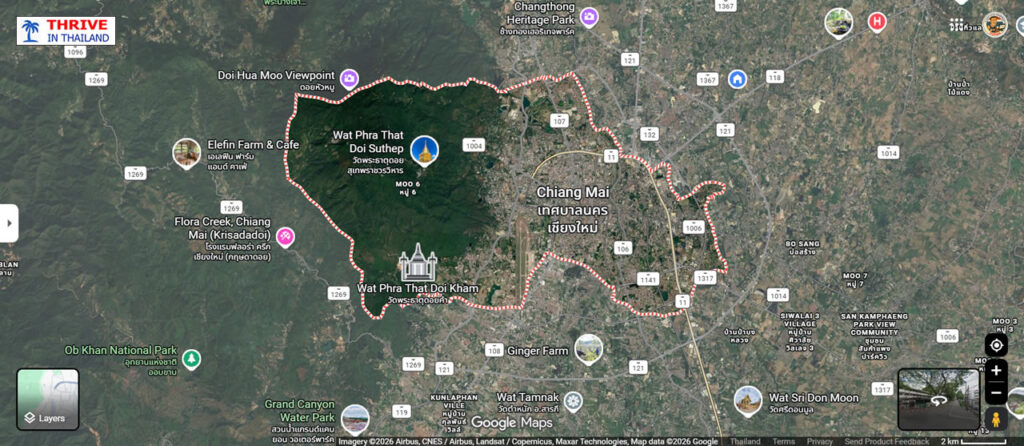
Chiang Mai’s location has shaped its identity for centuries. Nestled between mountain ranges and close to the borders of Myanmar and Laos, the city developed as the capital of the ancient Lanna Kingdom and remains the cultural heart of Northern Thailand today. Its cooler climate, surrounding countryside, and rich history give it a distinctly different character from Bangkok and the country’s southern beach resorts.
Although the city itself is compact, it provides easy access to some of Northern Thailand’s best attractions. Within a short drive, you can reach mountain viewpoints, waterfalls, elephant sanctuaries, hill tribe villages, national parks, and scenic countryside, making Chiang Mai an excellent base for exploring the region without constantly changing accommodation.
📍 Click the image below to open Chiang Mai’s location in Google Maps in a new tab.
Best Time to Visit Chiang Mai
Chiang Mai is a year-round destination, but each season offers a different experience. The cool season is generally considered the best time to visit, while the hot season includes the annual burning season, which can significantly affect air quality.
Cool Season (November to February) – Best Overall
This is widely regarded as the ideal time to visit Chiang Mai. Days are warm and comfortable, evenings can be surprisingly cool, and humidity is low. The clear skies and pleasant temperatures make it perfect for sightseeing, hiking, visiting temples, and exploring the surrounding mountains.
This is also the busiest time of year, particularly around Christmas, New Year, and the famous Yi Peng and Loy Krathong festivals in November. Hotels and flights often book out well in advance, so early reservations are recommended.
Average temperature: 15–30°C
✅ Best for:
- Sightseeing
- Outdoor activities
- Photography
- Festivals
- First-time visitors
Hot Season (March to May) – Heat & Air Pollution Concerns
March to May is the hottest time of year, with daytime temperatures frequently exceeding 35°C. Northern Thailand’s burning season generally begins in February and continues into April, with air pollution often at its worst in March. Agricultural burning, forest fires, and dry conditions can result in heavy haze and poor air quality across Chiang Mai and the surrounding region.
Conditions vary considerably from year to year, but if clean air and mountain views are important to your trip, March is generally the month of greatest concern, with problems sometimes beginning earlier or continuing into April. If you do visit, keep an eye on daily air quality forecasts and consider planning more indoor activities on hazy days.
The exception is Songkran, Thailand’s traditional New Year celebration in mid-April. Chiang Mai hosts one of the country’s biggest and most exciting Songkran festivals, attracting visitors from around the world despite the hot weather.
Average temperature: 22–38°C
✅ Best for:
- Songkran celebrations
- Budget travel outside holiday periods
⚠️ Consider avoiding if:
- You have respiratory conditions
- You want clear mountain views
- You plan to spend most of your time outdoors
Green Season (June to October) – Lush Landscapes & Fewer Crowds
The rainy season transforms Chiang Mai into one of Thailand’s greenest destinations. Regular showers keep the countryside lush, waterfalls flow at their best, and the surrounding mountains become particularly beautiful.
Rain usually falls in short but heavy bursts rather than lasting all day, meaning there’s still plenty of time for sightseeing between showers. You’ll also benefit from fewer tourists, lower accommodation prices, and a more relaxed atmosphere.
Average temperature: 23–33°C
✅ Best for:
- Nature lovers
- Photography
- Lower hotel prices
- Fewer crowds
When Should You Visit Chiang Mai?
| Travel Style | Best Time |
|---|---|
| First-time visitors | November to February |
| Outdoor adventures | November to February |
| Photography | November to February or July to October |
| Festivals | November for Yi Peng and Loy Krathong, or April for Songkran |
| Budget travelers | June to October |
| Avoiding crowds | June to October |
Not sure if it’s a good month to visit?
Use the Monsoon Weather Checker to choose a destination and month to see a clear Go / Iffy / Avoid signal from Thailand’s Meteorological Department climate averages (historical; no forecasts), plus typical rainfall, rainy days, temperature, and a one-line sea conditions note.
How to Get There
Thanks to its international airport and excellent road and rail connections, Chiang Mai is one of the easiest destinations in Thailand to reach. Whether you choose to fly, take the overnight train, travel by bus, or drive yourself, there are convenient options to suit every budget and travel style.
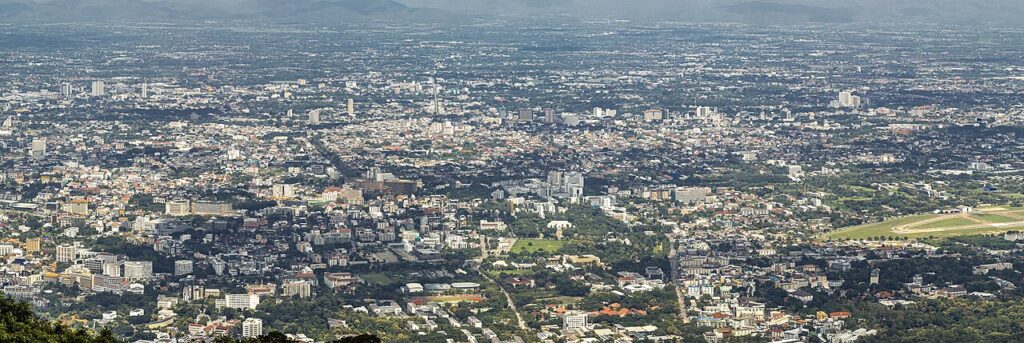
Photo by Supanut Arunoprayote on Wikimedia Commons, licensed under CC BY-4.0
By Air (Fastest & Most Convenient)
Flying is by far the quickest and most popular way to reach Chiang Mai. Chiang Mai International Airport (CNX) is located just a few kilometers southwest of the city center, with most hotels reachable in 15 to 20 minutes by taxi or Grab.
Frequent domestic flights operate from Bangkok, Phuket, Krabi, Hat Yai, Udon Thani, and several other Thai cities. The airport also offers a growing number of direct international connections to destinations across Asia.
📌 Flights from Bangkok take approximately 1 hour 15 minutes, with one-way fares typically ranging from THB 1,000 to 3,000, depending on the airline and booking date.
By Train (Comfortable & Scenic)
The overnight train from Bangkok to Chiang Mai is one of Thailand’s classic travel experiences and a favorite among both tourists and locals.
Trains depart from Krung Thep Aphiwat Central Terminal in Bangkok and arrive at Chiang Mai Railway Station, located around 3 km east of the Old City.
The journey takes approximately 10 to 14 hours, depending on the service. Comfortable air-conditioned sleeper cabins are available and are well worth booking in advance, particularly during the cool season and Thai holidays.
📌 Expect to pay approximately THB 800 to 1,600 for an air-conditioned sleeper berth.
By Bus (Budget-Friendly)
Long-distance buses connect Bangkok with Chiang Mai throughout the day and night, departing mainly from Mo Chit Bus Terminal. Both daytime and overnight services are available.
The journey typically takes 9 to 11 hours, depending on traffic and the service selected. VIP buses offer wider reclining seats, blankets, snacks, and onboard toilets, making them a comfortable alternative if sleeper train tickets are unavailable.
📌 Bus fares generally range from THB 600 to 1,000, depending on the class of service.
By Car (Great for Exploring Northern Thailand)
Driving from Bangkok to Chiang Mai takes approximately 9 to 10 hours, covering around 700 km via Highway 1 and Highway 11.
The roads are generally in good condition, making the journey straightforward, although traffic leaving Bangkok can be heavy. As you approach Chiang Mai, the scenery becomes increasingly mountainous and scenic.
Having your own vehicle can be a major advantage if you plan to explore attractions outside the city, such as Doi Inthanon National Park, Mon Jam, Chiang Dao, or the Mae Sa Valley.
📌 If you’re only visiting Chiang Mai itself, renting a car isn’t essential. Grab, taxis, and songthaews make getting around the city easy, while organized tours cover most of the popular day trips.
✅ Travel Tip: If time is limited, flying is by far the most convenient option. If you’re in no rush, the overnight sleeper train is one of Thailand’s classic travel experiences and lets you save the cost of a night’s accommodation.
Book Your Tickets
Planning to visit Chiang Mai? Click the image to compare available bus, train, ferry, and flight connections.
✅ View schedules, travel times, and current ticket prices in one place before you travel.
Getting Around Chiang Mai
Getting around Chiang Mai is generally easy and affordable. While the Old City and parts of Nimman are pleasant to explore on foot, most visitors will use a combination of Grab, red songthaews, tuk-tuks, and rental scooters to reach attractions across the city and surrounding countryside.
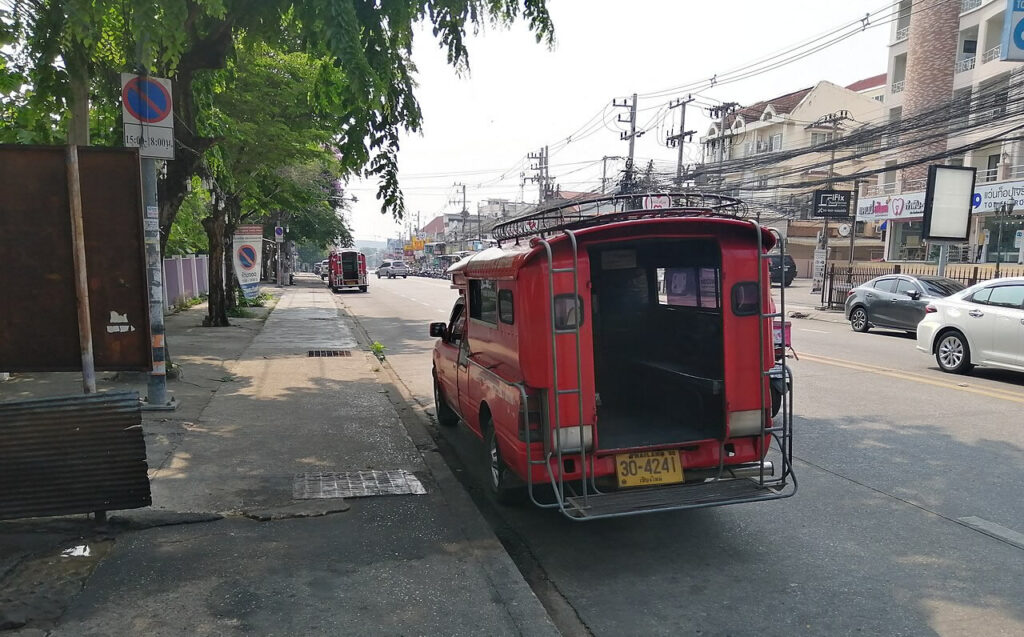
Photo by Patiparn.Nice2002bkk on Wikimedia Commons, licensed under CC BY-SA 4.0
Grab & Ride-Hailing Apps (Most Convenient)
Grab is widely available throughout Chiang Mai and is usually the easiest way to travel between hotels, restaurants, shopping malls, and tourist attractions. Fares are fixed in advance, vehicles are air-conditioned, and there’s no need to negotiate.
Bolt also operates in Chiang Mai and is sometimes slightly cheaper than Grab, although driver availability can vary.
📌 Typical fares:
- Old City → Nimman: THB 80–150
- Old City → Chiang Mai Airport: THB 120–180
- Old City → Central Festival: THB 150–250
Red Songthaews (The Local Experience)
Chiang Mai’s iconic red songthaews are shared pickup trucks that operate throughout the city without fixed routes. Simply tell the driver where you’re going, and they’ll let you know if they’re heading that way.
They’re one of the cheapest ways to travel and remain popular with both locals and visitors.
📌 Typical fare: THB 30–50 within the city, although longer journeys may cost more.
Tuk-Tuks
Tuk-tuks are easy to find around tourist areas such as the Old City, Night Bazaar, and major temples. While they offer a fun way to get around, fares are usually higher than Grab or songthaews. Always agree on the price before starting your journey.
📌 Typical fare: THB 100–250 depending on distance.
Renting a Scooter
Renting a scooter gives you the greatest flexibility if you plan to explore attractions outside the city. Always wear a helmet and make sure your travel insurance covers riding a motorcycle.
📌 Typical rental cost: THB 200–350 per day, or less for longer rentals.
Big Bike Rental & Motorcycle Touring
Chiang Mai is one of Thailand’s premier destinations for motorcycle touring and serves as the starting point for many of the country’s most scenic road trips. Numerous reputable rental companies offer adventure bikes, touring motorcycles, and large-capacity road bikes, making it easy to explore famous routes such as the Mae Hong Son Loop, Doi Inthanon National Park, Chiang Rai, and the winding mountain roads of Northern Thailand.
The city is also a popular base for off-road and enduro riding, with guided tours and trail networks leading through forests, mountain villages, and remote countryside. Whether you prefer paved mountain roads or challenging dirt tracks, there are plenty of opportunities for riders of all experience levels.
📌 Typical rental prices range from around THB 1,000 per day for a 300cc supermoto to THB 4,000 or more for a large touring motorcycle. If you’re planning a multi-day trip, many rental companies offer discounted weekly rates. During the cool season, it’s advisable to book in advance, as demand is highest between November and February.
Renting a Car
A rental car isn’t necessary for exploring Chiang Mai itself, but it’s a good option if you plan to visit places like Doi Inthanon, Chiang Dao, or Chiang Rai independently.
📌 Typical rental cost: THB 900–1,800 per day, depending on the vehicle and season.
Walking
The Old City is compact and easy to explore on foot, while Nimman is also very walkable. Sidewalks elsewhere in the city can be uneven or incomplete, so walking becomes less practical outside these areas.
✅ For most visitors, a combination of Grab and walking is all you’ll need. If you’re planning several day trips into the surrounding mountains, consider renting a car or joining organized tours rather than riding a scooter unless you’re already comfortable on Thai roads.
Best Things to Do in Chiang Mai
Chiang Mai offers far more than a collection of famous tourist attractions. While its temples and historic Old City are among Thailand’s best-known landmarks, the city’s real appeal lies in the variety of experiences it offers. Whether you’re interested in culture, mountain adventures, motorcycle touring, café hopping, outdoor activities, wellness, or local festivals, Chiang Mai provides something for almost every type of traveler.
Explore Chiang Mai’s Historic & Spiritual Side
With more than 300 Buddhist temples, Chiang Mai is one of Thailand’s most culturally significant cities. The Old City is particularly rewarding to explore on foot, where centuries-old temples stand alongside ancient city walls, quiet lanes, traditional wooden houses, cafés, and local markets, creating an atmosphere unlike anywhere else in the country.
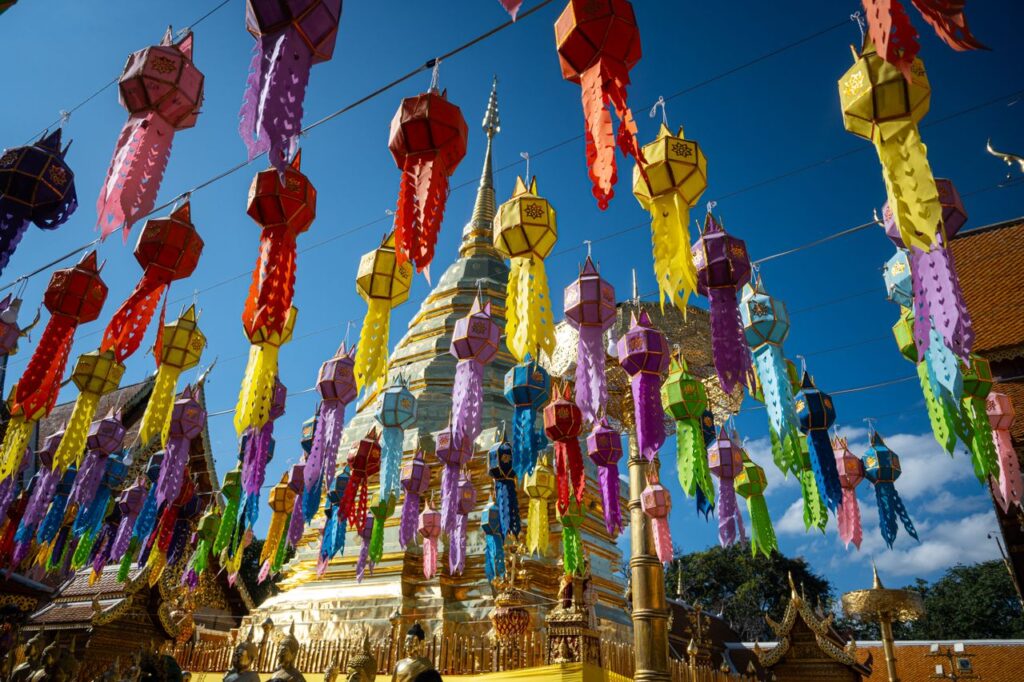
Highlights include:
- Wat Phra That Doi Suthep
- Wat Chedi Luang
- Wat Phra Singh
- Wat Umong
- Chiang Mai’s Old City and moat
Escape into Nature
One of Chiang Mai’s biggest advantages is how quickly you can leave the city behind. Within an hour, you’ll find national parks, mountain viewpoints, waterfalls, lakes, and outdoor attractions that make excellent half-day and full-day excursions. Whether you’re looking for scenic hiking trails, a relaxing afternoon by the water, or family-friendly activities, there’s no shortage of places to explore.
Popular destinations include:
- Doi Inthanon National Park – Thailand’s highest mountain with waterfalls and hiking trails.
- Huay Tung Tao Reservoir – Lakeside restaurants and mountain views.
- Grand Canyon Water Park – Swimming, inflatable courses, and outdoor fun.
- Mae Sa Waterfall – Multi-tiered waterfall surrounded by forest.
- Mon Jam – Scenic viewpoints, cafés, and flower gardens.
- Queen Sirikit Botanic Garden – Beautiful gardens and the famous canopy walkway.
Explore Northern Thailand by Road
Chiang Mai is widely regarded as Thailand’s motorcycle touring capital and is the perfect base for exploring the mountains of Northern Thailand. Whether you travel by car or motorcycle, countless scenic routes wind through forests, mountain villages, national parks, and spectacular viewpoints, making every journey as rewarding as the destination itself.
Popular routes include:
- Samoeng Loop – A scenic day ride through mountains, forests, and rural villages.
- Mae Hong Son Loop – Thailand’s most famous multi-day motorcycle and road trip.
- Chiang Dao – Limestone mountains, caves, and a relaxed rural atmosphere.
- Mae Kampong – A charming mountain village known for cafés and cool weather.
- Doi Ang Khang – One of Northern Thailand’s most scenic mountain drives.
- Mon Jam – Easy mountain escape with viewpoints, cafés, and flower gardens.
Discover Chiang Mai’s Café Culture
Chiang Mai has earned a reputation as one of Southeast Asia’s leading café destinations. Fueled by locally grown coffee from Northern Thailand and a thriving community of independent café owners, the city offers everything from minimalist specialty coffee shops and stylish brunch cafés to tranquil garden retreats and mountain cafés with spectacular views. For many visitors, café hopping has become an experience in itself.
Popular café areas include:
Nimman – Trendy specialty coffee shops, brunch cafés, and modern interiors.
Old City – Charming cafés tucked away in historic lanes and courtyards.
Mae Rim – Garden cafés surrounded by nature and mountain scenery.
Hang Dong – Relaxed countryside cafés with rice field views.
Mon Jam – Scenic mountain cafés offering panoramic viewpoints.
Visit an Ethical Elephant Sanctuary
Northern Thailand is one of the country’s best-known destinations for elephant tourism. Several sanctuaries around Chiang Mai focus on elephant welfare and more responsible forms of interaction, giving visitors an alternative to traditional elephant camps offering rides or performances.
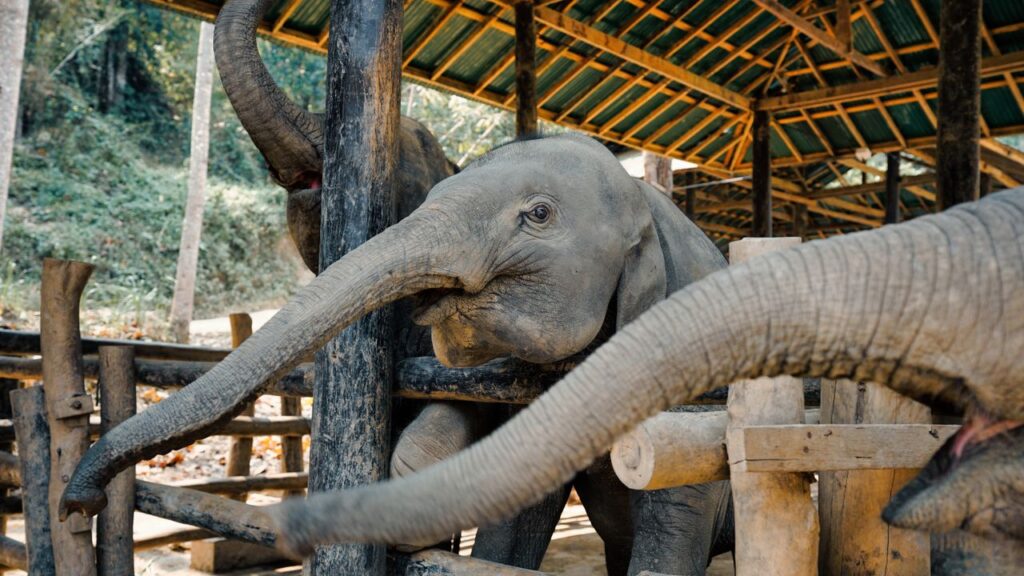
Well-known elephant sanctuaries around Chiang Mai include:
- Elephant Nature Park
- Kindred Spirit Elephant Sanctuary
- Into the Wild Elephant Camp
- Living Green Elephant Sanctuary
📌 Standards and visitor programs vary between sanctuaries and can change over time, so check current practices before booking.
Explore Chiang Mai’s Creative Side
Chiang Mai has long been regarded as Thailand’s creative capital, attracting artists, designers, craftspeople, and entrepreneurs from around the world. Traditional Lanna craftsmanship blends naturally with modern galleries, artisan cafés, independent boutiques, and creative spaces, making the city an inspiring place to explore even if you’re not an art enthusiast.
Interesting places include:
- Baan Kang Wat – A creative village of artisan workshops, cafés, and small galleries.
- MAIIAM Contemporary Art Museum – One of Thailand’s leading contemporary art museums.
- Bo Sang Umbrella Village – Famous for its traditional hand-painted umbrellas.
- San Kamphaeng Handicraft Village – Wood carving, silk, ceramics, lacquerware, and other local crafts.
- Nimman & the Old City – Home to numerous independent galleries, design stores, and artisan cafés.
Stay Active & Enjoy the Outdoors
With its mountains, forests, rivers, and scenic countryside, Chiang Mai is one of Thailand’s top destinations for outdoor adventure. Whether you’re looking for a leisurely bike ride, a challenging hike, or an adrenaline-filled experience, the region offers activities for every level of fitness and experience.

Popular activities include:
- Hiking in Doi Inthanon National Park or Chiang Dao.
- Cycling around the Old City or through the surrounding countryside.
- Ziplining through the rainforest canopy.
- White-water rafting on the Mae Taeng River during the rainy season.
- Rock climbing at Crazy Horse Buttress.
- ATV adventures through forests and mountain trails.
- Enduro riding on guided off-road tours across Northern Thailand.
Relax & Recharge
Chiang Mai is also an excellent destination for wellness. Whether you’re looking for a traditional Thai massage after a day of sightseeing or a luxurious spa treatment, there are countless ways to unwind.
Chiang Mai has long been one of Thailand’s leading wellness destinations. Its relaxed atmosphere, cooler mountain climate, and abundance of spas, massage schools, yoga studios, and meditation retreats make it an ideal place to slow down and recharge after days spent exploring the city and surrounding countryside.
Popular wellness experiences include:
- Traditional Thai massage at local massage shops or renowned massage schools.
- Luxury hotel spas offering premium treatments in tranquil surroundings.
- San Kamphaeng Hot Springs for a relaxing day surrounded by nature.
- Yoga studios offering classes for beginners and experienced practitioners.
- Meditation retreats at Buddhist temples and dedicated retreat centers.
Experience Chiang Mai’s Festivals
Chiang Mai has earned a reputation as one of Thailand’s best cities for celebrating festivals. Throughout the year, the city’s streets, temples, and public spaces come alive with colorful parades, traditional ceremonies, cultural performances, and community celebrations that attract visitors from around the world.
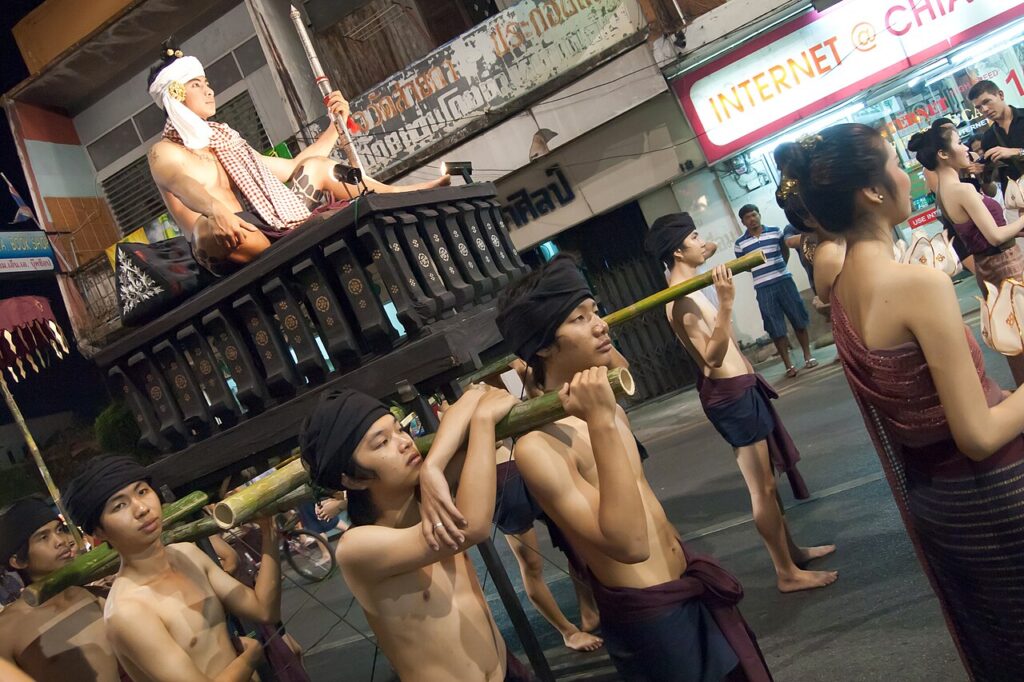
Photo by Vyacheslav Argenberg on Wikimedia Commons, licensed under CC BY 4.0
Major annual events include:
- Yi Peng Lantern Festival
- Loy Krathong
- Songkran
- Chiang Mai Flower Festival
📌 Whether you’re watching thousands of lanterns illuminate the night sky during Yi Peng or joining the city-wide water fights of Songkran, experiencing one of Chiang Mai’s festivals is often a highlight of any visit. If you’re planning to travel during these periods, book accommodation well in advance, as hotels and flights fill up quickly.
Book Tours & Activities in Chiang Mai
Many of Chiang Mai’s best experiences are easier to arrange in advance, particularly day trips, cooking classes, outdoor activities, and visits outside the city. You can browse current tours, activities, prices, and availability below.
What & Where to Eat
Chiang Mai has earned a reputation as one of Thailand’s finest food destinations, and for good reason. The city combines authentic Northern Thai (Lanna) cuisine with an outstanding street food scene, a thriving café culture, award-winning fine dining, luxury hotel brunches, and excellent riverside restaurants. Whether you’re enjoying a THB 60 bowl of Khao Soi or celebrating a special occasion at a Michelin-recognized restaurant, Chiang Mai offers memorable dining experiences for every taste and budget.
Dining at a Glance
| Dining Experience | Best For | Typical Cost |
|---|---|---|
| Northern Thai Cuisine | Authentic local flavors | THB 60–250 |
| Street Food | Budget-friendly meals | THB 50–100 |
| Casual & Mid-Range Restaurants | Thai & international cuisine | THB 150–500 |
| Café Culture | Coffee, brunch & remote work | THB 60–350 |
| Riverside Dining | Relaxed evening meals | THB 300–800 |
| Fine Dining | Special occasions | THB 1,500–4,000+ |
| Luxury Hotel Breakfast & Brunch | Premium experience | THB 700–2,000+ |
Experience Northern Thai Cuisine
Northern Thai cuisine is quite different from the food you’ll find in Bangkok or Southern Thailand. Influenced by the former Lanna Kingdom and neighboring Myanmar, local dishes tend to be richer, less sweet, and are often served with sticky rice instead of jasmine rice.
These are some of the regional specialties you shouldn’t miss:
| Dish | Description | Where to Try | Typical Price |
|---|---|---|---|
| Khao Soi | Coconut curry noodle soup topped with crispy noodles | Khao Soi Khun Yai, Khao Soi Lamduan, Khao Soi Mae Sai | THB 60–120 |
| Sai Ua | Northern Thai herb sausage | Warorot Market, local markets | THB 80–200 |
| Gaeng Hang Lay | Slow-cooked Northern pork curry | Traditional Northern Thai restaurants | THB 120–250 |
| Nam Prik Noom | Smoky green chili dip | Local restaurants | THB 80–150 |
| Nam Prik Ong | Tomato and minced pork chili dip | Northern Thai restaurants | THB 80–150 |
| Khan Toke Dinner | Traditional shared meal with cultural performances | Old Chiang Mai Cultural Center and similar venues | THB 500–900 |
Explore Chiang Mai’s Street Food Scene
Street food is one of the highlights of visiting Chiang Mai and one of the best ways to experience authentic local flavors without spending much money.
Some of the city’s best food markets include:
- Chiang Mai Gate Market – Popular with locals and an excellent place to sample authentic Northern Thai dishes.
- Chang Phuak Gate (North Gate) – Famous for late-night snacks and legendary street food stalls.
- Sunday Walking Street – Hundreds of food stalls combined with shopping and live entertainment.
- Saturday Walking Street – A slightly quieter alternative with an excellent selection of local food.
- Chiang Mai Night Bazaar – A lively mix of Thai, Asian, and international cuisine.
📌 Most street food dishes cost between THB 50 and 100, making it easy to sample several local specialties in a single evening.
Casual & Mid-Range Restaurants
Chiang Mai has an outstanding selection of casual and mid-range restaurants, making it easy to enjoy excellent food without spending a fortune. Whether you’re looking for authentic Northern Thai cuisine, Italian pizza, Japanese sushi, Indian curries, or healthy international cafés, you’ll find plenty of quality options throughout the city.
Some popular choices include:
- Ginger Farm Kitchen – Modern Northern Thai cuisine.
- Huen Phen – Traditional Northern Thai specialties.
- Why Not? Italian Restaurant & Wine Bar – Authentic Italian dining in the Old City.
- Salsa Kitchen – Popular Mexican cuisine.
- Akaligo – Mediterranean and Middle Eastern-inspired dishes.
📌 Expect to pay around THB 150–500 per person, depending on the restaurant and your choice of dishes.
Discover Chiang Mai’s Café Culture
Few cities in Southeast Asia embrace café culture quite like Chiang Mai. The city is home to hundreds of independent coffee shops serving locally grown beans from the mountains of Northern Thailand.
The Nimman area has become the center of Chiang Mai’s modern café scene, while the Old City offers charming cafés hidden among temples and historic streets. Venture beyond the city center and you’ll also discover scenic garden cafés, riverside cafés, and countryside coffee shops surrounded by rice fields and mountain views.
📌 Expect to pay around THB 60–120 for specialty coffee, while brunch dishes and light meals typically range from THB 150 to 350.
Enjoy Chiang Mai’s Fine Dining Scene
Chiang Mai has become one of Thailand’s leading fine dining destinations, with several restaurants featured in the Michelin Guide and recognized for their creative interpretation of Thai and international cuisine.
Some of the city’s standout fine dining restaurants include:
- Blackitch Artisan Kitchen
- Cuisine de Garden
- Kiti Panit
- B Samcook Home16
- The Service 1921 Restaurant & Bar
📌 Expect to pay between THB 1,500 and 4,000+ per person, depending on the restaurant and tasting menu.
Enjoy a Luxury Hotel Breakfast or Brunch
One of Chiang Mai’s lesser-known pleasures is enjoying breakfast or brunch at one of the city’s luxury hotels. Many welcome non-guests and offer exceptional buffets or à la carte menus in beautiful surroundings, making them ideal for a relaxed morning or special occasion.
Some of the best options include:
- Four Seasons Resort Chiang Mai
- 137 Pillars House
- Anantara Chiang Mai Resort
- InterContinental Chiang Mai The Mae Ping
- Shangri-La Chiang Mai
📌 Breakfasts and brunches typically cost between THB 700 and 2,000+ per person, depending on the hotel and dining experience.
Dine Along the Ping River
The Ping River provides the setting for some of Chiang Mai’s most atmospheric restaurants. Riverside dining combines excellent food with relaxing views, and many venues feature live music in the evenings.
Popular riverside restaurants include:
- The Good View Bar & Restaurant
- The Riverside Bar & Restaurant
- Deck One
- Anantara Chiang Mai Resort
For something different, you can also have dinner aboard a boat cruising along the Ping River. Evening dinner cruises combine Thai food with views of the riverbanks and illuminated parts of the city, offering a more leisurely alternative to dining at a riverside restaurant.
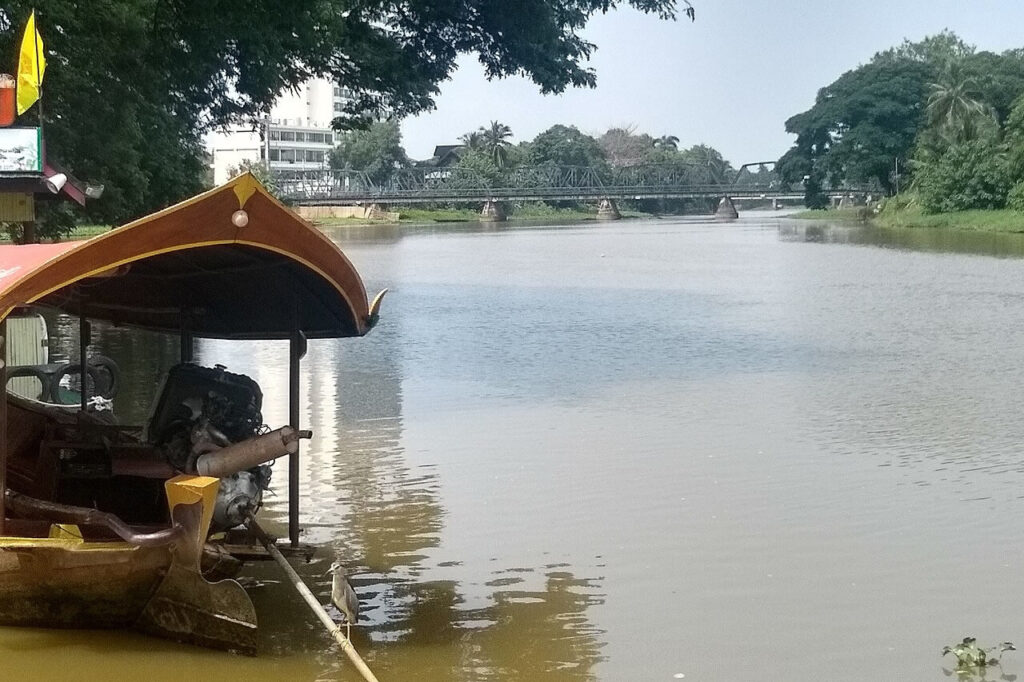
Photo by C411978 on Wikimedia Commons, licensed under CC BY-SA 4.0
Whether you’re looking for traditional Thai cuisine, fresh seafood, international dishes, or a meal on the river itself, riverside dining is one of the city’s most enjoyable evening experiences.
📌 Expect to spend around THB 300–800 per person, depending on the restaurant and your choice of food and drinks. Dinner cruises are generally priced separately and may cost more.
Typical Dining Costs
| Dining Experience | Typical Price |
|---|---|
| Street food | THB 50–100 |
| Local restaurant | THB 80–200 |
| Casual & mid-range restaurant | THB 150–500 |
| Café meal or brunch | THB 150–350 |
| Riverside dining | THB 300–800 |
| Luxury hotel breakfast | THB 700–2,000+ |
| Fine dining | THB 1,500–4,000+ |
📌 Chiang Mai’s food scene is far too diverse to cover in a single article. Think of the recommendations above as a starting point rather than a definitive list. Some of the city’s best dining experiences are often found in small family-run restaurants, hidden cafés, and neighborhood eateries waiting to be discovered.
Nightlife & Social Scene
Chiang Mai’s nightlife is more relaxed and diverse than many first-time visitors expect. Unlike Bangkok or Pattaya, the city isn’t defined by large entertainment districts or late-night party venues. Instead, evenings are often spent enjoying rooftop bars, live music, riverside restaurants, cocktail lounges, craft beer bars, and vibrant night markets. Whether you’re looking for a quiet drink with a view or a lively night out, Chiang Mai offers something to suit almost every taste.
| Experience | Examples | Best For |
|---|---|---|
| Live Music | North Gate Jazz Co-Op, The Riverside, Boy Blues Bar | Relaxed evenings & live entertainment |
| Cocktail Bars | Nimman, rooftop lounges | Date nights & stylish drinks |
| Electronic Music & DJs | Clubs and organised events | Dancing & late-night parties |
| Pool Parties | Hotels and seasonal events | Social events & meeting people |
| Backpacker Nightlife | Zoe in Yellow | Budget travelers & socializing |
| Adult Nightlife | Loi Kroh Road | Adult-oriented nightlife |
Live Music
Live music is one of the defining features of Chiang Mai’s nightlife. From intimate jazz sessions and acoustic performances to blues, rock, reggae, and popular Thai bands, there’s something happening almost every night of the week. Whether you’re looking for a relaxed evening with dinner and live entertainment or a lively bar with local musicians, Chiang Mai offers venues to suit every taste.
The Ping River is particularly well known for larger restaurants such as The Riverside Bar & Restaurant and The Good View Bar & Restaurant, where live bands perform throughout the evening. For a more intimate atmosphere, North Gate Jazz Co-Op has earned an international reputation for its nightly jazz performances, while Boy Blues Bar at the Night Bazaar is a long-time favorite for blues enthusiasts.
DJs, Electronic Music & Organised Parties
While Chiang Mai is best known for its relaxed nightlife, it also has a surprisingly active electronic music scene. House, techno, drum & bass, trance, and commercial DJs perform at clubs, bars, and special events throughout the year, attracting a mix of locals, expats, digital nomads, and international travelers.
Unlike Bangkok, Chiang Mai’s electronic music scene is largely event-driven rather than centered around a single entertainment district. Club nights, guest DJs, themed parties, music festivals, and rooftop events regularly take place at venues across the city, with many announced through social media shortly before the event.
📌 Popular venues include Nori Sky Terrace, Warm Up Café, and Twelve Twelve, while hotels, resorts, and event organisers frequently host seasonal pool parties and special events during the high season.
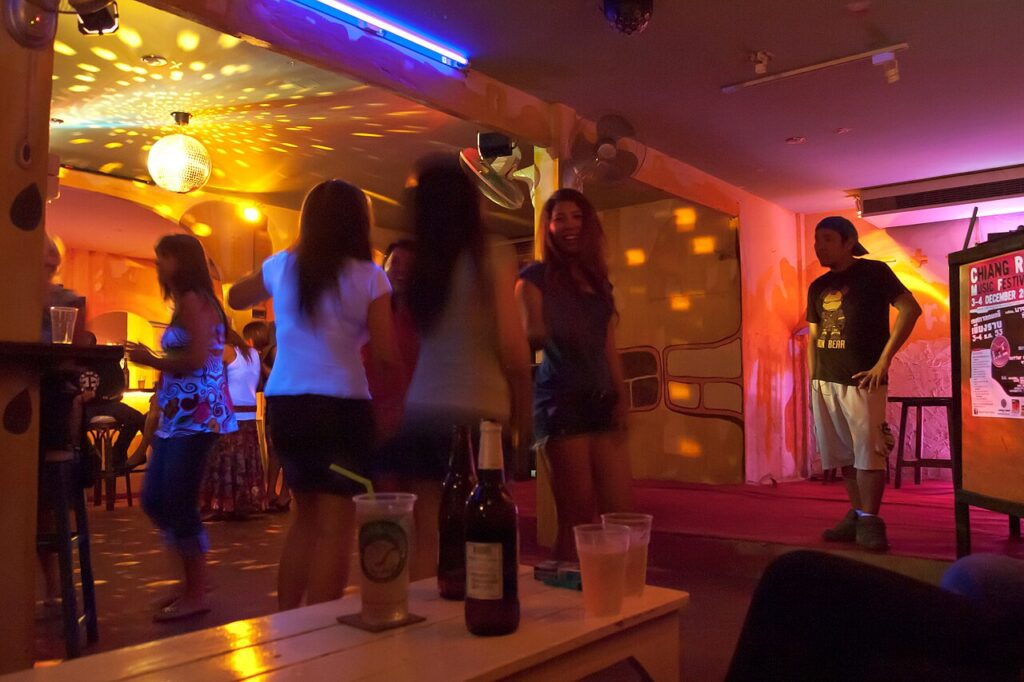
Photo by Vyacheslav Argenberg on Wikimedia Commons, licensed under CC BY 4.0
Pool Parties & Social Events
Chiang Mai’s social scene extends well beyond traditional bars and clubs. Throughout the year, hotels, resorts, hostels, and event organisers host pool parties, rooftop gatherings, sunset sessions, quiz nights, themed events, and community meetups, creating plenty of opportunities to meet both locals and fellow travelers.
These events are especially popular during the cool season (November to February) and around major holidays such as Songkran and New Year’s Eve, when venues organise larger celebrations featuring international DJs, live music, and entertainment.
📌 Many events are promoted through social media and local event listings, making them easy to discover once you’re in the city.
Nimman: Cocktails, Rooftops & Modern Nightlife
Nimman is Chiang Mai’s trendiest nightlife district, popular with young professionals, expats, digital nomads, and visitors looking for a more sophisticated evening out. The area is packed with stylish cocktail bars, rooftop lounges, wine bars, craft beer venues, and modern clubs, all within easy walking distance of one another.
Popular venues include Warm Up Café, Nori Sky Terrace, and numerous independent cocktail bars and rooftop lounges along Nimmanhaemin Road and its surrounding sois. Compared with the Old City, the atmosphere is more contemporary and less backpacker-oriented, making Nimman an excellent choice for relaxed drinks, date nights, or evenings with friends.
Old City & Backpacker Nightlife
The Old City offers one of Chiang Mai’s liveliest and most diverse evening scenes. Within its historic streets you’ll find everything from relaxed pubs such as UN Irish Pub to reggae venues, sports bars, hidden cocktail lounges, live music venues, and late-night backpacker bars. One of the biggest advantages is that most places are within easy walking distance, making it easy to explore several venues in a single evening.
The backpacker scene is centered around Zoe in Yellow, a popular open-air entertainment complex surrounded by bars, street food, and late-night venues that attracts a younger international crowd. However, the Old City’s nightlife extends far beyond Zoe, with numerous independent bars and live music venues creating a welcoming atmosphere for visitors of all ages.
📌 Whether you’re looking for a quiet beer, live music, a lively pub, or a social night out, the Old City offers one of Chiang Mai’s most varied nightlife experiences.
Riverside Bars
The Ping River offers one of Chiang Mai’s most enjoyable evening settings and is a favorite among both locals and visitors. As the sun sets, the riverbanks come alive with open-air restaurants, lively bars, and spacious terraces where guests enjoy dinner, drinks, and live music overlooking the water.
Well-known venues such as The Riverside Bar & Restaurant and The Good View Bar & Restaurant have become Chiang Mai institutions, attracting a diverse crowd ranging from couples and families to groups of friends celebrating special occasions. Most evenings feature live bands performing a mix of Thai and international music, creating a relaxed atmosphere that encourages visitors to linger long after dinner.
📌 If you’re looking for a memorable night out without the crowds of clubs or backpacker bars, the Ping River is one of the best places in Chiang Mai to experience the city’s laid-back nightlife.
Loi Kroh Road & Adult-Oriented Nightlife
Chiang Mai also has a small adult-oriented nightlife scene centered mainly around Loi Kroh Road, between the Old City and the Night Bazaar. Here you’ll find a mix of regular bars, beer bars, and a handful of venues catering to the adult entertainment market. Elsewhere in the city there are also a small number of go-go bars and karaoke venues, although the overall scene remains modest by Thai standards.
The area is relatively compact and much smaller and less prominent than the adult entertainment districts found in Pattaya or Bangkok. For most visitors, it’s simply another part of Chiang Mai’s broader nightlife landscape rather than the defining feature of evenings in the city.
Nightlife Budget: What to Expect
Chiang Mai can be very affordable for a night out, especially if you stick to local beer, casual bars, and live music venues. Costs rise quickly once you move into rooftop cocktails, premium wine, organised parties, or riverside dining, but there are good options across almost every budget.
| Nightlife Experience | Typical Cost |
|---|---|
| Local beer | THB 80–150 |
| Cocktail | THB 250–450 |
| Glass of wine | THB 200–400 |
| Live music venue | Usually free entry, drinks THB 80–250 |
| Club / DJ event | THB 200–600 |
| Pool party | THB 300–800 |
| Riverside dinner | THB 300–800 per person |
Where to Stay in Chiang Mai
Choosing where to stay in Chiang Mai can make a significant difference to your visit. The city is relatively compact, but its neighborhoods have very different characters. Staying inside the Old City puts temples and historic sights on your doorstep, while Nimman offers a more modern atmosphere centered around cafés, restaurants, and nightlife. Head toward the Ping River and the experience becomes quieter and more relaxed, while areas such as Santitham offer better value and a more local feel.
There is no single best area for everyone. The right choice depends on whether you prioritize sightseeing, nightlife, food, convenience, atmosphere, or simply getting more accommodation for your money.
Chiang Mai Areas at a Glance
| Area | Best For | Typical Hotel Price | What to Consider |
|---|---|---|---|
| Old City | First-time visitors & sightseeing | THB 700–3,000+ | Excellent walkability, but tourist-heavy and less convenient if exploring beyond the center |
| Nimman | Cafés, restaurants & nightlife | THB 1,000–4,000+ | Great urban lifestyle and very convenient, but busy and heavy traffic can be noticeable |
| Night Bazaar / Chang Khlan | Convenience, shopping & nightlife | THB 800–4,000+ | Very convenient, but lacks some of the character of the Old City and Nimman |
| Riverside | Couples, relaxation & upscale stays | THB 1,500–6,000+ | More peaceful and atmospheric, but you’ll rely more on transport |
| Santitham | Value & local life | THB 600–2,000 | Better value and more local, but less immediately convenient for sightseeing |
| Chiang Mai Countryside | Resorts, nature & tranquility | THB 1,000–8,000+ | More space and tranquility, but a poor choice without transport if you plan to visit the city frequently |
📌 Prices are approximate nightly rates and can rise considerably during festivals, holidays, and the November to February high season.
Old City: Best for First-Time Visitors
If you’re visiting Chiang Mai for the first time and want to concentrate on sightseeing, the Old City is difficult to beat. Staying within or close to the moat puts Wat Chedi Luang, Wat Phra Singh, Sunday Walking Street, restaurants, massage shops, cafés, and numerous smaller temples within walking distance.
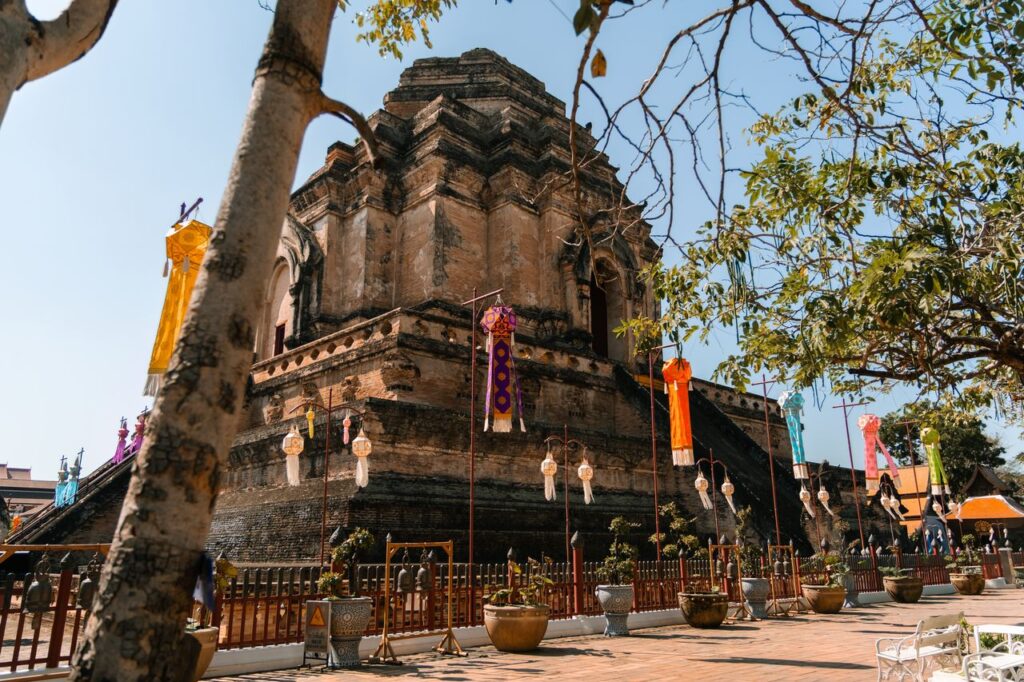
Accommodation ranges from inexpensive guesthouses and hostels to boutique hotels built around traditional courtyards and restored Lanna-style buildings.
📌 The main disadvantage is that some parts can feel distinctly tourist-oriented. Nevertheless, for a short first visit, the convenience often outweighs that drawback.
Nimman: Best for Modern Chiang Mai
Nimmanhaemin, usually shortened to Nimman, offers a completely different Chiang Mai experience. This is the city’s modern side, with specialty coffee shops, international restaurants, cocktail bars, shopping, coworking spaces, and contemporary hotels concentrated within a relatively small area.
It’s particularly well suited to younger travelers, digital nomads, couples, and anyone who values restaurants and nightlife as much as traditional sightseeing.
📌 One consideration is traffic. Nimman is one of Chiang Mai’s busiest areas, particularly during the morning and evening rush hours, and congestion around Nimmanhaemin Road and the surrounding streets can make getting in and out of the neighborhood slower than expected.
Night Bazaar & Chang Khlan: Best for Convenience
The Night Bazaar and Chang Khlan Road area is a practical compromise between sightseeing, entertainment, shopping, and accommodation. You’re just east of the Old City, close to the Ping River, and surrounded by restaurants, markets, massage shops, bars, and hotels across almost every price category.
Several of Chiang Mai’s larger international and upscale hotels are located here, but there are plenty of affordable choices as well.
📌 It doesn’t have the historic atmosphere of the Old City or the fashionable character of Nimman, but its central location makes it particularly convenient for visitors who want easy access to several parts of Chiang Mai.
Riverside: Best for a Relaxed Stay
Staying along the Ping River offers a quieter and more atmospheric alternative to the central tourist areas. Boutique hotels, luxury resorts, riverside restaurants, gardens, and terraces give this part of Chiang Mai a distinctly more relaxed character.
It’s particularly attractive for couples, longer stays, and travelers willing to pay a little more for surroundings and atmosphere rather than being directly among the major attractions.
📌 The trade-off is convenience. Depending on exactly where you stay, you’ll probably use Grab, a songthaew, or other transport more frequently than you would in the Old City.
Santitham: Best for Value & Local Life
Located between the Old City and Nimman, Santitham is worth considering if you want good value without staying far from central Chiang Mai. It’s a predominantly residential neighborhood filled with inexpensive Thai restaurants, cafés, markets, apartments, and smaller hotels.
You won’t step outside your hotel directly into Chiang Mai’s major sightseeing district, but both the Old City and Nimman are nearby. For budget-conscious travelers and longer stays, that can be an excellent compromise.
📌 Santitham also provides a better glimpse of everyday Chiang Mai than the city’s most heavily visited neighborhoods.
Chiang Mai Countryside: Resorts, Nature & Space
You don’t have to stay in central Chiang Mai at all. The countryside surrounding the city offers everything from inexpensive guesthouses and small boutique properties to secluded wellness retreats and luxury resorts. This can be an excellent alternative if nature, tranquility, and space matter more to you than having the Old City’s attractions within walking distance.
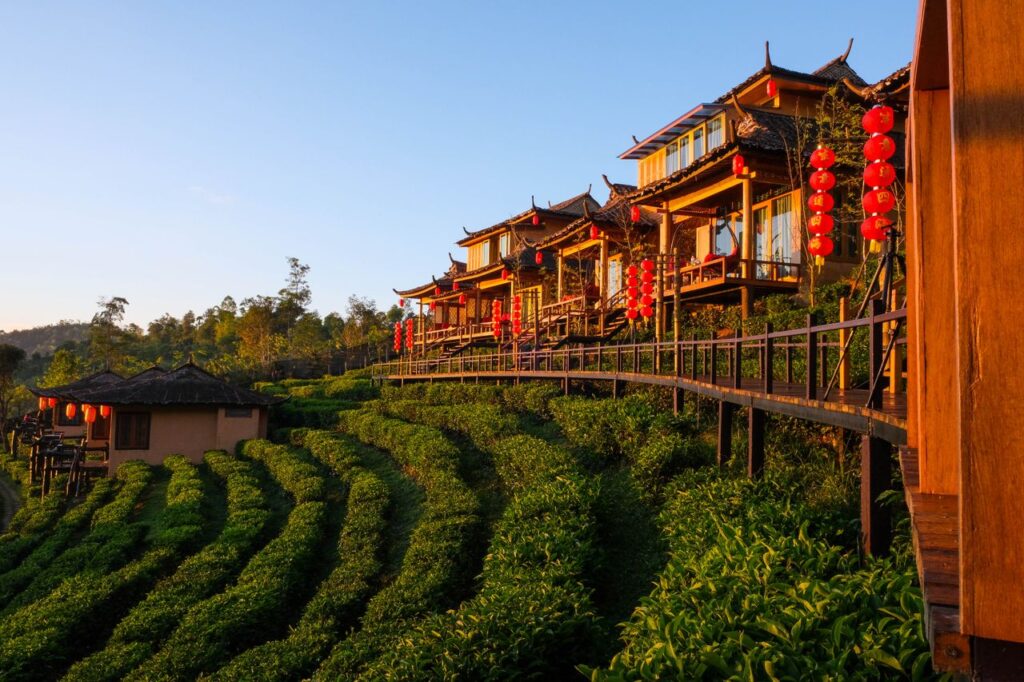
Different parts of the surrounding countryside offer distinctly different experiences:
- Mae Rim – North of the city and particularly well suited to resort stays, mountain scenery, and exploring the Mae Sa Valley and Mon Jam.
- Hang Dong – Southwest of Chiang Mai, with countryside resorts, villas, cafés, and convenient access to attractions along the Samoeng route.
- San Kamphaeng – East of the city, offering a more rural setting associated with handicraft villages, rice fields, and access to San Kamphaeng Hot Springs.
- Doi Saket – Northeast of Chiang Mai and noticeably more rural, with rice fields, mountain views, small resorts, and retreats suited to travelers looking for peace and quiet.
The important consideration is transport. These areas make considerably more sense if you have a car or motorcycle or are comfortable relying on taxis and Grab. For a first-time visitor spending only a few days in Chiang Mai and planning to concentrate on temples, restaurants, markets, and nightlife, staying centrally will usually be more practical.
✅ For a longer visit, a family holiday, a wellness break, or a trip centered around nature and exploring Northern Thailand, however, staying outside the city can offer a completely different and very rewarding Chiang Mai experience.
Find Accommodation in Chiang Mai
Chiang Mai has an enormous range of accommodation, from inexpensive guesthouses and boutique hotels to serviced apartments and luxury resorts. Rather than recommending a handful of properties from such a large and constantly changing selection, I suggest first choosing the area that best suits your trip, then comparing current accommodation options, prices, and guest reviews.
You can use the search options below to explore available accommodation across Chiang Mai and narrow the results by location, budget, and the facilities that matter to you.
📌 I’ve used Booking.com for many years and have always had good experiences. Agoda is another excellent option and sometimes lists different properties or prices, so it’s worth checking both.

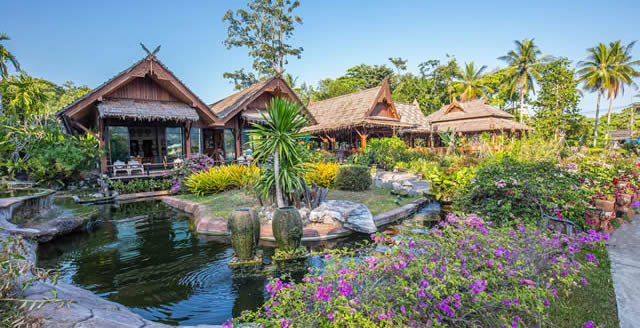
- ✅ Excellent Thailand coverage
- ✅ Great for local hotels & resorts
- ✅ Instant booking confirmation

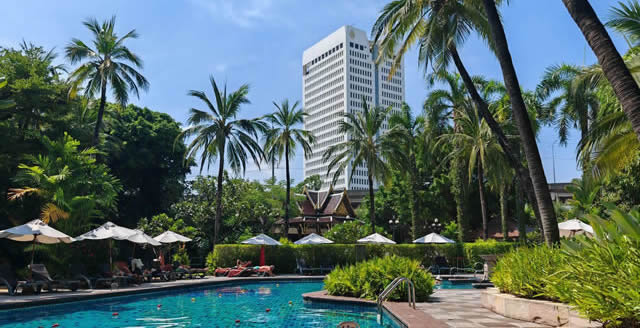
- ✅ Trusted guest reviews
- ✅ Hotels, resorts & apartments
- ✅ Easy online reservations
Shopping & Markets
Shopping in Chiang Mai ranges from traditional fresh markets and lively weekend walking streets to artisan workshops, independent boutiques, and modern shopping malls. What makes the city particularly interesting, however, is its strong tradition of craftsmanship. Northern Thailand is known for ceramics, textiles, silverware, wood carvings, handmade paper, lacquerware, and traditional umbrellas, while Chiang Mai’s younger creative community has added contemporary art, fashion, design, and locally made products to the mix.
Whether you’re looking for inexpensive souvenirs, authentic Northern Thai products, local food, handmade crafts, or modern retail, Chiang Mai offers very different shopping experiences depending on where you go.
Chiang Mai Shopping at a Glance
| Shopping Experience | Where to Go | Best For |
|---|---|---|
| Weekend Walking Streets | Sunday Walking Street, Saturday Walking Street | Handicrafts, street food & souvenirs |
| Traditional Markets | Warorot Market, Ton Lam Yai Market | Local food, textiles & everyday products |
| Night Markets | Night Bazaar, Anusarn Market | Souvenirs, food & evening shopping |
| Arts & Crafts | Baan Kang Wat, Bo Sang, San Kamphaeng | Handmade products & local craftsmanship |
| Modern Shopping | Central Festival, Central Airport Plaza, MAYA | Fashion, electronics, restaurants & cinemas |
| Independent Shops | Nimman, Old City | Design, fashion, art & specialty products |
Weekend Walking Streets
Chiang Mai’s weekend walking streets are as much about the experience as the shopping. Roads normally filled with traffic are closed for the evening and transformed into long pedestrian markets filled with handicrafts, clothing, artwork, street food, musicians, and local performers.
The Sunday Walking Street runs through the heart of the Old City along Ratchadamnoen Road and is the largest and best-known of Chiang Mai’s walking streets. Hundreds of vendors spread along the main road and surrounding temple grounds, selling everything from handmade jewelry and clothing to paintings, ceramics, carved wooden products, and inexpensive souvenirs.
The Saturday Walking Street on Wua Lai Road, just south of the Old City, is somewhat smaller. The neighborhood has traditionally been associated with Chiang Mai’s silversmith community, and silverware and decorative metalwork remain part of its identity alongside the usual food, crafts, and market stalls.
📌 Both become extremely busy during the cool season, so arriving earlier in the evening makes browsing considerably easier.
Traditional Markets: Experience Everyday Chiang Mai
For a very different shopping experience, visit Warorot Market (Kad Luang) and neighboring Ton Lam Yai Market near the Ping River. This is one of Chiang Mai’s most important traditional commercial areas and remains heavily used by local residents rather than existing primarily for tourists.
Inside and around the markets you’ll find dried fruit, northern sausages, chili pastes, spices, tea, clothing, fabrics, household goods, flowers, fresh produce, snacks, and countless other everyday products.
Warorot is particularly useful if you want to take home Northern Thai food products such as sai ua, nam prik noom, dried fruit, tea, or locally produced snacks. The surrounding streets are also worth exploring rather than simply walking through the main market building and leaving.
📌 This is one of the better places in central Chiang Mai to experience the city’s everyday commercial life.
Night Bazaar & Evening Shopping
The Chiang Mai Night Bazaar along Chang Khlan Road has been one of the city’s best-known tourist shopping areas for decades. The surrounding streets and covered markets fill with stalls selling clothing, souvenirs, handicrafts, artwork, accessories, and other tourist-oriented products.
Nearby Anusarn Market adds restaurants, street food, bars, and additional stalls, making the entire area more of an evening destination than simply somewhere to shop.
📌 The Night Bazaar is considerably more tourist-oriented than Warorot Market or the weekend walking streets, and some products are the same mass-produced souvenirs you’ll find elsewhere in Thailand. Even so, its central location and combination of shopping, food, and entertainment make it an easy place to spend an evening.
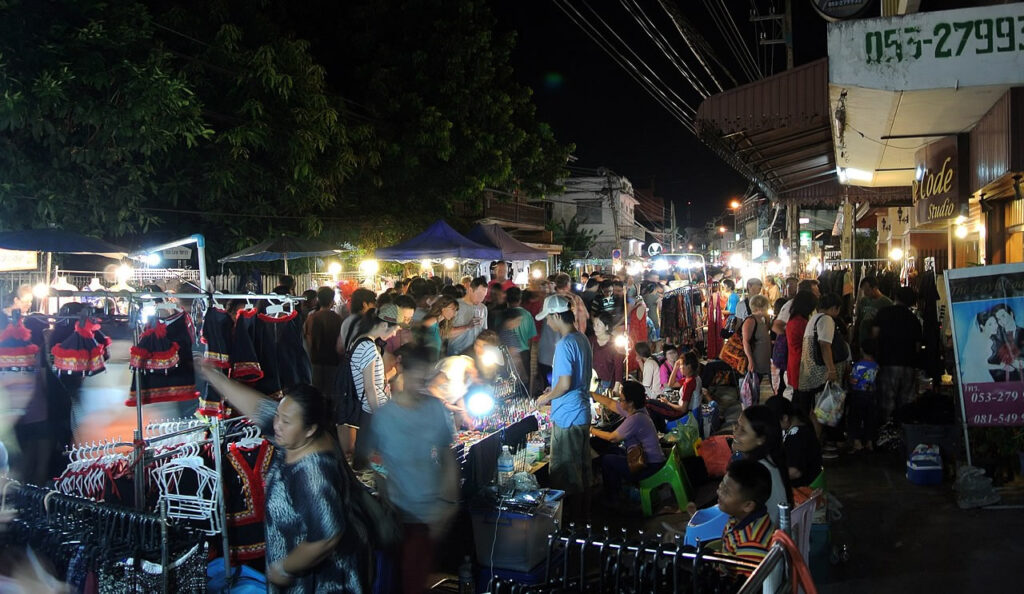
Photo by Adbar on Wikimedia Commons, licensed under CC BY-SA 3.0
Handicrafts, Art & Locally Made Products
Chiang Mai’s long tradition of craftsmanship is one of the strongest reasons to shop here. Rather than limiting yourself to souvenir stalls, it’s worth exploring some of the areas where local crafts are actually produced and sold.
Bo Sang, east of the city, is famous for its hand-painted paper umbrellas and parasols, while the wider San Kamphaeng area has long been associated with silk, ceramics, wood carving, lacquerware, silverware, and other traditional crafts.
For something more contemporary, Baan Kang Wat brings together small studios, independent shops, cafés, artists, and craftspeople in a leafy creative village near Wat Umong. It’s a good example of how Chiang Mai’s traditional artisan culture has evolved into a broader modern creative scene.
You’ll also find independent boutiques, galleries, ceramic studios, clothing designers, and specialty shops scattered throughout Nimman and the Old City.
📌 If you’re looking for something genuinely representative of Chiang Mai, locally made ceramics, textiles, artwork, coffee, tea, or handicrafts generally make more interesting purchases than generic Thailand souvenirs.
Modern Shopping Malls
Chiang Mai also has everything you’d expect from a major Thai city when it comes to modern retail.
Central Festival is one of Chiang Mai’s largest shopping malls, with a wide range of fashion brands, electronics, restaurants, a supermarket, cinema, and numerous services. Located just off the Superhighway northeast of the city center, it’s particularly convenient for visitors staying on that side of Chiang Mai.
Central Airport Plaza, close to Chiang Mai International Airport on Mahidol Road, is another of the city’s major shopping centers. It’s especially convenient for the southern and southwestern parts of Chiang Mai and offers department stores, fashion, electronics, restaurants, a supermarket, cinema, and plenty of practical services.
MAYA Lifestyle Shopping Center, at the intersection of Nimmanhaemin and Huay Kaew roads, is particularly convenient for visitors staying around Nimman. In addition to retail stores, it offers restaurants, cafés, entertainment, and a cinema.
📌 Malls probably aren’t the reason anyone travels to Chiang Mai, but they’re useful for practical shopping, escaping the afternoon heat, catching a movie, or finding something that isn’t readily available in markets and smaller shops.
A Practical Shopping Tip
Prices in shopping malls and established stores are normally fixed. At markets and souvenir stalls, some bargaining may be acceptable, particularly when buying several items, but it doesn’t need to become a contest. A friendly approach and a reasonable counteroffer usually work better than aggressive haggling.
For handmade products, it’s also worth asking whether an item was actually produced locally. Chiang Mai has an enormous craft industry, but tourist markets inevitably also contain mass-produced goods brought in from elsewhere.
Day Trips from Chiang Mai
One of Chiang Mai’s greatest advantages is how quickly you can leave the city behind and explore the mountains and countryside of Northern Thailand. Within a couple of hours, you can reach national parks, waterfalls, mountain villages, hot springs, reservoirs, caves, and some of the region’s most impressive scenery.
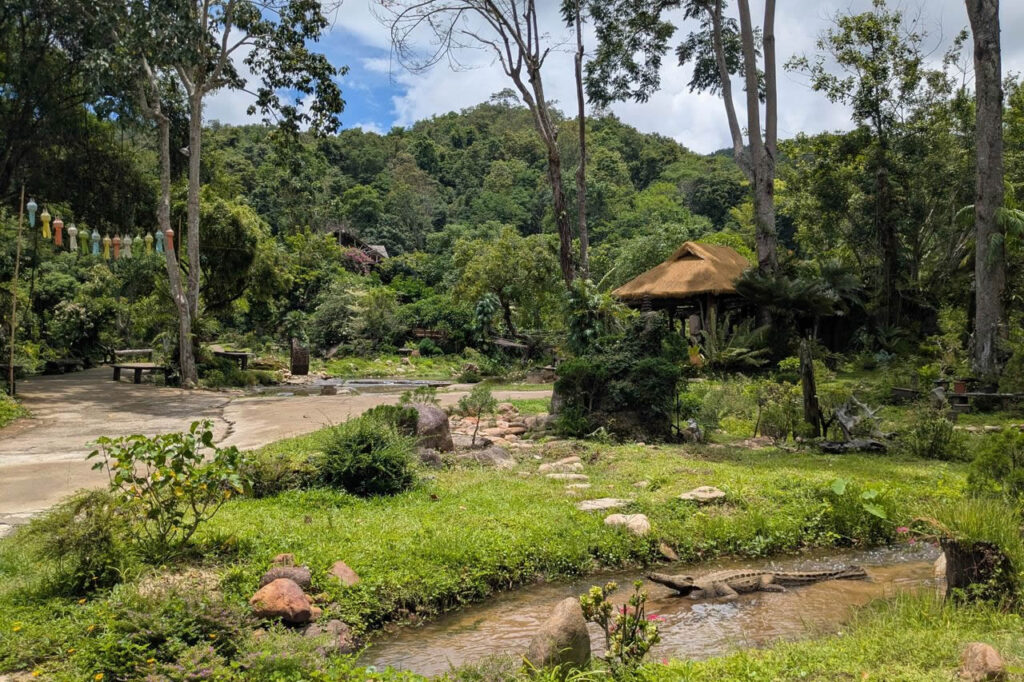
Whether you want to spend the day hiking in the mountains, exploring traditional villages, relaxing at a floating resort, visiting temples, or simply enjoying a scenic drive through the countryside, Chiang Mai makes an excellent base for day trips. The following destinations are all realistic excursions without requiring an overnight stay.
| Destination | Approx. Travel Time | Best For |
|---|---|---|
| Doi Suthep-Pui | 30–60 min | Temples, viewpoints, nature & waterfalls |
| Mae Rim & Mon Jam | 45–75 min | Mountains, gardens, attractions & cafés |
| Mae Kampong | 1–1.5 hrs | Mountain village, waterfalls & scenery |
| San Kamphaeng & Hot Springs | 45–75 min | Handicrafts, countryside & hot springs |
| Mae Ngat Dam | 1–1.5 hrs | Floating resorts, swimming, kayaking & lake experience |
| Doi Inthanon | 1.5–2 hrs | Mountains, waterfalls, hiking & viewpoints |
| Chiang Dao | 1.5–2 hrs | Mountains, caves, temples & rural scenery |
📌 Travel times are approximate from central Chiang Mai and can vary depending on traffic, weather, and your exact destination.
Doi Suthep-Pui: More Than Just the Temple
Wat Phra That Doi Suthep is one of Chiang Mai’s most famous landmarks, but the surrounding Doi Suthep-Pui National Park offers enough to turn a temple visit into a rewarding half-day or full-day excursion.
A good route can combine Wat Pha Lat, a peaceful forest temple on the lower slopes, with Wat Phra That Doi Suthep and the viewpoints overlooking Chiang Mai. From there, you can continue farther into the mountains toward Bhubing Palace, Doi Pui, waterfalls, hiking trails, and Hmong villages depending on how much time you have.
The mountain is particularly convenient because it begins immediately west of the city. You can experience forest, cooler temperatures, mountain roads, temples, and panoramic views without committing an entire day to traveling.
📌 If you only have a few days in Chiang Mai, Doi Suthep-Pui is one of the easiest excursions to combine with sightseeing in the city. A morning or afternoon is enough for the main attractions, while having your own transport gives you considerably more freedom to explore beyond Wat Phra That Doi Suthep.
Mae Rim & Mon Jam: Mountains, Gardens & Scenic Stops
Mae Rim is one of the easiest areas around Chiang Mai for building your own day trip. Head north from the city and the landscape gradually changes from busy suburbs to greener countryside and mountain foothills, with enough attractions along the way to fill anything from a relaxed half-day to a full day.
The Mae Sa Valley is home to Mae Sa Waterfall, Queen Sirikit Botanic Garden, cafés, gardens, and numerous outdoor attractions. Continue higher into the mountains toward Mon Jam and you’ll find cooler temperatures, viewpoints, hillside restaurants and cafés, flower gardens, and sweeping views across the surrounding valleys.
The advantage of Mae Rim is the variety. You don’t need to follow a fixed itinerary. A day could combine a waterfall and the botanical garden with lunch in the mountains, or focus almost entirely on the drive, scenery, and stops around Mon Jam.
📌 Having your own car or motorcycle makes this excursion considerably better. Many of the attractions are spread out, and part of the appeal is being able to stop whenever something along the route catches your interest.
Mae Kampong: Mountain Village & Forest Escape
Around 50 kilometers east of Chiang Mai, Mae Kampong is a small mountain village surrounded by forest, streams, and steep green hills. Its traditional wooden houses, cooler climate, and setting along a narrow valley make it feel considerably farther from the city than the drive would suggest.
The village itself is the main attraction. Spend some time walking through its narrow streets, stop at one of the small cafés or restaurants, visit Mae Kampong Waterfall, and continue to one of the viewpoints overlooking the surrounding mountains. Homestays and locally run businesses have also become an important part of the village’s tourism economy.
Mae Kampong is no longer an undiscovered mountain village. It has become extremely popular with Thai visitors in particular and can get very busy on weekends and public holidays. If possible, visit on a weekday and arrive relatively early to experience the village before the largest crowds arrive.
📌 Mae Kampong works best as a relaxed excursion rather than a checklist of attractions. The mountain setting, village atmosphere, cooler air, and journey through the countryside are as much a part of the experience as any individual sight.
San Kamphaeng & Hot Springs: Crafts, Countryside & Relaxation
East of Chiang Mai, San Kamphaeng makes an easy day trip combining Northern Thailand’s traditional handicrafts with a drive through the countryside and a relaxing visit to the area’s hot springs.
The route through Bo Sang and San Kamphaeng has long been associated with local craftsmanship. Bo Sang is particularly famous for its colorful hand-painted paper umbrellas, while workshops and shops throughout the area produce silk, ceramics, wood carvings, lacquerware, silverware, and other traditional products. Some workshops allow visitors to watch craftspeople at work rather than simply browse finished souvenirs.
Continue farther east and you’ll reach San Kamphaeng Hot Springs, set in landscaped grounds where naturally heated mineral water emerges from underground. Visitors can soak their feet, use the mineral baths, relax in the park, or try the local tradition of cooking eggs in the hottest spring water.
📌 This trip works particularly well if you combine several stops rather than visiting the hot springs alone. Bo Sang, local workshops, lunch in the countryside, and the hot springs together make for a varied and easy-going day outside Chiang Mai.
Mae Ngat Dam & Floating Resorts: A Day on the Water
About an hour north of Chiang Mai, Mae Ngat Somboon Chon Dam offers a completely different kind of day trip. The reservoir lies within Si Lanna National Park, surrounded by forested hills, but the real attraction isn’t the dam itself. It’s getting out onto the water.
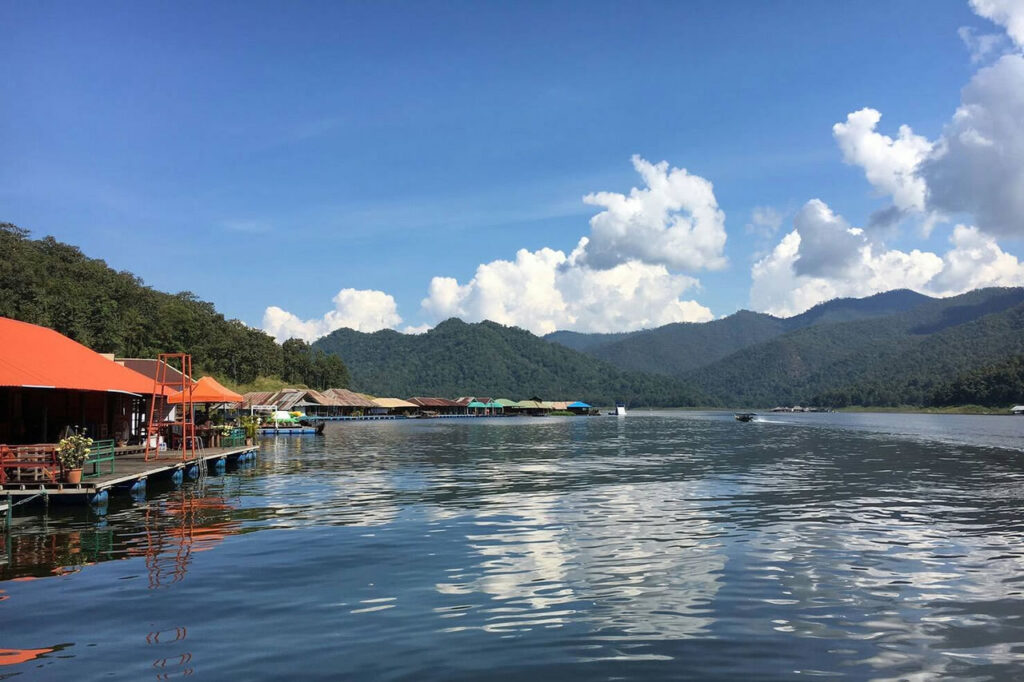
From the pier, boats take visitors across the reservoir to a collection of floating restaurants and raft-house resorts. You can spend several hours swimming, kayaking, eating lunch, relaxing on the floating decks, and enjoying the mountain scenery. Some resorts also offer additional water activities, making it easy to spend most of the day without leaving the lake.
Although Mae Ngat works perfectly as a day trip, staying overnight at one of the floating resorts is also possible and turns it into a very different experience. Once the day visitors leave, you can spend the evening surrounded by the reservoir and mountains, sleep directly on the water, and wake up to the quiet lake the following morning. Accommodation ranges from fairly simple raft houses to more comfortable floating resorts.
For a day trip, arrive in the morning, take a boat to one of the floating resorts, and simply make the lake your destination rather than trying to combine Mae Ngat with several other attractions. The boat journey itself is part of the experience, and once you’re away from the shore, the setting feels surprisingly remote.
✅ I visited Mae Ngat many times while living in Chiang Mai. I recently came across this TripAdvisor review I wrote after one of those visits years ago, and it still captures why Mae Ngat remains one of my favorite escapes from the city:

“Great place to spend the day with family and friends, only 1 hour from Chiang Mai. Just grab a table at a floating restaurant and enjoy yourselves. The place we stayed had a water trampoline and they let us use a kayak for free. The food was all right – staff speaks Thai plus some limited English.
If you stay overnight rent a floating house and bring your own supplies of food & drink – you can BBQ on the deck. During high season it is better to make a reservation.”
Doi Inthanon National Park: Thailand’s Highest Mountain
About two hours southwest of Chiang Mai, Doi Inthanon National Park makes one of the best full-day excursions from the city. Home to Thailand’s highest mountain at 2,565 meters, the park combines waterfalls, forest trails, mountain viewpoints, pagodas, and noticeably cooler temperatures.
Popular stops include the summit, the King and Queen Pagodas, Wachirathan Waterfall, and nature trails such as Kew Mae Pan, when open. With the attractions spread across a large mountainous area, allow a full day rather than trying to squeeze Doi Inthanon into a rushed half-day trip.
The experience also changes considerably with the seasons. The cool months bring low temperatures and occasional mist around the summit, while the rainy and green seasons transform the forests and waterfalls and can offer particularly impressive scenery.
📌 I have a complete guide to Doi Inthanon National Park covering how to get there, entrance fees, waterfalls, hiking trails, viewpoints, and the best time to visit.
Chiang Dao: Mountains, Caves & Northern Scenery
Around 70 kilometers north of Chiang Mai, Chiang Dao is dominated by the dramatic limestone massif of Doi Luang Chiang Dao, one of Thailand’s highest mountains. The combination of mountain scenery, caves, temples, forests, and rural countryside makes it an excellent full-day escape from the city.
The best-known attraction is Chiang Dao Cave, an extensive cave system beneath the mountains containing Buddhist shrines, stalactites, and stalagmites. Some sections are illuminated and easy to explore, while deeper parts require a local guide and lantern.
Also worth visiting is Wat Tham Pha Plong, a peaceful forest temple reached by climbing a long staircase through the jungle. The setting beneath the mountain is impressive and provides a very different experience from Chiang Mai’s busy city temples.
But Chiang Dao is not really about rushing between attractions. The drive north, mountain views, quiet roads, cafés, restaurants, and surrounding countryside are a large part of its appeal. With your own transport, you can easily spend a day exploring without following a rigid itinerary.
📌 Chiang Dao also rewards a longer stay. While it works well as a day trip from Chiang Mai, spending a night beneath Doi Luang Chiang Dao gives you more time to enjoy the mountain setting and explore the surrounding countryside at a slower pace.
Worth Visiting, But Better Overnight
Some of Northern Thailand’s most popular destinations are frequently advertised as day trips from Chiang Mai. While they may be technically possible to visit in a single day, the amount of time spent traveling means I wouldn’t recommend experiencing them that way.
Chiang Rai is around three hours from Chiang Mai by road and is well worth visiting for attractions such as the White Temple, Blue Temple, Baan Dam, and the surrounding countryside. Trying to see the highlights and return to Chiang Mai on the same day, however, means spending six hours or more on the road. If your itinerary allows, stay at least one night.
The same applies to Pai. The journey through the mountains is part of the experience, but the famously winding road takes around three hours each way. Pai itself, along with the surrounding viewpoints, hot springs, waterfalls, and countryside, deserves more than a few rushed hours before driving back.
📌 If you have enough time, treat Chiang Rai and Pai as separate destinations rather than day trips from Chiang Mai. Both are much more rewarding when you stay overnight and have time to explore beyond the headline attractions.
Best Photo Spots & Scenic Viewpoints
Chiang Mai is an exceptionally rewarding destination for photography, combining historic temples, ancient city walls, mountain landscapes, lakes, waterfalls, and panoramic viewpoints. The surrounding mountains also mean you don’t have to travel far from the city to find dramatically different scenery.
The locations below offer some of the best photographic opportunities in and around Chiang Mai. For each spot, I’ve included the best time to visit, shot ideas, crowd considerations, practical shooting notes, equipment suggestions, and drone considerations to help you plan your visit.
📍 Drone note: Flying a drone in Thailand is subject to national registration and aviation requirements, in addition to restrictions imposed by national parks, temples, and individual attractions. Check the current rules before flying.
Wat Phra That Doi Suthep (Temple & City Views)
📌 Golden temple architecture with panoramic views over Chiang Mai.
✅ Best time: Early morning or late afternoon
Shot ideas: Golden chedi, naga staircase, temple details, city panorama
Crowd strategy: Arrive early before tour groups
Shooting notes: Watch highlights on the reflective gold surfaces
Equipment tip: Wide-angle plus short telephoto
Drone notes: National park and temple restrictions apply
Difficulty: ★★☆☆☆ Easy
📍 Google Maps: Wat Phra That Doi Suthep
Chiang Mai Old City & Moat (Historic City Scenes)
📌 Ancient gates, brick walls, moat reflections, temples, and everyday street life.
✅ Best time: Early morning or late afternoon
Shot ideas: Tha Phae Gate, moat reflections, city walls, monks, street scenes
Crowd strategy: Early morning for cleaner architectural shots
Shooting notes: Explore beyond Tha Phae Gate for quieter compositions
Equipment tip: Standard zoom or lightweight prime
Drone notes: Airport proximity makes drone use problematic
Difficulty: ★☆☆☆☆ Easy
📍 Google Maps: Chiang Mai Old City
Wat Chedi Luang (Ancient Temple Architecture)
📌 The massive ruined chedi is one of Chiang Mai’s strongest architectural subjects.
✅ Best time: Morning or late afternoon
Shot ideas: Ancient chedi, naga staircases, elephants, monks
Crowd strategy: Visit early for unobstructed wide shots
Shooting notes: Walk around the chedi to find the best light
Equipment tip: Wide or standard zoom
Drone notes: Not recommended around the active temple
Difficulty: ★☆☆☆☆ Easy
📍 Google Maps: Wat Chedi Luang
Doi Inthanon National Park (Mountains & Waterfalls)
📌 Mountain scenery, misty forests, waterfalls, trails, and the famous twin pagodas.
✅ Best time: Early morning; green season for waterfalls
Shot ideas: Wachirathan Waterfall, pagodas, mist, forests, mountain views
Crowd strategy: Start early before day tours arrive
Shooting notes: Mist and changing weather can produce the best images
Equipment tip: Wide-angle; tripod useful for waterfalls
Drone notes: National park permission and Thai drone regulations apply
Difficulty: ★★★☆☆ Moderate
📍 Google Maps: Doi Inthanon National Park
Huay Tung Tao Reservoir (Lake & Mountain Views)
📌 A peaceful reservoir with water reflections and Doi Suthep as the backdrop.
✅ Best time: Early morning or late afternoon
Shot ideas: Reflections, bamboo huts, lake scenes, Doi Suthep
Crowd strategy: Weekday mornings are quietest
Shooting notes: Explore different sides of the reservoir for changing perspectives
Equipment tip: Standard zoom; polarizer useful
Drone notes: Check current local and aviation restrictions
Difficulty: ★☆☆☆☆ Easy
📍 Google Maps: Huay Tung Tao Reservoir
Royal Park Rajapruek (Gardens & Architecture)
📌 Landscaped gardens and the impressive Ho Kham Luang Royal Pavilion.
✅ Best time: Morning or late afternoon
Shot ideas: Royal Pavilion, reflections, flowers, symmetrical gardens
Crowd strategy: Arrive early for clean architectural shots
Shooting notes: Use gardens and water features as foreground elements
Equipment tip: Standard zoom
Drone notes: Check park permission before flying
Difficulty: ★☆☆☆☆ Easy
📍 Google Maps: Royal Park Rajapruek
📌 Chiang Mai’s best photographs aren’t necessarily taken at famous viewpoints. Simply walking through the Old City, visiting a local market, sitting beside the moat, or exploring the smaller streets can reveal monks collecting alms, street vendors preparing food, old wooden houses, songthaews, temple life, and countless everyday scenes.
Suggested Chiang Mai Itineraries
Chiang Mai is best experienced with enough time to explore both the city and the surrounding countryside. A few days are enough for the main temples, markets, food, and Doi Suthep, while a longer stay gives you time for mountain excursions and some of the experiences outside the usual sightseeing circuit.
The itineraries below are deliberately flexible rather than hour-by-hour schedules. Use them as a framework and adjust individual days depending on the weather, season, and your interests.
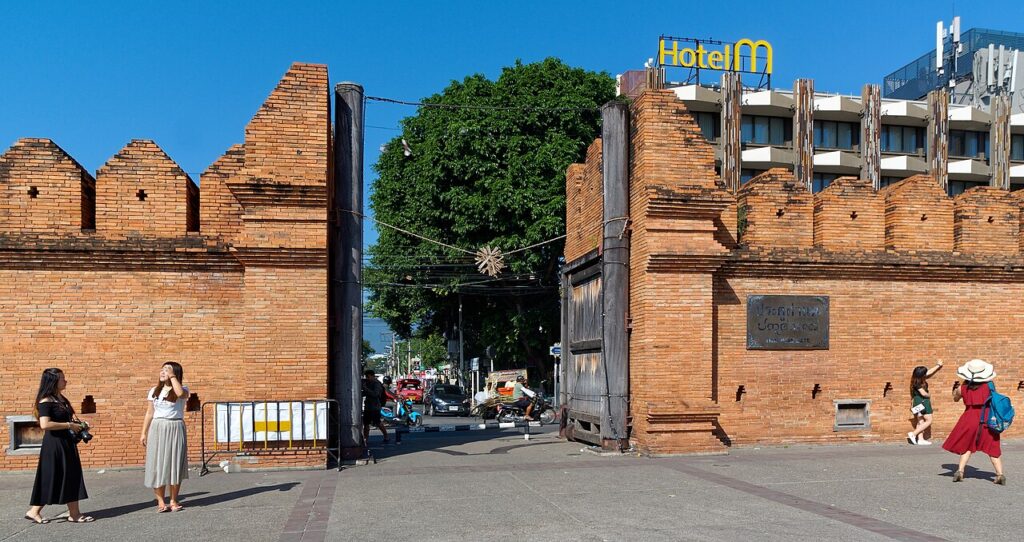
Photo by Jakub Hałun on Wikimedia Commons, licensed under CC BY-SA 4.0
2–3 Days in Chiang Mai (First Visit)
For a first visit, concentrate on the Old City and nearby highlights rather than trying to cover too much of Northern Thailand.
Day 1 – Old City & Markets
- Explore the Old City on foot
- Visit Wat Chedi Luang and Wat Phra Singh
- Stop for Northern Thai food or a café
- Explore a local market or walking street
- Dinner and drinks in the Old City or along the Ping River
Day 2 – Doi Suthep & Modern Chiang Mai
- Morning trip to Wat Phra That Doi Suthep
- Optional stop at Wat Pha Lat
- Return to the city for lunch
- Explore Nimman and its cafés and shops
- Evening at the Night Bazaar, live music venue, or riverside restaurant
Day 3 (Optional) – Choose Your Experience
- Visit an ethical elephant sanctuary, or
- Take a short countryside trip to Mae Rim and Mon Jam, or
- Keep the day relaxed with markets, cafés, massage, and more time exploring Chiang Mai
📌 Focus: the essential Chiang Mai experience without trying to fit a major full-day excursion into a short stay
4–5 Days in Chiang Mai (City & Countryside)
Four or five days gives you enough time to experience Chiang Mai itself while adding one or two proper excursions into the surrounding mountains and countryside.
Day 1 – Old City & Temples
- Explore the Old City
- Wat Chedi Luang and Wat Phra Singh
- Local lunch or Khao Soi
- Markets, cafés, and smaller temples
- Evening in the Old City
Day 2 – Doi Suthep & Nimman
- Wat Phra That Doi Suthep
- Optional Wat Pha Lat or additional stops in Doi Suthep-Pui
- Afternoon around Nimman
- Cocktail bar, live music, or dinner by the Ping River
Day 3 – Full-Day Excursion
Choose one:
- Doi Inthanon National Park
- Mae Kampong
- Mae Rim & Mon Jam
- Mae Ngat Dam & floating resorts
Return to Chiang Mai for a relaxed evening.
Day 4 – Local Chiang Mai
- Warorot Market and the riverside area
- Café, massage, or shopping
- Baan Kang Wat or another creative area
- Walking Street or Night Bazaar in the evening
Day 5 (Optional) – Another Side of Northern Thailand
- Chiang Dao, or
- San Kamphaeng and the hot springs, or
- Ethical elephant sanctuary
- Final dinner in Chiang Mai
📌 Focus: a balanced combination of temples, food, city life, and Northern Thailand’s countryside
1 Week in Chiang Mai (Complete Experience)
A week gives you enough time to explore Chiang Mai without rushing while also using the city as a base for several very different excursions.
Day 1 – Discover the Old City
- Old City temples and historic streets
- Local food and cafés
- Markets and street life
- Evening around the Old City
Day 2 – Doi Suthep & Nimman
- Wat Phra That Doi Suthep
- Explore more of Doi Suthep-Pui
- Afternoon and evening around Nimman
Day 3 – Doi Inthanon
- Full-day trip to Doi Inthanon National Park
- Waterfalls, viewpoints, pagodas, and mountain scenery
- Relaxed evening after returning to Chiang Mai
Day 4 – Slow Down & Explore Locally
- Warorot Market
- Ping River area
- Baan Kang Wat or local galleries
- Massage, café, or pool time
- Riverside dinner or live music
Day 5 – Mae Ngat or Mae Kampong
Choose between:
- A day swimming, kayaking, eating, and relaxing at a floating resort on Mae Ngat Reservoir, or
- A mountain escape to Mae Kampong
Day 6 – Choose Your Own Adventure
- Ethical elephant sanctuary
- Chiang Dao
- Mae Rim & Mon Jam
- San Kamphaeng and hot springs
- Outdoor adventure such as rafting, ziplining, cycling, or enduro riding
Day 7 – Enjoy Chiang Mai Without an Agenda
- Revisit a favorite neighborhood
- Café or leisurely lunch
- Last-minute shopping
- Massage or spa
- Finish with a favorite restaurant, night market, live music venue, or riverside evening
📌 Focus: enough time to experience Chiang Mai properly while combining city life, mountains, countryside, and several of Northern Thailand’s standout excursions
Typical Costs in Chiang Mai
Chiang Mai remains relatively affordable by Thai tourist-destination standards, although what you spend can vary considerably depending on where you stay and how you travel. Local food, transport, and everyday services can still be inexpensive, while boutique hotels, upscale restaurants, organised tours, and nightlife can quickly increase the daily budget.
The figures below provide a realistic indication of what visitors can expect to pay.
| Expense | Typical Cost |
|---|---|
| Budget hotel / guesthouse | THB 600–1,200 per night |
| Mid-range hotel | THB 1,200–3,000 per night |
| Local Thai meal | THB 60–150 |
| Casual / mid-range restaurant | THB 150–500 |
| Coffee | THB 60–120 |
| Local beer | THB 80–150 |
| Songthaew ride | THB 30–60+ |
| Grab ride within the city | THB 80–200 |
| Motorcycle rental | THB 200–400 per day |
| Traditional Thai massage | THB 250–400 per hour |
| Organised day trip | THB 1,000–2,500+ |
| Typical night out | THB 500–1,500+ |
How Much Should You Budget Per Day?
- Budget traveler – THB 1,200–2,000 per day: This is realistic if you stay in a simple guesthouse or budget hotel, eat mainly at local restaurants and markets, and use songthaews or occasional Grab rides. There is still room for inexpensive attractions, cafés, and the occasional drink, but organised tours and nightlife will push the budget higher.
- Comfortable mid-range – THB 2,500–4,500 per day: This gives you considerably more flexibility, including a comfortable hotel, a mixture of Thai and international restaurants, regular cafés and drinks, Grab transport, entrance fees, and some paid activities. For many visitors, this is a realistic budget for enjoying Chiang Mai without having to watch every expense.
- Higher-end – THB 5,000+ per day: At this level, you can choose upscale accommodation, better restaurants and cocktail bars, use private transport more frequently, and comfortably include organised excursions, spa treatments, nightlife, and other higher-priced activities.
📌 These daily estimates are per person and include accommodation, but not flights or major shopping. Couples sharing a hotel room will generally spend less per person.
Want a realistic Thailand trip budget?
Use the Thailand Travel Cost Calculator — just enter your destinations, trip length, and travel style to get instant, accurate per-person and group trip costs in both THB and USD.
📌 Want a deeper breakdown of what things cost across Thailand by region and style?
Read the full Cost of Travel in Thailand guide.
Digital Nomad Friendliness
Chiang Mai has been one of Asia’s best-known digital nomad destinations for many years. Affordable living costs, reliable internet, a large choice of cafés and coworking spaces, and an established international community make it particularly easy to combine a stay in Northern Thailand with remote work.
- Nimman remains the most obvious base for digital nomads, with cafés, coworking spaces, restaurants, gyms, shopping, and nightlife concentrated within a relatively small area. Santitham offers a more local atmosphere and generally better value, while the Old City suits those who prefer to be closer to Chiang Mai’s historic center and tourist attractions.
- Internet connectivity is generally excellent. Fiber connections are widely available in condominiums and apartments, while cafés and coworking spaces commonly provide fast Wi-Fi. Chiang Mai’s extensive café culture also means there is no shortage of places to work outside your accommodation, although not every café is designed for people occupying a table with a laptop for several hours.
- The established community is another advantage. Remote workers, freelancers, entrepreneurs, and other long-stay foreigners are easy to meet through coworking spaces, meetups, social events, and the wider expat community. This can make Chiang Mai particularly appealing to people arriving alone.
The Downsides
Chiang Mai is no longer the exceptionally cheap digital nomad destination it was once known as, particularly in popular areas such as Nimman. It can still offer very good value, but accommodation, cafés, international food, and entertainment can add up quickly if you live primarily within the expat-oriented parts of the city.
- The biggest seasonal drawback is air pollution during the burning season, generally at its worst between February and April. Air quality can become poor enough that some long-stay residents choose to leave Chiang Mai temporarily.
- Visa and work considerations also need to be taken seriously. Staying in Thailand and having permission to work are separate issues, so anyone planning an extended period of remote work should make sure their visa and circumstances are appropriate.
✅ Planning to work remotely from Chiang Mai?
For a more detailed look at costs, accommodation, coworking, visas, lifestyle, and the advantages and disadvantages of basing yourself here, see Why Chiang Mai Remains a Top Destination for Digital Nomads
Family Friendliness
Chiang Mai is a good destination for families, particularly for those who enjoy a combination of outdoor activities, cultural experiences, and easy day trips. Many of the best family attractions are outside the city center, so there is plenty of variety beyond temples and markets.
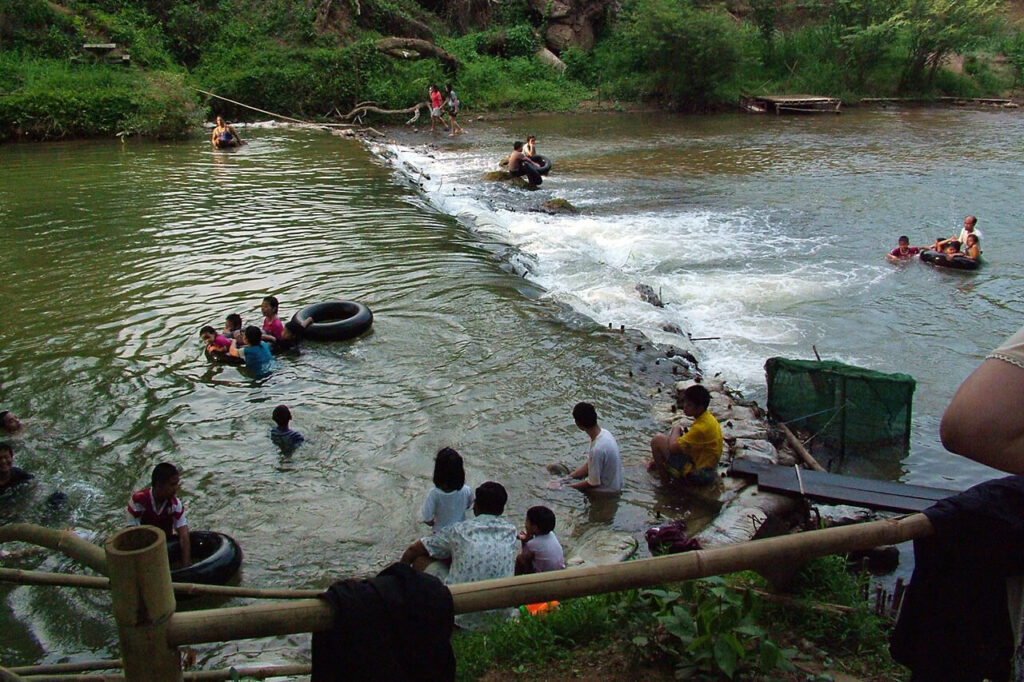
Photo by Nedian91 on Wikimedia Commons, licensed under CC BY-4.0
What Families Can Do
- Nature & outdoors: waterfalls, national parks, easy nature walks and mountain trips
- Family attractions: Huay Tung Tao, Royal Park Rajapruek and water parks
- Animal experiences: responsible elephant sanctuaries and other nature-based activities
- Culture: temples, markets, handicraft villages and local festivals
- Day trips: Doi Suthep, Mae Rim, Mae Kampong and the surrounding countryside
- Easy downtime: swimming pools, cafés and air-conditioned shopping malls
Getting Around with Children
Transport is probably the biggest practical consideration. Chiang Mai is spread out, and many family attractions are outside the center. Renting a car or hiring a driver can make a substantial difference, particularly with younger children.
📌 Grab works well for shorter journeys around the city. Motorcycles may be convenient for individual travelers, but they are not a sensible transport solution for most families.
Where to Stay
For a short family holiday, three areas stand out:
- Old City: best for sightseeing and being able to walk to restaurants and attractions
- Riverside: quieter surroundings with comfortable hotels and resorts
- Countryside resorts: more space, swimming pools and a relaxed setting, but you’ll need transport
What to Consider
Heat: Outdoor sightseeing can be tiring with children during the hottest months.
Burning season: Air pollution, particularly from February into April, can significantly affect outdoor activities.
Distances: Attractions that look close on a map can involve considerable driving, especially once you head into the mountains.
Everyday Convenience
Restaurants are generally welcoming toward children, while shopping malls provide useful air-conditioned breaks from the heat. Families staying longer also have access to international schools, private hospitals, supermarkets, and the everyday services needed for long-term living.
📌 Overall, Chiang Mai isn’t a purpose-built family resort destination, but its combination of nature, culture, activities, good infrastructure, and easy excursions makes it a particularly versatile place to visit with children.
Local Services & Emergency Information
Chiang Mai has well-developed medical and tourist services, with several major hospitals, numerous pharmacies, and dedicated Tourist Police assistance. For most visitors, help is readily available when needed.
Hospitals & Medical Care
Chiang Mai has several established hospitals commonly used by international visitors and expats, including:
- Chiang Mai Ram Hospital
- Bangkok Hospital Chiang Mai
- McCormick Hospital
- Lanna Hospital
- Maharaj Nakorn Chiang Mai Hospital (Suan Dok)
📌 Private hospitals generally provide the easiest experience for international visitors, particularly when English-language assistance or coordination with travel insurance is required. Chiang Mai also has strong specialist and university-level medical care.
Pharmacies
Pharmacies are widespread throughout Chiang Mai, particularly around the Old City, Nimman, Night Bazaar, shopping malls, and major roads. In areas frequented by foreigners, English-speaking staff are relatively common.
📌 If you rely on prescription medication, it is sensible to bring an adequate supply for your trip and keep medication in its original packaging. For more information about bringing medication into the country, buying medicines locally, and Thai regulations, see our Prescription Medication in Thailand guide.
Tourist Police
The Tourist Police can be particularly useful when foreign visitors need assistance with lost property, disputes, scams, accidents, or communication with local authorities. English-language assistance is available through the nationwide Tourist Police number included below.
- Police: 191
- Tourist Police: 1155 (English-speaking assistance)
- Ambulance / Medical Emergency: 1669
- Fire: 199
Embassies & Consular Assistance
Chiang Mai has several foreign consulates and honorary consulates, but many countries handle their main consular services through their embassies in Bangkok.
Consular representation in Chiang Mai includes:
- 🇺🇸 United States – U.S. Consulate General Chiang Mai
- 🇨🇳 China – Consulate General of the People’s Republic of China in Chiang Mai
- 🇯🇵 Japan – Consulate-General of Japan in Chiang Mai
- 🇩🇪 Germany – Honorary Consul in Chiang Mai
- 🇬🇧 United Kingdom – British Embassy Bangkok, supported locally by an Honorary Consul in Chiang Mai when required
Consular services vary considerably. Honorary consulates in particular may provide only limited assistance, while passport, visa, or other formal services may be handled by the country’s embassy in Bangkok. Check your government’s official website before visiting.
📌 If you lose your passport or face a serious legal or medical problem, contact your country’s embassy or consular representative for current instructions.
Travel Insurance
Private hospital treatment can become expensive if you require hospitalization, surgery, or other significant treatment. Travel insurance with adequate medical coverage is therefore strongly recommended.
📌 Keep your insurer’s emergency assistance details accessible during your trip. For anything beyond straightforward outpatient treatment, contacting the insurer early can make hospital admission, guarantees of payment, and subsequent claims considerably easier.
Related Guides & Further Reading
Travel in Thailand is easier when you have the right balance of practical advice and destination inspiration. Below you’ll find useful travel resources to help you prepare smoothly, plus nearby destinations worth adding to your journey.
Thailand Travel Essentials: Plan Smarter, Travel Easier
Need tips on visas, health, culture, or everyday logistics? My hub brings all the key guides together in one place: Explore the Thailand Travel Guide
Your Next Thai Adventure Awaits
Looking for where to go next? These nearby or complementary places pair well with your current destination and are worth your time in the Land of Smiles.
- Sukhothai Travel Guide: Thailand’s First Capital
- Phu Chi Fa – Sunrise Above the Clouds in Chiang Rai
- Ayutthaya Travel Guide: Temples, History & How to Visit Thailand’s Ancient Capital

Founder of Thrive in Thailand
Long-term expat living in Thailand—sharing culture, insights, and real-life farang wisdom, one story at a time!
If you found this content useful, a coffee is a simple way to say thanks and helps keep Thrive in Thailand independent and ad-free.
💬 Have you visited Chiang Mai? Share your experiences, recommendations, or questions in the comments below.