Tattoos in Thailand range from sacred designs received for protection and good fortune to contemporary body art chosen for its appearance or personal meaning. Understanding that distinction helps explain a tattoo culture shaped by both longstanding beliefs and individual expression.
Sak Yant is the best-known spiritual tattoo tradition, combining sacred designs with teachings and blessings passed down through generations of practitioners. Alongside it, modern studios offer everything from fine-line work to large, detailed pieces in a wide range of styles.
This guide explores the cultural background, the differences between tattooing methods and traditions, and what to consider if you are thinking about getting a tattoo in Thailand.
The Historical Roots of Tattooing
Tattooing has a long history across mainland Southeast Asia, with traditions extending beyond the borders of modern Thailand. Its purposes have varied between communities, from marking identity and belonging to seeking spiritual protection.
Protective tattoos were particularly associated with warriors, who believed that sacred markings could help them survive battle. These beliefs form part of the background to Sak Yant, where designs are received for their spiritual significance.
The tradition draws on several cultural and religious influences. Indian sacred diagrams known as yantras, Buddhist teachings, Hindu imagery and animist beliefs have all contributed to its development. This makes Sak Yant part of a wider regional heritage rather than an isolated Thai invention.
Those protective beliefs continue today, although the reasons for receiving a tattoo have broadened. For some wearers, a sacred tattoo remains connected to faith, moral conduct and a relationship with a teacher. Others choose tattoos for personal expression, decoration or a connection with Thailand.
Understanding Sak Yant
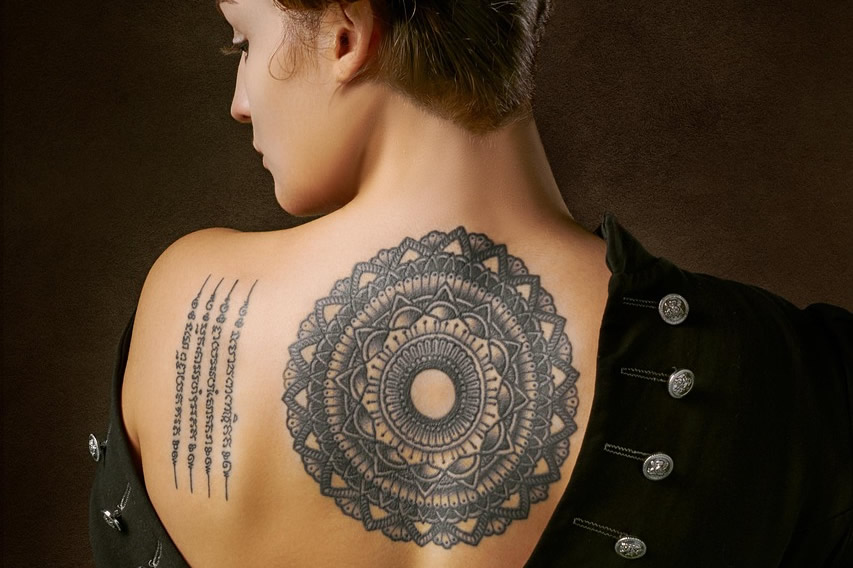
Sak means to tattoo, while yant comes from yantra, a sacred diagram. Sak Yant designs combine geometric patterns, inscriptions, animal figures or deities, with different designs associated with protection, good fortune, strength or personal influence.
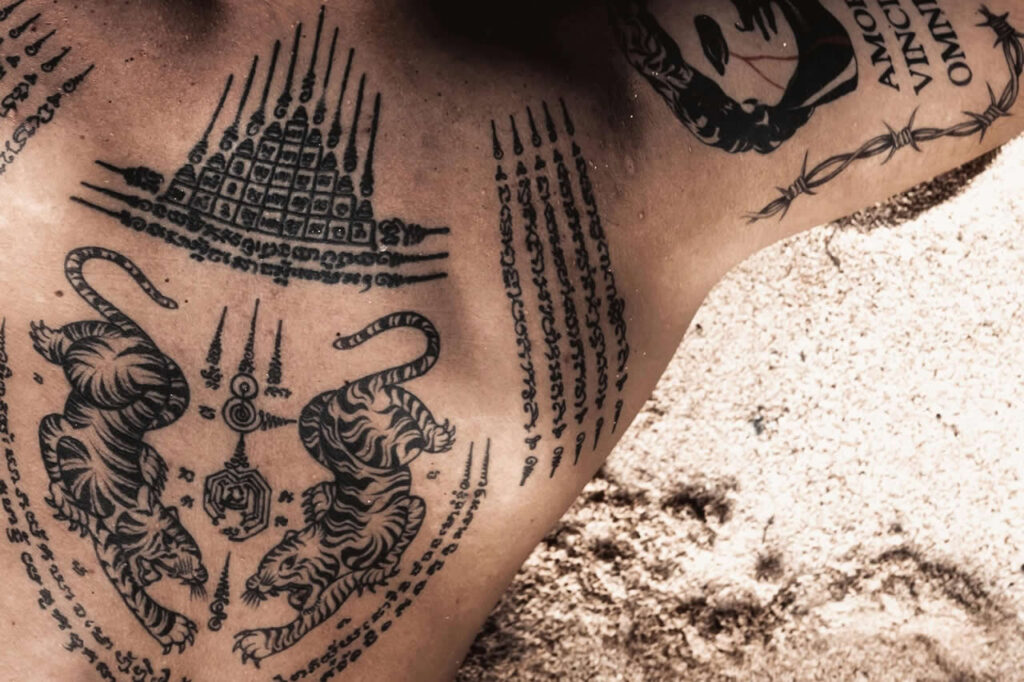
For devotees, the tattoo is part of a spiritual practice. Its significance comes from the design, the knowledge of the practitioner and the blessings that accompany it. The protective qualities attributed to these tattoos are matters of belief.
Monks, Masters and Blessings
Sak Yant is practised by some Buddhist monks and by lay masters commonly known as ajarns, meaning teachers. A temple is therefore one possible setting, but established traditions also exist outside monasteries.
Receiving a Sak Yant may involve offerings, chanting and a blessing. The practitioner may discuss the recipient’s intentions and advise on the design and its placement. Customs differ between teachers, so the experience is not identical everywhere.
Some traditions also involve commitments to ethical behaviour or particular rules passed down by the teacher. These should be explained by the practitioner rather than treated as a universal checklist found online.
Designs and Their Meanings
Recognisable examples include Hah Taew, the five-line design, and Gao Yord, often translated as nine spires. Animal figures such as tigers and the monkey figure Hanuman also appear in Sak Yant.
Meanings and inscriptions can vary between masters and lineages. A design’s appearance alone does not explain everything about its purpose, and a copied image may leave out important context.
If you are considering a Sak Yant, ask the practitioner to explain the design, its placement and any commitments involved. A studio tattoo reproducing a sacred pattern should not automatically be assumed to include the same teachings or ritual.
Hand-Poked and Machine Tattoos
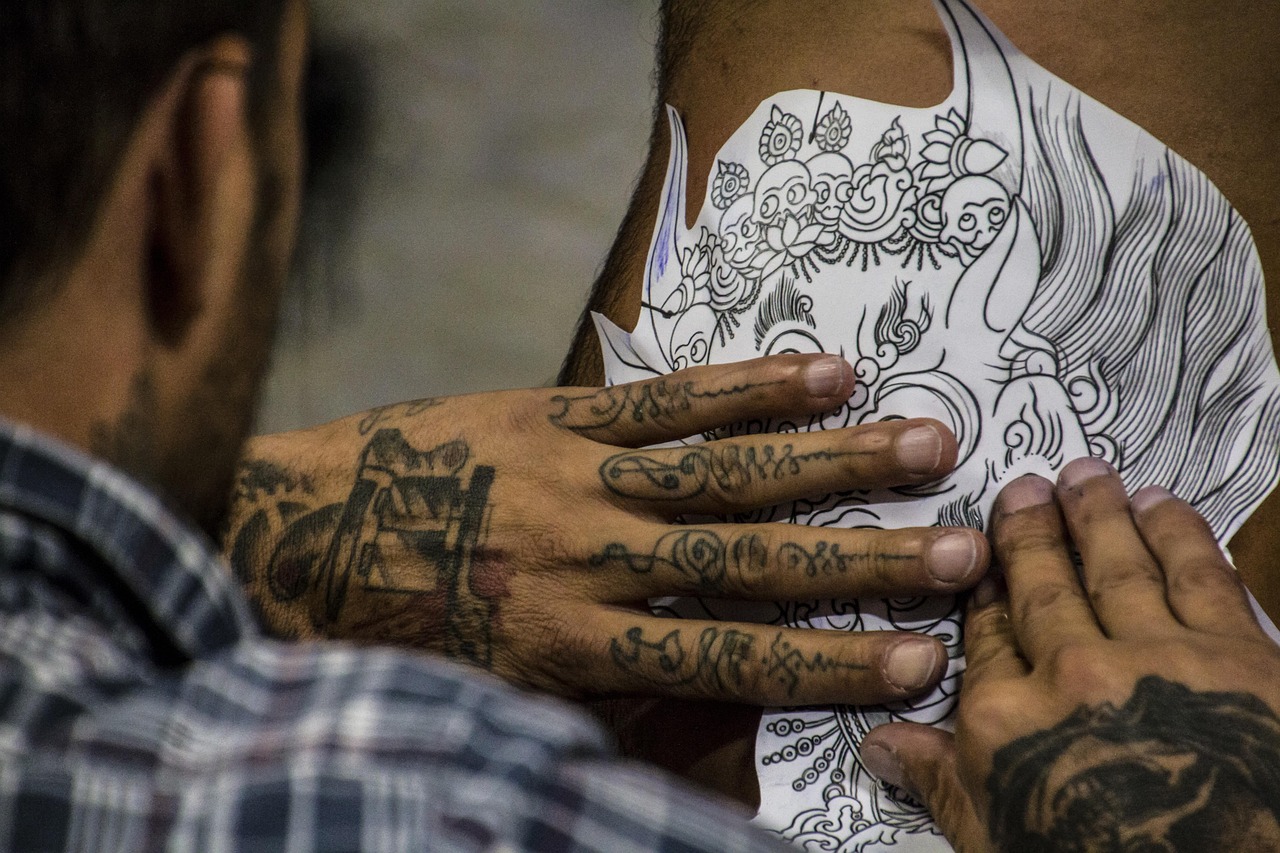
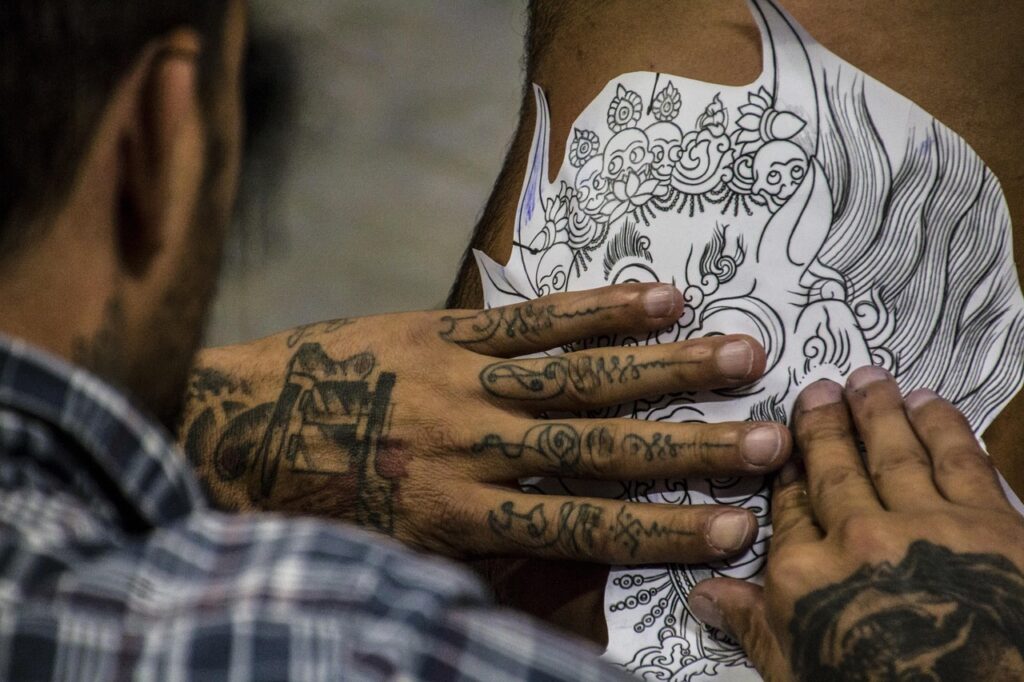
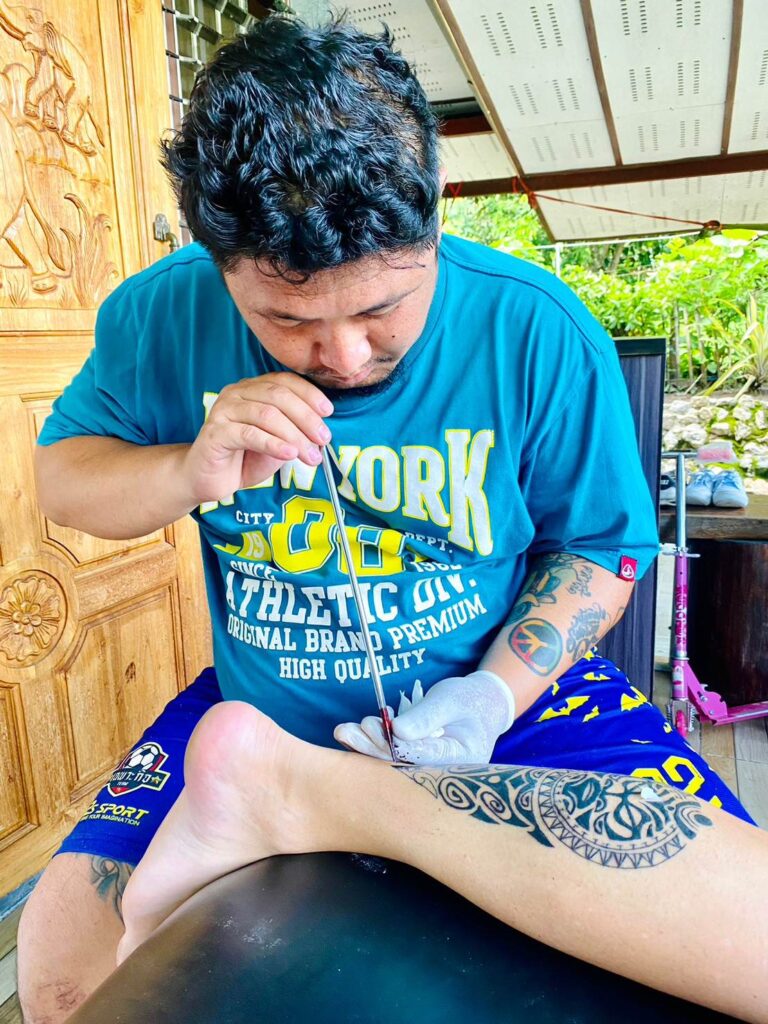
Hand-poked tattoos are applied manually, with the artist repeatedly guiding a needle into the skin. In Thailand, this is often advertised as “bamboo tattooing,” although many practitioners use a metal rod fitted with needles.
The method and the spiritual tradition are separate things. A hand-poked tattoo can be purely decorative, while receiving a Sak Yant involves the designs, teachings and rituals described above. Choosing hand-poking does not automatically make a tattoo sacred.
Machine tattooing uses a powered device to move the needles. It is widely used in contemporary studios for styles ranging from small lettering to portraits and extensive colour work. Artists may specialise in one method or offer both.
📌 Neither method guarantees better artwork or safer practice. The artist’s skill, suitable equipment and hygiene standards matter in either setting.
My First Tattoo
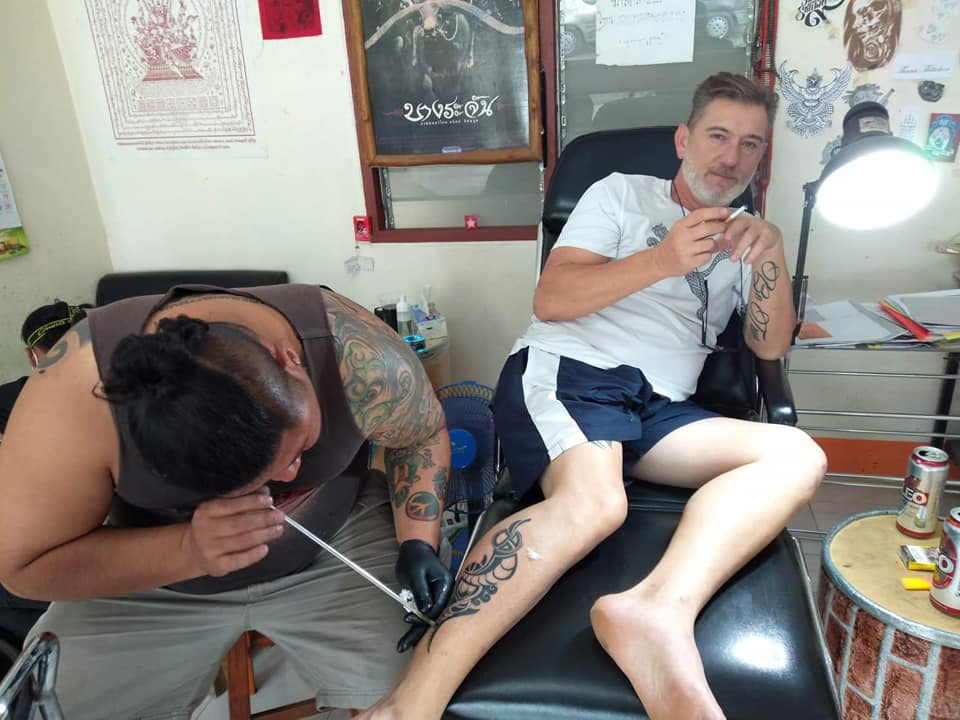
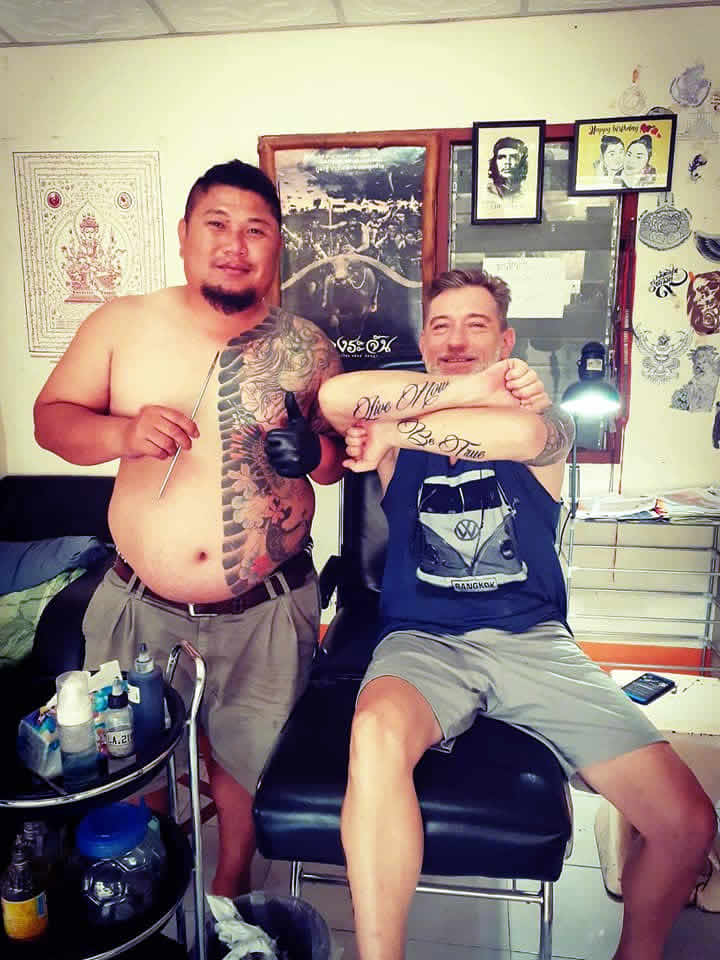
“When I came to Thailand, I was a ‘Tattoo Virgin’. I always liked tattoos but it was never important enough to actually get one done. I met a Thai guy who had a lot of ink on his body.
It turned out he was trained in the traditional practice of hand-poke tattooing and he offered to tattoo me for free. I accepted and caught the tattoo fever right away…!”
Tattoo Culture Today
Thailand’s contemporary tattoo scene extends well beyond traditional designs. Studios offer Japanese-inspired work, realism, fine-line tattoos, geometric patterns and many other styles. Some artists incorporate Thai imagery into modern compositions, while others work primarily in international styles.
Tourism is part of this scene, with studios serving visitors alongside local customers. For someone considering a tattoo, the useful distinction is often the artist’s specialism: skill in one style does not necessarily translate into equal experience with another.
How Are Tattoos Viewed in Thailand?
There is no single Thai attitude towards tattoos. Reactions can depend on the design, its placement, the setting and the individual looking at it. A sacred inscription, a small decorative tattoo and a prominent face tattoo can carry very different associations.
Visible tattoos may attract little attention in tourist areas or creative settings, while more conservative workplaces and families may view them differently. Their visibility in everyday life should not be mistaken for universal acceptance.
Sacred imagery also carries considerations beyond fashion. A design chosen simply because it looks attractive may have religious meaning to someone else, making its use and placement worth understanding before committing to it.
Getting a Tattoo: Cultural and Practical Considerations
Choosing an Artist or Practitioner
Look for examples of the artist’s work in the style you want, including photographs of healed tattoos where available. Discuss the design, size, placement and likely number of sessions before agreeing to proceed.
For Sak Yant, also establish who will perform the tattoo and whether the visit includes a consultation, blessing and explanation of any commitments. If language is a barrier, arrange help so you can understand the discussion and ask questions.
Sacred Imagery and Placement
Buddha images and other religious symbols carry significance beyond their appearance. Before choosing one, discuss whether the design and intended placement are appropriate with a knowledgeable practitioner. Sacred imagery on the lower body can be regarded as disrespectful.
If a tattoo includes an inscription, have its meaning explained rather than relying on a photograph or an online translation. Ask before photographing a practitioner, ceremony or other recipients.
Hygiene Standards
The same hygiene expectations apply in a studio, temple or private tattooing space. Look for:
- Sterile, single-use needles opened from sealed packaging.
- Fresh disposable gloves and a clean working area.
- Ink dispensed into new, single-use cups.
- Proper sterilisation of any reusable equipment that could come into contact with blood.
A new needle alone does not establish that the whole process is hygienic. Ink and other equipment can also introduce contamination. If the practitioner cannot clearly explain their procedures, choose somewhere else.
Plan for Healing
A fresh tattoo needs care, which can affect your holiday plans. Avoid swimming and keep the tattoo out of direct sunlight while it heals. Schedule beach days, pool visits and water activities before the tattoo appointment.
Ask for clear aftercare instructions, including how to clean the area and care for its dressing. Healing time varies with the tattoo and the individual, so do not assume a hand-poked tattoo will be ready for swimming sooner.
📌 Seek medical advice if redness, swelling or pain worsens, pus develops, or you feel feverish. Contact a healthcare professional if the tattoo is not healing as expected.
What Does a Tattoo Cost in Thailand?
The price depends on the artist, location, size, detail, placement and time required. A small outline and a detailed colour tattoo of the same size can involve very different amounts of work.
Studios may charge a fixed price for the piece, an hourly rate or a day rate. Many also have a minimum charge to cover preparation and materials.
For an indication of current Bangkok studio prices, BKK INK advertises a ฿1,000 minimum for tiny designs, with longer work charged at ฿3,000 per hour plus ฿1,000 for materials per session. ALL DAY Tattoo lists ฿3,500 per hour, with a ฿2,800 minimum. These are individual studio examples rather than a nationwide price range.
For a sleeve or back piece, ask for an estimate covering the whole project and the likely number of sessions. Confirm whether design work, materials, aftercare products and any touch-ups are included, along with the deposit and cancellation terms.
Sak Yant Costs
Sak Yant costs vary considerably between practitioners and arrangements. A direct visit involving traditional offerings is different from a booked studio appointment or a guided visit with transport and translation.
For example, Sak Yant Chiang Mai lists common designs at approximately ฿2,000–฿6,000, depending on size and complexity. This is one provider’s published range rather than a standard price across Thailand.
Before booking, establish what the quoted amount covers: the tattoo, offerings, blessing, interpreter and any transport. Do not assume that a temple visit is free or that an advertised package includes every design.
Tattoos in Thailand are typically more affordable than in Western countries, making it a popular destination for travelers looking to get inked.
Wherever in the world you are getting your tattoo done, always prioritize quality and safety over cost when choosing a tattoo artist.
📍 Good is not cheap, and cheap is not good!
💬 Did you get inked in Thailand? How does it compare to getting a tattoo in your home country? What’s your opinion? I appreciate your feedback in the comments section.