


A Changing Landscape
Thailand’s education system faces a difficult challenge: preparing students for a changing world while making good-quality schooling accessible across society. Technology and industry demands are part of that discussion, but so are the opportunities available to children from different backgrounds.
For expat families, these questions also have a personal dimension. Choosing a school involves looking beyond the curriculum to consider teaching quality, language, affordability and the options children will have when they finish their education.
In my opinion, education has long been one of Thailand’s biggest problems. I am not just talking about what students learn or how they are taught, but whether families across Thai society have access to decent schooling.
Reforms need to prepare young people for changing employment demands. But their success should also be judged by whether they give children from less privileged backgrounds a fairer chance to build a better future.
This article looks at the skills gap, attitudes towards vocational education, classroom technology and inequality, and considers what these challenges mean for families raising children in Thailand.
The Urgency for Reform: Why Now?
Education reform takes years to show results. Changes to curricula, teacher training and school resources need time to reach classrooms, and students spend much of their childhood within the system as it stands. Delays therefore affect the opportunities available to successive generations.
Meanwhile, technology is changing the tasks people perform at work and the skills employers need. Schools and universities face the challenge of building strong foundations in reading, mathematics and science while helping students learn to apply their knowledge, assess information and solve unfamiliar problems.
There is also an economic consequence. When employers cannot find the skills they need locally, it can limit business growth and make Thailand less attractive for investment. Education alone cannot determine the country’s competitiveness, but it plays an important part in its ability to adapt.
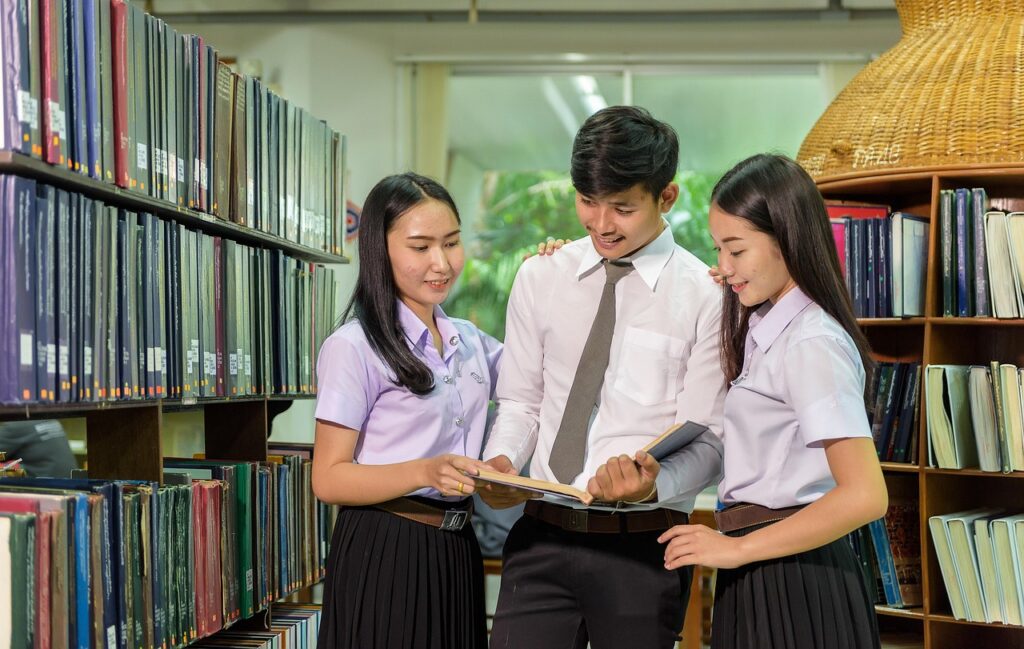
The Skills Gap: A Workforce Out of Sync
A qualification does not always mean a graduate has the skills an employer needs. Thailand’s challenge is to connect education more closely with working life, giving students opportunities to apply their knowledge and develop practical competence.
The foundations also need attention. In the OECD’s PISA 2022 assessment, Thailand’s 15-year-olds performed below the OECD average in mathematics, reading and science, with results declining in all three subjects compared with 2018. These assessments do not measure every aspect of education, but they highlight weaknesses that can affect further study and workplace learning.
Vocational Education Deserves Greater Recognition
The status of vocational education is another obstacle. University degrees often carry greater social prestige, while technical and vocational routes can be seen as a second choice. This can discourage students from considering training that suits their abilities and career interests.
From my perspective, that hierarchy deserves questioning. A university education has considerable value, but it should not be treated as the only respectable route to a successful working life.
Improving the reputation of vocational education also requires improving the training itself. Stronger links with employers, relevant equipment and well-supervised apprenticeships can help students develop useful skills and give families more confidence in the opportunities these qualifications offer.
Technology in Classrooms: More Than Providing Devices
Digital tools can broaden access to learning materials, support independent study and connect students with teaching beyond their own school. But providing computers or tablets is only part of the task. Teachers also need training, suitable resources and reliable technical support to use them effectively.
Thailand’s schools face different circumstances. Some have extensive digital facilities, while others struggle with limited resources and staffing. Technology offers opportunities to support schools in underserved areas, but uneven access can also reinforce existing disadvantages.
What matters is how these tools contribute to learning. Researching a topic, assessing the reliability of information and creating something independently are more meaningful measures of digital literacy than simply spending time using a device.
What This Means for Expat Families
National trends provide context, but they cannot tell you what happens in an individual classroom. Public, private Thai, bilingual and international schools differ in their resources and teaching approaches, with variation within each category too.
For families comparing schools, the useful question is how technology fits into everyday teaching: whether students use it to investigate, collaborate and develop their own ideas, and how teachers guide that process.
For a broader look at schooling and family life, see my guide to raising children in Thailand.
For me, the deeper issue is inequality. Expensive private schooling gives wealthier families choices that most households cannot afford. Public schools provide an essential route through education, but access to well-resourced schools and specialist teaching is uneven.
A child’s opportunities should not depend so heavily on family income or where they grow up. Improving technology matters, but it cannot substitute for good teachers and properly supported schools.
The real challenge facing Thailand’s education system is to narrow the gap between rich and poor.

Is Thailand Ready for the Future?
Thailand’s education challenges cannot be solved by updating curricula or introducing classroom technology alone. Progress also depends on supporting teachers, strengthening vocational pathways and giving students from different backgrounds access to a good education.
The test is what changes for students: whether they leave school with strong foundations, useful skills and realistic options for further study or employment. Improvements need to reach schools with fewer resources as well as those already equipped to offer more.
For expat families, the national picture is part of the context when choosing a school and planning a child’s future in Thailand. For the country as a whole, the question is broader: how many young people have a fair chance to fulfil their potential?
💬 What has your experience of education in Thailand been, either as a parent or through people you know? Share your thoughts in the comments below.