

Hat Yai isn’t the kind of place you visit for postcard beaches or slow island mornings. It’s a busy southern hub with a real pulse. Think night markets that run like clockwork, dim sum breakfasts that turn into long lunches, and shopping streets packed with Thai and Malaysian weekenders who clearly know what they’re doing.
If you like destinations that feel alive and unapologetically local, Hat Yai is a great pick. It’s especially good for food lovers, market hunters, bargain shoppers, and travelers heading deeper south (or toward Malaysia) who want a city stop that actually delivers.
Hat Yai sits in Songkhla Province in southern Thailand, around 30–40 minutes from Songkhla Old Town and Samila Beach. In this guide, I’ll walk you through what to do, where to eat, the best markets, where to stay, and the easiest day trips, so you can enjoy Hat Yai for what it is: practical, chaotic in a fun way, and seriously underrated.
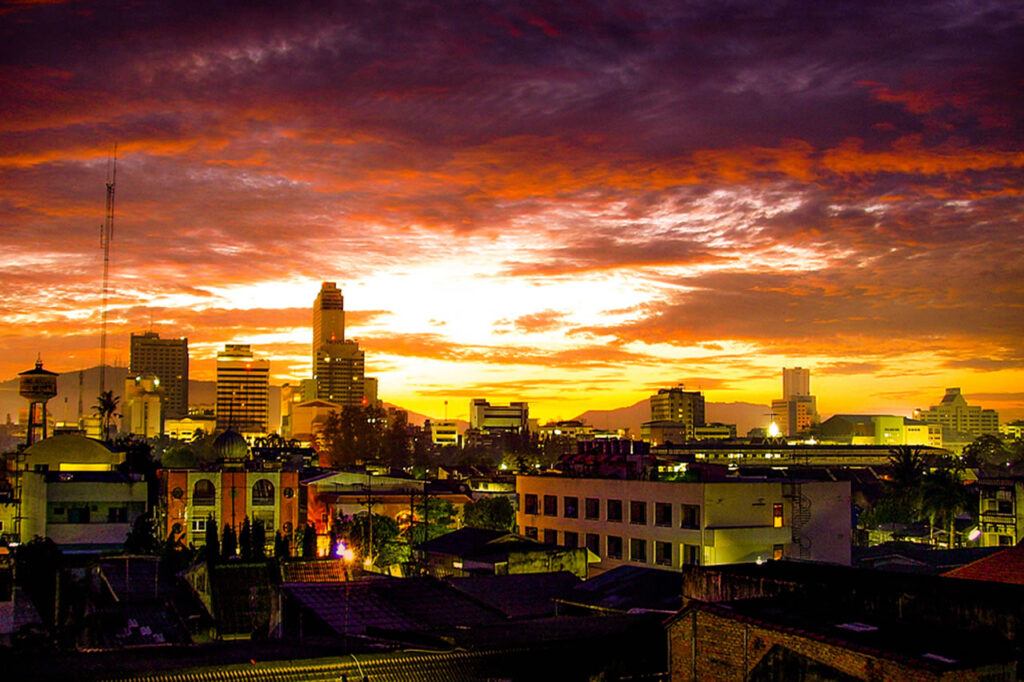
Photo “Hat Yai Sunset” by Nopphasin Suksawat on Wikimedia Commons, licensed under CC BY SA 3.0
Where Is Hat Yai?
Hat Yai is located in Songkhla Province in southern Thailand, close to the Malaysian border and firmly positioned on the country’s main north–south transport corridor. It’s not a coastal town and it’s not an island hub, but it plays a crucial role as the commercial, transport, and shopping center of the deep south.
The city sits about 30 kilometers from Songkhla Old Town and Samila Beach, making it easy to combine an urban stay with a short coastal side trip. Hat Yai is also one of the most important railway stops in southern Thailand, with long-distance trains running between Bangkok and the Malaysian border, alongside frequent bus connections to nearby provinces.
Because of this strategic location, Hat Yai attracts a steady mix of Thai domestic travelers, Malaysian visitors, and business travelers, giving the city a distinctly local, fast-moving feel rather than a resort-town atmosphere.
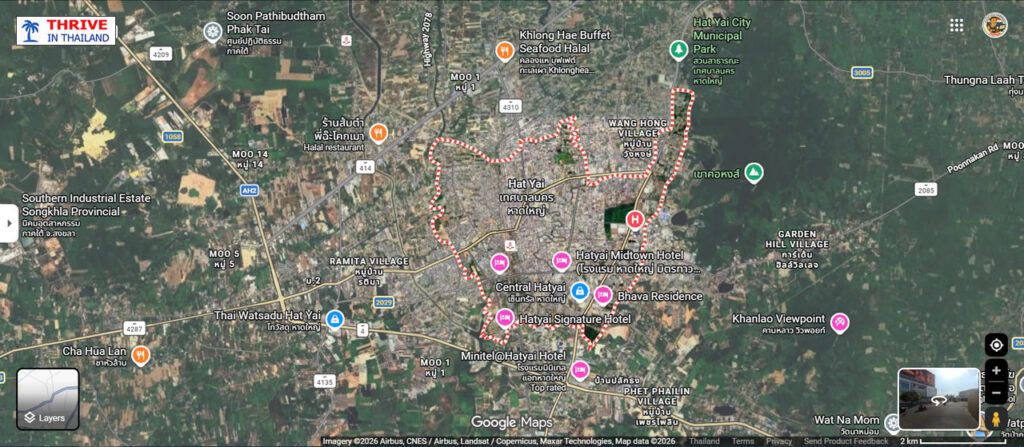
Hat Yai on the Map
Hat Yai developed as southern Thailand’s primary transport and commercial hub, which explains why so many rail lines, highways, and bus routes converge here. Although the city sits inland, it offers easy access to Songkhla Old Town and Samila Beach to the east, surrounding southern provinces, and the Malaysian border to the south without complicated transfers.
Click the image below to open Hat Yai’s location in Google Maps in a new tab.
Best Time to Visit Hat Yai
Hat Yai is a year-round city, but the experience can vary noticeably depending on weather and travel patterns. Unlike much of Thailand, the deep south tends to be hot, humid, and wetter for longer stretches, so timing your visit makes a difference.
- The best time to visit is generally from January to April, when rainfall is lower and days are more predictable. Temperatures are still warm, but the city is easier to explore on foot, and night markets and outdoor areas are more comfortable in the evenings.
- From May to September, Hat Yai becomes hotter and more humid, with occasional heavy showers. Rain usually comes in short bursts rather than all-day downpours, so sightseeing is still possible, but plans may need some flexibility.
- The wettest period typically runs from October to December, when monsoon rains can be frequent and intense. While prices may be slightly lower and crowds thinner, flooding and travel delays can occasionally disrupt transport and outdoor activities.
📌 Festivals & Local Events
Hat Yai doesn’t host major international festivals, but it does see noticeable spikes during Thai public holidays and Malaysian long weekends, when visitors cross the border for shopping and food. Chinese New Year can be especially busy, with decorations, higher hotel occupancy, and extended market hours. During these periods, the city feels livelier but also more crowded, so booking accommodation in advance is recommended.
Not sure if it’s a good month to visit?
Use the Monsoon Weather Checker—choose a destination and month to see a clear Go / Iffy / Avoid signal from Thailand’s Meteorological Department climate averages (historical; no forecasts), plus typical rainfall, rainy days, temperature, and a one-line sea conditions note.
How to Get to Hat Yai
Hat Yai is one of southern Thailand’s main transport hubs, making it easy to reach by air, train, or road from across the country and from Malaysia. Its central role in the region means frequent services and competitive prices.
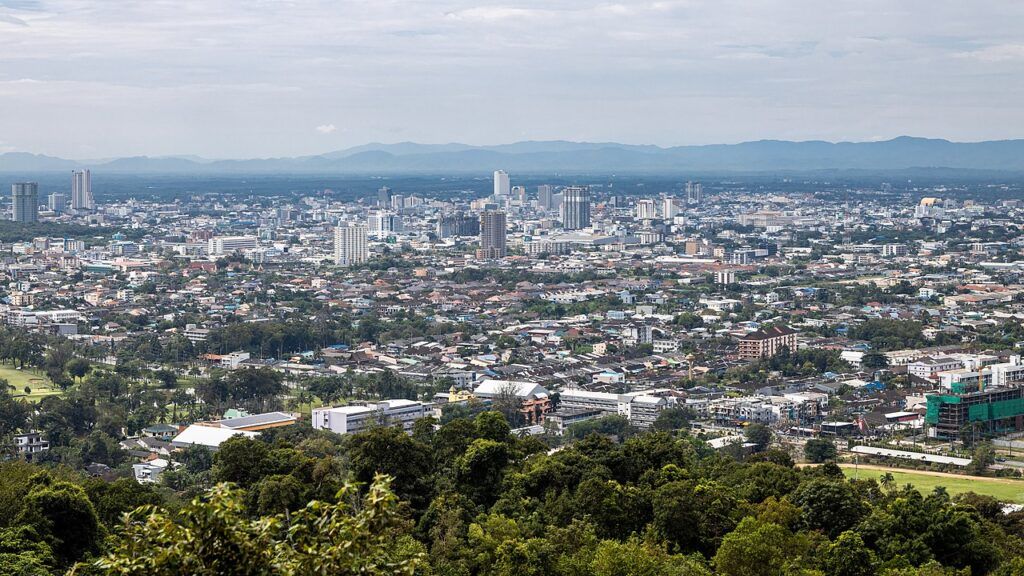
Photo by Supanut Arunoprayote on Wikimedia Commons, licensed under CC BY 4.0
By Plane
Hat Yai International Airport (HDY) is about 15 minutes from the city center.
- From Bangkok: ~1 hour 30 minutes flight time
- Typical prices: approx. 1,000–3,000 THB one-way, depending on season and airline
- Airlines: Thai AirAsia, Nok Air, Thai Lion Air, Thai VietJet, Thai Airways
📌 Flights are frequent and often the fastest and most convenient option. Airport taxis and ride-hailing services make getting into town quick and inexpensive.
By Train
Hat Yai is one of the most important railway stations in southern Thailand, with services running along the country’s main north–south line.
- From Bangkok: ~14–18 hours, depending on train type
- Typical prices: approx. 300–1,500 THB, depending on seat or sleeper class
- Overnight sleepers: Popular and practical for long-distance travel
📌 The train station is centrally located, making this a comfortable and scenic option if you don’t mind the longer journey. Trains also continue south toward the Malaysian border.
By Bus or Minivan
Long-distance buses and minivans connect Hat Yai with Bangkok and most southern provinces.
- From Bangkok: ~12–14 hours
- Typical prices: approx. 700–1,200 THB
- Arrival point: Hat Yai Bus Terminal (short taxi or songthaew ride to downtown)
📌 Buses are a budget-friendly option, though the journey can feel long. VIP and overnight buses offer more comfort than standard services.
From Malaysia
Hat Yai is a common entry point for travelers coming from Malaysia, particularly via the Padang Besar border crossing.
- From Penang: ~4–5 hours
- From Kuala Lumpur: ~7–9 hours
- Typical prices: approx. 500–1,200 THB, depending on route and transport type
📌 Border crossings are generally straightforward, but weekends and public holidays can mean longer queues, especially when Malaysian visitors travel to Hat Yai for shopping and food.
Getting Around Hat Yai
Getting around Hat Yai is straightforward, but it’s not a city designed for leisurely strolling. Distances are short, traffic can be busy, and most visitors rely on local transport rather than walking long distances.
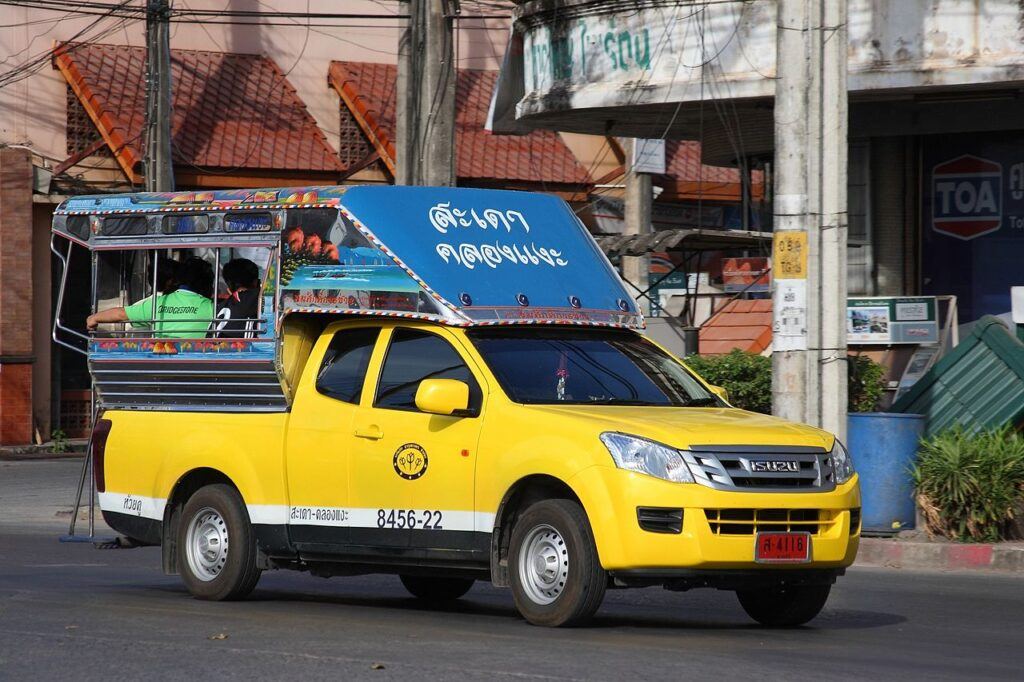
Photo by Ilya Plekhanov on Wikimedia Commons, licensed under CC BY SA 3.0
Songthaews (Shared Pickups)
Songthaews are the backbone of local transport in Hat Yai. These shared pickup trucks run fixed routes around the city and nearby areas.
- Typical cost: around 10–30 THB per ride
- How they work: flag one down, hop in, and pay when you get off
- Best for: short trips and getting a feel for local life
📌 Routes aren’t always clearly marked in English, so this option works best if you know roughly where you’re going or are comfortable asking locals.
Taxis & Ride-Hailing Apps
Metered taxis are limited, but Grab is widely used and reliable in Hat Yai.
- Typical cost: around 80–200 THB within the city
- Best for: convenience, air-conditioning, and door-to-door travel
📌 Grab is especially useful at night or during heavy rain, when songthaews can be less predictable.
Tuk-Tuks & Motorbike Taxis
Tuk-tuks and motorbike taxis are available in busy areas and near markets, malls, and transport hubs.
- Typical cost: around 40–100 THB, depending on distance
- Tip: agree on the price before starting the ride
📌 They’re fast and convenient for short hops, but not ideal if you’re carrying luggage.
Renting a Motorbike or Car
Renting a motorbike or car is possible, but not always necessary for short stays.
- Motorbike rental: approx. 200–300 THB per day
- Car rental: approx. 1,000+ THB per day
📌 Traffic can be hectic, and Hat Yai isn’t the easiest city for inexperienced riders. If you do rent, make sure you have the proper license and insurance.
Walkability & Safety
Central areas near markets, malls, and hotels are walkable in short bursts, but heat, traffic, and uneven sidewalks make long walks uncomfortable. Stick to well-lit streets at night and use transport for longer distances.
📌 During peak hours and weekends, traffic can slow to a crawl. Allow extra time if you’re heading to markets, bus terminals, or the train station.
Top Things to Do in Hat Yai
Hat Yai isn’t about ticking off famous landmarks. Its appeal lies in everyday energy, food culture, and local routines that visitors rarely see in Thailand’s resort towns. These are the experiences that make a stay here worthwhile.
Explore Hat Yai’s Markets
Markets are at the heart of the city. Kim Yong Market is the most famous, packed with dried fruit, snacks, cosmetics, and souvenirs popular with Thai and Malaysian shoppers. For a more relaxed evening vibe, Greenway Night Market offers street food, clothes, and live music in an easy-to-navigate layout.
📌 Late afternoon and early evening are the best times to avoid peak heat and crowds.
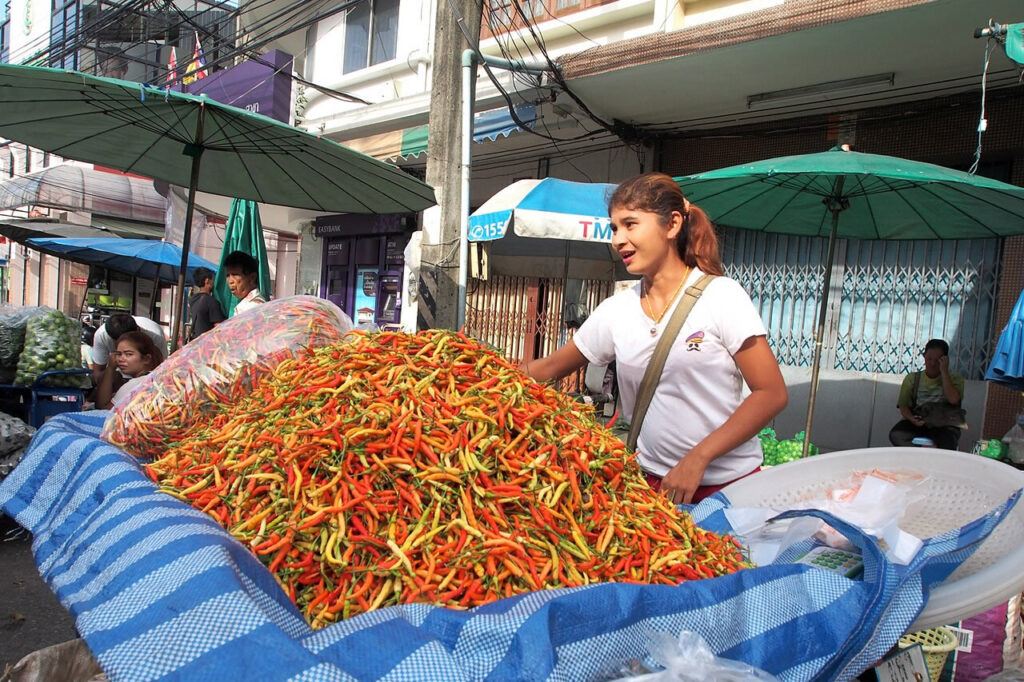
Photo by John Ragai on Wikimedia Commons, licensed under CC BY 2.0
Ride the Cable Car to Hat Yai Municipal Park
One of the city’s most recognizable attractions, the Hat Yai Cable Car takes you up to Hat Yai Municipal Park on Khao Kho Hong hill. At the top, you’ll find viewpoints over the city, temples, and the large Standing Buddha, one of the tallest statues in southern Thailand.
📌 Go close to sunset for cooler temperatures and better views.
Discover Southern Thai & Chinese-Thai Food
Hat Yai is a food city first and foremost. Morning dim sum sessions are a local ritual, while lunch and dinner bring spicy southern curries, fried chicken, seafood, and Chinese-influenced dishes. Eating your way through local restaurants and night markets is easily one of the best things to do here.
📌 If you enjoy exploring food beyond tourist menus, Hat Yai delivers.
Visit Central Festival Hat Yai
This modern shopping mall is more than just retail. Central Festival Hat Yai is a social hub with restaurants, cafés, cinemas, and air-conditioned relief from the heat. It’s especially lively in the evenings and on weekends.
Take a Short Trip to Songkhla Old Town
Just 30–40 minutes away, Songkhla Old Town offers a completely different atmosphere. Colorful shophouses, street art, cafés, and quiet lanes make it a great half-day escape from Hat Yai’s bustle.
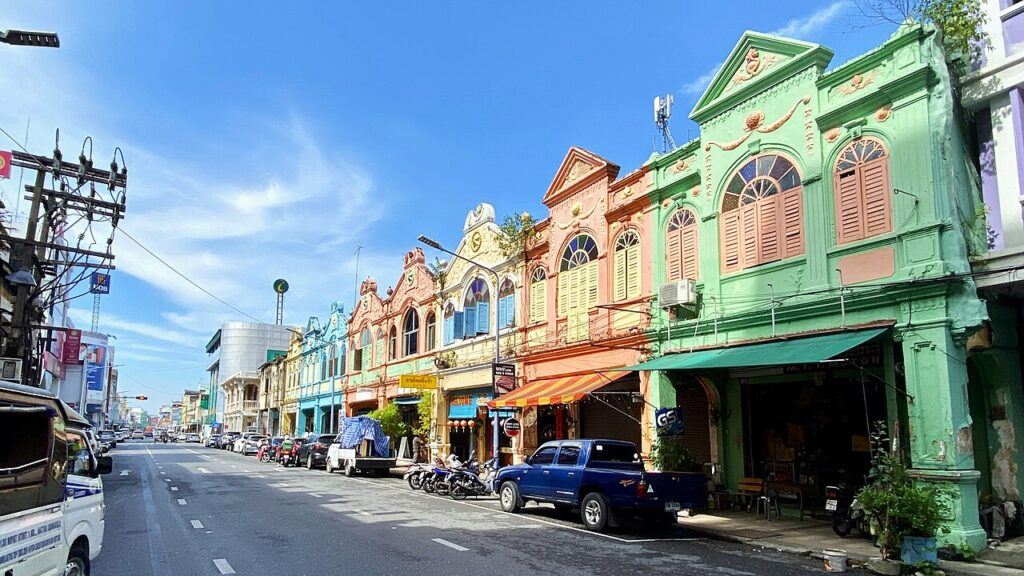
Photo by Slleong on Wikimedia Commons, licensed under CCO 1.0
Experience Hat Yai After Dark
Evenings in Hat Yai revolve around night markets, food streets, and local hangouts rather than clubs. Walking through busy market areas after dark gives you a real sense of the city’s rhythm and how locals unwind.
Best Photo Spots & Scenic Viewpoints
Hat Yai isn’t known for dramatic coastlines or historic skylines, but it offers plenty of unexpected photo opportunities if you know where to look. From hilltop viewpoints to lively street scenes, these spots capture the city’s character best.
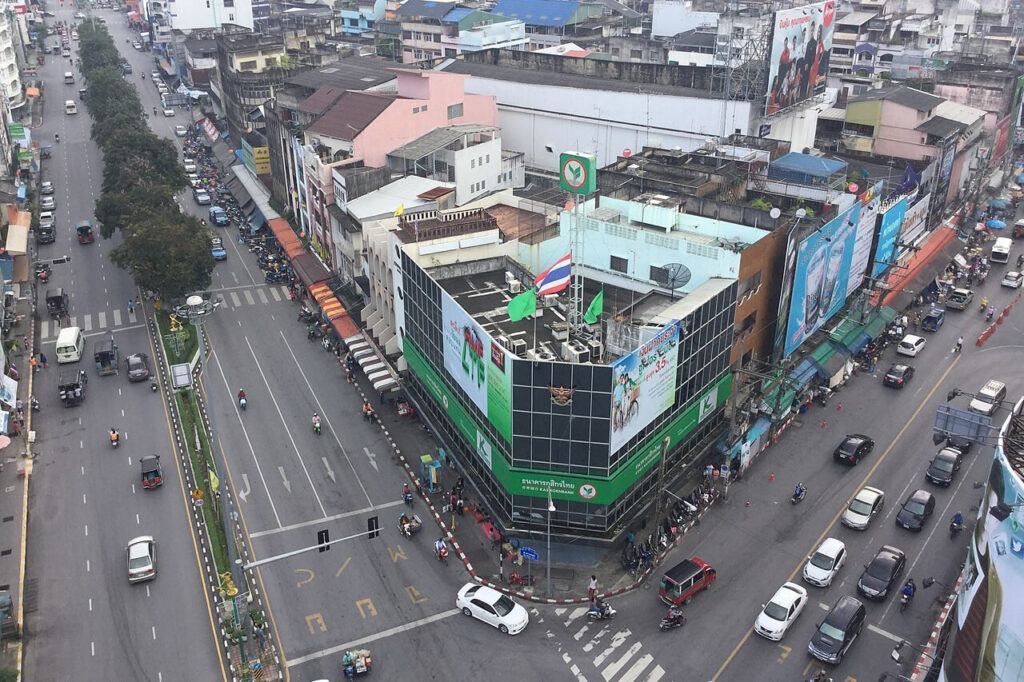
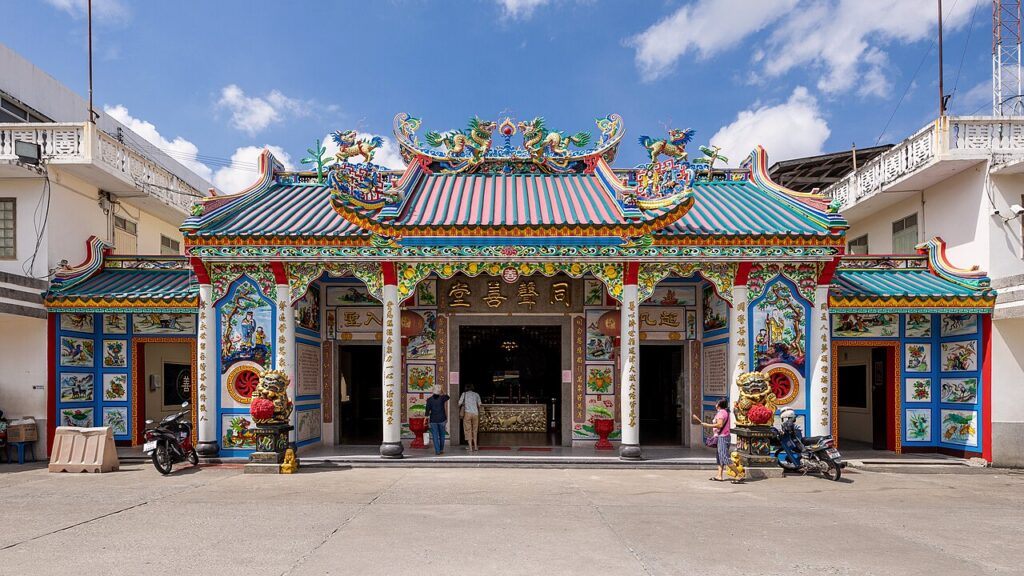
Hat Yai Municipal Park Viewpoint (City & Hilltop Views)
📌 Wide city views from Khao Kho Hong hill, overlooking Hat Yai’s dense urban landscape and surrounding greenery.
✅ Best time: Late afternoon to sunset (16:30–18:30)
Shot ideas: City panoramas, layered rooftops, temple details, sunset skies
Crowd strategy: Quieter on weekdays; busier around sunset on weekends
Shooting notes: Bring a lens hood; haze is common on hot days
Equipment tip: Standard zoom or short telephoto (24–105mm equivalent)
Drone notes: ❌ Not recommended; religious site and restricted airspace
Difficulty: ★☆☆☆☆ Easy
📍 Google Maps: Hat Yai Municipal Park
Standing Buddha, Hat Yai (Temple & Landmark)
📌 One of the tallest standing Buddha statues in southern Thailand, set against hills and open sky.
✅ Best time: Late afternoon
Shot ideas: Full-height statue shots, low-angle perspectives, details of the base
Crowd strategy: Quietest mid-afternoon; brief spikes near sunset
Shooting notes: Be respectful; avoid obstructing worshippers
Equipment tip: Wide to standard zoom (16–70mm equivalent)
Drone notes: ❌ Not allowed at religious sites
Difficulty: ★☆☆☆☆ Easy
📍 Google Maps: Phra Phuttha Mongkol Maharaj
Hat Yai Cable Car (Aerial & Urban Perspectives)
📌 A short cable car ride offering moving views over trees, temples, and city rooftops.
✅ Best time: Clear days, late afternoon
Shot ideas: City glimpses through windows, hill approaches, cable lines
Crowd strategy: Short queues on weekdays; busier near sunset
Shooting notes: Watch reflections and motion blur
Equipment tip: Standard zoom with image stabilization
Drone notes: ❌ Restricted area
Difficulty: ★★☆☆☆ Easy–Moderate
📍 Google Maps: Hat Yai Cable Car
Kim Yong Market (Street Life & Color)
📌 One of Hat Yai’s busiest markets, packed with food stalls, shoppers, and everyday city scenes.
✅ Best time: Late afternoon to early evening
Shot ideas: Vendor close-ups, colorful produce, candid street moments
Crowd strategy: Very busy in the evening; manageable earlier
Shooting notes: Ask before photographing people up close
Equipment tip: Fast prime or small zoom (35–50mm equivalent)
Drone notes: ❌ Not appropriate
Difficulty: ★★☆☆☆ Easy–Moderate
📍 Google Maps: Kim Yong Market
Songkhla Old Town (Architecture & Street Scenes – Day Trip)
📌 Colorful heritage shophouses, murals, and quiet streets just outside Hat Yai.
✅ Best time: Morning or golden hour
Shot ideas: Shophouse facades, street art, café scenes
Crowd strategy: Very quiet on weekday mornings
Shooting notes: Ideal for slow, observational photography
Equipment tip: Standard zoom (24–70mm equivalent)
Drone notes: ❌ Urban restrictions apply
Difficulty: ★☆☆☆☆ Easy
📍 Google Maps: Songkhla Old Town
📌 Hat Yai rewards photographers who embrace movement and everyday moments. The best images often come from markets, viewpoints, and ordinary streets rather than fixed landmarks — letting the city’s rhythm do the work.
What & Where to Eat in Hat Yai
Hat Yai is one of southern Thailand’s most food-driven cities, shaped by southern Thai, Chinese-Thai, and Malaysian influences. Eating here isn’t about curated dining experiences. It’s about volume, variety, and repetition — locals eat out often, know exactly what they like, and don’t waste time on places that don’t deliver.
✅ Expect bold flavors, generous portions, and prices that make it easy to try more than one meal at a time.
Must-Try Local Dishes
- Southern Thai curries
Rich, spicy, and unapologetically intense. Look for gaeng tai pla and gaeng som — fiery, sour, and very local. - Hat Yai–style fried chicken
Crispy, aromatic, often served with sticky rice. Simple, addictive, and widely available. - Dim sum (Chinese-Thai style)
A morning ritual in Hat Yai. Small plates of steamed dumplings, buns, and sides are ordered continuously until you’re full. - Roti & Muslim-Thai dishes
Influenced by Malaysia, with sweet and savory rotis, curries, and grilled meats. Especially common in the evenings. - Seafood
Often brought in from nearby coastal areas. Grilled fish, prawns, and shellfish are popular at night markets and casual restaurants.
Best Places to Eat & Explore
Kim Yong Market (Daytime & Early Evening)
A food and shopping hub where you can sample snacks, sweets, dried fruit, and quick local meals. Ideal for grazing rather than sitting down.
Greenway Night Market
One of the easiest places to explore Hat Yai’s street food scene. Clean layout, wide variety, and plenty of seating make it beginner-friendly.
Dim Sum Restaurants (Morning)
Scattered throughout the city, often busy from early morning until late breakfast. Point at what you want or mark your choices on paper slips.
Local Muslim-Thai Eateries
Found throughout Hat Yai, especially in the evenings. These spots are excellent for roti, curries, grilled meats, and late-night meals.
Casual Chinese-Thai Restaurants
Reliable places for rice dishes, stir-fries, and soups. Menus are often photo-based and prices are reasonable.
Cafés & Sit-Down Restaurants
Hat Yai has a growing café scene, especially around malls and newer neighborhoods. Expect modern Thai cafés, bakeries, and dessert spots mixed in with long-established local restaurants rather than trendy dining districts.
Air-conditioned restaurants inside Central Festival Hat Yai are a good option if you want comfort, English menus, and predictable pricing.
💡 Practical Eating Tips
- Expect spice: Southern food is hotter than average. Ask for mai phet if needed, but some dishes are spicy by default.
- Cash is king: Many markets and local eateries don’t accept cards.
- Follow the crowd: Busy places usually mean fast turnover and good food.
- Peak times matter: Dim sum is best in the morning; night markets are liveliest after sunset.
Sample Places to Eat in Hat Yai (Local Favorites & Price Guide)
Hat Yai has no shortage of good food, but these well-known spots give you a reliable starting point. The table below highlights popular local venues, what they’re known for, and typical price ranges so you can plan meals without overthinking it.
| Venue | What to Try | Why It’s Worth Visiting | Typical Prices |
|---|---|---|---|
| Chokdee Dim Sum | Steamed dim sum baskets, buns | Classic local dim sum spot; busy mornings and consistently good quality | ฿25–฿100 per basket |
| Decha Fried Chicken | Hat Yai–style fried chicken, sticky rice | One of Hat Yai’s signature dishes, crisp and well-seasoned | ฿80–฿150 |
| Kim Yong Market (Food Stalls) | Snacks, noodles, sweets, takeaway food | Ideal for grazing and sampling local flavors while shopping | ฿30–฿120 per item |
| Greenway Night Market | Street food, grilled meats, desserts | Easy, social night market with wide choice and seating | ฿40–฿150 |
| Local Muslim-Thai Eateries | Roti, curries, grilled meats | Strong Malaysian influence; excellent late-night food options | ฿50–฿150 |
| Central Festival Hat Yai | Thai & international restaurant chains | Air-conditioned comfort, English menus, predictable pricing | ฿150–฿300+ |
💡 Price notes:
- Street food and markets are generally under ~฿150 per dish.
- Sit-down restaurants can range ~฿150–฿300+ depending on dishes and portions.
- Drinks & desserts (cafés) are typically ฿100–฿250.
📌 Hat Yai is best eaten slowly and often. Skip rigid meal plans, follow the crowds, and treat markets and small eateries as part of the experience — a few dishes here and there usually tell you more about the city than a single “best restaurant.”
Nightlife & Social Scene in Hat Yai
Hat Yai’s nightlife is practical, local, and routine-driven, shaped far more by food culture and everyday habits than by nightlife districts or club scenes. Compared to beach destinations or resort towns, evenings here revolve around night markets, casual bars, live music spots, and places where people sit, eat, and stay awhile.
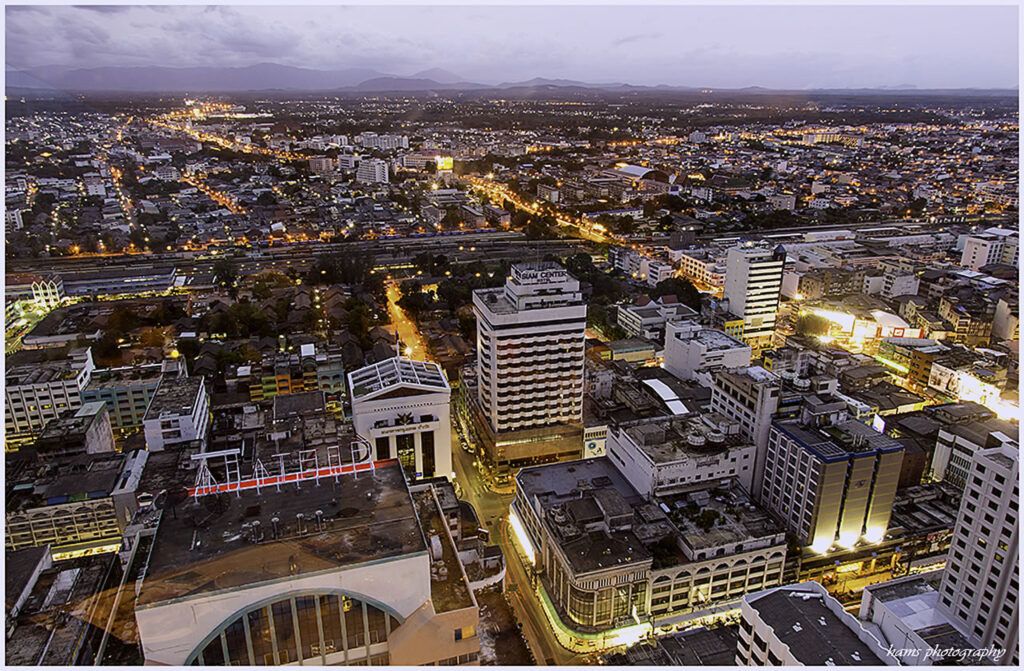
Photo by hams Nocete on Wikimedia Commons, licensed under CC BY-SA 2.0
Hat Yai after dark feels busy rather than wild. Streets stay active, markets fill up, and social life unfolds in familiar, repeatable places rather than one-off “nights out.”
Bars & casual drinking spots
Hat Yai has small bars and pubs scattered across the city, often attached to restaurants or operating as standalone local venues. These places are typically for a few drinks and conversation, not late-night partying. Crowds are mostly Thai locals, with a smaller number of long-stay foreigners.
Live music & evening hangouts
Live music is common, usually Thai pop, rock, or acoustic sets. Venues tend to be relaxed, with music as background rather than the main event. Volume levels are generally lower than in nightlife-heavy destinations.
Night markets as social hubs
For many visitors, night markets are the real social scene in Hat Yai. Food, casual drinks, browsing, and people-watching combine into an easy, no-pressure evening. Markets are where groups meet, eat together, and spend hours without committing to a bar or venue.
Expat & long-stay social life
Hat Yai has a small, low-profile expat community. Social connections usually form through daily routines such as cafés, gyms, work, or long-term stays rather than organized nightlife or meetups. This keeps the scene grounded and very local.
Nightlife & Social Spots in Hat Yai (With Typical Prices)
The table below highlights bars, markets, and evening hangouts that people actually use in Hat Yai. These are casual, accessible places with local pricing and no resort-style markups.
| Venue | What to Expect | Vibe | Typical Prices |
|---|---|---|---|
| Greenway Night Market | Street food, casual seating, browsing | Social, lively, relaxed | Food ฿40–฿150 Drinks ฿40–฿100 |
| ASEAN Night Bazaar | Food stalls, shopping, casual drinks | Busy, local, slightly touristy | Food ฿40–฿150 Beer ฿80–฿120 |
| Kim Yong Market (Evenings) | Snacks, takeaway food, people-watching | Very local, busy, informal | Food ฿30–฿120 |
| Post Laser Disc Pub | Live Thai bands, beers, spirits | Local, loud, energetic | Beers ฿90–฿150 Spirits ฿150–฿250 |
| Handlebar Hat Yai | Beer, cocktails, live music nights | Casual, mixed crowd | Beers ฿100–฿180 Cocktails ฿180–฿250 |
| The Pubb Hat Yai | Pub-style drinks, music, food | Relaxed, social, late evenings | Beers ฿120–฿180 Food ฿120–฿250 |
| Lee Garden Plaza (Evenings) | Bars, casual drinks, people-watching | Lively, central, familiar | Beers ฿80–฿150 Drinks ฿120–฿200 |
| Cafés Near Central Festival (Evenings) | Coffee, desserts, light drinks | Quiet, casual, mixed crowd | Coffee ฿80–฿120 Drinks ฿120–฿200 |
❌ What it’s not
Hat Yai is not a nightlife destination in the clubbing or party sense. If you’re looking for large clubs, international DJs, or late-night entertainment zones, other Thai cities are better suited. Many visitors appreciate Hat Yai precisely because evenings stay grounded, affordable, and routine-based.
📌 Hat Yai’s social life is built around familiarity rather than spectacle. Night markets, casual bars, and repeat visits to the same places matter more than staying out late — it’s a city where evenings feel lived-in, not staged.
Where to Stay in Hat Yai
Hat Yai isn’t a resort town, so accommodation here is practical, affordable, and location-driven rather than scenic. Most visitors choose hotels based on access to markets, transport hubs, and shopping areas, and for short stays that approach works well.
You’ll find excellent value across all budgets, especially in the mid-range business hotel category, which dominates the city.
Photo by กิตติ เลขะกุล on Wikimedia Commons, licensed under CC BY 3.0
Best Areas to Stay in Hat Yai
Downtown / Central Hat Yai (Lee Garden – Train Station Area)
📌 This is the most convenient area for first-time visitors.
- Walking distance to Kim Yong Market, Lee Garden Plaza, and many restaurants
- Easy access to songthaews, taxis, and the train station
- Busy and lively, especially in the evenings
Best for: short stays, food-focused visits, and easy transport connections.
Near Central Festival Hat Yai
📌 A newer, more spread-out area near the city’s main shopping mall.
- Close to Central Festival Hat Yai and modern cafés
- Quieter at night compared to downtown
- Requires transport to reach markets and the train station
Best for: travelers who prefer newer hotels, mall access, and a calmer atmosphere.
Hat Yai Airport Area (Short Stays & Early Flights)
📌 Mostly practical hotels aimed at transit travelers.
- Convenient for early flights or late arrivals
- Limited nightlife and dining nearby
- Taxi or Grab needed for most activities
Best for: overnight stays and early departures.
Types of Accommodation You’ll Find
✅ Mid-Range Hotels (Best Value)
Hat Yai excels here. Clean rooms, reliable air-conditioning, elevators, and on-site parking are common, often at very reasonable prices.
✅ Budget Guesthouses & Simple Hotels
Available mostly around the city center. Rooms are basic but functional, suitable for short stays.
✅ Higher-End Hotels
A small selection of more upscale hotels exists, mainly catering to business travelers. Expect comfort rather than luxury experiences.
Typical Prices (Per Night)
- Budget hotels & guesthouses: approx. 600–1,200 THB
- Mid-range hotels: approx. 1,200–2,500 THB
- Higher-end hotels: approx. 2,500–4,000+ THB
📌 Prices can rise on weekends, public holidays, and Malaysian long weekends, when Hat Yai sees a noticeable influx of visitors.
Recommended Places to Stay in Hat Yai
Hat Yai offers good value accommodation across all budgets, with most hotels focused on comfort, location, and practicality rather than luxury. The options below highlight reliable, well-reviewed places in convenient areas of the city.
| Accommodation | Type & Style | Vibe / Best For | Approx. Price (per night) |
|---|---|---|---|
| Centara Hotel Hat Yai | Upscale city hotel | Comfort & amenities, near markets | ~฿1,600+ |
| New Season Square Hotel | Upper mid-range hotel | Central location, modern rooms | ~฿1,800+ |
| Lee Gardens Plaza Hotel | Business hotel | Walkable area, transport & food nearby | ~฿1,500+ |
| Monkham Village Hatyai | Mid-range boutique | Relaxed atmosphere, good service | ~฿1,600+ |
| The Habita Hatyai | Stylish boutique hotel | Modern design, good value | ~฿1,200+ |
| Crystal Hotel Hat Yai | Mid-range classic hotel | Reliable comfort at reasonable prices | ~฿1,000+ |
| Red Planet Hat Yai | Budget chain hotel | Clean, predictable, central | ~฿800+ |
| Hatyai Signature Hotel | Budget hotel | Simple, clean, good value | ~฿600+ |
Booking Tips
- Book early for weekends, especially if traveling from Malaysia
- Check hotel parking if you’re renting a car
- Location matters more than amenities in Hat Yai
- Agoda and Booking.com usually have the widest selection and best pricing here
📌 In Hat Yai, comfort and location matter more than views. Choose a hotel that puts you close to food, markets, and transport, and you’ll get far more out of your stay than by chasing “luxury” labels.
Shopping & Local Markets
Shopping is one of Hat Yai’s main draws, especially for Thai and Malaysian visitors who come specifically for food products, clothing, cosmetics, and everyday goods. The city’s shopping scene is busy, practical, and price-driven, with far less focus on souvenirs and far more on things people actually use.
✅ Most shopping happens in markets, plazas, and large malls, and evenings are generally the best time to explore.
Kim Yong Market (Must-Visit)
Kim Yong Market is Hat Yai’s most famous shopping area and a central part of daily life in the city.
- Dried fruit, snacks, sweets, tea, coffee, and local products
- Cosmetics, clothing, shoes, and household items
- Constantly busy, especially on weekends
📌 This is the place to buy edible souvenirs and see how locals shop. Expect crowds and narrow aisles, but also very competitive prices.
Greenway Night Market
Greenway is a more structured, visitor-friendly market with a mix of food and shopping.
- Street food stalls and casual seating
- Clothes, accessories, and small gifts
- Lively atmosphere in the evenings
📌 It’s an easy introduction to Hat Yai’s market culture, especially if you prefer wide walkways and clearly laid-out stalls.
ASEAN Night Bazaar
Located near the bus terminal area, ASEAN Night Bazaar combines shopping and food in a large open-air space.
- Budget clothing, bags, shoes, and accessories
- Food stalls and casual drinks
- Popular with tour groups and weekend visitors
📌 Prices are reasonable, and light bargaining is expected.
Central Festival Hat Yai
Hat Yai’s largest and most modern shopping mall, Central Festival is where locals come for air-conditioning, international brands, and dining.
- Thai and international fashion brands
- Supermarket, cinemas, cafés, and restaurants
- Comfortable break from the heat
📌 It’s less about bargains and more about convenience and comfort.
Lee Garden Plaza Area
The streets around Lee Garden Plaza come alive in the evenings with small shops, stalls, and street vendors.
- Clothes, shoes, accessories, and snacks
- Easy to combine with food and nightlife
- Very central and walkable
📌 This area is ideal for casual browsing after dinner.
Local Specialties Worth Buying in Hat Yai
- Dried fruit & snack mixes (Hat Yai style):
Particularly mango, pineapple, and tamarind, often sold in vacuum-packed bags at Kim Yong Market. These are a popular purchase with Malaysian visitors and make practical, easy-to-carry gifts.
Photo by Hannah 50 on Wikimedia Commons, licensed under CC BY SA 3.0
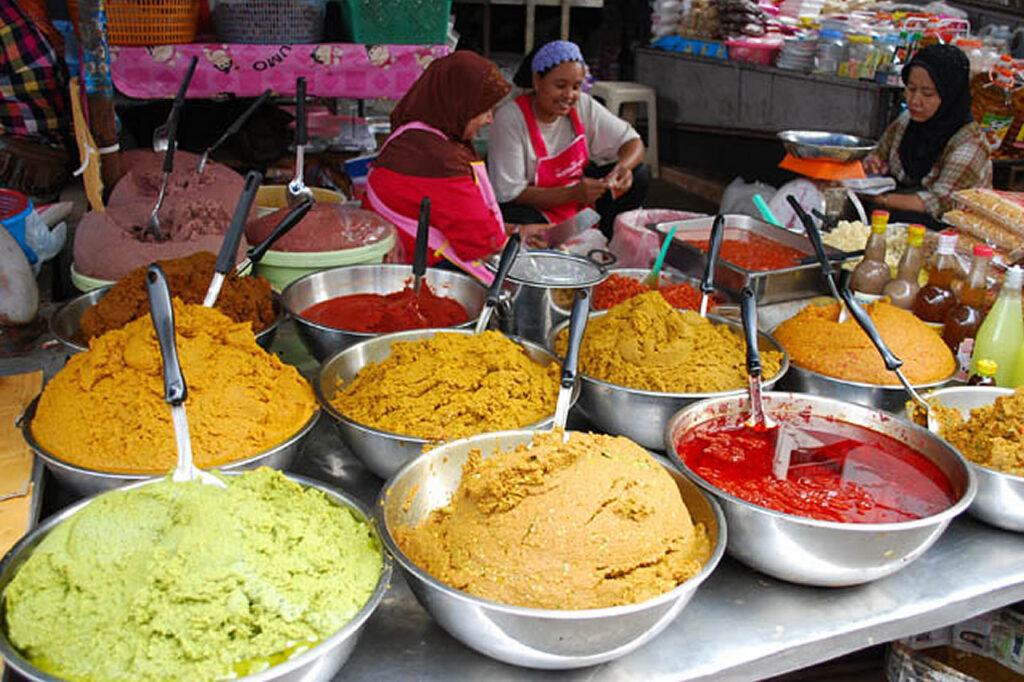
- Southern Thai curry pastes & spice blends:
Look for ready-made gaeng tai pla and gaeng som pastes, as well as dried chilies and spice mixes specific to southern cooking. Vendors will often explain how to use them, and prices are noticeably lower than in tourist-heavy regions.
📌 These items reflect Hat Yai’s role as a regional food hub rather than a souvenir town — practical buys that locals actually take home.
Bargaining & Practical Tips
- Bargaining is normal at markets, but keep it friendly
- Fixed prices are common at malls and chain stores
- Cash is widely used at markets
- Evenings are cooler and more lively than midday
📌 Shopping in Hat Yai is about variety and value, not polish. Markets, malls, and street stalls blend together into an experience that’s busy, practical, and very local — exactly what many visitors come here for.
Day Trips & Nearby Attractions
One of Hat Yai’s strengths is its location. While the city itself is busy and urban, several worthwhile destinations sit within 30–90 minutes, making easy half-day or full-day trips possible without changing hotels.
Photo by Supanut Arunoprayote on Wikimedia Commons, licensed under CC BY 4.0
✅ These nearby spots add coastline, history, and quieter scenery to a Hat Yai stay.
Songkhla Old Town (30–40 minutes)
Songkhla Old Town offers a slower pace and a very different atmosphere from Hat Yai.
- Colorful Sino-Thai shophouses and street art
- Cafés, small museums, and quiet lanes
- Easy half-day trip
📌 It’s ideal for walking, photography, and a relaxed lunch by the water.
How to get there: Songthaew, bus, or taxi
✅ Best time: Morning or late afternoon
Samila Beach & Laem Samila (30–40 minutes)
Hat Yai isn’t coastal, but the sea is close.
- Long beachfront promenade
- Iconic golden mermaid statue
- Casual seafood restaurants
📌 This is more of a local beach escape than a resort beach, but it’s pleasant for a few hours.
How to get there: Taxi or songthaew via Songkhla
✅ Best time: Late afternoon to sunset
Koh Yor (45–60 minutes)
Koh Yor is a small island village connected by bridge, offering a glimpse into traditional southern life.
- Stilt houses and fishing communities
- Quiet roads and waterfront views
- Minimal tourism
📌 Best for travelers curious about local culture rather than attractions.
How to get there: Taxi or rented car
✅ Best time: Morning
Tang Kuan Hill & Samila Viewpoints (Songkhla)
This small hill near Songkhla town offers panoramic views and a short cable car ride.
- City and coastline views
- Temple at the summit
- Good photography spot
📌 It pairs well with Songkhla Old Town in a single trip.
Phathammarong Museum & Viewpoint (45 minutes)
Located near Songkhla, this hilltop park and museum focuses on southern Thai culture and history.
- Large seated Buddha statue
- Open viewpoints and park areas
- Quiet and uncrowded
📌 A good option if you want views without crowds.
Border Area & Padang Besar (Longer Day Trip)
Some travelers combine Hat Yai with a short visit toward the Malaysian border.
- Markets and transport hub
- Rail connection to Malaysia
- Useful for onward travel rather than sightseeing
📌 This is more practical than scenic, but relevant for longer itineraries.
Practical Tips for Day Trips
- Start early to avoid heat and traffic
- Taxis and Grab are easiest for groups
- Songthaews are cheaper but slower
- Combine Songkhla Old Town + beach in one trip
📌 Hat Yai works best as a base. The city gives you food, energy, and convenience, while nearby areas add coastline, history, and breathing space — all within easy reach.
Itineraries
Hat Yai works best with a clear plan, especially if you’re visiting for a short time. These itineraries are designed to suit different travel styles, whether you’re passing through or staying long enough to explore beyond the city.
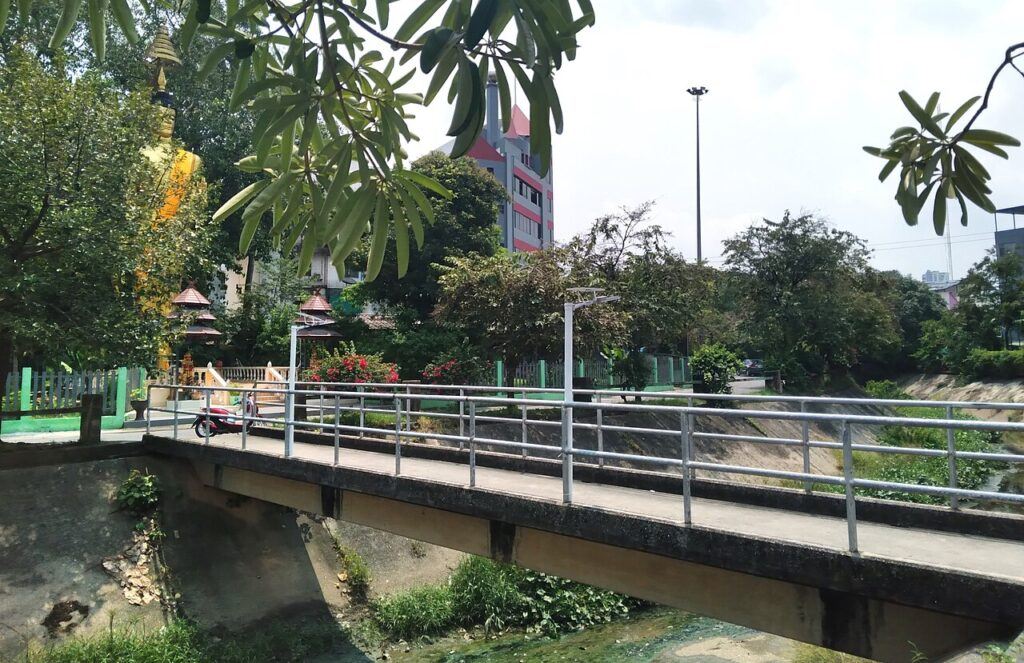
Photo by Pchaas on Wikimedia Commons, licensed under CCO 1.0
1-Day Hat Yai Highlights
📌 A compact introduction focused on food, markets, and city views.
Morning
- Dim sum breakfast at a local restaurant
- Walk through Kim Yong Market to sample snacks and browse local products
Midday
- Lunch at a casual local eatery or food court
- Short café break or rest to escape the midday heat
Afternoon
- Visit Central Festival Hat Yai for shopping and air-conditioned downtime
- Optional dessert or coffee stop
Late Afternoon
- Ride the Hat Yai Cable Car up to Hat Yai Municipal Park
- Walk around the Standing Buddha and enjoy views over the city
Evening
- Dinner at Greenway Night Market or ASEAN Night Bazaar
- Optional casual drink or live music near the Lee Garden area
Typical spend: ฿900–฿1,500 per person
✅ Best for: Short stopovers, first-time visitors, food-focused travelers
2-Day Hat Yai + Songkhla Balance
📌 Urban food culture paired with one easy coastal escape.
Day 1 – Hat Yai City Life & Markets
- Morning:
Dim sum breakfast at a local restaurant, followed by a walk through Kim Yong Market for snacks and local products - Midday:
Lunch at a casual local eatery or food court
Short rest or café break to escape the heat - Afternoon:
Visit Central Festival Hat Yai for shopping and air-conditioned downtime - Late Afternoon:
Cable car ride to Hat Yai Municipal Park
Walk around the Standing Buddha and enjoy city views - Evening:
Dinner at Greenway Night Market or ASEAN Night Bazaar
Optional live-music bar or casual drinks near Lee Garden area
Day 2 – Songkhla Old Town & Coast (Half-Day)
- Morning:
Travel to Songkhla Old Town
Explore shophouse streets, street art, and cafés - Lunch:
Seaside restaurant near Songkhla or Samila Beach - Afternoon:
Walk along Samila Beach or visit nearby viewpoints
Return to Hat Yai mid-afternoon - Evening:
Relaxed dinner near your hotel
Optional evening stroll or dessert café
Typical spend: ฿1,200–฿2,500 per person (depending on transport and dining choices)
✅ Best for: First-time visitors, couples, food-focused travelers, easy pacing
3-Day Hat Yai at a Slower Pace
📌 More breathing room, less rushing, and time to repeat what you enjoy.
Day 1 – Hat Yai Food & Markets
- Follow the Day 1 Hat Yai City Life itinerary above
- Keep the evening flexible for food and wandering
Day 2 – Songkhla Old Town & Samila Beach
- Follow the Day 2 Songkhla half-day itinerary above
- Return earlier and enjoy a quiet evening in Hat Yai
Day 3 – Local Life or Easy Excursion
- Option A: Visit Koh Yor for a glimpse of traditional fishing communities
- Option B: Phathammarong Museum & viewpoints near Songkhla
- Option C: Slow shopping day around Central Festival and Lee Garden area
📌 End the day with a final market meal or casual local restaurant.
Typical spend: ฿1,800–฿3,000 per person (3 days)
✅ Best for: Relaxed travelers, repeat visitors, people who prefer flexibility
📌 Hat Yai itineraries work best when they stay light. Plan around food and late afternoons, keep mornings productive, and don’t over-schedule — the city rewards repeat visits more than box-ticking.
Cost Snapshot
Hat Yai is one of the more affordable city destinations in Thailand, especially when it comes to food, accommodation, and local transport. Prices are driven by domestic and Malaysian visitors rather than international tourism, which keeps everyday costs realistic and good value.
✅ You don’t need a big budget to eat well or stay comfortably here.
Typical Daily Costs in Hat Yai
| Expense Category | Typical Cost (THB) | Notes |
|---|---|---|
| Street food & local meals | ฿40–฿120 per dish | Markets, food courts, local eateries |
| Sit-down local restaurant | ฿80–฿150 | Southern Thai & Chinese-style food |
| Coffee | ฿60–฿100 | Specialty cafés slightly higher |
| Beer (local bar) | ฿80–฿150 | Generally cheaper than beach destinations |
| Motorbike rental | ฿200–฿300 / day | Weekly or monthly discounts common |
| Taxi / Grab (short ride) | ฿100–฿250 | Depends on distance and time of day |
| Budget accommodation | ฿700–฿1,200 / night | Guesthouses and simple hotels |
| Mid-range accommodation | ฿1,200–฿2,000 / night | Boutique hotels, serviced apartments |
| Attractions & small fees | ฿0–฿200 | Many sights and viewpoints are free |
Estimated Daily Budgets
- Budget traveler: ~฿900–฿1,300 / day
Simple hotel, street food, songthaews, minimal extras. - Mid-range traveler: ~฿1,500–฿2,200 / day
Comfortable hotel, mix of markets and sit-down meals, Grab/taxi use. - Comfort-focused traveler: ~฿2,800+ / day
Higher-end hotel, malls and restaurants, taxis throughout.
Money-Saving Tips
- Eat where locals eat — markets and small eateries offer the best value
- Stay central to reduce transport costs
- Visit markets in the evening instead of bars for social time
- Book hotels early for weekends and Malaysian holidays
✅ Hat Yai delivers strong value without feeling “cheap.” Food and accommodation are particularly good for the price, making it easy to travel comfortably without inflating your daily budget.
Want a realistic Thailand trip budget?
Use the Thailand Travel Cost Calculator — just enter your destinations, trip length, and travel style to get instant, accurate per-person and group trip costs in both THB and USD.
📌 Want a deeper breakdown of what things cost across Thailand by region and style?
Read the full Cost of Travel in Thailand guide.
Digital Nomad Friendliness
Hat Yai is not a classic digital nomad hub, but it can work surprisingly well for short stays, focused work periods, or transit breaks. The city’s strengths lie in affordability, food, and infrastructure rather than community or lifestyle branding.
If you’re looking for coworking culture and nomad meetups, other Thai cities are better suited. If you want reliable basics and minimal distractions, Hat Yai does the job.
Internet & Connectivity
- Stable 4G/5G coverage throughout the city
- Fiber internet is common in hotels and serviced apartments
- Speeds are generally sufficient for video calls and remote work
📌 Connectivity is rarely an issue.
Work-Friendly Cafés & Spaces
Hat Yai doesn’t have a large coworking scene, but there are plenty of cafés suitable for laptop work, especially during weekdays.
- Cafés near Central Festival Hat Yai tend to be quieter
- Local coffee shops often allow longer stays during off-peak hours
- Power outlets are common; Wi-Fi quality varies by venue
📌 Dedicated coworking spaces are limited and come and go, so don’t plan around them.
Accommodation for Longer Stays
- Serviced apartments and mid-range hotels offer good monthly rates
- Many places provide desks, reliable Wi-Fi, and housekeeping
- Long-term rentals exist but are aimed more at locals than short-term nomads
📌 For stays of a few weeks, hotels with monthly discounts are often the simplest option.
Cost & Lifestyle Considerations
- Daily expenses are low compared to major nomad hubs
- Food is excellent and inexpensive
- Nightlife and social distractions are limited
📌 This makes Hat Yai suitable for deep work phases rather than networking.
Community & Social Life
- Very small visible nomad community
- Few organized meetups or events
- Social interaction usually happens through cafés, gyms, or language schools
📌 Hat Yai feels local-first, which some nomads appreciate and others find isolating.
✅ Hat Yai works best for digital nomads who value focus over buzz. It’s not a place to build a community, but it can be a comfortable, affordable base when you need to get work done and eat well.
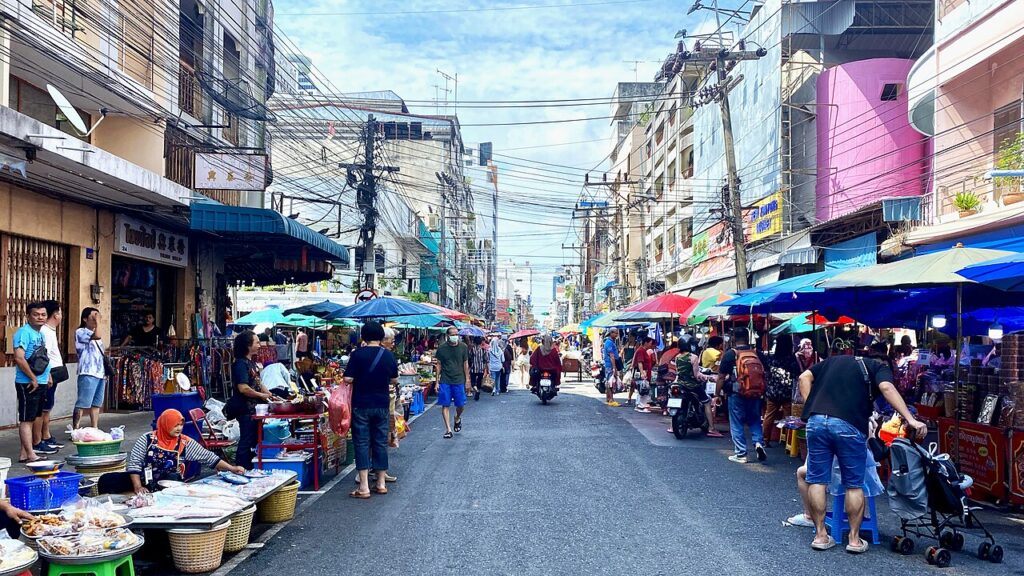
Photo by Slleong on Wikimedia Commons, licensed under CCO 1.0
Family-Friendliness
Hat Yai is not a family-focused destination, but it can work well for short stays with children, especially for families who value convenience, food options, and everyday comforts over beach activities or resort-style attractions.
The city feels local, busy, and functional, which some families appreciate and others may find overwhelming.
Safety & General Environment
- Busy traffic in central areas, especially near markets
- Sidewalks are inconsistent, making strollers less practical
- Public spaces are generally safe during the day and early evening
📌 Supervision is important, particularly in crowded market areas.
Kid-Friendly Activities
Hat Yai doesn’t offer many child-specific attractions, but there are a few options that work well with kids:
- Hat Yai Municipal Park: Cable car ride, open spaces, and viewpoints
- Central Festival Hat Yai: Cinemas, food courts, air-conditioned comfort
- Casual cafés and dessert shops popular with families
📌 These are best suited for half-day outings rather than full activity days.
Accommodation for Families
- Mid-range hotels often offer larger rooms or connecting options
- Serviced apartments are a practical choice for longer stays
- Family-specific amenities are limited, but comfort levels are generally good
📌 Choosing a hotel near a mall or park makes family logistics easier.
Food & Dining with Children
- Wide range of mild, familiar dishes available
- Food courts and markets allow flexible meal choices
- Western chains and bakeries are easy to find
📌 Hat Yai is one of the easier Thai cities for picky eaters.
Healthcare Access
- Large hospitals with English-speaking staff are available
- Pharmacies are widespread and well-stocked
- Emergency care is reliable by regional standards
📌 This adds reassurance for families traveling with young children.
✅ Hat Yai suits families best as a practical stop rather than a holiday base. If you’re passing through southern Thailand or Malaysia, it offers comfort, food variety, and reliable services without the complexity of resort logistics.
Local Services & Emergency Info
Hat Yai is a major regional city, so access to essential services is generally reliable. While most visitors won’t need these, it’s useful to know where help is available, especially if you’re staying more than a night or two.
- Police: 191
- Tourist Police: 1155 (English-speaking assistance)
- Ambulance / Medical Emergency: 1669
- Fire: 199
Hospitals & Medical Care
Hat Yai has several large hospitals serving southern Thailand, with English-speaking staff available in private facilities.
- Bangkok Hospital Hat Yai – Private hospital, higher costs, English-speaking staff
- Hat Yai Hospital – Major public hospital, more affordable, limited English
- Songklanagarind Hospital (Prince of Songkla University) – Teaching hospital with good facilities
Pharmacies are widespread and well-stocked, and many medications are available without a prescription.
📌 Travel insurance is recommended if you plan to use private hospitals.
Police & Tourist Assistance
- Tourist Police are available in Hat Yai and can assist with lost items, disputes, or emergencies involving visitors.
- Regular police stations are located throughout the city, though English proficiency may vary.
Immigration Office
Hat Yai has a regional immigration office that handles visa extensions, reporting, and other immigration matters.
- Services include visa extensions, 90-day reporting, and re-entry permits
- Expect queues during peak periods
- Dress modestly and bring copies of documents
📌 Always check opening hours in advance, as schedules can change.
Post Office & Courier Services
- Thailand Post branches are available in central Hat Yai
- Private couriers such as DHL, Kerry Express, and Flash Express operate in the city
- Shipping domestically is fast and inexpensive
Practical Tips
- Keep a copy of your passport (photo or digital)
- Carry hotel contact details when out late
- Use Grab or taxis at night if unsure about routes
- For medical visits, private hospitals offer the smoothest experience for non-Thai speakers
✅ Hat Yai is well-equipped for everyday needs and emergencies. While it’s not a tourist-focused city, essential services are easy to access and comparable to other major regional hubs in Thailand.
FAQs About Visiting Hat Yai
📌 Is Hat Yai safe for tourists?
Yes. Hat Yai is generally safe for visitors, including solo travelers. Like any busy city, be mindful of traffic, crowded markets, and personal belongings, especially in busy shopping areas.
📌 Do people in Hat Yai speak English?
English is limited outside hotels, malls, and major transport hubs. Basic communication is usually manageable with gestures, simple phrases, or translation apps, especially in restaurants and markets.
📌 Is Hat Yai suitable for a long stay?
Hat Yai works well for short to medium stays focused on food, shopping, or work. For long-term living, it suits people who prefer a local, no-frills city rather than an expat-heavy lifestyle destination.
📌 Can I use credit cards in Hat Yai?
Credit cards are accepted at malls, large hotels, and chain restaurants. Markets, street food stalls, and smaller shops are almost entirely cash-based.
📌 Is Hat Yai worth visiting if I don’t plan to go to Malaysia?
Yes. While Hat Yai is a common transit point, many travelers visit purely for its food culture, markets, and city energy without crossing the border.
Related Guides & Further Reading
Travel in Thailand is easier when you have the right balance of practical advice and destination inspiration. Below you’ll find useful travel resources to help you prepare smoothly, plus nearby destinations worth adding to your journey.
Thailand Travel Essentials: Plan Smarter, Travel Easier
Need tips on visas, health, culture, or everyday logistics? My hub brings all the key guides together in one place: Explore the Thailand Travel Guide
Your Next Thai Adventure Awaits
Looking for where to go next? These nearby or complementary places pair well with your current destination and are worth your time in the Land of Smiles.
- Koh Lipe – The Maldives of Thailand: Complete Travel Guide
- Koh Phayam Island Guide: Rustic Charm, Best Beaches & Travel Tips
- Phuket Town: A Local-Style Guide to Old Town, Food & Everyday Life
💬 Have a specific question about Hat Yai that’s not covered here? Ask in the comments — practical, real-world questions help keep this guide useful and up to date.