

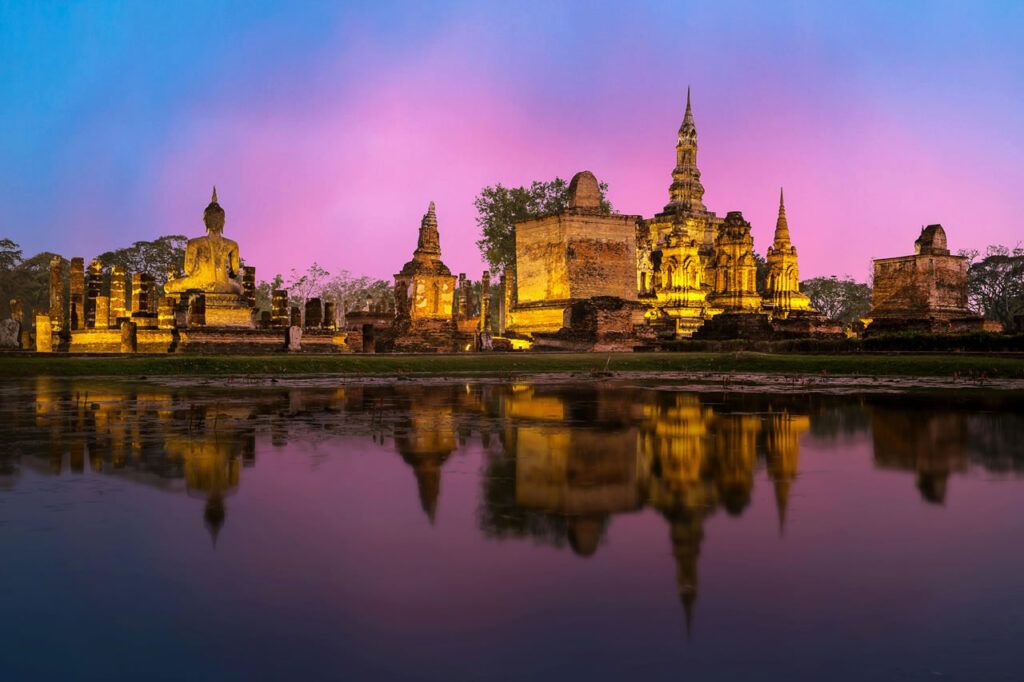
Sukhothai is where Thailand’s story comes into focus. Quiet lanes, lotus ponds, and elegant brick-and-stone ruins make it one of the country’s most photogenic places to slow down, rent a bicycle, and explore at your own pace. The UNESCO-listed Historical Park is the headline act, but the small-town rhythm, friendly cafés, and open skies are just as memorable.
Best for history lovers, cultural travelers, photographers, relaxed explorers, and families who prefer space over crowds. Less ideal if you want nightlife.
Quick context: Sukhothai lies about halfway between Bangkok and Chiang Mai. The town has two distinct sides—a modern center with most hotels and restaurants, and a historic zone beside the ruins, perfect for early-morning or sunset visits.
Where Is It?
Sukhothai is located in lower northern Thailand, about 430 km north of Bangkok and 300 km south of Chiang Mai. It’s the capital of Sukhothai Province and sits between Phitsanulok to the east and Kamphaeng Phet to the south, making it a natural stop for travelers heading overland between Bangkok and Chiang Mai.
📍 Many visitors stay in the main town for dining and transport, while others choose accommodation near the Historical Park to be closer to the ruins.
Sukhothai on the Map
The map shows Sukhothai’s layout with the modern town to the east and the Historical Park to the west.
Click the map to open Sukhothai’s location in Google Maps in a new tab.

Best Time to Visit
- November–February (Cool/Dry – Best Overall): Comfortable days, crisp mornings, and clear light for cycling the ruins. Peak season around Loy Krathong (usually November) when the Historical Park hosts spectacular lanterns and cultural shows—book early.
- March–May (Hot Season): Very hot afternoons; plan sunrise/sunset park visits and a midday break. Air quality can dip at times in the wider north—check conditions if you’re sensitive.
- June–October (Rainy Season): Short, refreshing showers bring out lush greens and dramatic skies. Fewer crowds and good hotel deals. Heaviest rain usually Sep–Oct; carry a light poncho and watch for slippery paths.
📌 For photos, aim for golden hour (first hour after sunrise, last hour before sunset). The ponds, laterite walls, and Buddha images glow beautifully in soft light.
Not sure if it’s a good month to visit?
Use the Monsoon Weather Checker—choose a destination and month to see a clear Go / Iffy / Avoid signal from Thailand’s Meteorological Department climate averages (historical; no forecasts), plus typical rainfall, rainy days, temperature, and a one-line sea conditions note.
How to Get There
From Bangkok
- Flight → Sukhothai (THS): 1 hr 15 min on Bangkok Airways. Realistic one-way range ~฿1,700–3,000 depending on season and how early you book. Recent promos have started from ฿1,700 (excl. taxes/fees), and meta-search lows often show ~$39–$45 one way (~฿1,400–฿1,700). Airport → Old Sukhothai shuttle/taxi ฿200–500 (35–45 min).
- Train to Phitsanulok + Bus/Minivan to Sukhothai: Train ฿350–900 (class/speed) + bus/minivan ฿70–120 (1 hr). Total 6–9 hrs.
- Direct Bus (Mo Chit → Sukhothai): ฿300–550 (A/C coach), 7–8 hrs; overnight options available.
From Chiang Mai
- Bus/Minivan (Arcade Terminal): ฿280–450, 5–6 hrs.
- Self-drive: fuel/tolls roughly ฿900–1,400 one way; 4.5–5.5 hrs.
From Phitsanulok
- Bus/Minivan: ฿70–120, ~1 hr.
- Taxi/Grab: ฿900–1,400, 60–75 min door to door.
Airport Transfers (THS)
- Hotel shuttle / counter shuttle: ฿200–350 per person to town.
- Meter taxi/private car: ฿350–600 to Old Sukhothai; ฿250–500 to New Sukhothai.
Useful Tips
- Aim to arrive before sunset to catch golden hour in the park on day one.
- Train + bus via Phitsanulok is the best comfort/value if you don’t want to fly.
- Coaches keep the A/C cold—bring a light layer.
- Self-driving? Break at Kamphaeng Phet; avoid dusk/night for the easiest navigation.
Photo by katsunori.n on Wikimedia Commons, licensed under CC BY 3.0
How to Get to Sukhothai: Routes, Prices & Times
Use this quick reference to compare routes, typical prices, and travel times to Sukhothai.
| Route | Typical Price | Time | Notes |
|---|---|---|---|
| Flight (Bangkok → Sukhothai THS) | ฿1,700–3,000 one-way | ~1h 15m (flight) | Bangkok Airways; book early for lower fares. |
| Airport Transfer (THS → Old/New Sukhothai) | ฿200–500 | 35–45m | Hotel shuttle, counter shuttle, or taxi/private car. |
| Train (BKK → Phitsanulok) + Bus/Van (→ Sukhothai) | Train ฿350–900 + Bus ฿70–120 | 6–9h total | Best comfort/value if you don’t fly. |
| Direct Bus (Bangkok Mo Chit → Sukhothai) | ฿300–550 | 7–8h | Overnight options; bring a layer (cold A/C). |
| Bus/Van (Chiang Mai → Sukhothai) | ฿280–450 | 5–6h | Depart from Arcade Bus Terminal. |
| Self-Drive (Chiang Mai → Sukhothai) | Fuel/tolls ฿900–1,400 | 4.5–5.5h | Good highways; avoid dusk/night if possible. |
| Phitsanulok → Sukhothai (Bus/Van) | ฿70–120 | ~1h | Frequent departures throughout the day. |
| Phitsanulok → Sukhothai (Taxi/Grab) | ฿900–1,400 | 60–75m | Convenient door-to-door transfer. |
Getting Around
Sukhothai moves at an easy pace—bikes for the park, tuk-tuks for town, and scooters if you want full freedom.
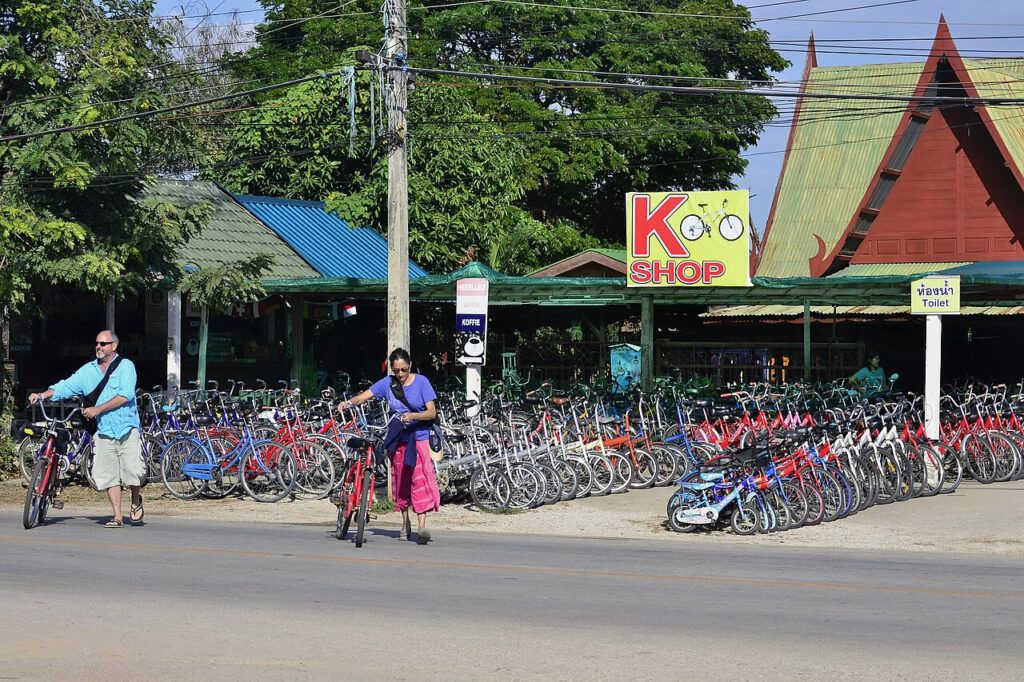
Photo by Hartmann Linge on Wikimedia Commons, licensed under CC BY-SA 3.0
Best ways to move:
- Bicycle (ideal for the Historical Park): Flat paths, shady trees, gentle distances. Rentals from guesthouses or shops near the gates.
- Motorbike/Scooter: Flexible for hopping between zones and nearby villages; only if you’re confident.
- Tuk-tuk / Songthaew: Handy for town ↔ park and short hops. Agree fare before riding.
- Walking: Lovely inside the park core; less practical between town and park (too far).
- Grab/Bolt: Coverage is improving in New Sukhothai; expect wait times at off-peak hours.
Typical local costs (guide ranges):
- Bicycle rental: ฿50–120/day (some include lock and lights)
- Motorbike rental: ฿200–300/day (+fuel; passport deposit/ID)
- Tuk-tuk town ↔ park: ฿120–200 each way (negotiate, time of day matters)
- Songthaew town ↔ park: ฿20–40 per person, fixed routes/daytime only
- Hotel shuttle (select stays): ฿80–150 per person, scheduled runs
Licences & safety (important):
- Carry your home-country licence + IDP for scooters; police occasionally check.
- Wear a helmet; roads between zones are quiet but vehicles move fast.
- Avoid riding at midday heat; plan loops at sunrise and late afternoon.
- Bring water, sun protection, mosquito repellent, and a small bike lock.
- After dark, use lights/reflectors; some paths are unlit.
Practical Tips:
- For a smooth day, base near the western gate of the Historical Park, pick up a bike after sunrise, and ride the inner loop first while it’s cool.
- If you’re mixing zones or heading to Si Satchanalai, a scooter or tuk-tuk hire by the hour is more efficient than multiple short rides.
- Keep small bills/coins for songthaews and park-side snack stalls.
Top Things to Do
Sukhothai isn’t a place for ticking off sights in a rush—it’s about slowing down and soaking up the mix of history, culture, and small-town charm. The Historical Park is the star, but there’s plenty more to fill your days, from museums and markets to countryside cycling and nearby ruins.
1) Sukhothai Historical Park — Mini Guide
Why it matters
UNESCO-listed heart of Sukhothai, with classic lotus ponds, laterite walls, and serene Buddha images that define early Thai architecture.
How it’s organized
- Central Zone (Wat Mahathat): Iconic stupas, reflection pools; start here.
- North Zone: Wat Si Chum (the giant seated Buddha) + Khpan Phra Ruang.
- West / South / East Zones: Scattered ruins, quieter lanes, soft light late day.
- Getting between zones: Bike, or use the park tram (hop-on style; small fee).
Tickets & access
- Tickets are sold by zone; keep small bills.
- Bicycles may incur a small gate fee; rentals are easy near the entrances.
- Tram tickets available at main gates; good for non-cyclists and families.
(Fees change—post ranges rather than exact amounts, and remind readers to check at the gate.)
Best times & photo spots
- Sunrise: Wat Sa Si (island temple + footbridge), mist over ponds.
- Golden hour: Wat Si Chum (soft side light), outer-zone Buddha images.
- Midday strategy: Museum or café break; return late afternoon.
Suggested routes
- Half day (highlight loop): Central Zone → Wat Sa Si → Wat Si Chum → sunset vantage in West Zone.
- Full day (slow + thorough): Museum → Central morning loop → lunch/rest → North/West late afternoon → blue-hour pass back through Central.
Practical tips (rename to “Useful Tips” if you prefer)
- Start with the Ramkhamhaeng National Museum; 45–60 min adds big context.
- Bicycle rental: ฿50–120/day; check brakes, get a lock, carry water.
- Dress respectfully (shoulders/knees covered) and avoid climbing on structures.
- Drones generally require permission; avoid flying without permits.
- Shade is patchy—bring hat, sunscreen, repellent; paths can be slippery after rain.
With kids / mobility
- Choose the tram plus short, shaded walks at headline temples; bring a stroller with larger wheels if possible.
- Rest stops and small kiosks are dotted near main sites.
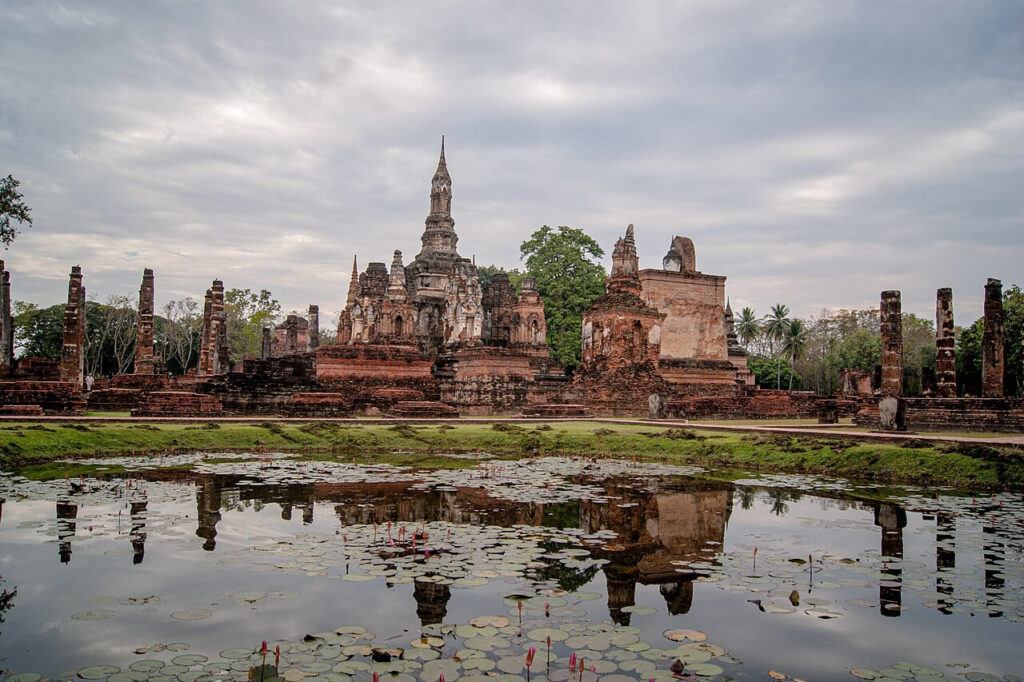
Photo by Philip Nalangan on Wikimedia Commons, licensed under CC BY 4.0
2) Ramkhamhaeng National Museum
Sukhothai-era art, inscriptions, and artifacts that make the ruins “click.” Allow 60–90 minutes; it transforms what you’ll notice in the park.
3) Sunrise & Sunset Photo Loops
Cycle the inner loop at sunrise for calm reflections, then ride the quieter outer zones at late afternoon for warm light and long shadows.
4) Sangkhalok Ceramics & Crafts
Look for studios and small workshops featuring classic Sukhothai motifs. Many offer short demos and packable pieces—great souvenirs.
5) Night Markets & Sukhothai Noodles
Hunt down Sukhothai noodles (sweet-savory pork broth, thin rice noodles, crackling). Night markets in town are cheap, lively, and easy after a day of riding.
6) Si Satchanalai Historical Park (Day Trip)
Sukhothai’s quieter sister site (≈ 1 hour away). Similar-era ruins with far fewer crowds—wonderful by scooter or a hired tuk-tuk/driver.
7) Ramkhamhaeng National Park (Viewpoints & Trails)
Forest paths and broad panoramas over the plains. Go early for cooler temps and better visibility; trails can be steep in places.
8) Village & Countryside Cycling
Beyond the park, pedal quiet lanes past rice fields and canals. Ask your guesthouse for backroad routes or join a short local tour.
9) Thai Massage & Spa Breaks
Simple, good-value parlors in town—perfect for a midday reset between morning and late-afternoon sessions in the park.
10) Festivals (Timing Permitting)
If your dates align, Loy Krathong in Sukhothai is spectacular (lanterns, light-and-sound shows, cultural performances). Book early—rooms sell out fast.
Best Photo Spots & Scenic Viewpoints
Sukhothai is basically made for slow photography: lotus ponds, reflection shots, and soft golden light on ancient brick-and-stone ruins. These are the spots that consistently deliver.
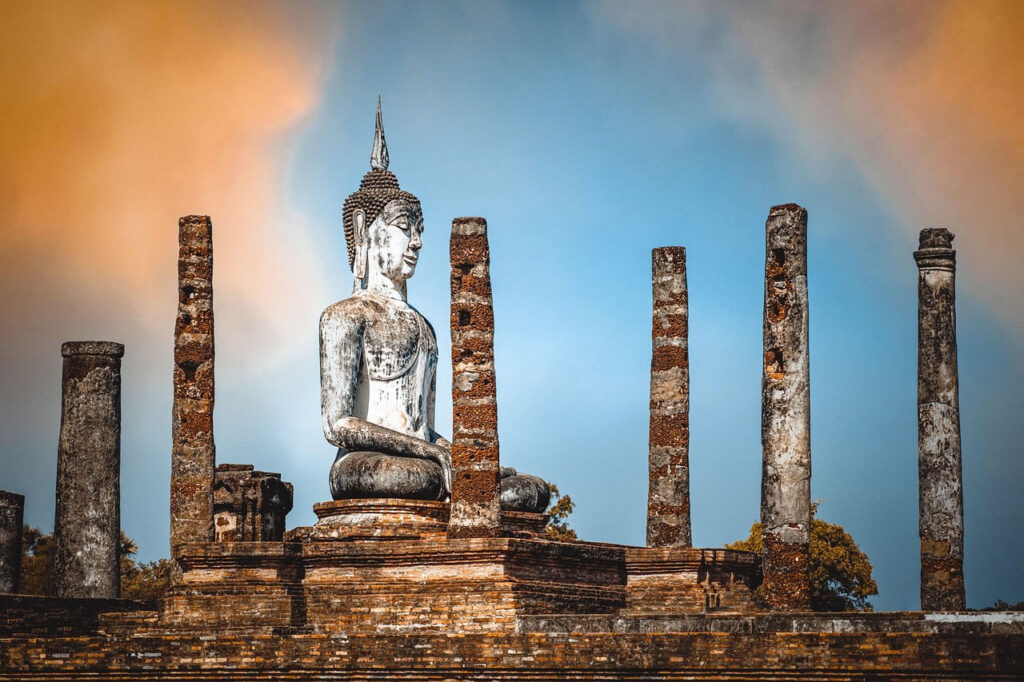
Wat Mahathat Reflection Ponds (Central Zone)
📌 The “classic Sukhothai” shot: chedis and temple ruins mirrored in still water.
✅ Best time: Sunrise + golden hour
Shot ideas: Wide reflections, symmetry shots from the pond edge, silhouettes of cyclists
Crowd strategy: Arrive at opening time and head here first
Tripod notes: Easy, lots of stable ground
Difficulty: ★☆☆☆☆ Easy – flat paths
📍 Google Maps: Wat Mahathat (Sukhothai Historical Park)
Wat Sa Si (Island Temple + Footbridge)
📌 A postcard-worthy island temple with a simple bridge and calm water views.
✅ Best time: Sunrise (misty calm) or late afternoon
Shot ideas: Bridge leading lines, temple framed by trees, reflections with lily pads
Crowd strategy: Go early; it’s a favorite photo stop for day trippers
Lens tip: Wide-angle for the full scene, mid-range for clean temple framing
Difficulty: ★☆☆☆☆ Easy – short walk
📍 Google Maps: Wat Sa Si
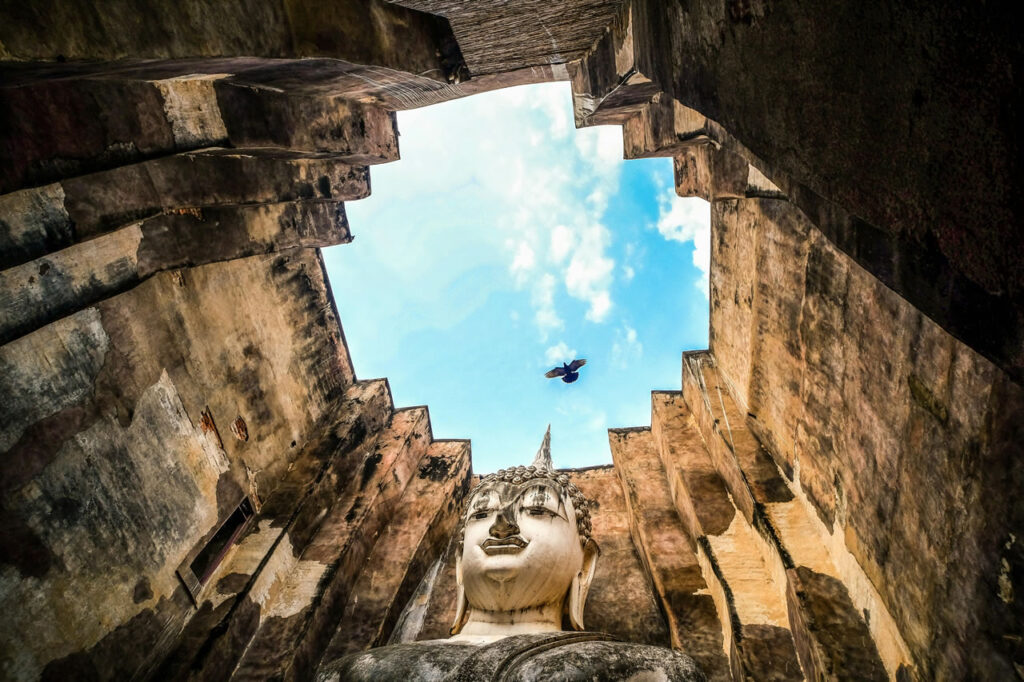
Wat Si Chum (Giant Seated Buddha, North Zone)
📌 The most dramatic “single subject” shot in Sukhothai: a huge Buddha framed by stone walls.
✅ Best time: Morning (soft side light)
Shot ideas: Framed face shots through the opening, detail textures, people for scale
Crowd strategy: Visit early or late afternoon; midday tours can stack up
Tip: Step back and shoot from the doorway for a clean, iconic composition
Difficulty: ★☆☆☆☆ Easy – short walk, mostly level
📍 Google Maps: Wat Si Chum
Sunset Ridge at Wat Saphan Hin (West Zone)
📌 A hilltop viewpoint feel without a “viewpoint platform” vibe, with big sky and a peaceful setting.
✅ Best time: Late afternoon into sunset
Shot ideas: Buddha silhouette against the sky, warm light on laterite/brick, wide landscapes
Crowd strategy: Fewer people than the central zone, especially on weekdays
Footwear tip: Wear grippy shoes; paths can be uneven
Difficulty: ★★☆☆☆ Moderate – gentle uphill walk
📍 Google Maps: Wat Saphan Hin
Blue Hour / Festival Lights (Seasonal)
📌 If you catch Loy Krathong season, the park at night can look completely different.
✅ Best time: Twilight / blue hour (when open for events)
Shot ideas: Lit ruins, reflections with lantern glow, long exposure ambience
Crowd strategy: Expect crowds—compose higher or tighter, and shoot “through” people
Note: Night access depends on events/season, not daily
Difficulty: ★☆☆☆☆ Easy – flat, but busy
📍 Google Maps: Sukhothai Historical Park (Central Zone)
What & Where to Eat
Sukhothai may be small, but it has a food scene worth exploring—especially if you like simple, hearty northern-style dishes and night market snacks. The town’s signature is Sukhothai noodles (guay tiew Sukhothai): a sweet–savory pork broth with thin rice noodles, ground pork, green beans, lime, peanuts, and a sprinkle of pork crackling.
Local Favorites
- Sukhothai Noodles: Found in both Old and New Sukhothai; try small family-run shops near the Historical Park.
- Grilled Meats & Skewers: Common at night markets; pair with sticky rice and papaya salad.
- Seasonal Fruits: Mango, longan, and lychee from surrounding provinces.
Street Food & Markets
- New Sukhothai Night Market (near Yom River): Dozens of stalls with noodles, curries, fried snacks, and desserts; a lively evening hangout.
- Walking Street (weekends in Old Sukhothai): Handicrafts plus local food stalls, easy to combine with a night bike ride around the ruins.
Sit-Down Spots & Cafés
- Dream Café (New Sukhothai): Long-running traveler favorite with Thai and Western dishes.
- Poo Restaurant (New Sukhothai): Casual spot known for Sukhothai noodles and local classics.
- Coffee & Bakery Cafés: Sprinkled around town, catering to cyclists and tourists—good for a midday break.
Price Ranges (guide)
- Street snacks & noodles: ฿40–80
- Simple sit-down meals: ฿80–150
- Mid-range restaurants: ฿200–400+ for two
Useful Tips
- Ask specifically for “Kuay Tiew Sukhothai” if you want the local noodle style; not every shop serves it by default.
- Night markets are busiest Fri–Sun; weekdays are quieter but still good.
- In Old Sukhothai, eating options thin out after 9pm—plan dinner early.
Eating Out in Sukhothai: Sample Venues & Prices
| Venue | Type | Typical Price | Highlights |
|---|---|---|---|
| Poo Restaurant | Casual Local Eatery | ฿60–120 per dish | Known for Sukhothai noodles and Thai classics. |
| Dream Café | Traveler Café/Restaurant | ฿120–250 mains | Mix of Thai & Western dishes; cozy, long-time expat favorite. |
| New Sukhothai Night Market | Street Food | ฿40–80 per item | Noodles, skewers, curries, and desserts; best Fri–Sun evenings. |
| Walking Street (Old Sukhothai) | Weekend Market | ฿50–100 snacks | Food stalls plus local crafts; lively weekend atmosphere. |
| Local Coffee Shops | Cafés | ฿60–120 drinks/snacks | Good Wi-Fi, popular with cyclists and day-trippers. |
Nightlife & Social Scene
Sukhothai isn’t a nightlife destination, and evenings here are quiet compared to Chiang Mai or Bangkok. Most visitors wind down after exploring the ruins with a stroll through the night market or a simple meal in town.
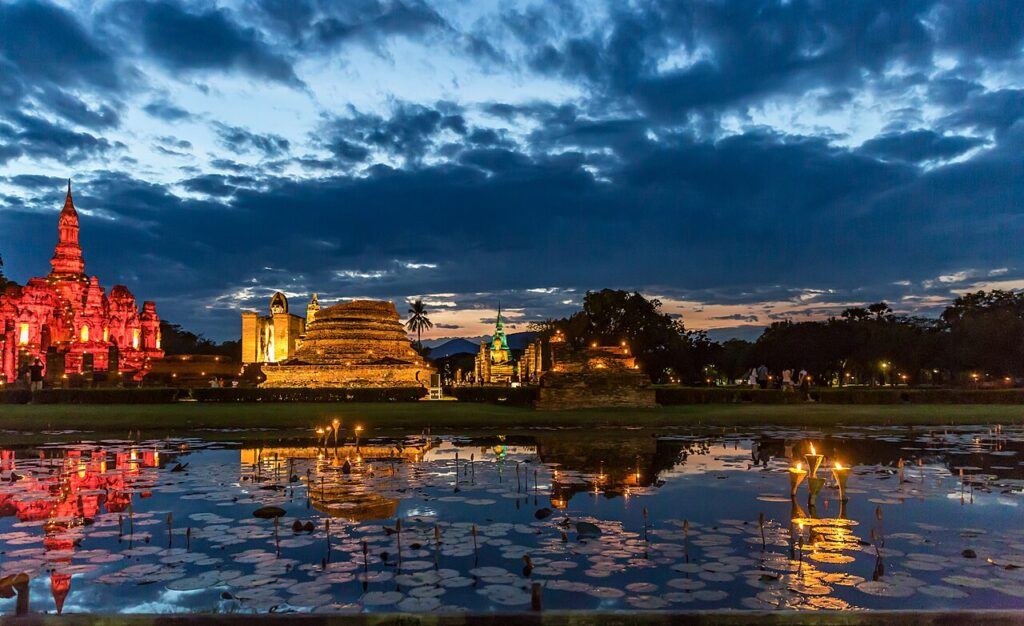
Photo by Ninaras on Wikimedia Commons, licensed under CC BY-SA 4.0
A few low-key bars and riverside spots in New Sukhothai serve cold beer and cocktails, but don’t expect clubs or live music. The real “nightlife” highlight is seasonal—Loy Krathong in November, when the Historical Park comes alive with lanterns, performances, and festive crowds.
- Chopper Bar (New Sukhothai) – Casual bar/restaurant on the main road; live-music nights sometimes; full bar. Expect local beers and simple cocktails.
- Dream Café (New Sukhothai) – Long-running traveler café with dinner service; good for a relaxed glass of wine/beer rather than a “bar” night. Typically open evenings.
- Fong Bear (near Night Market area) – Small beer spot known for a decent selection (incl. imports/craft) and a laid-back vibe; handy after the market.
📌 Typical prices (guide): local beer ฿70–120, import/craft ฿120–220, simple cocktails ฿120–200. Hours can be seasonal—check on arrival or call ahead.
Where to Stay
Sukhothai splits into two main bases:
- Old Sukhothai – right beside the Historical Park. Best for history buffs, photographers, and early-morning cyclists. Quiet at night, but you’ll wake up steps from the ruins.
- New Sukhothai – the modern town 12 km away. More hotels, restaurants, and services, with better access to buses and onward transport.
Accommodation Types
- Budget guesthouses in Old Sukhothai, often family-run, from ฿400–700/night.
- Mid-range hotels & resorts with pools and bike rentals, usually ฿1,000–2,000/night.
- Boutique heritage stays styled with local wood and decor, around ฿2,000–3,500/night.
- Luxury resorts with large gardens and pools, from ฿4,000+ per night.
Booking Tips
- During Loy Krathong (Nov), both Old and New Sukhothai fill up—reserve early.
- Old Sukhothai offers better park access, but dining options shut early; New Sukhothai has more nightlife (albeit limited).
- Many hotels provide bike rentals or shuttles—worth asking when booking.
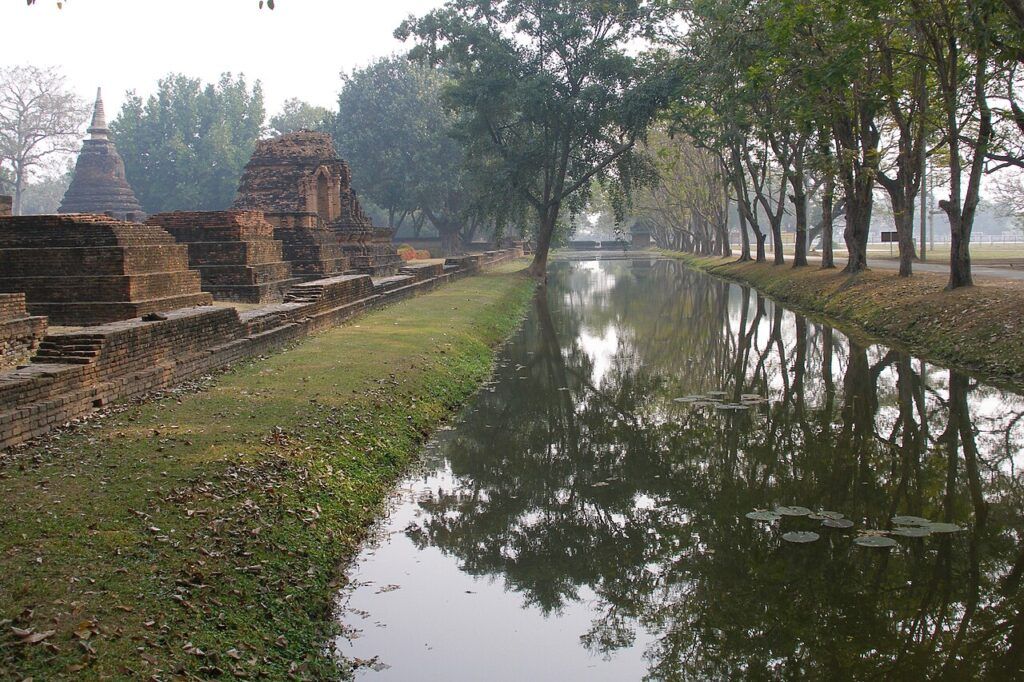
Photo by Vyacheslav Argenberg on Wikimedia Commons, licensed under CC BY-4.0
Sample Hotels & Price Ranges in Sukhothai
Stay in Old Sukhothai if you want to wake up beside the Historical Park and cycle at sunrise. Pick New Sukhothai for more dining, transport, and budget-friendly options. Boutique resorts near the park add charm, while larger resorts outside town suit those wanting pools, gardens, and a quieter retreat.
| Area & Hotel | Category | Typical Price | Why Stay Here? |
|---|---|---|---|
| Old City – Sukhothai Guest House | Budget Guesthouse | ฿400–700/night | Steps from the park, bike rentals on-site, family-run atmosphere. |
| Old City – J&J Guesthouse | Budget Guesthouse | ฿500–800/night | Simple bungalows, garden setting, very close to the Historical Park. |
| New City – EZ House Hostel | Budget Hostel | ฿300–600/night | Backpacker-friendly, dorms & private rooms, walkable to bus station. |
| New City – Pai Sukhothai Resort | Mid-Range Hotel | ฿1,000–1,800/night | Central location, pool, good for families or longer stays. |
| New City – Ruean Thai Hotel | Mid-Range Boutique | ฿1,200–2,000/night | Classic teak-wood architecture, warm service, outdoor pool. |
| Old City – Oldtown Boutique House | Mid-Range Hotel | ฿1,000–1,600/night | Walking distance to Historical Park, stylish interiors, quiet setting. |
| Old City – Legendha Sukhothai | Boutique Resort | ฿2,500–3,500/night | Traditional Lanna-style rooms, riverside setting, near Historical Park. |
| Old City – Sriwilai Sukhothai | Boutique Resort | ฿3,000–4,000/night | Infinity pool overlooking rice paddies, modern Thai design, spa services. |
| Between Airport & Old City – Sukhothai Heritage Resort | Luxury Resort | ฿4,000–6,000+/night | Spacious grounds, two pools, elegant Thai décor, airport shuttle service. |
Shopping & Local Markets
Sukhothai doesn’t have big malls or flashy shopping districts, but it’s a good place to pick up authentic crafts and local food. Shopping here is about markets, handicrafts, and souvenirs that reflect the area’s history.
Night Markets & Walking Streets
- New Sukhothai Night Market (by the Yom River): Open daily, busiest on weekends. Great for cheap eats, fresh fruit, and casual browsing.
- Old Sukhothai Walking Street (weekends): Combines food stalls with handicrafts, textiles, and cultural performances.
Local Crafts & Souvenirs
- Sangkhalok Ceramics: Traditional pottery with distinctive glazes, once exported across Asia in the Sukhothai era.
- Handwoven Textiles: Cotton and silk items from village cooperatives—scarves, bags, and wall hangings.
- Replica Buddha Images: Found in small workshops; make sure items are respectful and not intended as kitsch.
Price Pointers
- Market snacks & street eats: ฿20–60
- Handcrafted souvenirs (scarves, small ceramics): ฿150–400
- Larger ceramics or textiles: ฿600+
Useful Tips
- Bargaining is normal at night markets—friendly negotiation is expected.
- In Old Sukhothai, shops close early; best shopping is around dusk.
- For quality crafts, ask your guesthouse for trusted village cooperatives rather than tourist-only shops.
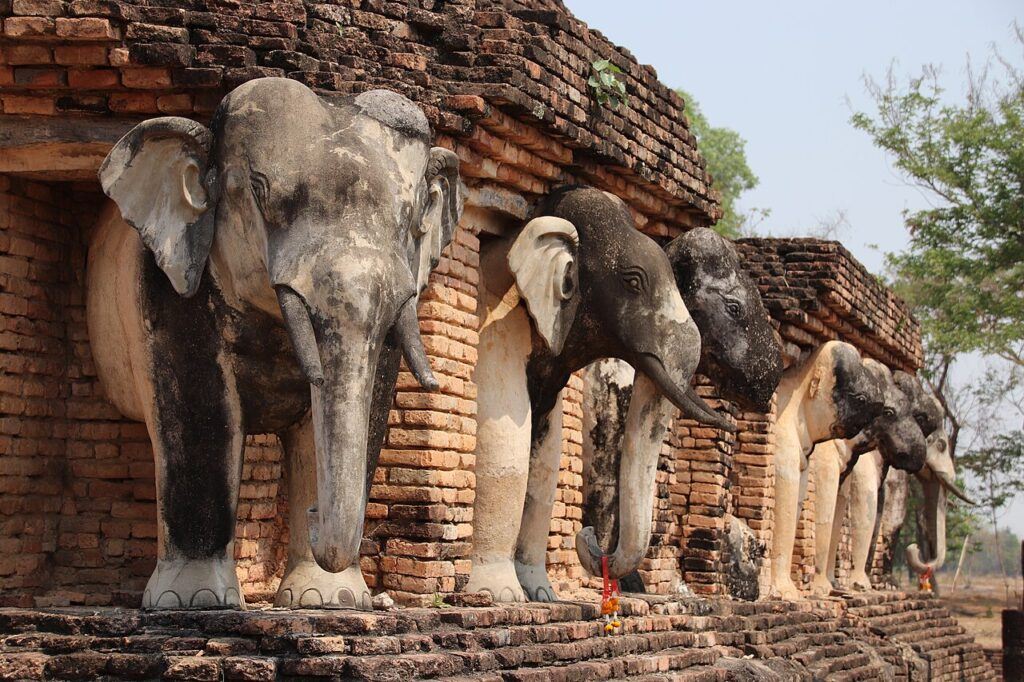
Shopping Snapshot: Markets, Crafts & Typical Prices
Use this quick snapshot to find the best markets and crafts in Sukhothai—and what you should expect to pay.
| Place / Item | What You’ll Find | Typical Price | Notes |
|---|---|---|---|
| New Sukhothai Night Market | Street food, fruit, everyday goods | ฿20–60 snacks • ฿40–80 noodles | Open daily; liveliest Fri–Sun near the Yom River. |
| Old Sukhothai Walking Street (weekends) | Food stalls, souvenirs, small crafts | ฿50–150 snacks/souvenirs | Good for gifts; combine with an evening ride near the park. |
| Sangkhalok Ceramic Studio (various) | Bowls, plates, decorative pieces | Small ฿150–350 • Larger ฿600–1,500+ | Ask your guesthouse for reputable studios/co-ops. |
| Textile Cooperative Shop | Handwoven cotton/silk scarves, bags | Scarves ฿200–500 • Larger pieces ฿600+ | Fair prices, better quality than tourist-only stalls. |
| Local Wood/Carving Workshop | Small carvings, home decor | ฿150–400 small • ฿600+ larger | Check finish/quality; avoid items made from protected woods. |
| Riverside Produce Stalls | Seasonal fruit, local snacks | Fruit bags ฿20–50 | Best near dusk; great for picnic supplies. |
Day Trips & Nearby Attractions
Sukhothai makes a great base for exploring northern Thailand’s early history and countryside charm. Within a short drive, you’ll find ancient sister cities, quiet temples, and scenic backroads that reveal more of the old kingdom’s legacy.
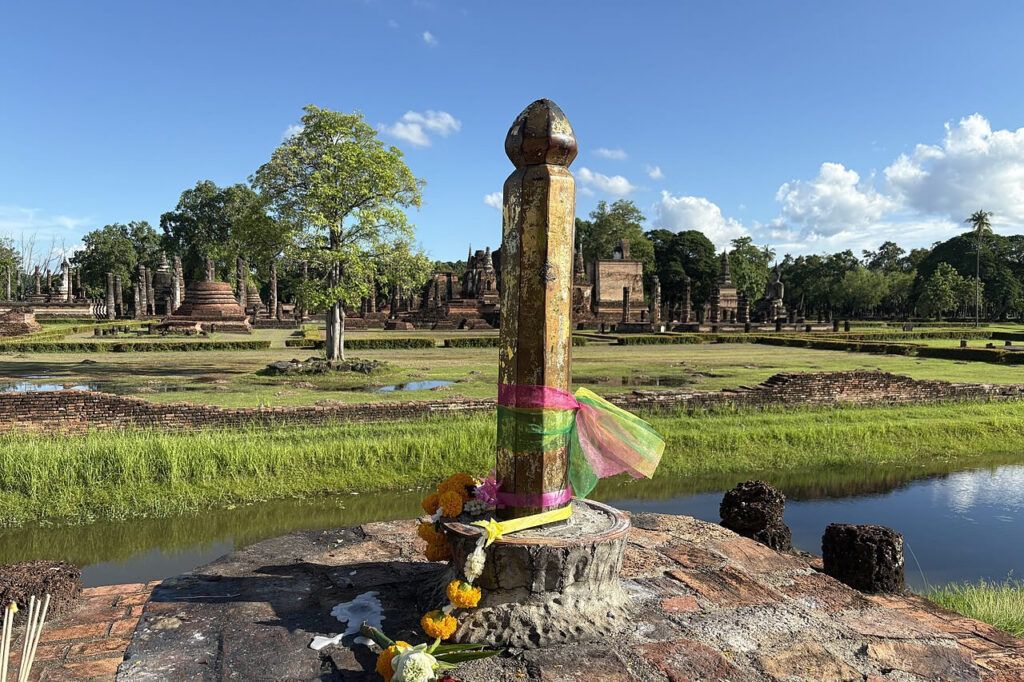
Photo by Chainwit. on Wikimedia Commons, licensed under CC BY-4.0
Si Satchanalai Historical Park (≈ 55–65 km, ~1 hr)
Sukhothai’s quieter sister site with similar-era ruins and lush grounds. Great by scooter or hired tuk-tuk/driver; allow 3–4 hrs on site.
How to go: Songthaew from New Sukhothai (infrequent) or private transfer; cycling is too far for most.
Kamphaeng Phet Historical Park (UNESCO) (≈ 80–90 km, ~1.5 hrs)
Forest-set ruins with dramatic laterite chedis and headless Buddha images. Far fewer visitors than Sukhothai; lovely in late afternoon light.
How to go: Bus to Kamphaeng Phet + tuk-tuk, or self-drive.
Ramkhamhaeng National Park (≈ 60–70 km, ~1.5 hrs)
Hikes to ridge viewpoints over the Sukhothai plains; trails can be steep and hot—start early and bring plenty of water.
How to go: Self-drive or charter; limited public transport.
Phitsanulok City & Wat Phra Si Rattana Mahathat (Wat Yai) (≈ 60 km, ~1 hr)
Visit one of Thailand’s most revered Buddha images, combine with riverside cafés or the Sergeant-Major Thawee Folk Museum for local culture.
How to go: Frequent buses/minivans from Sukhothai.
Ban Na Ton Chan Community (crafts & homestay) (≈ 80 km, ~1.5 hrs)
Village known for weaving, woodwork, and community-based tourism. Hands-on craft demos and photogenic wooden houses.
How to go: Self-drive or arrange via guesthouse/local tour.
Good to know
- For parks/ruins, plan cool hours (early morning or late afternoon) and bring hat, sunscreen, repellent.
- Private transfers save time if you’re pairing two stops in one day (e.g., Si Satchanalai + Ramkhamhaeng).
- Always check closing times—outer zones and museums may shut earlier than expected.
Itineraries
Sukhothai works best when you plan around the light: cool mornings for cycling and midday museum/café breaks, then back into the park for late-afternoon glow and sunset.
1-Day Highlights (1 Day + 1 Night)
📌 Best if you want sunrise or sunset without rushing.
Morning (Sunrise + Cool Hours)
- Enter early and cycle the Central Zone first (Wat Mahathat + reflection ponds)
- Continue to Wat Sa Si while it’s still quiet
Midday (Heat Break)
- Ramkhamhaeng National Museum (60–90 minutes)
- Lunch + café break in Old or New Sukhothai
Late Afternoon / Sunset
- Head to Wat Si Chum (North Zone) for dramatic light
- If you still have energy: finish with West Zone for sunset atmosphere
✅ Best for: first-timers, photographers, relaxed explorers who want the “best light” experience
2-Day Classic Sukhothai (The Sweet Spot)
📌 Perfect for travelers who want the park properly, without turning it into a marathon.
Day 1 (Orientation + Golden Hour)
- Afternoon arrival + museum
- Sunset ride in the Central Zone (soft light, long shadows)
Day 2 (Sunrise + Quieter Zones)
- Sunrise loop: Wat Sa Si → Wat Mahathat
- Late morning: North Zone (Wat Si Chum)
- Optional late afternoon: West Zone (Wat Saphan Hin) or countryside cycling lanes
✅ Best for: culture lovers, families, anyone who wants unhurried exploring
3-Day History Loop (Add a Big Day Trip)
📌 If you’ve got the time, this turns Sukhothai into a mini “ancient Thailand” itinerary.
Day 1–2
- Follow the 2-Day Classic plan above
Day 3 (Choose One)
- Si Satchanalai Historical Park (quieter sister site, fewer crowds, 3–4 hours on-site), or
- Kamphaeng Phet Historical Park (UNESCO ruins + laterite structures, great late-afternoon light)
✅ Best for: history buffs, slow travelers, anyone who wants a second ruins park with far fewer people
Itineraries at a Glance: Sukhothai
Use this quick comparison to pick the right Sukhothai itinerary based on how much time you have and what kind of experience you want (sunrise photos, deeper history, or an easy family-friendly loop).
| Itinerary | Duration | Focus | Best For |
|---|---|---|---|
| Sunrise Highlights | Half day (morning) | Central Zone ruins, reflection ponds, soft light | Short stays, photographers, early risers |
| Classic 1-Day Loop | 1 full day | Museum, Central + North Zones, sunset cycling | First-time visitors, relaxed explorers |
| Slow History Weekend | 2 days | Full park exploration + Si Satchanalai | History lovers, photographers |
| Family-Friendly Day | Half–1 day | Tram ride, key temples, museum | Families, older travelers |
| Extended Culture Stay | 3 days | Ruins, countryside cycling, nearby parks | Slow travelers, culture-focused trips |
Cost Snapshot: Sukhothai
Sukhothai is easy on the wallet. Most travelers spend modestly on food and transport, with accommodation the main swing factor. Here’s a quick breakdown of typical expenses:
| Item | Where / What | Typical Price (THB) |
|---|---|---|
| Historical Park Entry | Per zone (Central/North/West); small bike fee at some gates | ~฿100 per zone (+฿10–20 bike) |
| Ramkhamhaeng National Museum | Near park entrance; ideal before touring ruins | ฿150–200 |
| Bicycle Rental (day) | Guesthouses/shops by park gates | ฿50–120 |
| Scooter Rental (day) | Town or park area; IDP recommended | ฿200–300 (+fuel) |
| Tuk-tuk (town ↔ park) | New Sukhothai ↔ Old Sukhothai, each way | ฿120–200 |
| Songthaew (shared pickup) | Fixed routes, daytime only | ฿20–40 |
| Airport Shuttle (THS → town) | Counter shuttle or hotel pickup | ฿200–350 per person |
| Local Meals | Markets & simple eateries | ฿40–120 |
| Coffee / Smoothie | Cafés in town/near park | ฿50–120 |
| Guesthouse (night) | Old or New Sukhothai | ฿400–700 |
| Mid-range Hotel (night) | Pool/AC, central or near park | ฿1,000–1,800 |
| Boutique / Resort (night) | Heritage style or larger grounds | ฿2,500–3,500 (฿4,000+ luxe) |
| Day Trip: Si Satchanalai | Scooter or hired tuk-tuk/driver | Fuel ~฿120–200 • Driver ฿800–1,500 |
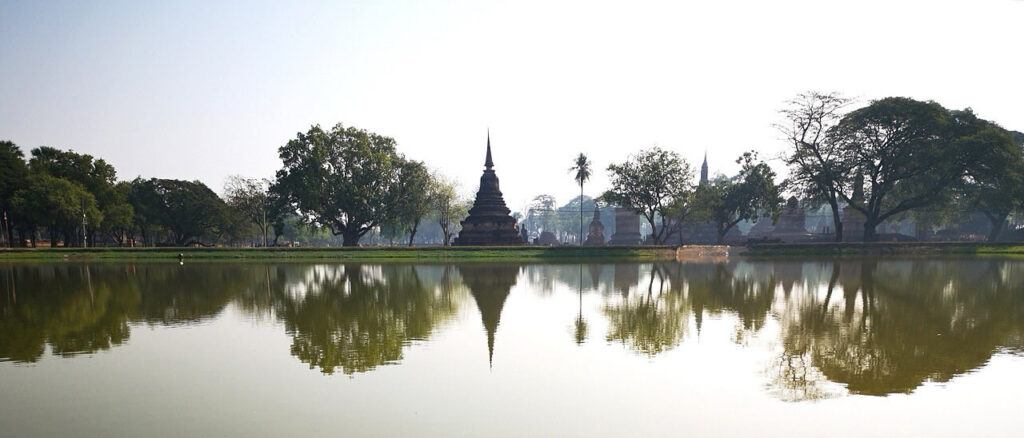
Photo by Garonzi Stefania on Wikimedia Commons, licensed under BY-SA 4.0
Daily Budgets
- Backpacker: ฿800–1,200/day — guesthouse (฿400–700), street food (฿40–80 per item), bicycle, songthaew/tuk-tuk as needed. Park entry extra by zone.
- Mid-Range: ฿1,800–3,000/day — mid-range hotel (฿1,000–1,800), scooter rental, mix of market and sit-down meals, museum, a couple of tuk-tuks.
- Comfort: ฿4,000+/day — boutique/resort, private transfers, guided day trip to Si Satchanalai, restaurants/cafés, souvenirs.
📌 Estimates reflect typical mid-2025 ranges and exclude long-distance travel (flights/train from Bangkok/Chiang Mai). Prices vary by season, promotions, and festival periods (Loy Krathong sees higher room rates).
Want a realistic Thailand trip budget?
Use the Thailand Travel Cost Calculator — just enter your destinations, trip length, and travel style to get instant, accurate per-person and group trip costs in both THB and USD.
📌 Want a deeper breakdown of what things cost across Thailand by region and style?
Read the full Cost of Travel in Thailand guide.
Family-Friendliness
Sukhothai is great for slow, easy days with kids—flat cycling paths, wide open spaces, and plenty of short, rewarding stops.
Why families like it
- Flat, shaded cycling inside the Historical Park; short distances between highlights.
- Low-stress pacing: museums, snack breaks, and park loops fit nicely into half-days.
- Quiet evenings: minimal nightlife, early dinners, easy bedtime.
Kid-friendly things to do
- Historical Park tram (hop-on style) for little legs; mix with brief walks at Wat Mahathat, Wat Sa Si, and Wat Si Chum.
- Ramkhamhaeng National Museum first (45–60 min) to make the ruins “click.”
- Sunset loop: golden light + cooler temps; stop for coconut ice cream near the gates.
- Countryside cycle (short version): guesthouse-arranged backroads past rice fields.
Where to stay (with kids)
- Old Sukhothai: walk/ride straight into the park; quiet nights and heritage-style resorts close to the ruins.
- New Sukhothai: more dining options, convenience stores, and easier transport links.
- Look for pool access, on-site bike rentals, and family rooms—you’ll find examples of all three in the Where to Stay section with options across budget, mid-range, and boutique categories.
Practical tips
- Bring/borrow child seats or larger-wheel strollers (some paths are bumpy).
- Pack hats, sunscreen, repellent, and extra water; shade is patchy at midday.
- Dress respectfully for temple areas (shoulders/knees covered).
- Plan a midday rest (pool/nap) and do park time at sunrise + late afternoon.
- For day trips (e.g., Si Satchanalai), consider a private driver or tuk-tuk so you can control stops and timing.
Local Services & Emergency Info
Sukhothai is straightforward for basics—public hospital in town, plenty of small clinics and pharmacies, and easy access to police/tourist-police support. Here’s the need-to-know:
Key Services at a Glance
| Service | Where / Notes | What to Expect |
|---|---|---|
| Police / Tourist Police | Police stations in town; Tourist Police hotline 1155 (English) | General assistance, reports, translation help via Tourist Police. |
| Hospitals & Clinics | Public hospital in New Sukhothai; numerous private clinics | Basic ER care; bring passport & insurance details. For specialists, consider Phitsanulok. |
| Pharmacies | Clusters on main roads in New Sukhothai; smaller shops near the park | Common meds OTC; keep your prescription photo for refills. |
| Post & Courier | Thailand Post branches in town; private couriers in commercial areas | Send postcards, EMS, or domestic parcels; ask hotels about nearest branch hours. |
| Immigration (Info) | Check locally for the nearest office & current services | 90-day reporting/visa matters: confirm location/hours with hotel or Tourist Police before you go. |
Emergency Numbers (nationwide)
- 191 Police
- 1669 Medical Emergency
- 199 Fire
- 1155 Tourist Police (English)
Useful Tips
- Save your hotel’s business card (Thai address) for taxis and forms.
- For clinic visits, bring a medication list and any allergy info.
- If you need an English-speaking doctor, ask your hotel which hospital/clinic is best that day.
- Keep small cash for photocopies, passport photos, and transport.
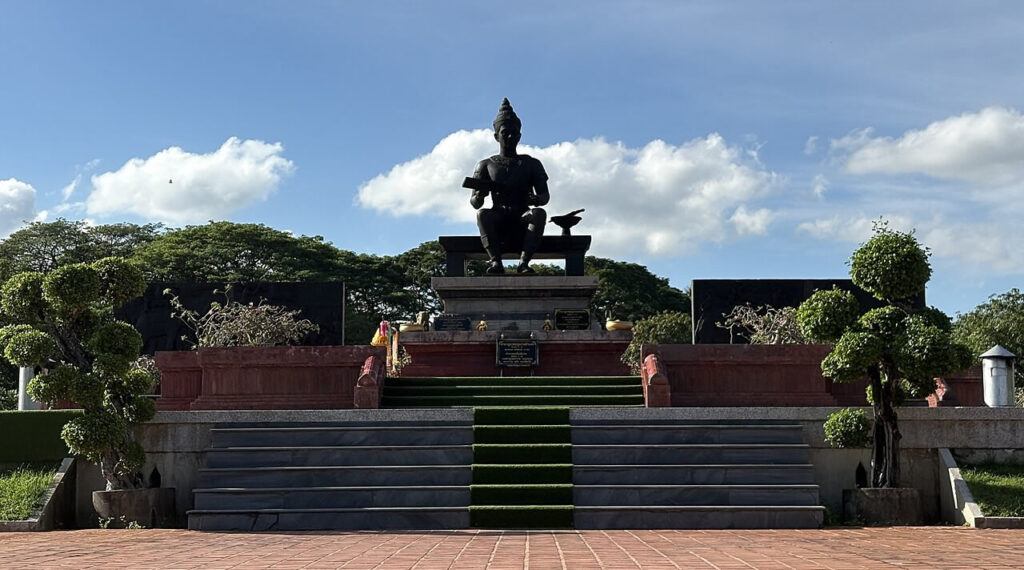
Photo by Chainwit. on Wikimedia Commons, licensed under CC BY-4.0
FAQs About Visiting Sukhothai
Here’s a short FAQ to cover the most common Sukhothai questions not covered above.
📌 What’s the best way to explore the Historical Park—bike, tram or walking?
Bike for flexibility across zones; walking is fine for the central core only; the tram suits families or anyone avoiding long rides.
📌 How much time should I spend in Sukhothai?
Two full days covers sunrise/sunset in the park, the museum, and a relaxed loop. Add a third day if you want Si Satchanalai or countryside cycling.
📌 Is cycling in the Historical Park safe for kids and older travelers?
Yes—flat terrain and light traffic. Consider bikes with child seats, or use the tram plus short walks at headline temples.
📌 Is English widely spoken in Sukhothai?
Hotels, the museum, and park gates—yes. Markets and small eateries—less so. A phrase app helps.
📌 Can I fly a drone in/around Sukhothai?
Not inside Sukhothai Historical Park without an official permit. Thailand-wide rules also apply: camera drones generally require CAAT registration and third-party insurance, keep visual line of sight, stay well clear of crowds/roads, observe the altitude ceiling (commonly ~90 m), and avoid airports/helipads. When in doubt, ask at the park office; unauthorized flights can be fined and equipment confiscated.
Related Guides & Further Reading
Travel in Thailand is easier when you have the right balance of practical advice and destination inspiration. Below you’ll find useful travel resources to help you prepare smoothly, plus nearby destinations worth adding to your journey.
Thailand Travel Essentials: Plan Smarter, Travel Easier
Need tips on visas, health, culture, or everyday logistics? My hub brings all the key guides together in one place: Explore the Thailand Travel Guide
Your Next Thai Adventure Awaits
Looking for where to go next? These nearby or complementary places pair well with your current destination and are worth your time in the Land of Smiles.
- Ayutthaya Travel Guide: Temples, History & How to Visit Thailand’s Ancient Capital
- Phanom Rung Historical Park: Ancient Khmer Temples on an Isan Volcano
💬 Got a question I didn’t cover or a tip from your own visit? Drop it in the comments—I’ll update this guide to help fellow travelers.