
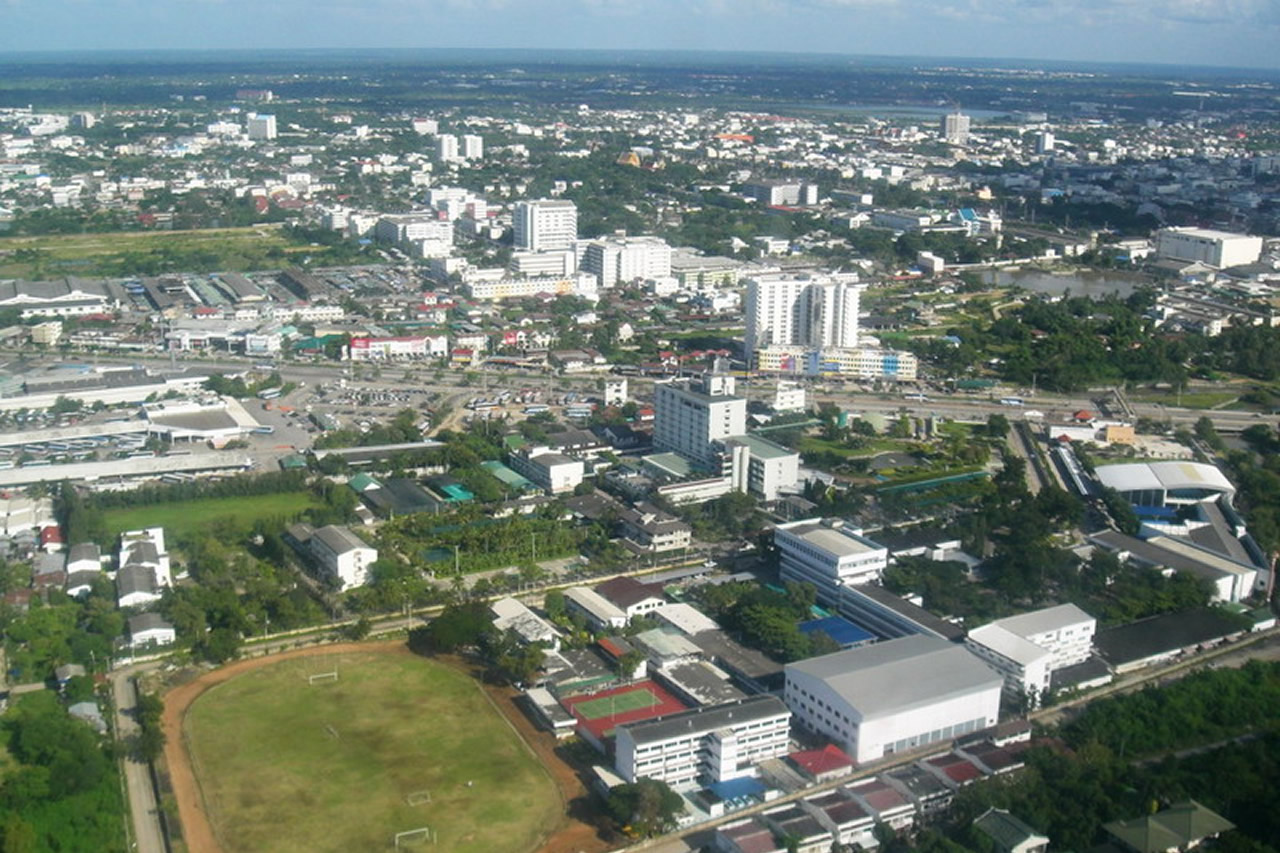
Nakhon Ratchasima, better known as Korat, is one of those Thai cities that quietly surprises you. It’s big, busy, and unapologetically local, yet sits right on the edge of some of Thailand’s most impressive nature. If you’re curious about real everyday Thailand, with fewer tour buses and more street food stalls, Korat delivers exactly that.
Often described as the gateway to Isaan (Northeastern Thailand), Korat blends regional culture, historic sites, and modern Thai city life. It’s not polished or postcard-perfect, but that’s part of the appeal. You come here to understand how Thailand works beyond the beach towns and old-city tourist zones.
Korat is best suited for curious travelers, slow explorers, families, and long-stay visitors who value space, affordability, and authenticity. It’s also a practical base for visiting Khao Yai National Park, one of Thailand’s most famous nature escapes, without staying inside a resort bubble.
Located about 260 km northeast of Bangkok, Korat is easy to reach yet feels distinctly removed from the capital’s pace and pressures.
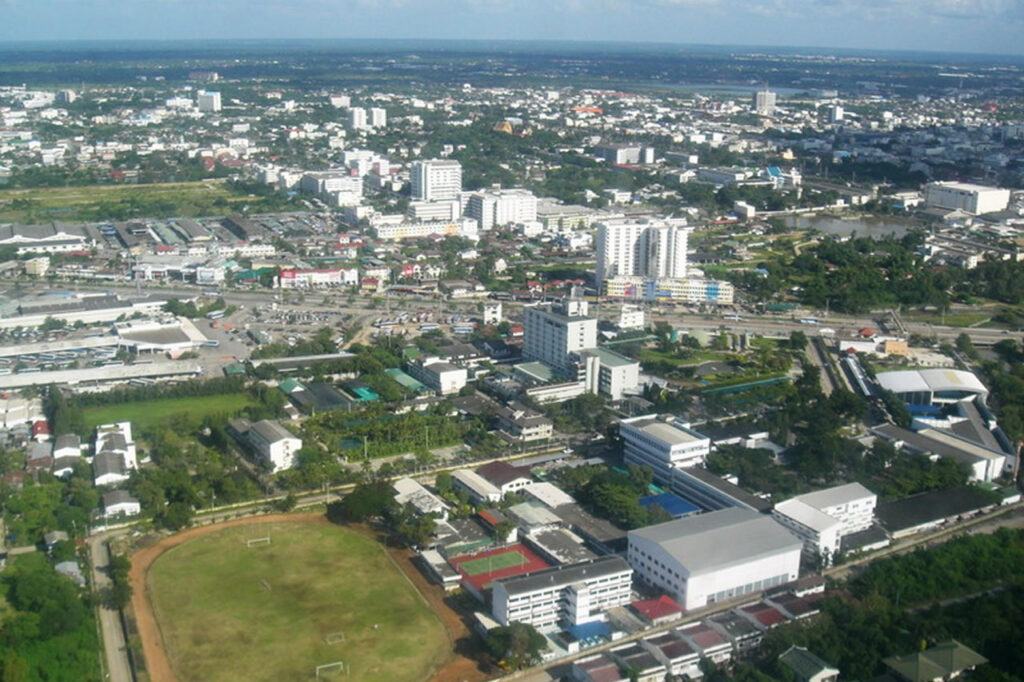
Photo “Korat Aerial View” by Lazydog on Wikimedia Commons, licensed under CC BY-3.0
Where Is Nakhon Ratchasima?
Nakhon Ratchasima sits at the western edge of Isaan, acting as a natural gateway between central Thailand and the northeast. It’s the largest city in the region and the capital of Nakhon Ratchasima Province, which is one of Thailand’s biggest provinces by area.
The city is strategically positioned along major transport routes, making it a key stop for travelers heading deeper into Isaan or out toward nature. One of Korat’s biggest advantages is its proximity to Khao Yai National Park, which lies about 90 km to the southwest and is easily reachable for day trips or overnight stays.
In practical terms, Korat feels like a major Thai city rather than a tourist town. You’ll find shopping malls, universities, hospitals, and sprawling residential areas, all surrounded by farmland and low mountain ranges that hint at the countryside beyond.
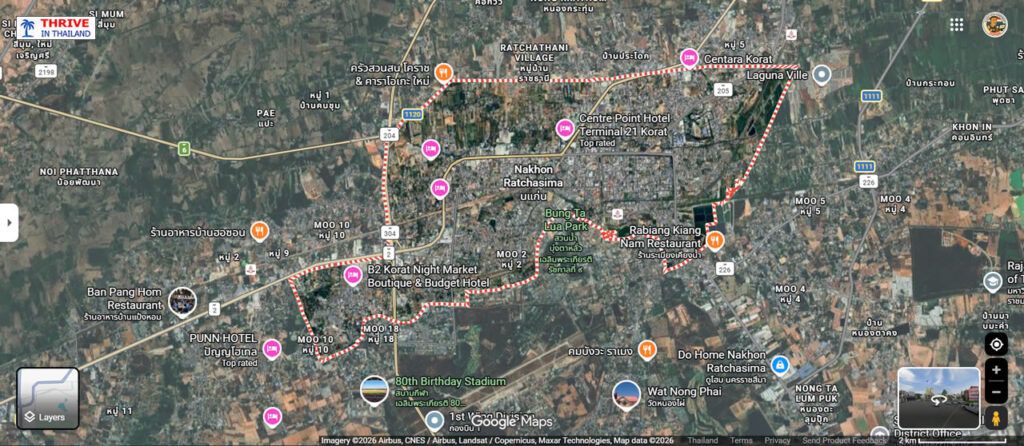
Nakhon Ratchasima on the Map
Nakhon Ratchasima grew into northeastern Thailand’s main transport, military, and commercial gateway, which explains why major highways and rail lines converge here. Sitting at the western edge of Isaan, the city connects Bangkok and central Thailand with the northeast, making it a natural transit and logistics hub rather than a tourist-oriented stop.
While Korat itself is inland and firmly urban, it offers easy access to Khao Yai National Park to the southwest, historic sites like Phimai to the north, and deeper Isaan provinces beyond. This central positioning makes Korat a practical base for exploring both nature and regional culture without complicated onward travel.
Click the image below to open Nakhon Ratchasima’s location in Google Maps in a new tab.
Best Time to Visit Nakhon Ratchasima
Korat has a tropical savanna climate, similar to much of northeastern Thailand, with clear seasonal shifts that can strongly affect your experience. Choosing the right time to visit mostly comes down to heat tolerance and whether you plan to explore nearby nature like Khao Yai.
Cool & Dry Season (November to February) — Best Overall
This is the most comfortable time to visit Korat. Days are warm but manageable, evenings are cooler, and rainfall is minimal. It’s ideal for city exploration, markets, temples, and especially day trips to Khao Yai, where hiking and wildlife spotting are at their best.
- Pleasant daytime temperatures
- Clear skies and low humidity
- Peak season for domestic travel and festivals
Hot Season (March to May) — Very Hot, Very Local
Temperatures climb quickly and can feel intense, especially in April. That said, this period offers a very authentic local atmosphere, fewer foreign visitors, and good hotel availability.
- Expect high heat, especially mid-day
- Songkran (Thai New Year) in April adds energy and water fights
- Best for travelers used to Thai heat or short stays
Rainy Season (June to October) — Greener, Quieter
Rain usually comes in short, heavy bursts rather than all-day downpours. The countryside turns lush, prices drop slightly, and tourist numbers thin out. Some outdoor activities may be limited, but city life continues as normal.
- Landscapes around Korat and Khao Yai are at their greenest
- Occasional flooding in low-lying areas after heavy rain
- Good value for longer stays and slow travel
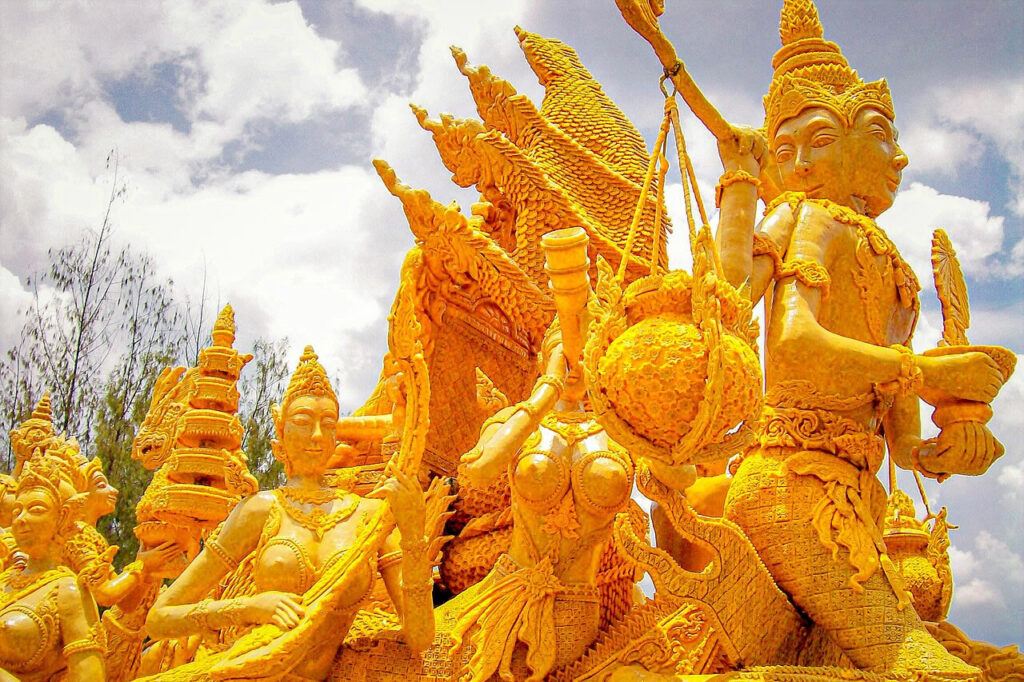
Photo by Philip Nalangan on Wikimedia Commons, licensed under CC BY-4.0
Korat also hosts its own candle procession during Buddhist Lent (usually July), featuring locally made wax sculptures and temple events. While more low-key than Ubon Ratchathani’s famous festival, it offers a genuine look at local traditions.
📌 When to avoid?
If you dislike heat and humidity, late March to early May can be challenging. Otherwise, Korat is a year-round destination with each season offering a different perspective on local Thai life.
Not sure if it’s a good month to visit?
Use the Monsoon Weather Checker to choose a destination and month to see a clear Go / Iffy / Avoid signal from Thailand’s Meteorological Department climate averages (historical; no forecasts), plus typical rainfall, rainy days, temperature, and a one-line sea conditions note.
How to Get to Nakhon Ratchasima
Korat is one of the easiest northeastern Thai cities to reach thanks to its role as a major transport hub. Whether you’re coming from Bangkok or elsewhere in Thailand, getting here is straightforward and affordable.
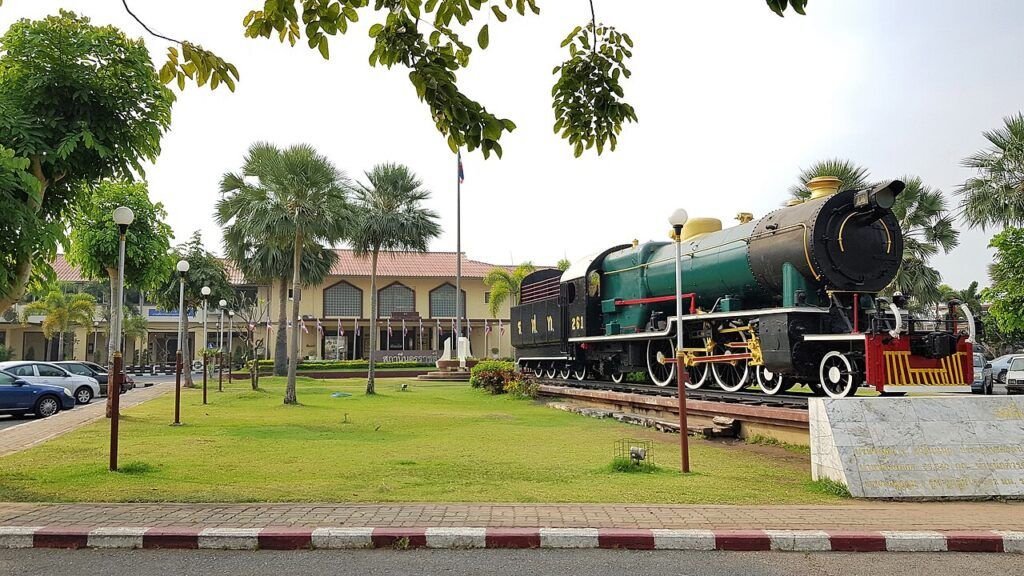
Photo by Takeaway on Wikimedia Commons, licensed under CC BY-SA 4.0
From Bangkok
By Train
Trains run daily between Bangkok (Hua Lamphong / Bang Sue) and Korat’s main train station. Trip time is usually 4–6 hours, depending on the service.
- 3rd class (fan seating): ~฿180–฿250
- 2nd class (air-con): ~฿350–฿450
- 1st class sleeper: ~฿800–฿1,200
📌 Booking in advance is recommended for 1st/2nd class seats during peak travel periods.
By Bus or Minivan
Buses and minivans depart frequently from Bangkok’s Mo Chit Bus Terminal. Travel time is about 3.5–4.5 hours.
- Standard bus: ~฿250–฿350
- VIP / Air-con bus: ~฿350–฿450
- Minivan: ~฿300–฿400
📌 VIP buses are a nice middle ground — comfy seats, less crowded, and fewer stops.
By Car
Driving from Bangkok takes around 3.5–4 hours via Mittraphap Road (Highway 2). Fuel cost one-way is roughly:
- Petrol / Gas: ~฿800–฿1,200 (depends on vehicle & pump prices)
📌 Parking in central Korat is generally plentiful and inexpensive compared with Bangkok.
From Other Parts of Thailand
Korat is connected to many Isaan cities by long-distance bus:
- Khon Kaen → Korat: ~฿300–฿450 (4–5 hrs)
- Ubon Ratchathani → Korat: ~฿450–฿650 (6–7 hrs)
- Buriram → Korat: ~฿250–฿350 (3–4 hrs)
📌 Prices depend on bus class and operator.
Flying to Korat
Korat’s airport exists but regular commercial flights are rare. Most travelers instead fly into Bangkok (BKK / DMK) and continue by land transport.
✅ If your itinerary includes Khao Yai National Park, Korat makes a practical and often cheaper base compared with accommodations inside the park itself.
Getting Around Nakhon Ratchasima
Korat is a large, spread-out city, so getting around efficiently depends on where you’re staying and how far you plan to travel. While it’s not a walkable city overall, transport is cheap and easy to use once you know the options.
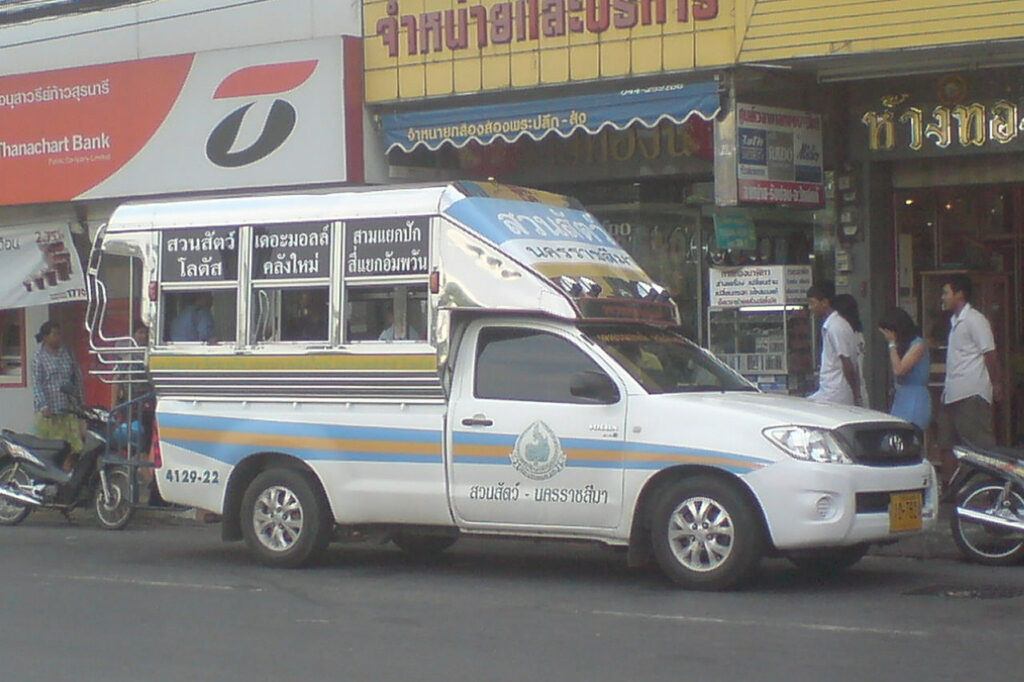
Photo by Paul Hewitt on Wikimedia Commons, licensed under CC BY-SA 3.0
Grab, Taxis & Ride-Hailing
Grab works reliably throughout Korat and is the easiest option for visitors.
- Short city rides: ~฿60–฿120
- Longer cross-city trips: ~฿150–฿250
- Late evening availability: Generally good, even after 9 pm
📌 Traditional taxis are less common than in Bangkok, so Grab is usually the better bet.
Songthaews (Shared Pickup Trucks)
Songthaews operate fixed routes across the city and are widely used by locals.
- Typical fare: ~฿10–฿20 per ride
- How it works: Hop on, ring the bell to stop, pay when exiting
- Best for: Short hops if you’re comfortable asking locals or your hotel staff about routes
📌 They’re cheap and authentic, but signage is limited and routes aren’t tourist-friendly.
Motorbike Taxis
Motorbike taxis are available around markets, malls, and transport hubs.
- Short rides: ~฿30–฿60
- Longer rides: ~฿70–฿120
📌 Helmets are usually provided, but quality varies. Useful for quick trips in traffic.
Car & Motorbike Rental
Renting your own vehicle makes sense if you plan to explore outside the city.
- Motorbike rental: ~฿200–฿300 per day
- Car rental: ~฿1,000–฿1,500 per day
📌 An international or Thai driving license is technically required. Police checks are less frequent than in tourist hotspots but do happen.
Walking & Practical Reality
Central areas around malls and markets are walkable in short bursts, but distances add up quickly and sidewalks can be inconsistent. Expect to rely on transport for most trips.
✅ If you’re visiting Khao Yai National Park, arrange transport in advance. Grab coverage drops outside the city, and renting a car or booking a tour is far more reliable than improvising on the day.
Top Things to Do in Nakhon Ratchasima
Korat isn’t about ticking off famous landmarks. Its appeal lies in history, everyday Thai culture, and easy access to nature. These are the highlights that give you a real sense of place.
Visit Thao Suranari Monument
This monument honors Ya Mo, Korat’s most revered historical figure. Locals stop here to pray, make offerings, and pay respect, especially in the mornings and early evenings. It’s the symbolic heart of the city and a good starting point to understand local pride and identity.
Explore Phimai Historical Park
About an hour north of the city, Phimai is one of Thailand’s most impressive Khmer temple complexes. Older than Angkor Wat, it’s quieter, easier to explore, and deeply atmospheric. A half-day trip from Korat is ideal.
Experience a Modern Thai Mall at Terminal 21 Korat
More than just shopping, Terminal 21 is where locals eat, meet, and cool off from the heat. The food court is excellent value, and it’s a great place to observe everyday city life.
Wander Local Markets & Night Bazaars
Korat’s markets are lively, affordable, and almost entirely local. Expect grilled meats, Isaan staples like som tam and larb, and casual evening crowds.
- Street food prices are very low
- Little English spoken, but pointing works just fine
- Best visited after sunset
Use Korat as a Base for Khao Yai National Park
One of Thailand’s most famous national parks sits just southwest of the city. Many travelers base themselves in Korat and visit Khao Yai on a day trip or overnight excursion, avoiding resort prices while keeping flexibility.
✅ Korat rewards travelers who slow down. It’s less about headline attractions and more about observing daily rhythms, regional food culture, and life outside Thailand’s tourist corridors.
Best Photo Spots & Scenic Viewpoints in Nakhon Ratchasima
Korat isn’t a city of dramatic skylines, but it offers meaningful, story-driven photo spots. Think local life, history, temples, and nature just outside the city. These are the places that capture Korat’s character best.
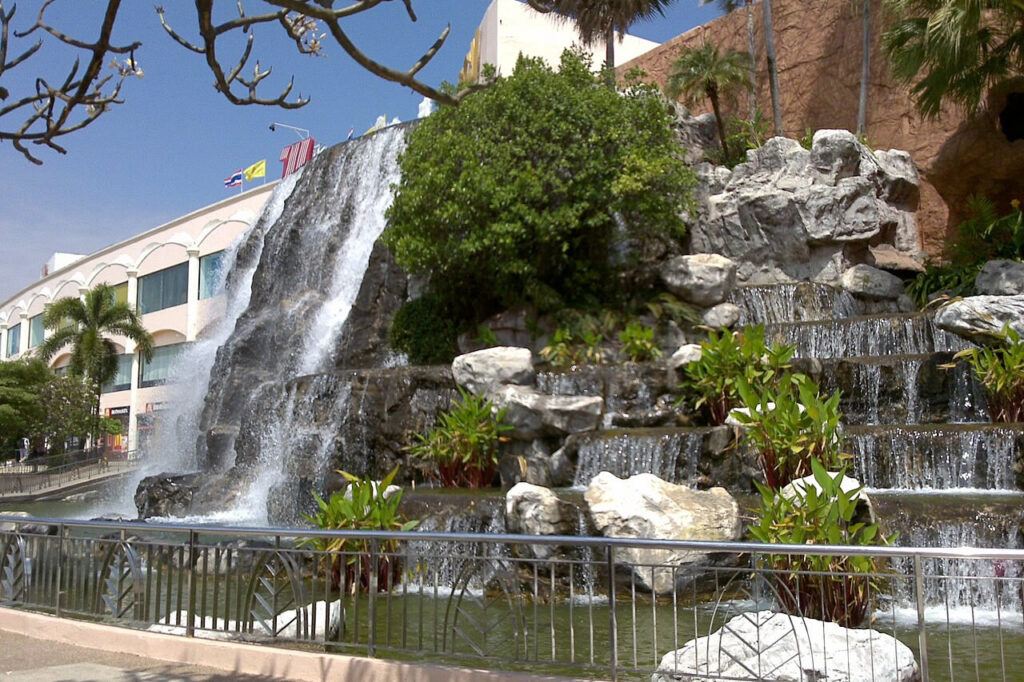
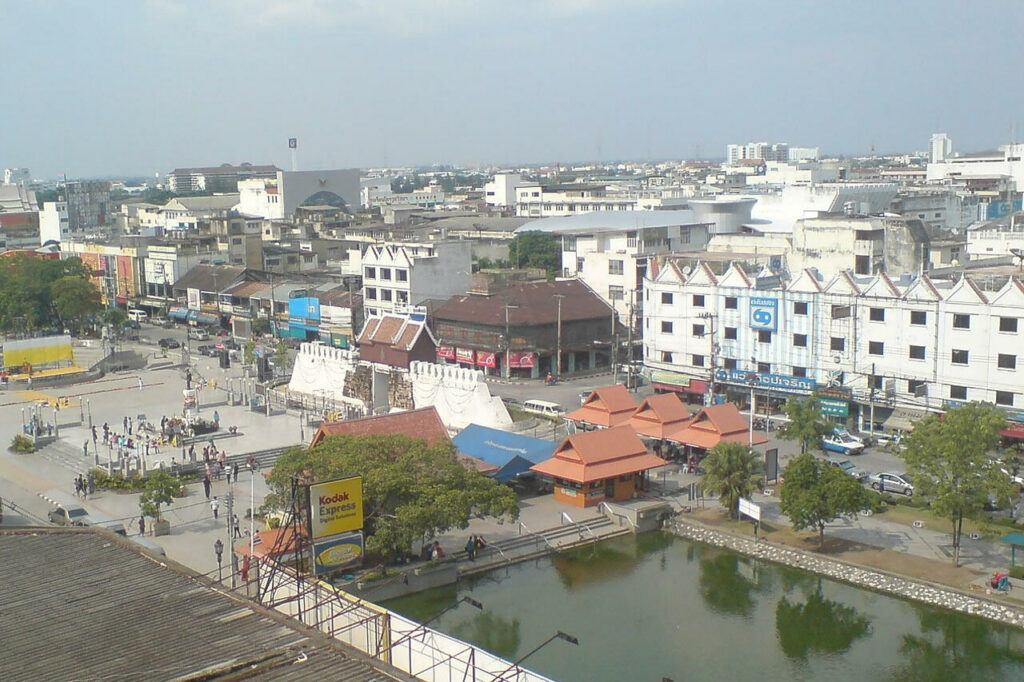
Thao Suranari Monument (City Landmark & Local Life)
📌 The symbolic heart of Korat, where daily life, history, and local devotion intersect.
✅ Best time: Early morning (06:30–08:30) or late afternoon (16:30–18:30)
Shot ideas: Monument details, flower offerings, locals praying, wide plaza scenes
Crowd strategy: Calm in the morning; livelier around sunset
Shooting notes: Handheld works well; watch for harsh midday light
Equipment tip: Standard zoom (24–70mm equivalent)
Drone notes: ❌ Not recommended; central urban area
Difficulty: ★☆☆☆☆ Easy
📍 Google Maps: Thao Suranari Monument
Phimai Historical Park (Ancient Architecture & Atmosphere)
📌 One of Thailand’s most impressive Khmer-era temple complexes, older than Angkor Wat.
✅ Best time: Late afternoon (16:00–18:00)
Shot ideas: Stone corridors, gateways, symmetry shots, people for scale
Crowd strategy: Quieter on weekdays; busiest mid-morning
Shooting notes: Wide angles shine; textures and lines photograph beautifully
Equipment tip: Wide to standard zoom (16–35mm / 24–70mm)
Drone notes: ❌ Not allowed; protected archaeological site
Difficulty: ★★☆☆☆ Easy–Moderate
📍 Google Maps: Phimai Historical Park
Wat Sala Loi (Modern Temple Architecture)
📌 A striking boat-shaped temple blending modern design with Buddhist symbolism.
✅ Best time: Morning (07:00–09:00)
Shot ideas: Architectural curves, reflections, monks, detail shots
Crowd strategy: Quiet most of the day; respectful atmosphere
Shooting notes: Mind respectful framing; dress appropriately
Equipment tip: Standard zoom or short telephoto
Drone notes: ⚠️ Technically possible, but culturally sensitive — avoid
Difficulty: ★☆☆☆☆ Easy
📍 Google Maps: Wat Sala Loi
Dan Kwian Pottery Village (Crafts & Village Life)
📌 A traditional pottery village offering strong cultural and lifestyle photography.
✅ Best time: Mid-morning (09:00–11:00)
Shot ideas: Pottery workshops, hands at work, village streets, river scenes
Crowd strategy: Light crowds on weekdays; busier on weekends
Shooting notes: Ask before photographing artisans — almost always welcomed
Equipment tip: Standard zoom or short prime (35–50mm)
Drone notes: ⚠️ Possible in open areas, but ask locals first
Difficulty: ★★☆☆☆ Easy–Moderate
📍 Google Maps: Dan Kwian Pottery Village
What & Where to Eat in Nakhon Ratchasima
Korat sits right on the edge of Isaan, and the food reflects that perfectly. Expect bold flavors, grilled meats, fermented notes, sticky rice, and dishes that lean spicy, sour, and unapologetically local. This is a city where eating well is easy and inexpensive, especially if you’re happy to follow the crowds.
Isaan Dishes You Shouldn’t Miss
These staples show up everywhere, from street carts to sit-down restaurants:
- Som Tam (Papaya Salad) – Spicy, sour, salty, and addictive; ask for phet nit noi if you want it milder
- Larb – Minced meat salad with herbs, lime, and toasted rice powder
- Gai Yang – Charcoal-grilled chicken, usually served with sticky rice and dipping sauce
- Nam Tok – A punchy grilled meat salad, popular with locals
- Sticky Rice (Khao Niao) – The default carb, eaten with your hands
📌 Korat-style Isaan food can be spicier than Bangkok versions. Don’t be shy about adjusting heat levels.
Street Food & Local Markets
Street food is where Korat really shines. It’s cheap, fast, and made for locals rather than tourists.
- Evening markets around the city offer grilled meats, noodle soups, desserts, and fresh fruit
- Prices are typically ฿40–฿70 per dish
- English menus are rare, but pointing works just fine
📌 Look for stalls with lots of locals and high turnover — that’s usually the safest and tastiest bet.
Casual Restaurants & Local Favorites
Korat has plenty of no-frills restaurants serving regional food in relaxed settings.
- Rabiang Kiang Nam – Popular riverside-style Isaan dishes, good for groups
- Ban Pang Hom Restaurant – Traditional Thai and Isaan food, consistently well-reviewed
- Local noodle shops – Excellent for quick lunches, usually under ฿60
📌 These places focus on flavor and generous portions rather than presentation — which is exactly the point.
Food Courts & Malls
If you want air-conditioning and variety, Korat’s malls deliver.
- Terminal 21 Korat has one of the best-value food courts in the region
- Dishes typically range from ฿40–฿80
- Clean, fast, and ideal during the hottest part of the day
📌 Food courts are also a great low-risk way to try Isaan dishes if you’re new to the cuisine.
Cafés & Coffee Culture
Korat has a growing café scene, driven by students and young locals.
- Expect modern Thai cafés with good espresso, iced drinks, and desserts
- Prices are modest by Thai city standards
- Many cafés double as informal workspaces during quiet hours
Price Snapshot (Eating Out)
Typical prices you’ll see across the city:
- Street food meal: ฿40–฿70
- Local restaurant: ฿80–฿150
- Mall food court: ฿40–฿80
- Western-style café meal: ฿150–฿250
✅ Korat is an excellent city for food lovers who value authentic Isaan flavors, low prices, and everyday Thai dining over curated dining experiences.
Real-Life Eating Examples in Korat
| Place / Area | What to Order | Why It’s Worth It | Typical Price |
|---|---|---|---|
| Rabiang Kiang Nam | Grilled fish, som tam, Isaan sharing dishes | Popular local restaurant known for classic Isaan flavors and group-friendly portions | ฿120–฿250 |
| Ban Pang Hom Restaurant | Larb, gai yang, tom saep | Reliable local favorite serving traditional Thai–Isaan food without tourist pricing | ฿100–฿200 |
| Ruen Isaan Restaurant | Nam tok, larb, sticky rice | Classic Isaan restaurant popular with locals for bold, traditional flavors | ฿80–฿150 |
| Save One Night Market | Grilled meats, snacks, desserts | One of Korat’s best-known night markets with a wide variety of affordable street food | ฿40–฿100 |
| B2 Korat Night Market Area | Som tam, skewers, casual meals | Lively evening market with many stalls in one place and a strong local crowd | ฿40–฿100 |
| Terminal 21 Korat – Food Court | Rice bowls, noodles, Isaan dishes | Clean, air-conditioned, and excellent value; easy entry point for Isaan food | ฿40–฿80 |
| Suranaree Market (Morning) | Jok (rice porridge), fried dough, soy milk | Local morning market ideal for traditional Thai breakfasts | ฿30–฿60 |
| Dan Kwian Area Restaurants | Thai countryside-style dishes | Good lunch stop after visiting the pottery village, with a relaxed rural atmosphere | ฿80–฿150 |
📌 Korat food often leans spicier and more fermented than Bangkok versions. If you’re unsure, ask for phet nit noi (a little spicy). Evening markets after 5 pm are the safest bet for variety and atmosphere.
Nightlife & Social Scene in Korat
Korat’s nightlife is local, low-key, and centered around food, malls, and casual socializing rather than clubs and late-night partying. This is not a city people come to party in, but if you know what to expect, evenings here are relaxed and enjoyable.
Bars & Evening Hangouts
Most nightlife in Korat revolves around casual bars, live-music venues, and open-air beer gardens. These places tend to attract Thai locals, students, and young professionals rather than tourists.
- Live Thai music is common, especially on weekends
- Beer prices are modest compared to Bangkok
- English is limited, but the atmosphere is welcoming
📌 Expect an early start and an earlier finish than in major nightlife hubs.
Night Markets as Social Spaces
For many locals, night markets are the social scene. Places like Save One Night Market and the B2 Korat Night Market become evening meeting points rather than just places to eat.
- Busy from around 5:30 pm onwards
- Food, drinks, casual shopping, and people-watching in one place
- Easy, low-pressure environment for visitors
📌 This is often the most enjoyable way to experience Korat after dark.
Malls & Cafés in the Evening
Large malls, especially Terminal 21 Korat, function as social hubs well into the evening.
- Restaurants and cafés stay open late
- Popular with families and groups of friends
- Comfortable, air-conditioned alternative to outdoor venues
📌 It’s not unusual for locals to spend an entire evening here.
Expat & Visitor Scene
Korat has a small but steady expat presence, mainly long-stay residents and retirees. Social life tends to revolve around informal meetups, cafés, or small bars rather than organized nightlife districts.
- Few dedicated expat bars
- More social through personal networks than public venues
- Friendly but understated atmosphere
📍 What to expect overall:
Evenings in Korat are about conversation, food, and live music, not dancing until dawn. If you’re looking for a calm, authentic Thai city where nights wind down naturally, Korat fits the bill.
Nightlife & Social Scene in Korat (Real-Life Venues)
Below is a short list of real, named venues that reflect Korat’s actual nightlife. These are places locals go for drinks, live music, and relaxed evenings rather than late-night partying. Think bars, beer houses, night markets, and easy social spots you can drop into without planning ahead.
| Venue | What to Expect | Typical Prices | Vibe |
|---|---|---|---|
| LILA | Cocktail-style bar with a “good vibe” atmosphere; sit at the bar or small tables | Cocktails ฿180–฿300 Beers ฿120–฿180 |
Warm, social, more “date-night” than party |
| Chill Bar Korat | Local-style bar (pub vibe) for casual drinking and hanging out | Drinks ฿120–฿220 Beers ฿90–฿150 |
Local, relaxed, straightforward |
| Hop Beer House Korat | Beer house with food; good if you want a sit-down evening with drinks and a meal | Beers ฿120–฿220 Mains ฿180–฿450 |
Casual, group-friendly, “beer lover” spot |
| Tin’s Thing Brewery | Craft beer spot with a modern hangout feel; good for trying different styles | Craft beers ฿160–฿260 Snacks ฿120–฿250 |
Trendy, friendly, good for small groups |
| Within Korat – Mixology Café x Poshtel | Mixology-style drinks with scheduled jazz/soft live music (typically weekends) | Cocktails ฿200–฿320 Wine (glass) ฿220+ |
Calm, conversational, slightly more refined |
| Save One Night Market | Night bazaar energy with street food and casual drinks; easy “no-plan” evening | Beer ฿60–฿120 Food ฿40–฿120 |
Busy, fun, people-watching |
| B2 Korat Night Market | Local night market area near food, drinks, and late-evening crowd movement | Beer ฿70–฿140 Food ฿40–฿120 |
Local, youthful, casual |
| Terminal 21 Korat (Evening) | Mall social hub: restaurants, dessert cafés, and easy-going evening hangouts | Drinks ฿120–฿280 Meals ฿120–฿350 |
Mainstream, mixed crowd, comfortable |
| Monkey Bar Korat | Bar option if you’re already around the Terminal 21 area and want a simple drink stop | Drinks ฿150–฿300 | Easy, casual, low-effort |
📌 Taken together, these venues show what nightlife in Korat really looks like: casual, affordable, and centered on conversation rather than crowds. It’s easy to find a pleasant place to spend the evening, but expectations matter. Korat rewards visitors who enjoy low-key social scenes and local rhythms rather than nightlife built around tourism.
Where to Stay in Korat
Korat is a spread-out city, so where you stay matters more than the specific hotel brand. Most visitors are best off choosing accommodation based on convenience and daily rhythm rather than sights within walking distance.
Photo by John Smith on Wikimedia Commons, licensed under CC BY-SA 3.0
City Center & Mall Areas (Most Convenient)
Staying near Terminal 21 Korat, The Mall Korat, or the central commercial districts gives you the easiest access to restaurants, cafés, transport, and evening hangouts.
- Best for first-time visitors and short stays
- Easy Grab access and reliable transport links
- Wide choice of mid-range hotels and serviced apartments
💰 Typical prices:
- Budget hotels: ฿700–฿1,200
- Mid-range hotels: ฿1,200–฿2,000
Near Night Markets (Evening Atmosphere)
Areas around Save One Night Market and B2 Korat are lively in the evenings and convenient if food and casual nightlife are a priority.
- Good for travelers who enjoy local street life
- Can be noisy at night, especially on weekends
- Mostly smaller hotels and guesthouse-style stays
💰 Typical prices:
- Budget to mid-range: ฿800–฿1,500
Quiet Residential Areas (Longer Stays)
Outer neighborhoods and residential zones offer better value, more space, and a calmer environment.
- Suited to long-stay visitors, retirees, and families
- Limited walkability; transport is essential
- Many serviced apartments and condo-style hotels
💰 Typical prices:
- Serviced apartments: ฿800–฿1,500
- Monthly discounts often available
Near Khao Yai Route (Good Base for Day Trips)
If your focus is Khao Yai National Park, staying on the southwest side of the city can reduce travel time while keeping Korat’s amenities within reach.
- Practical for nature-focused itineraries
- Fewer dining options nearby
- Best with a car or planned transport
💰 Typical prices:
- Mid-range hotels: ฿1,000–฿1,800
What to Expect Overall
Accommodation in Korat is good value, clean, and functional rather than boutique-focused. Luxury resorts are rare inside the city, but mid-range hotels and serviced apartments are plentiful and reliable.
📌 For stays longer than a few nights, consider serviced apartments. They offer more space, better value, and a lifestyle that fits Korat’s slower pace.
Where to Stay in Korat (Hotel Examples & Prices)
Below is a short, practical shortlist of reliable hotels in Korat, covering budget, mid-range, and longer-stay options. These properties are well-located, commonly used by visitors, and easy to find on major booking platforms.
| Hotel | What to Expect | Typical Price (per night) | Best For |
|---|---|---|---|
| Centre Point Hotel Terminal 21 Korat | Modern hotel connected to Terminal 21 mall; excellent location with easy dining and transport | ฿1,500–฿2,000 | Convenience & first-time visitors |
| Centara Korat | Comfortable city hotel with pool and fitness facilities | ฿1,200–฿1,800 | Mid-range comfort |
| Kantary Hotel Korat | Spacious rooms with kitchenettes; well-suited for longer stays | ฿2,000–฿2,800 | Families & long stays |
| Koranaree Courtyard Boutique Hotel | Smaller boutique-style hotel with local character and friendly service | ฿1,000–฿1,600 | Boutique value |
| PUNN Hotel | Modern, well-reviewed hotel with clean rooms and quiet atmosphere | ฿1,200–฿1,800 | Comfort & reliability |
| The Beverly Hills Hotel Korat | Classic mid-range hotel with generous room sizes | ฿1,000–฿1,500 | Traditional comfort |
| Sima Thani Hotel | Large, budget-friendly hotel with pool and multiple dining options | ฿700–฿1,200 | Budget with amenities |
| Chunlee Grand Korat Hotel | Simple, affordable stay near central Korat | ฿600–฿1,000 | Budget travelers |
| Crystal Resort Korat | Basic accommodation offering very good value for short stays | ฿500–฿900 | Lowest-cost option |
📌 Prices in Korat are generally stable year-round, but weekends and local events can push rates up slightly. For stays longer than a few nights, serviced apartments and hotels with kitchenettes often offer better overall value.
Shopping & Local Markets in Korat
Shopping in Korat is practical and local-first, mixing large malls with lively night markets and everyday neighborhood stalls. It’s easy to pick up essentials, souvenirs, and street food without paying tourist prices.
Malls & Modern Shopping
Korat’s malls are social hubs as much as shopping centers, especially in the afternoon and evening.
- Terminal 21 Korat – The city’s standout mall with a wide mix of Thai and international brands, food courts, cafés, and cinemas.
- The Mall Korat – Another major option with supermarkets, fashion chains, and casual dining.
📌 These are good places to escape the heat, eat well, and shop comfortably.
Night Markets & Local Finds
Night markets are where Korat feels most alive after dark.
- Save One Night Market – Large, energetic, and popular with locals; great for clothes, snacks, and casual gifts.
- B2 Korat Night Market – Smaller but lively, with a strong focus on food and evening hangouts.
📌 Expect affordable prices, relaxed browsing, and plenty of street food along the way.
What to Buy
- Casual clothing and local fashion
- Snacks, sweets, and packaged Thai treats
- Handmade items and everyday Thai goods
Bargaining & Tips
- Bargaining is normal at markets, less so in malls
- Be polite and keep it light; small discounts are common
- Evening markets after 5 pm offer the best atmosphere and variety
📌 Korat isn’t a destination for luxury shopping, but it’s excellent for everyday Thai retail, relaxed night markets, and mall-based convenience without the crowds found in bigger cities.
Day Trips & Nearby Attractions from Korat
One of Korat’s biggest advantages is its location. The city works extremely well as a base for exploring national parks, Khmer ruins, rural villages, and seasonal attractions across northeastern Thailand. Many of these places are easy half-day or full-day trips.
Khao Yai National Park (1–1.5 hours)
Khao Yai National Park offers a cooler climate and a completely different landscape from Korat.
- Jungle trails, waterfalls, and scenic viewpoints
- Chance to spot elephants, gibbons, and hornbills
- One of Thailand’s best national parks
📌 Ideal for nature lovers, hiking, and escaping the city heat.
How to get there: Car, hired driver, or tour
✅ Best time: Early morning (wildlife) or late afternoon
Phimai Historical Park (≈1 hour)
Phimai Historical Park is one of Thailand’s most impressive Khmer temple complexes.
- Older than Angkor Wat
- Compact, well-preserved ruins
- Easy to explore in a few hours
📌 Ideal for history lovers and a relaxed half-day trip.
How to get there: Car, bus, or taxi
✅ Best time: Morning or late afternoon
Dan Kwian Pottery Village (≈30 minutes)
Dan Kwian offers a glimpse into traditional pottery-making and rural life near Korat.
- Handmade ceramics and workshops
- Riverside setting with local eateries
- Calm, non-touristy atmosphere
📌 Ideal for browsing, light shopping, and an easy short trip.
How to get there: Car or taxi
✅ Best time: Late morning or early afternoon
Sai Ngam (≈1 hour)
Sai Ngam is a quiet nature spot known for its massive banyan trees and shaded paths.
- Peaceful walking trails
- Very few visitors
- Free or low-cost entry
📌 Ideal for a slow-paced nature break and photography.
How to get there: Car or taxi
✅ Best time: Morning or late afternoon
Jim Thompson Farm (≈1 hour, seasonal)
Jim Thompson Farm is a popular seasonal attraction showcasing Isaan culture and agriculture.
- Flower fields and farm exhibits
- Cultural displays and food stalls
- Open only once a year (usually Dec–Jan)
📌 Ideal for families and seasonal visits — check opening dates in advance.
How to get there: Car or tour
✅ Best time: Morning on weekdays (when open)
Wat Ban Rai (1.5–2 hours)
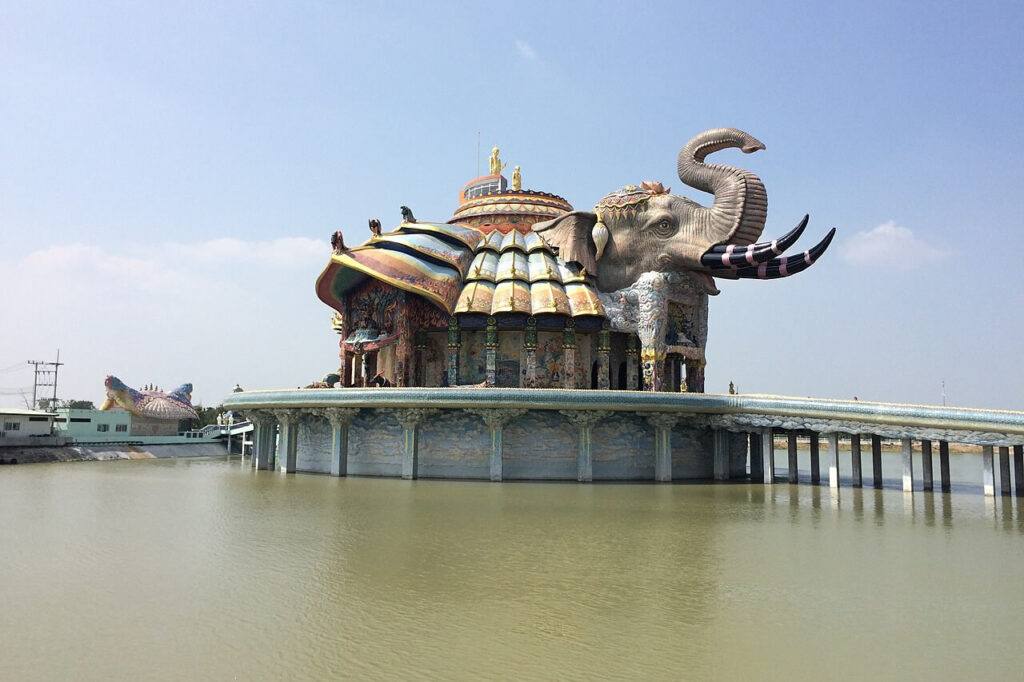
Photo by กิตติ เลขะกุล on Wikimedia Commons, licensed under CC BY-3.0
Wat Ban Rai is a modern Buddhist temple best known for its elephant-shaped main structure, set on a lake in western Nakhon Ratchasima Province.
- Striking contemporary temple architecture
- Elevated walkways over water with detailed artwork
- Popular with Thai visitors and photographers
📌 Best appreciated as a visual stop rather than a traditional heritage site.
How to get there: Car or hired driver
✅ Best time: Morning or late afternoon (strong midday sun)
How to Get Around
Most day trips are easiest by car or hired driver. Public transport exists for some destinations, but schedules can be slow and indirect. For flexibility, renting a car in Korat is often the most practical option.
📌 Korat isn’t packed with attractions inside the city, but it excels as a base for exploring the wider region. If you enjoy mixing city comforts with easy access to nature and history, it works exceptionally well.
Itineraries for Korat
These sample itineraries are designed to match how most people actually use Korat: either as a short city stop or as a base for nearby day trips. Adjust pacing depending on whether you have a car.
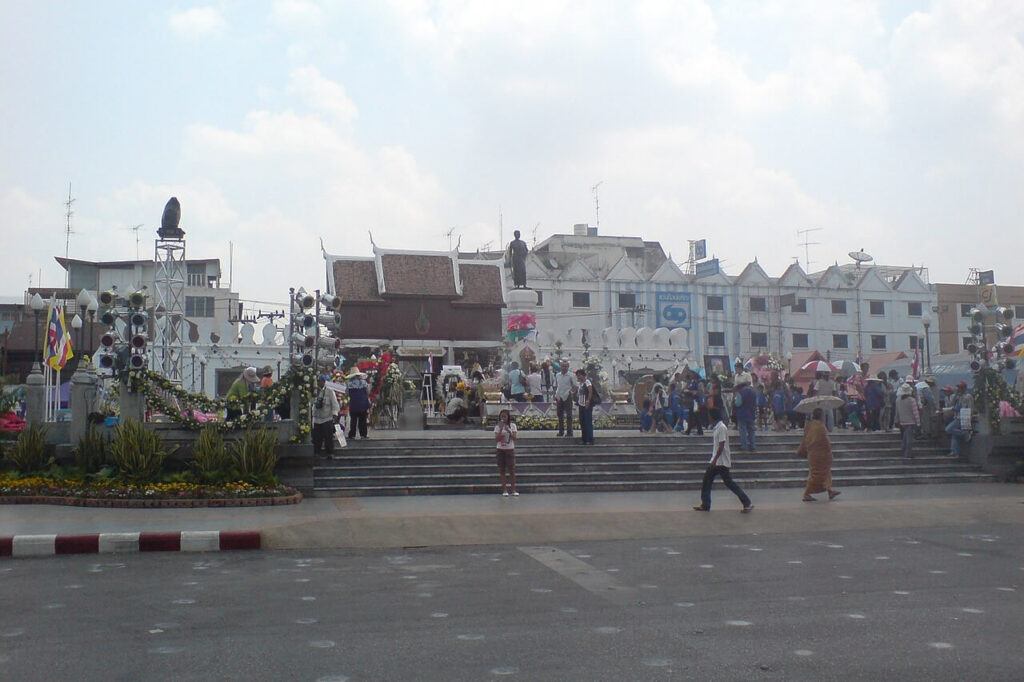
Photo by Paul Hewitt on Wikimedia Commons, licensed under CC BY-SA 3.0
1-Day Korat Highlights (City-Focused)
✅ Best for: Short stops, transit breaks, first-time visitors
Morning
- Breakfast at a local café or market
- Visit Phimai Historical Park (if arriving early and mobile) or explore central Korat
- Light lunch near the city center
Afternoon
- Mall break at Terminal 21 Korat (food court, cafés, air-conditioning)
- Short walk or rest during the hottest hours
Evening
- Dinner at a local Isaan restaurant
- Explore Save One Night Market or B2 Korat Night Market
- Casual drinks or café stop to end the day
📌 This itinerary works well without a car if you stay central.
2-Day Korat & Surroundings
✅ Best for: Relaxed pace, food lovers, light sightseeing
Day 1 – Korat City
- Morning markets or café breakfast
- Visit Dan Kwian Pottery Village (late morning)
- Lunch nearby or back in the city
- Afternoon rest or mall time
- Evening night market and casual nightlife
Day 2 – Nature or History
- Morning trip to Phimai Historical Park or Sai Ngam
- Lunch in a small town or roadside restaurant
- Return to Korat mid-afternoon
- Easy final dinner and drinks
📌 A car or driver makes Day 2 much easier.
3-Day Korat as a Base
✅ Best for: Slow travel, nature lovers, longer stays
Day 1 – City & Food
- Korat city exploration
- Markets, malls, and local restaurants
- Evening drinks or live music
Day 2 – Khao Yai National Park
- Early start for wildlife and cooler temperatures
- Waterfalls, viewpoints, and short hikes
- Dinner back in Korat or near the park
Day 3 – Local Culture
- Late start and relaxed morning
- Dan Kwian or Phimai depending on interest
- Lunch, souvenir browsing, and departure prep
📌 This itinerary shows Korat at its best: city comfort plus easy regional access.
How to Choose the Right Itinerary
- No car, short stay: 1-day city itinerary
- Interested in culture: 2-day version with Phimai
- Nature-focused or slow travel: 3-day base itinerary
📌 Korat isn’t about ticking off attractions. It works best when you slow down, eat well, and use the city as a practical launch point for the wider region.
Cost Snapshot for Korat
Korat is a very affordable Thai city, especially compared to Bangkok or major tourist destinations. Day-to-day costs are low, and it’s easy to live or travel comfortably without budgeting hard.
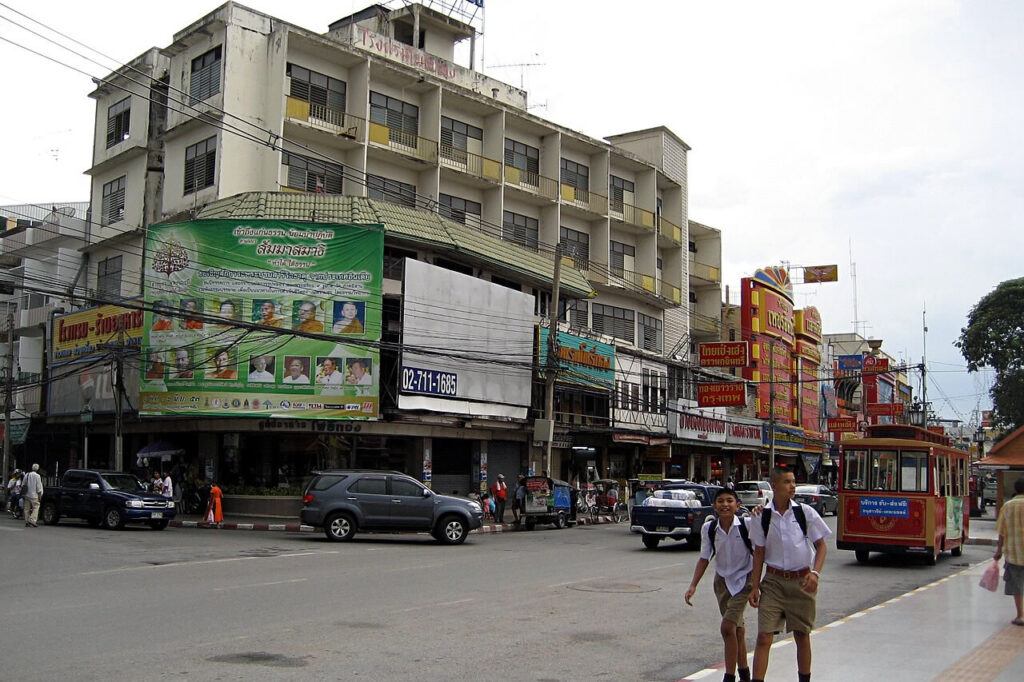
Photo by Khaosaming on Wikimedia Commons, licensed under CC BY-SA 3.0
What Things Typically Cost
Below is a realistic snapshot of common expenses you’ll encounter as a visitor.
| Expense | Typical Cost | Notes |
|---|---|---|
| Street food meal | ฿40–฿70 | Noodles, rice dishes, grilled snacks |
| Local restaurant meal | ฿80–฿150 | Isaan or Thai food, generous portions |
| Mall food court meal | ฿40–฿80 | Good value, air-conditioned comfort |
| Coffee / iced drink | ฿40–฿90 | Local cafés and chains |
| Beer (local bar) | ฿70–฿150 | Lower than Bangkok prices |
| Grab / short taxi ride | ฿60–฿120 | Depends on distance and time of day |
| Mid-range hotel (per night) | ฿1,200–฿1,800 | Central locations, good comfort |
| Budget hotel / guesthouse | ฿600–฿1,000 | Clean and functional |
Estimated Daily Budgets
- Budget traveler: ฿800–฿1,200
- Mid-range traveler: ฿1,500–฿2,200
- Comfort-focused stay: ฿2,500+
📌 These estimates include accommodation, food, local transport, and casual evening activities.
Value Compared to Other Cities
Compared to Bangkok, Chiang Mai, or Phuket, Korat offers similar comfort at noticeably lower prices, especially for food, drinks, and accommodation. What you give up in variety and nightlife, you gain in affordability and everyday ease.
✅ Korat is an excellent choice if you value low daily costs, authentic local pricing, and simple living without sacrificing comfort.
Want a realistic Thailand trip budget?
Use the Thailand Travel Cost Calculator — just enter your destinations, trip length, and travel style to get instant, accurate per-person and group trip costs in both THB and USD.
📌 Want a deeper breakdown of what things cost across Thailand by region and style?
Read the full Cost of Travel in Thailand guide.
Digital Nomad Friendliness in Korat
Korat is not a classic digital nomad hotspot, but it works surprisingly well for remote workers who value low costs, space, and a local lifestyle over community events and co-working culture.
Internet & Connectivity
Internet quality in Korat is generally reliable.
- Home and hotel Wi-Fi is fast and stable
- Mobile data is inexpensive and widely available
- 4G is standard; 5G coverage is growing
📌 For most remote work, connectivity is not an issue.
Workspaces & Cafés
Dedicated co-working spaces are limited, but Korat has plenty of cafés and mall spaces that work well for short sessions.
- Cafés around malls and university areas are laptop-friendly
- Terminal 21 Korat offers quiet cafés and seating during off-peak hours
- Expect fewer power outlets and no formal work culture
📌 Korat suits people who already have routines rather than those seeking a co-working community.
Cost & Lifestyle Fit
Low living costs are Korat’s biggest advantage for remote workers.
- Affordable accommodation and food
- Easy day-to-day life without tourist pricing
- Calm environment that supports focused work
📌 Longer stays are especially good value, particularly in serviced apartments or condos.
Community & Networking
✅ Korat has a small remote-worker and expat presence, but no established nomad scene.
- Limited meetups or organized events
- Social connections happen organically
- Better for independent workers than network-driven nomads
📌 Korat works best for digital nomads who are self-sufficient, cost-conscious, and comfortable without a built-in community. If you need co-working spaces, events, and a social nomad scene, other Thai cities will be a better fit.
Family-Friendliness in Korat
Korat is a practical, low-stress city for families, especially those who value space, affordability, and everyday Thai life over attractions and entertainment aimed at children.
Safety & Daily Life
Korat feels safe and calm, particularly in residential areas and around malls.
- Low levels of tourist-related crime
- Family routines blend easily into local life
- Side streets and neighborhoods are quieter than big cities
📌 Traffic exists, but it’s generally manageable outside peak hours.
Parks & Kid-Friendly Spaces
While Korat isn’t packed with playgrounds or theme attractions, there are enough everyday outdoor spaces for families.
- Public parks and open green areas around the city
- Mall-based play zones and cinemas for hot days
- Nearby nature areas make good weekend escapes
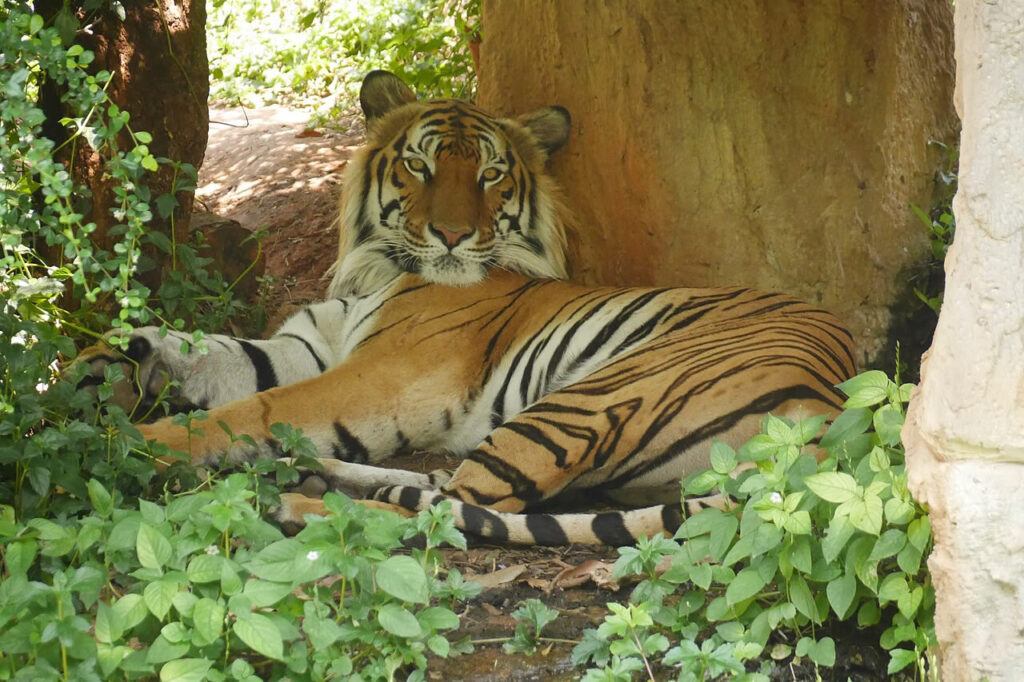
Photo by กสิณธร ราชโอรส on Wikimedia Commons, licensed under CC BY-SA 4.0
Korat Zoo is a large, Thai-style zoo popular with local families. It’s spacious and affordable, though facilities are more basic compared to newer zoos in Thailand. Best suited for families with children rather than short-term visitors.
📌 For bigger outdoor experiences, families often head to Khao Yai.
Schools & Education
Korat has local Thai schools and a small number of private options, but it’s not a major international-school hub.
- Suitable for short stays or families integrating locally
- Limited choice for Western-curriculum schooling
- Families seeking international education usually look to Bangkok or Chiang Mai
Accommodation & Cost
Housing and accommodation are family-friendly and affordable.
- Larger hotel rooms and serviced apartments are common
- Long-term rentals offer good value and space
- Day-to-day costs stay low even for families
📌 This makes Korat attractive for families on a budget or those planning a slower pace of life.
✅ Korat suits families looking for affordability, safety, and a grounded Thai lifestyle rather than child-focused attractions or international-school infrastructure. It works best for short stays, domestic travel, or families comfortable living locally.
Local Services & Emergency Info in Korat
Korat has good everyday infrastructure for visitors and long-stay foreigners. Essential services are easy to access, and major facilities are spread across the city rather than concentrated in one area.
- Police: 191
- Tourist Police: 1155 (English-speaking assistance)
- Ambulance / Medical Emergency: 1669
- Fire: 199
Hospitals & Medical Care
Korat is well served by both public and private hospitals, with several facilities experienced in treating foreigners.
- Private hospitals offer shorter wait times and English-speaking staff
- Public hospitals are cheaper but busier and more Thai-language focused
- Pharmacies are widespread and well stocked
📌 If you rely on private hospitals, health insurance is strongly recommended.
Police & Tourist Assistance
- Regular police stations are located throughout the city
- Tourist Police (1155) can assist with language support and basic issues
- Korat is generally safe, but normal precautions still apply
Immigration & Government Services
- Immigration services are available within Nakhon Ratchasima Province
- Processes can be slower than in Bangkok
- Bring copies of documents and allow extra time
📌 For visas, extensions, or reporting, plan ahead and avoid last-minute visits.
Post Office, Couriers & Practical Services
- Thailand Post offices are reliable and affordable
- Private couriers (DHL, Kerry, Flash) operate citywide
- SIM cards, phone repairs, and printing services are easy to find
Practical Tips
- Keep digital and paper copies of your passport
- Use Grab for transport if you don’t drive
- Emergency services respond reliably, but English levels vary
✅ Korat offers solid, dependable local services without the complexity or congestion of larger Thai cities. For most travelers and long-stay visitors, day-to-day logistics are straightforward once you’re settled.
FAQs About Korat (Nakhon Ratchasima)
These questions come up often but aren’t fully answered in the sections above.
📌 Is Korat worth visiting if I don’t have a car?
Yes, but with limitations. You can enjoy the city itself, malls, markets, and food without a car using Grab. For day trips like Khao Yai or Phimai, having a car or hiring a driver makes things much easier.
📌 How many days do you really need in Korat?
For most travelers, 1–2 days is enough to see the city and eat well. Korat becomes more interesting as a base for nearby attractions, which is where a 2–3 day stay makes sense.
📌 Is Korat more traditional than other Thai cities?
Yes. Korat feels noticeably more local and less tourist-oriented than places like Chiang Mai or Phuket. English is less common, and daily life follows a more traditional Thai rhythm.
📌 Can Korat be used as a base for Khao Yai National Park?
Yes. Many visitors stay in Korat and do day trips to Khao Yai, especially if accommodation near the park is full or expensive. Expect an early start and plan transport in advance.
📌 Is Korat a good destination for first-time visitors to Thailand?
It depends. Korat suits travelers who want to experience everyday Thai city life. If you prefer tourist infrastructure, English-speaking services, and attractions within walking distance, other destinations may feel easier.
Related Guides & Further Reading
Travel in Thailand is easier when you have the right balance of practical advice and destination inspiration. Below you’ll find useful travel resources to help you prepare smoothly, plus nearby destinations worth adding to your journey.
Thailand Travel Essentials: Plan Smarter, Travel Easier
Need tips on visas, health, culture, or everyday logistics? My hub brings all the key guides together in one place: Explore the Thailand Travel Guide
Your Next Thai Adventure Awaits
Looking for where to go next? These nearby or complementary places pair well with your current destination and are worth your time in the Land of Smiles.
- Khao Yai National Park Travel Guide: Waterfalls, Wildlife & An Easy Escape from Bangkok
- Udon Thani Travel Guide: What to Do, Where to Stay & Local Tips for a Great Visit
💬 If you’ve spent time in Korat, we’d love to hear what you enjoyed most — feel free to share your tips in the comments.