
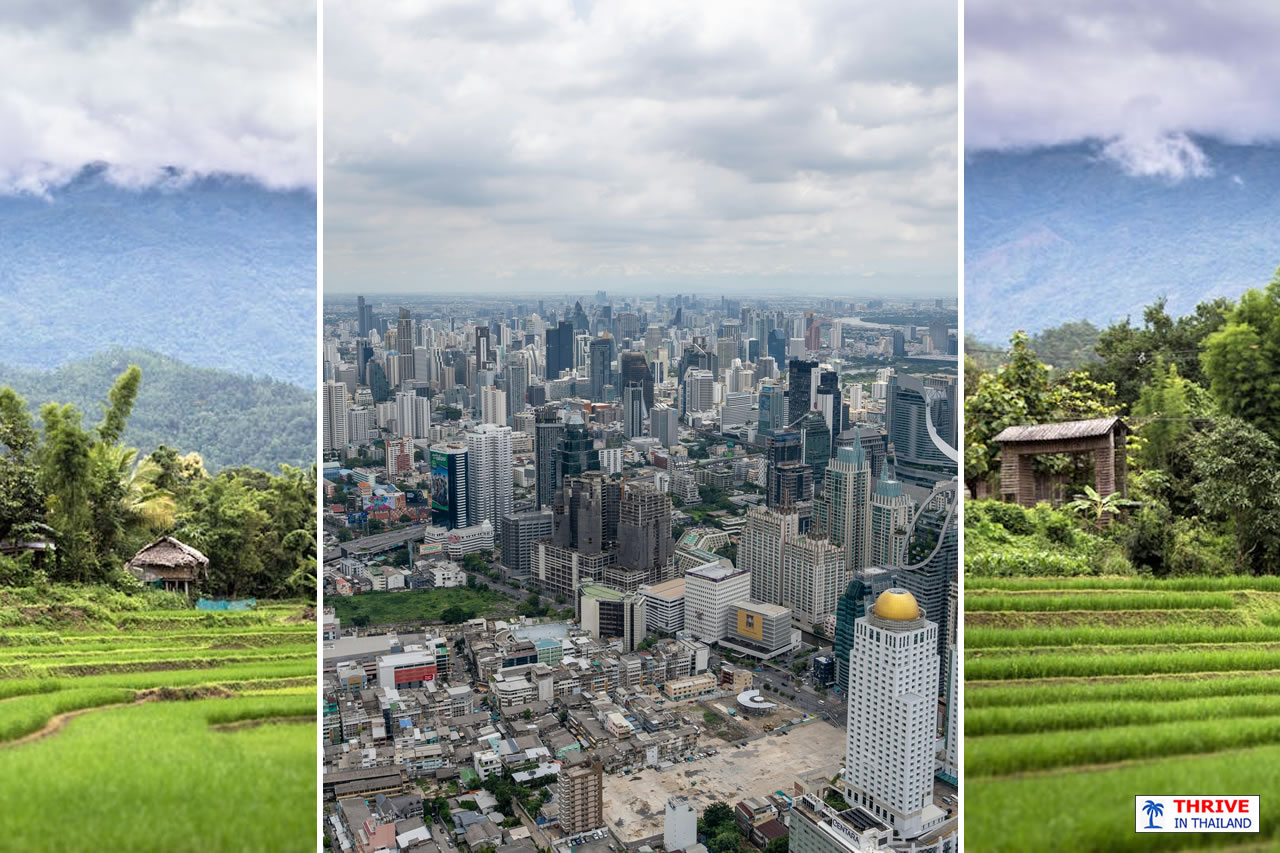
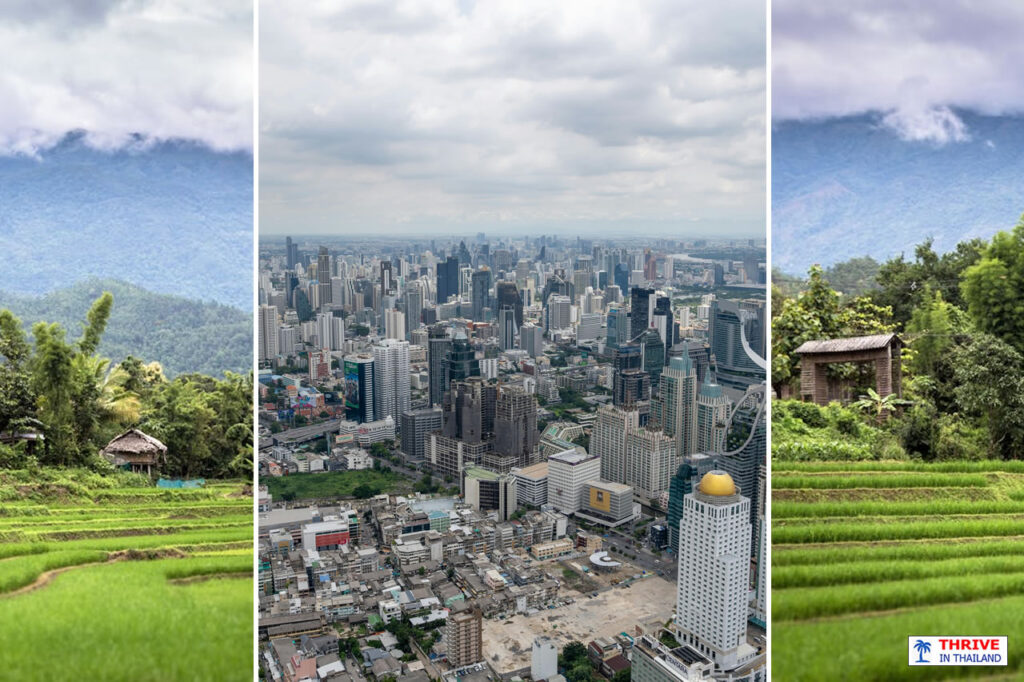
Spend enough time in Thailand and you’ll start to notice patterns that aren’t immediately obvious when you first arrive. One of them is the steady movement of people from rural regions to the country’s major cities. It’s not something most visitors think about, but it quietly shapes large parts of daily life, from the workforce in Bangkok to the communities in tourist areas.
For many expats, this movement is often interpreted in very simple terms. Assumptions are made about where people come from, why they leave, and what motivates their decisions. But like many things in Thailand, the reality is more layered and doesn’t fit neatly into a single explanation.
At the center of this dynamic is Isaan, Thailand’s northeastern region. It’s an area rich in culture and strong in community, but also one that has faced long-standing economic limitations compared to the rest of the country. For generations, this has influenced how people live, work, and make decisions about their future.
This article isn’t about telling stories or passing judgment. It’s about stepping back and looking at the bigger picture, examining the forces that drive migration, the realities people face when they leave, and why this part of Thailand is often misunderstood by outsiders.
📌 Because once you begin to see the broader context, many things that seem confusing at first start to make a lot more sense.
What Is Isaan? Understanding Thailand’s Northeast
Isaan refers to Thailand’s northeastern region, covering a large part of the country both geographically and culturally. It borders Laos and Cambodia and includes provinces such as Khon Kaen, Udon Thani, Ubon Ratchathani, and Buriram. Despite its size and population, it remains one of the least economically developed regions in Thailand.
Life in Isaan is shaped by a strong connection to land and community. Agriculture still plays a central role, particularly rice farming, and many families rely on seasonal income tied to harvest cycles. Villages tend to be close-knit, with extended families living near each other and maintaining long-standing social ties.
Culturally, Isaan has its own identity. The local language, often referred to as Isaan, is closely related to Lao, and daily life reflects traditions that are distinct from central Thailand. Food, festivals, and social customs all carry a regional flavor that is both rich and deeply rooted.
At the same time, opportunities within the region can be limited. Outside of a few larger cities, there are fewer options for higher-paying jobs, and economic growth has historically lagged behind areas like Bangkok and the Eastern Seaboard.
📌 This difference didn’t appear suddenly. It developed over time, shaped by geography, infrastructure, and long-term economic patterns that have influenced the region for generations.
Why Isaan Is Different: A Brief Historical Context
The differences between Isaan and other parts of Thailand didn’t happen overnight. They developed gradually over time and are rooted in geography, infrastructure, and long-standing economic conditions.
Located on the country’s northeastern edge, Isaan has traditionally been more remote from Thailand’s political and economic center. For much of its history, the region remained largely agricultural, with fewer opportunities for industrial growth compared to the areas around Bangkok and the Eastern Seaboard.
Infrastructure followed a similar path. While central Thailand experienced rapid development, many parts of Isaan progressed more slowly. Farming remained the backbone of the local economy, often tied to seasonal cycles and affected by drought and soil conditions in certain areas. This made income less predictable and, in many cases, lower than in other regions.
At the same time, Bangkok and its surrounding provinces continued to expand, attracting investment, jobs, and better infrastructure. Over time, this created a clear gap between rural and urban Thailand, one that became increasingly visible as mobility improved and travel became easier.
📌 Seen in this light, the movement of people from Isaan to the cities is not surprising. It reflects a long-standing imbalance in opportunities rather than a sudden or isolated trend.
The Economic Reality of Rural Thailand
For many families in Isaan, daily life is closely tied to the local economy, and that economy is still largely based on agriculture. Rice farming remains one of the main sources of income, often supplemented by small-scale work, local trade, or temporary jobs.
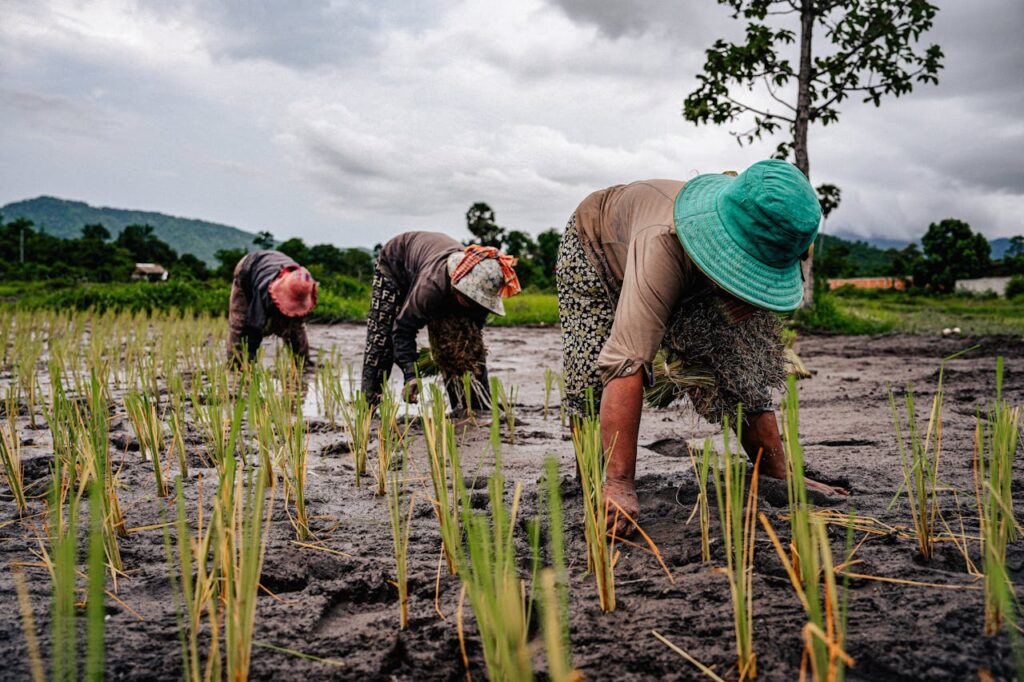
This creates a situation where income is not only limited, but also inconsistent. Earnings can vary depending on the season, weather conditions, and market prices. During certain periods of the year, there may be little or no income at all, which makes long-term financial planning difficult.
Wages in rural areas are generally much lower than in Thailand’s major cities. While the cost of living is also lower, the gap in earning potential is significant. Even modest city jobs can offer a level of income that would be difficult to achieve in many rural provinces.
Opportunities outside agriculture do exist, particularly in larger regional centers like Khon Kaen or Udon Thani. However, these are still limited compared to Bangkok or the Eastern Economic Corridor, where industry, services, and international business are more concentrated.
For younger generations, this difference becomes more visible over time. Access to education, social media, and travel has made it easier to compare lifestyles and opportunities across regions. What might have been accepted as a normal way of life in the past is now increasingly seen as restrictive.
📌 Against this backdrop, leaving Isaan is not simply a matter of ambition or preference. In many cases, it is a practical decision shaped by income potential, stability, and the desire to support family members more effectively.
Why People Leave Isaan
Given the economic realities in rural areas, the decision to leave Isaan is often less about chasing opportunity and more about responding to limitations.
One of the most significant factors is the difference in earning potential. Even entry-level jobs in cities like Bangkok, Pattaya, or Phuket can offer higher and more stable income than what is available in many rural provinces. For families that depend on shared financial support, this difference matters.
Family expectations also play a role. In many cases, those who move to the city are expected to contribute financially to parents or relatives back home. This is not always seen as a burden, but rather as part of a broader sense of responsibility within the family structure.
There is also a practical side to the decision. Cities offer more consistent work, access to services, and the possibility of building a different kind of life. For some, it’s about independence. For others, it’s about stability.
At the same time, the choice is rarely simple. Leaving home often means being separated from family, adjusting to a very different environment, and navigating challenges that are not always visible from the outside.
📌 Seen in this context, migration from Isaan to Thailand’s cities is not unusual or exceptional. It follows a pattern that has developed over time, shaped by economic conditions, family dynamics, and the search for more reliable opportunities.
Migration Patterns: Where People Go
Once people leave Isaan, the destination is usually determined by where work is available. Over time, clear migration patterns have developed, with certain cities and regions attracting workers from across the northeast.
Bangkok remains the primary destination. As the country’s economic center, it offers the widest range of job opportunities from retail and hospitality to factory work, office roles, and domestic services. For many, it is the first step into urban life, where adjusting to a different pace, environment, and set of expectations becomes part of the experience, something that also applies to expats learning to adapt to Thai culture more broadly.
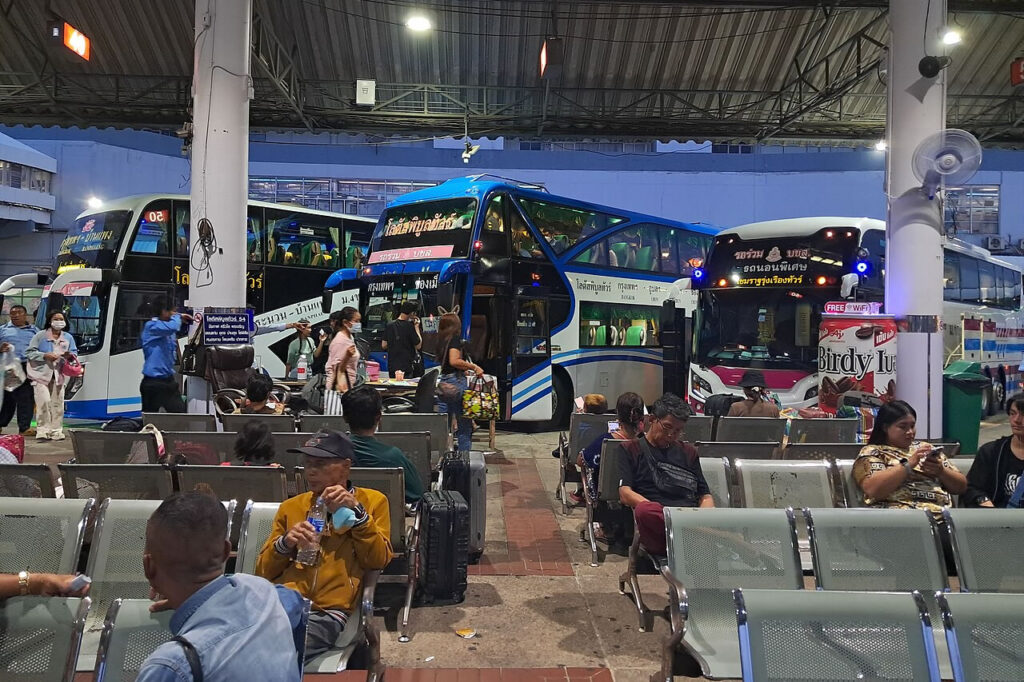
Photo by Mapleonade on Wikimedia Commons, licensed under CC BY 4.0
Tourist areas such as Pattaya, Phuket, and Koh Samui are another major draw. These locations rely heavily on service-based industries, including hotels, restaurants, and entertainment venues. The demand for workers is constant, particularly in areas where tourism drives the local economy.
Industrial zones along the Eastern Seaboard also attract a significant number of migrants. Provinces like Chonburi and Rayong offer factory jobs with relatively stable income compared to seasonal work in rural areas.
Not everyone moves directly to a major city. Some settle in regional hubs like Khon Kaen or Udon Thani, where opportunities are more limited than in Bangkok but still offer alternatives to village life.
📌 These patterns are not random. They reflect where Thailand’s economic activity is concentrated and where people are most likely to find consistent work.
Life After Migration: The Reality in Cities
Arriving in the city often brings new opportunities, but it also comes with its own set of challenges.
For many migrants, work is available, but it is not always easy. Jobs in retail, hospitality, factories, or domestic services typically involve long hours and relatively modest pay. While income is more consistent than in rural areas, it is often balanced by higher living costs.

Accommodation is one of the main adjustments. To keep expenses manageable, many people share rooms or live in small apartments, especially in areas close to work. Privacy and space are limited, but proximity and affordability tend to take priority.
Daily life can be demanding. Long working hours, commuting, and the pace of the city create a routine that is very different from village life. At the same time, there is a level of independence and access to services that may not be available in rural areas.
Opportunities for upward mobility exist, but they are not always easy to access. For some, city life becomes a long-term path. For others, it is a temporary phase, working for a few years to save money before returning home.
📌 This balance between opportunity and constraint is an important part of the picture. Moving to the city can improve financial stability, but it rarely comes without trade-offs.
The Role of the Entertainment Industry
Any discussion about migration from Isaan to Thailand’s cities would be incomplete without acknowledging the role of the entertainment industry. It is one of several sectors that employ people from rural areas, particularly in locations where tourism is a major part of the local economy.
In cities like Bangkok, Pattaya, and Phuket, the industry offers work that is often more accessible than other types of employment. For individuals with limited formal education or work experience, it can provide an immediate source of income, sometimes higher than what is available in other entry-level jobs.

At the same time, it is important to keep this in perspective. The entertainment sector represents only a portion of the broader workforce. Many migrants from Isaan work in retail, hospitality, factories, offices, or run small businesses. Focusing only on one segment can create a distorted view of a much more diverse reality.
As with other types of work, the reasons for entering this sector are usually practical rather than ideological. Income, flexibility, and availability tend to be the main factors, shaped by individual circumstances rather than a single defining narrative.
📌 Approached in this way, the entertainment industry becomes part of the overall economic landscape, neither ignored nor exaggerated, but understood within its proper context.
Family, Obligation, and Money Flow
One of the most important aspects of migration in Thailand is the role of family. Financial decisions are rarely made in isolation, and income is often seen as something that supports a wider network rather than just the individual.
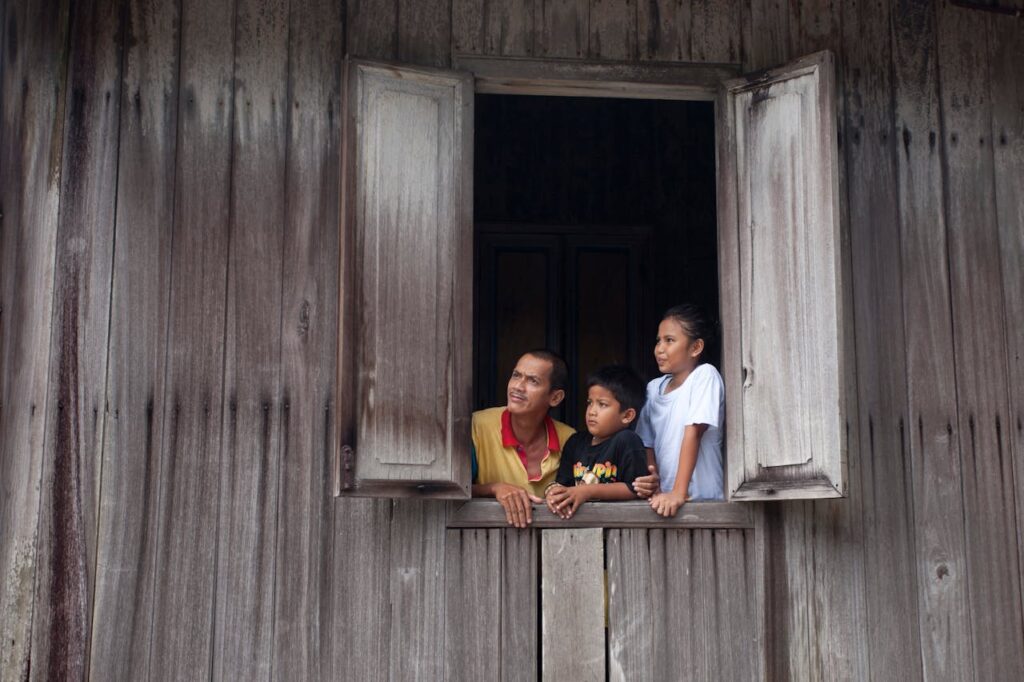
For many people who move from Isaan to the city, sending money home is a normal part of life. This can include regular transfers to parents, contributions to household expenses, or support for siblings and extended family members. In some cases, it becomes a consistent monthly obligation, and understanding the most efficient ways to manage transfers and everyday finances is important, especially for expats navigating the system, as outlined in this guide to Banking & Financial Tips for Expats in Thailand.
This dynamic is closely tied to cultural expectations. Family structures in Thailand tend to be more collective than individualistic, and there is a strong sense of responsibility toward parents, especially as they get older. Providing support is often viewed as a natural extension of family roles rather than a burden.
At the same time, the reality can be more nuanced. The amount of support, the expectations involved, and the level of pressure can vary significantly from one situation to another. Some individuals contribute willingly and without strain, while others may feel a stronger sense of obligation.
For outsiders, this can sometimes be misunderstood. Financial support may be interpreted as unusual or transactional, particularly in the context of relationships. In reality, it is often part of a broader system of mutual support that exists within families.
📌 Seen within this framework, the flow of money between cities and rural areas is not an exception; it is a key part of how many households maintain stability and continuity across generations.
Relationships Across Cultures
When people from different cultural backgrounds form relationships, differences in expectations are almost inevitable. In Thailand, these differences can sometimes be more noticeable, particularly when it comes to views on money, family, and long-term responsibilities.
For many Thais, financial support within a relationship is not always seen as unusual. Contributing to shared expenses, helping family members, or planning for long-term stability are often part of a broader understanding of partnership. These expectations are shaped by the same family structures and social norms discussed earlier.
For many expats, the perspective can be different. Relationships are often viewed as more individual, with a stronger emphasis on personal independence and clearly defined boundaries around finances. This can lead to misunderstandings when assumptions on both sides are not aligned.
In situations where one partner has moved from a rural area to the city, these differences can become more pronounced. Financial responsibilities toward family may still be present, even as the relationship develops, and this can be difficult to interpret without the broader cultural context.
At the same time, it’s important to avoid generalizations. Relationships vary widely, and individual values, personalities, and life experiences all play a role. Not every situation follows the same pattern, and assumptions—whether positive or negative—can easily lead to misjudgment.
📌 Seen in context, many of these differences are not problems in themselves. They are simply the result of two people approaching life from different cultural frameworks.
How Thai Society Views the Isaan–City Divide
The differences between Isaan and Thailand’s major cities are not only economic; they are also reflected in how people perceive each other within the country.
In urban centers like Bangkok, there can be subtle distinctions based on background, education, and place of origin. People from rural areas are sometimes viewed as coming from a simpler or less developed environment, while city life is often associated with modernity, opportunity, and higher social status.
At the same time, these perceptions are not fixed or uniform. Many people from Isaan have built successful lives in cities, working in a wide range of professions and contributing to the country’s economy in meaningful ways. Over time, migration has blurred the lines between regions, even if certain assumptions still exist.
Within Isaan itself, there is often a strong sense of identity and pride. Cultural traditions, language, and community ties remain important, and many people maintain close connections to their hometowns even after spending years in the city.
It’s also worth noting that these internal dynamics are rarely discussed openly. Social harmony is highly valued in Thai culture, and differences are often handled quietly rather than directly confronted. As a result, underlying perceptions may exist without being explicitly stated.
📌 For outsiders, this layer is easy to miss. Without being aware of these internal perspectives, it’s difficult to fully grasp how regional background can influence opportunities, expectations, and social interactions in Thailand.
Choice, Responsibility, and Reality
It’s easy to look at migration from a distance and try to explain it in simple terms. In reality, the decisions people make are shaped by a combination of circumstances, responsibilities, and personal choices.
Economic conditions play a significant role. Limited opportunities in rural areas and the need for stable income create strong incentives to move to the city. At the same time, individual decisions still matter. People choose where to go, what work to take, and how they manage their lives within those constraints.
Family expectations can influence these choices, but they do not fully define them. Some individuals take on financial responsibilities willingly, while others navigate more complex situations where obligation and personal goals are not always aligned.
It’s also important to recognize that outcomes can vary. For some, moving to the city leads to greater stability and new opportunities. For others, it may involve ongoing challenges and trade-offs that are less visible from the outside.
Reducing these experiences to a single narrative misses the complexity of what is actually happening. People are neither purely driven by circumstance nor entirely free from it. Most decisions fall somewhere in between.
📌 Seen in this light, migration from Isaan is best understood as a process shaped by both structure and agency, where individual paths are influenced by broader conditions but never fully determined by them.
What Expats Often Get Wrong
For many expats, first impressions of Thailand are shaped by what they see on the surface, often within a limited environment such as tourist areas or specific social circles. From there, it is easy to form conclusions that seem logical but don’t fully reflect the broader reality. Many of these early impressions are also reflected in the common advantages and challenges discussed in guides like Pros and Cons of Living in Thailand, though the deeper context often only becomes clear over time.
One of the most common misunderstandings is the tendency to focus on individual situations without considering the larger context. Decisions that appear unusual or difficult to explain often make more sense when viewed through the lens of economic conditions, family structures, and long-term social patterns.
There is also a tendency to interpret behavior through a Western framework. Concepts such as independence, financial boundaries, or personal choice can carry different meanings depending on cultural background. When these differences are not recognized, it can lead to misinterpretation.
Another point that is often overlooked is the diversity within Thailand itself. Not all people from Isaan share the same experiences, just as not all expats approach life in the same way. Generalizations, even when they are based on real observations, can quickly become misleading when applied too broadly.
Over time, many long-term residents begin to see these patterns more clearly. The initial confusion tends to fade as the underlying structure becomes more familiar, and situations that once seemed puzzling start to fit into a wider framework.
📌 Taking a step back and considering that broader context can make a significant difference. It doesn’t require agreeing with everything, but it does help create a more accurate and balanced understanding of how life in Thailand actually works.
A More Balanced Way to Understand Thailand
Looking at Thailand through a single lens rarely gives a complete picture. The country is shaped by a mix of regional differences, economic realities, and cultural values that don’t always align with familiar assumptions.
The movement from Isaan to the cities is one example of this. What may appear as individual choices on the surface is often connected to a broader system of opportunity, responsibility, and long-standing patterns that have developed over time.
A more balanced perspective comes from recognizing these layers without trying to reduce them to simple explanations. Not every situation can be easily categorized, and not every decision follows the same logic. Context matters.
For expats, this shift in perspective can be useful in everyday life. It allows for more accurate expectations, fewer misunderstandings, and a clearer view of how different parts of Thai society are connected.
📌 Over time, this kind of awareness tends to replace initial assumptions with something more grounded. The details may still vary from one situation to another, but the overall picture becomes easier to navigate.
💬 If you’ve had your own experiences with life in different parts of Thailand, feel free to share them in the comments.